
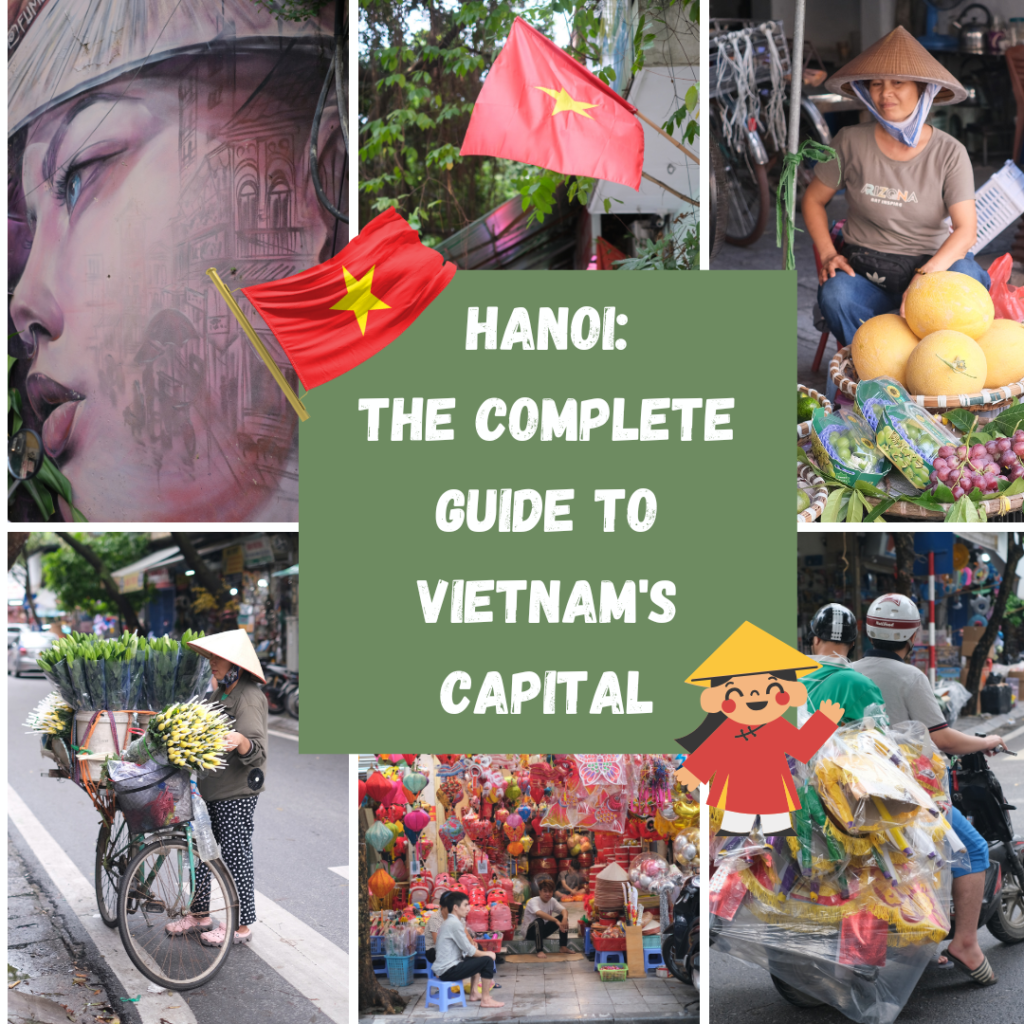
Hanoi is not just the capital of Vietnam. It is its soul! While southern Ho Chi Minh City rushes forward with skyscrapers and modernity, Hanoi carefully guards its nostalgia and millennial tradition. It is a city that stuns you at first contact with the noise of thousands of scooters, only to be soothed by the silence of a lake in the morning mist.
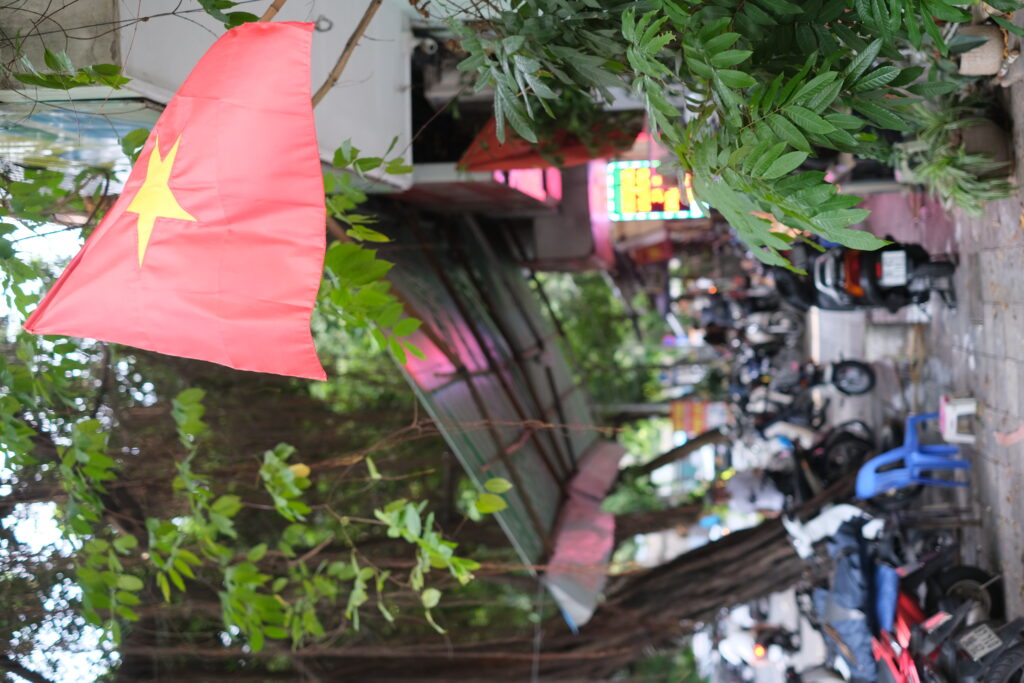
When you step onto the streets of Hanoi, the first thing that greets you is not a monument or history. It’s the sound. The constant honking of scooters, the rustling of plastic chairs, the hissing of phở soup, and a loud “Hello, my friend!” that comes from around the corner before you can even adjust your backpack. Welcome to Hanoi!
A LITTLE HISTORY KILLS NO ONE
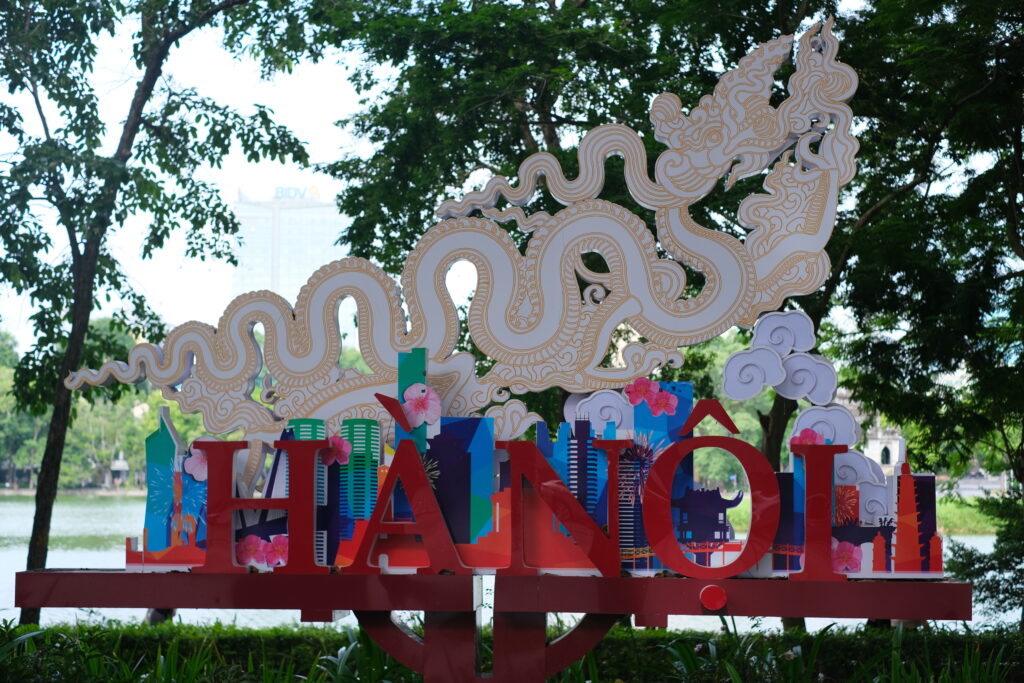
The history of Hanoi, one of the oldest capitals in the world, is a fascinating journey through millennia. The city has served as a center of power, a cultural crossroads, and a symbol of resistance. It began in 1010, when Emperor Ly Thai To saw a golden dragon flying over the river. He considered this phenomenon a lucky sign and decided to move the capital there, which he named Thăng Long, or “Dragon’s Ascent.”
The legacy of this era is the fascinating Imperial Citadel of Thang Long (a UNESCO World Heritage Site), which served as the political center for the long 13th century.
In the 19th century, Hanoi became the center of French Indochina, which gave it an unmistakable European character. The wide boulevards, showy villas and monumental buildings from this era have all been preserved. All of this is reminiscent of this contradictory chapter in history.
The 20th century brought the struggles for independence and the Vietnam War. Hanoi became a symbol of the resistance of North Vietnam.
And what is Hanoi like today? It is a city of contrasts. Millions of motorbikes zigzag between historic pagodas and colonial houses, and modern skyscrapers rise in the background. Despite its rapid development, I think the city retains its unique atmosphere.
A CITY THAT DRIVES AT TWO MILLION HONKS
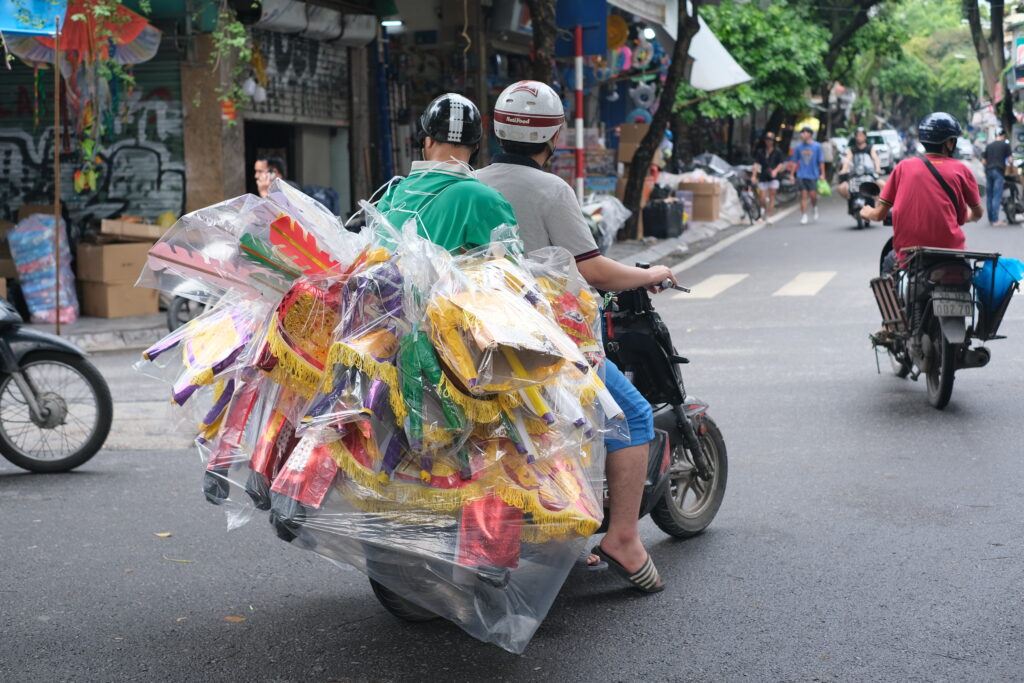
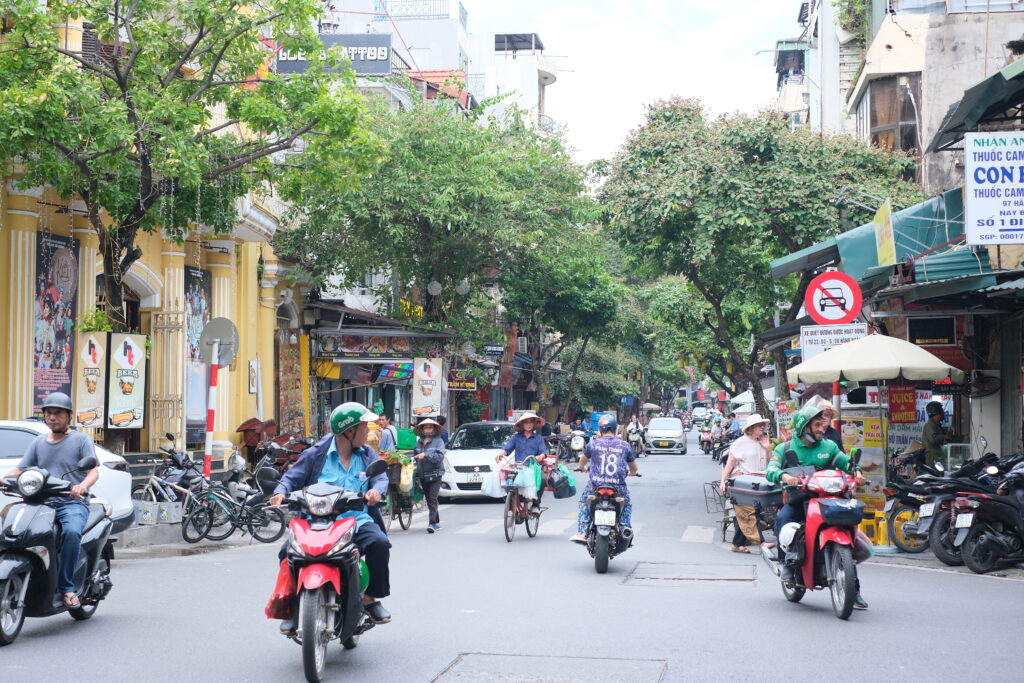
Hanoi has around eight million inhabitants and, by some estimates, around twenty million motorbikes. Crossing the road is a ritual here. You don’t expect anyone to give you the right of way here. That won’t happen. You just join the stream of motorbikes and go slowly and calmly. In short, don’t panic. Motorbikes will pass you. The first crossing of the road will be your little personal revolution. The second one will just be a Zen exercise.

MY TIP:
LEARN TO CROSS
Learn to cross. And I mean it. 🙂 The basic rule is, don’t look drivers in the eye, it will slow you down. Above all, don’t stop or back up. Keep a smooth and slow pace. Drivers are used to calculating your trajectory. You’re like a stone in a stream, the water will just flow past you. I think you’ll understand what I’m talking about when you get to Hanoi. 🙂
FORGET TAXIS, THE GRAB APP
IS YOUR SALVATION
Forget about classic taxis unless you have to. The Grab app is your salvation. You can order a car, but the real experience is the “Grab Bike”. You get a helmet, get on behind a stranger Vietnamese and weave through traffic for a fraction of the price of a car.
FIRST STEPS IN THE LABYRINTH: OLD TOWN
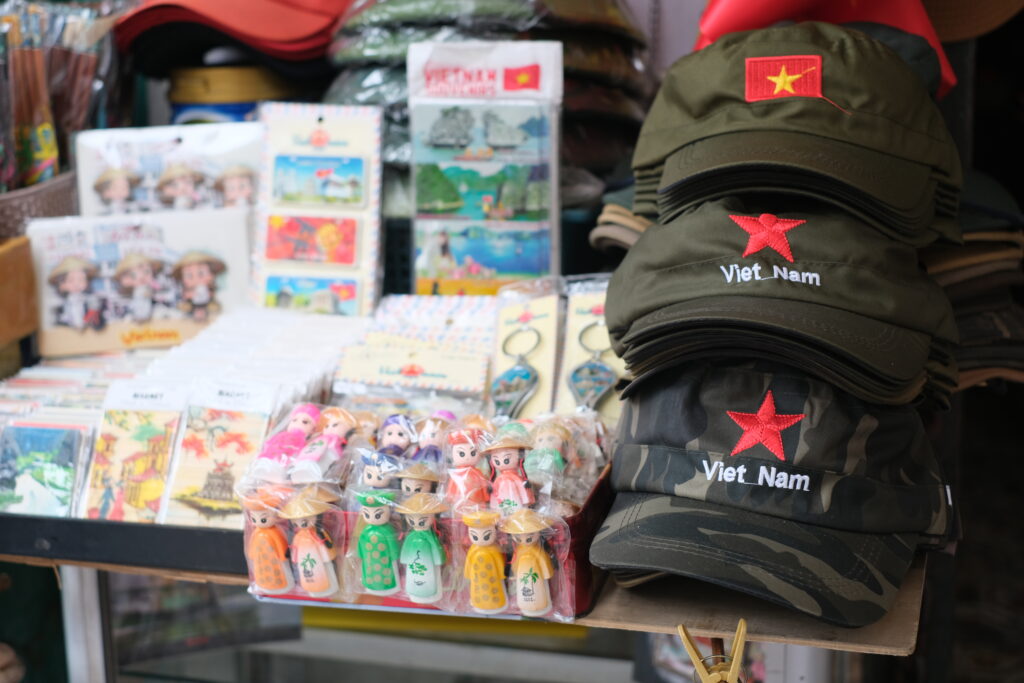
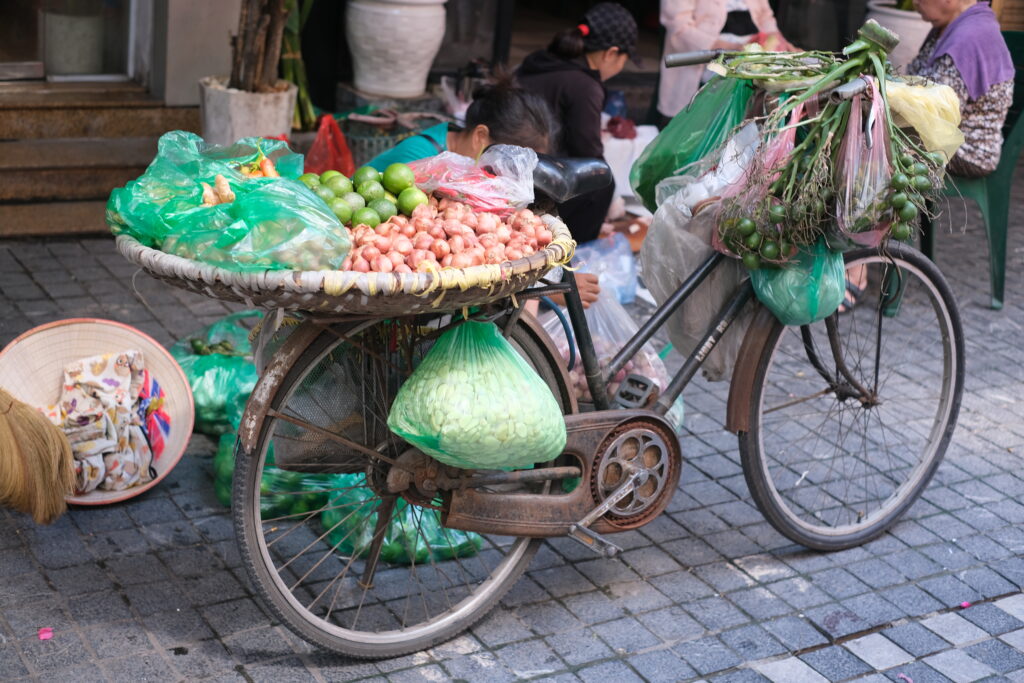
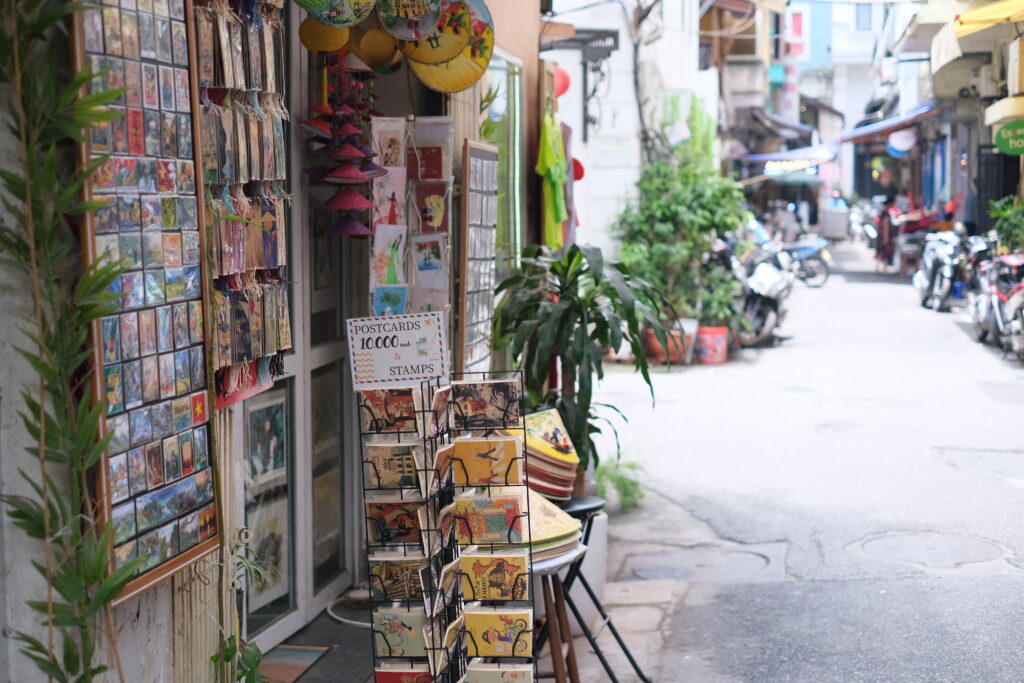
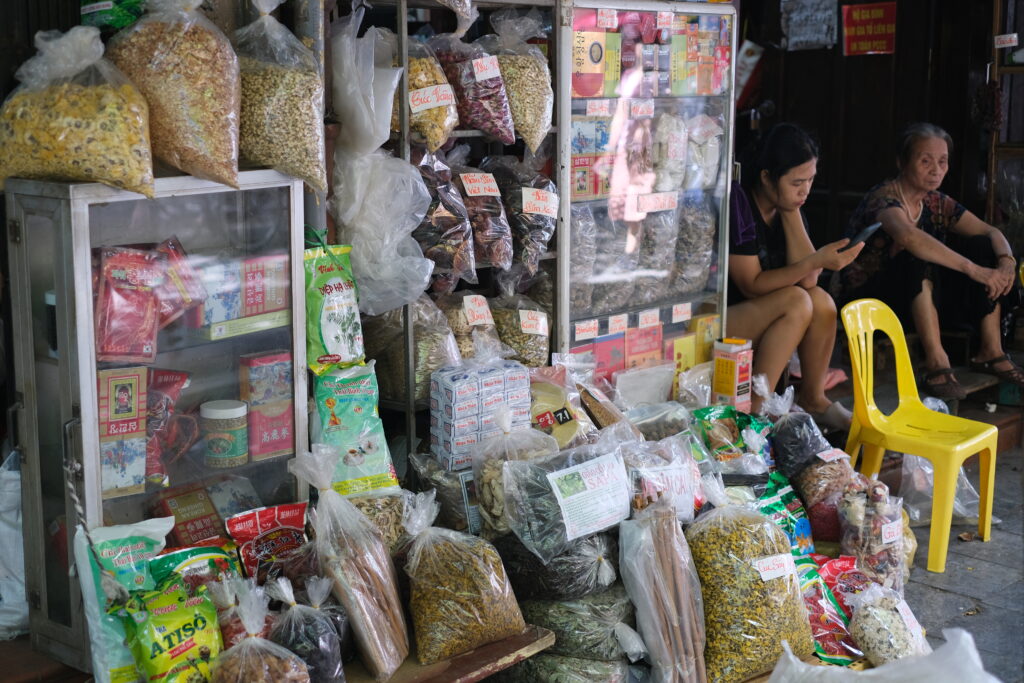
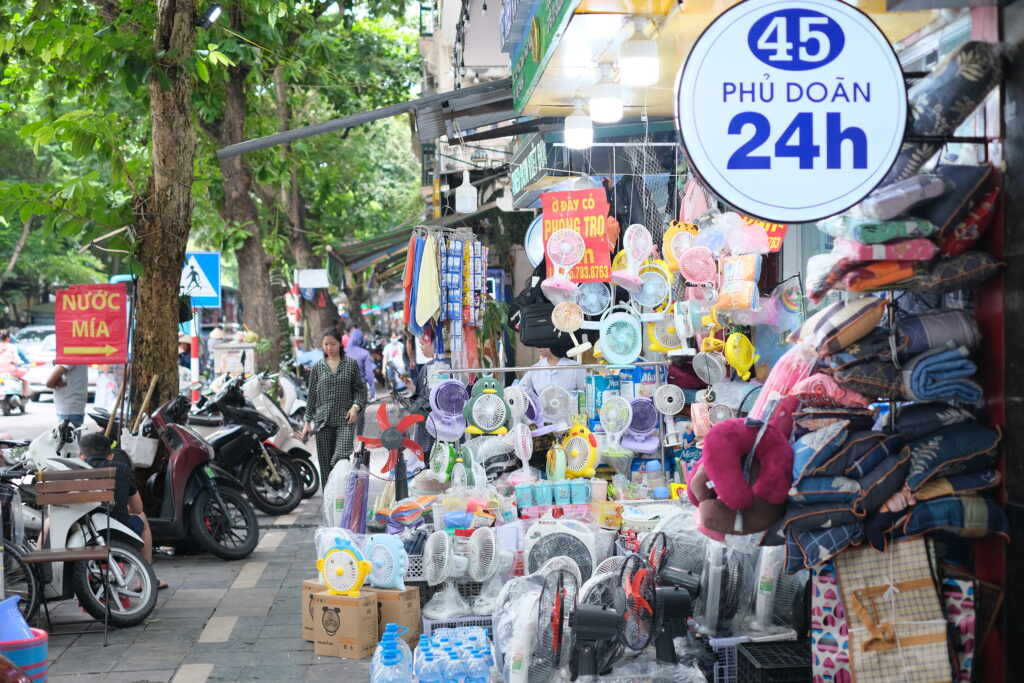
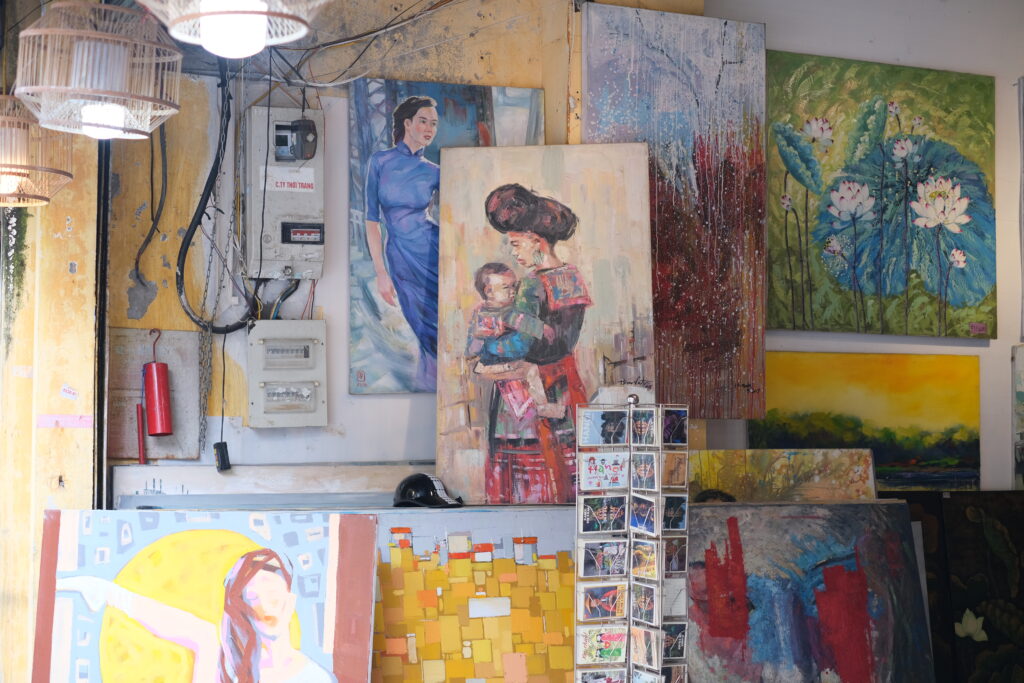
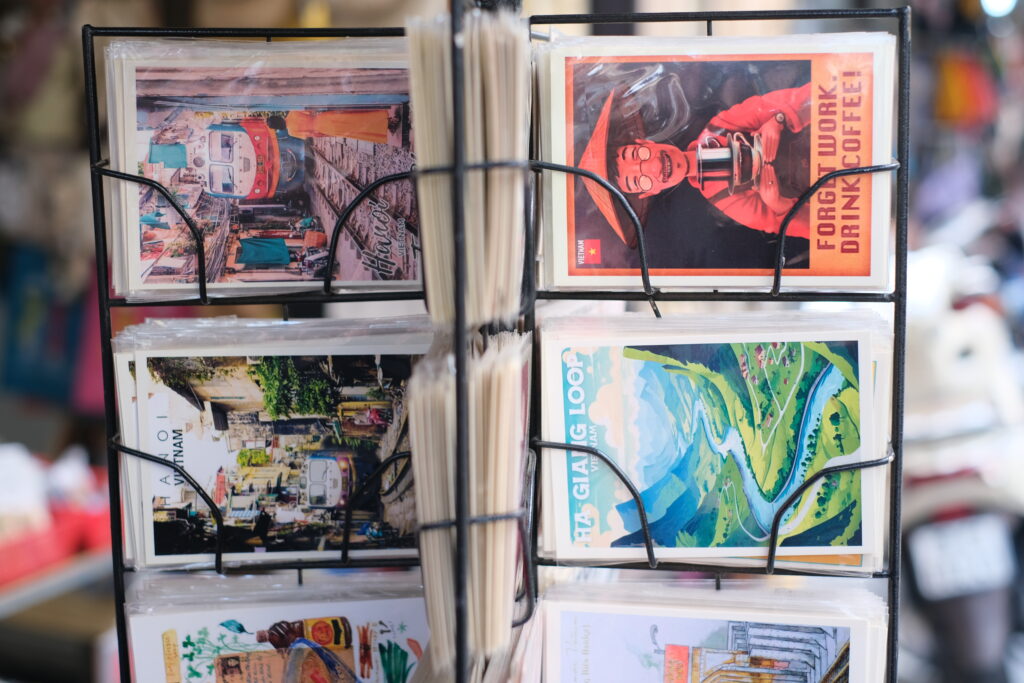
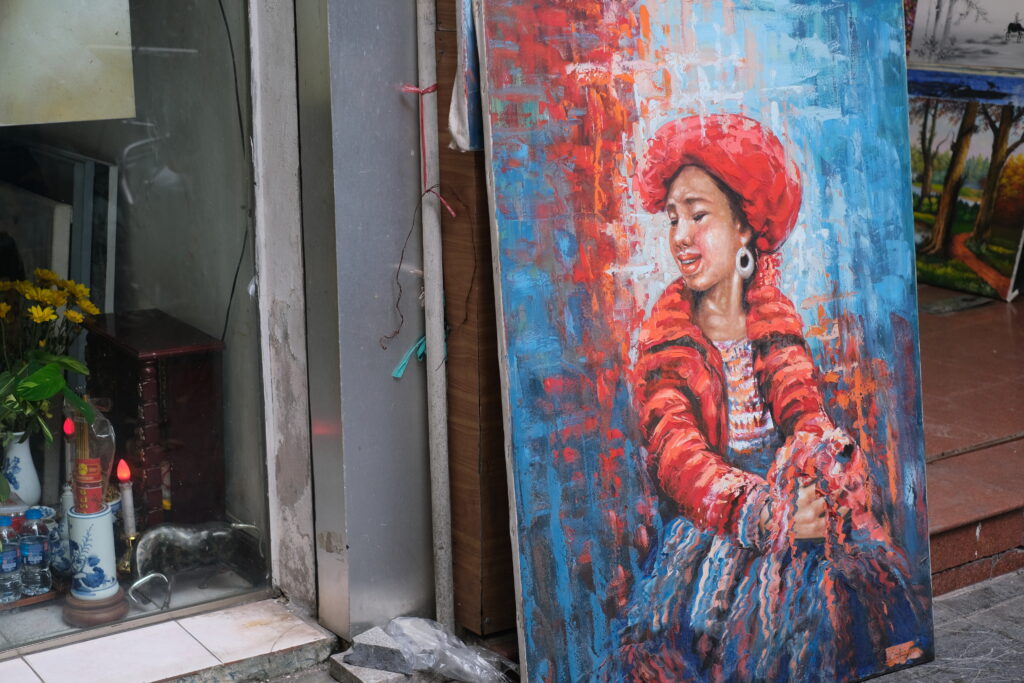
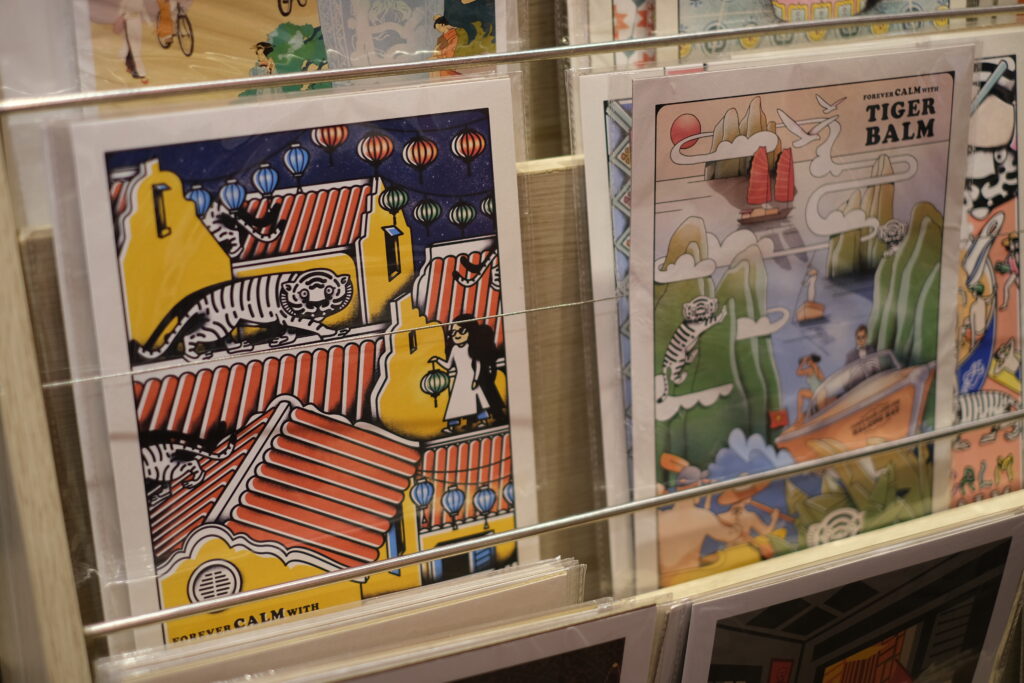
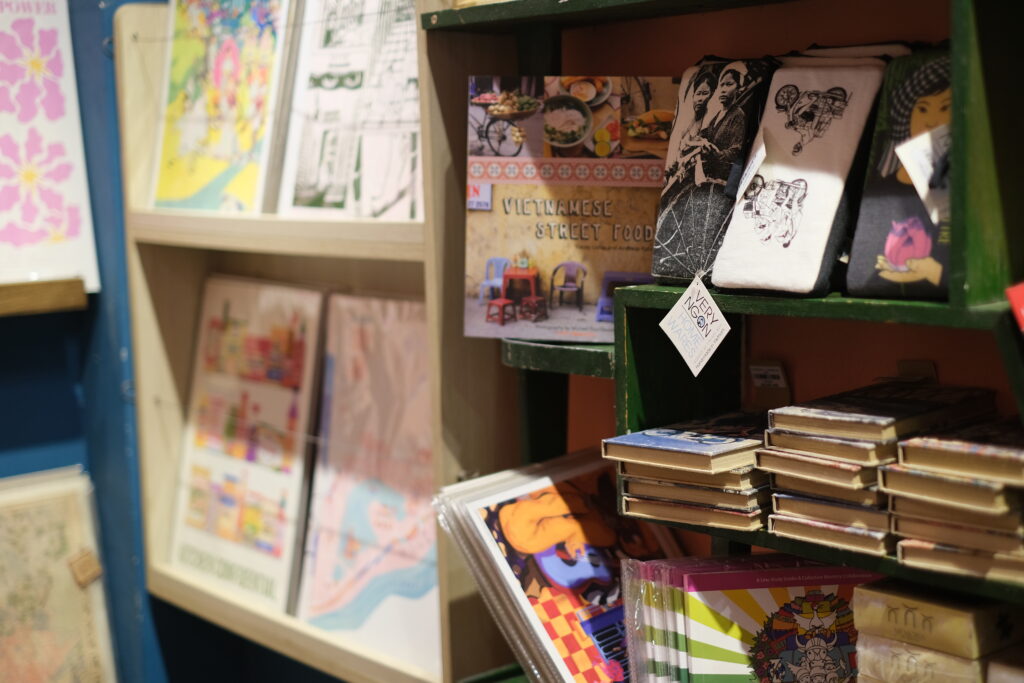
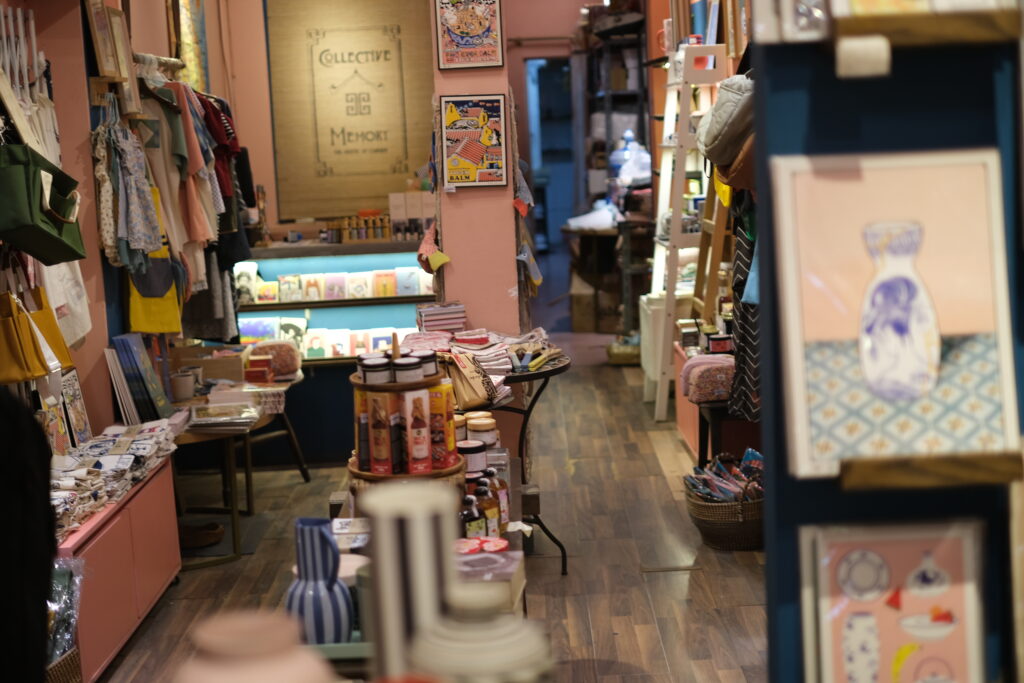
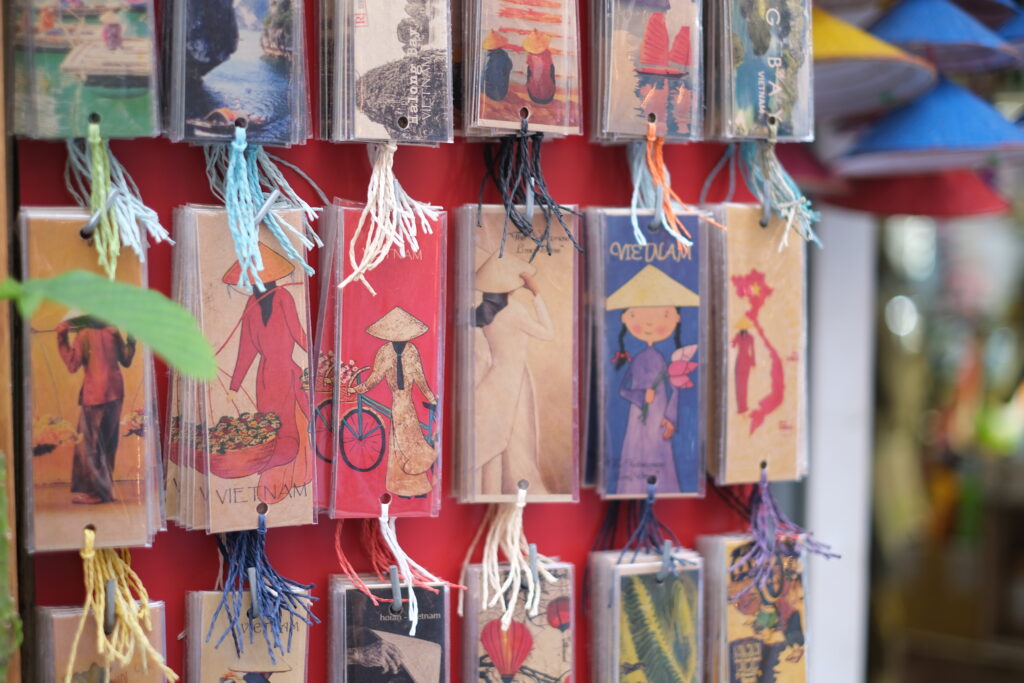
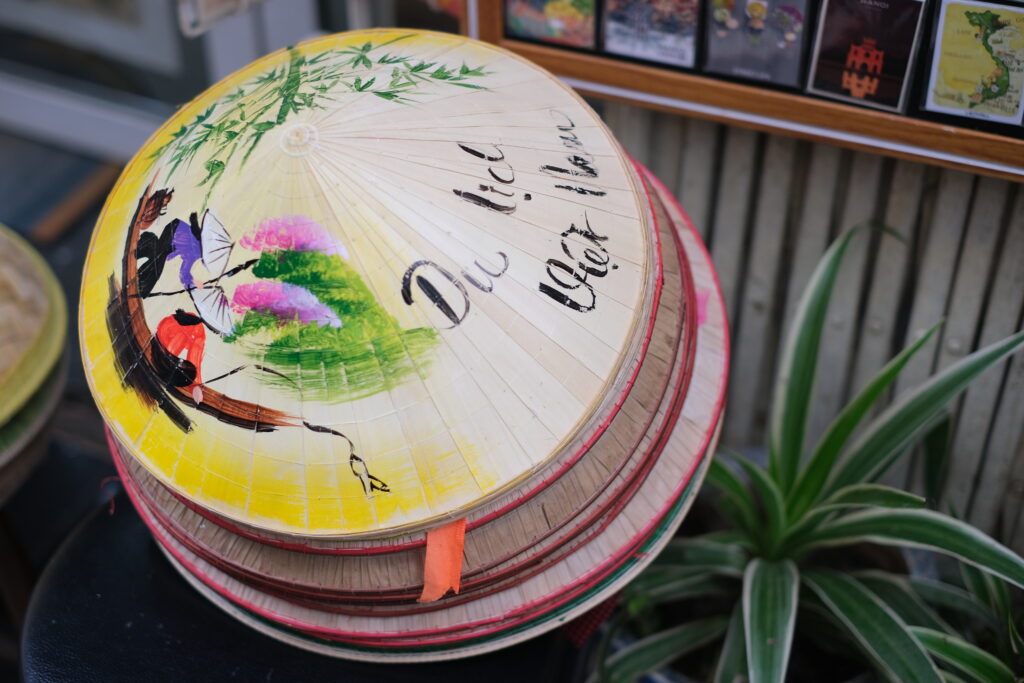
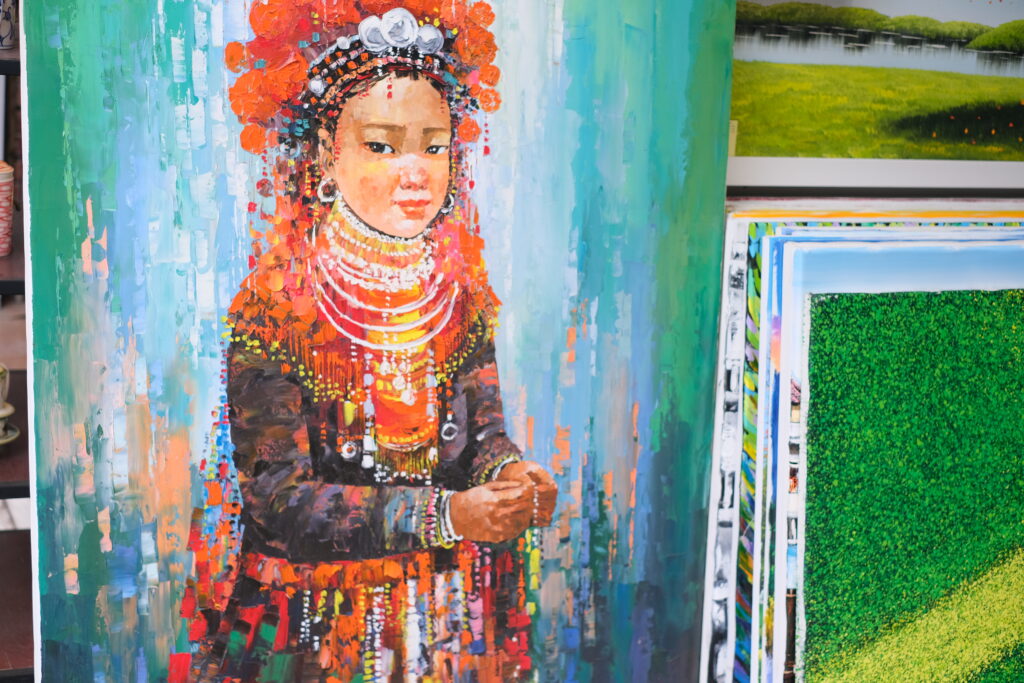
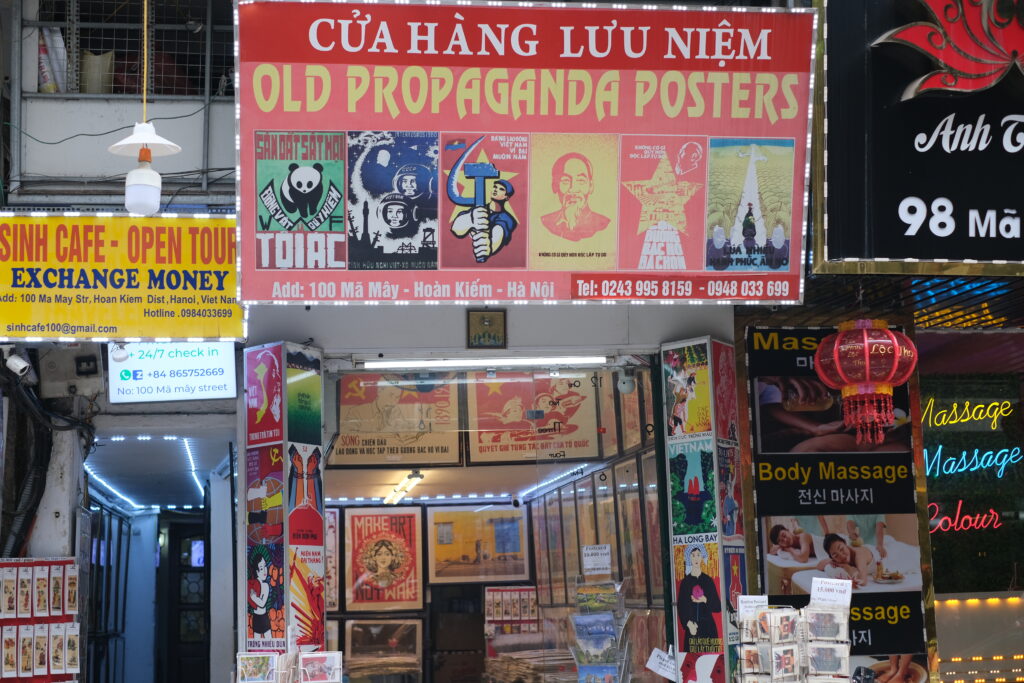
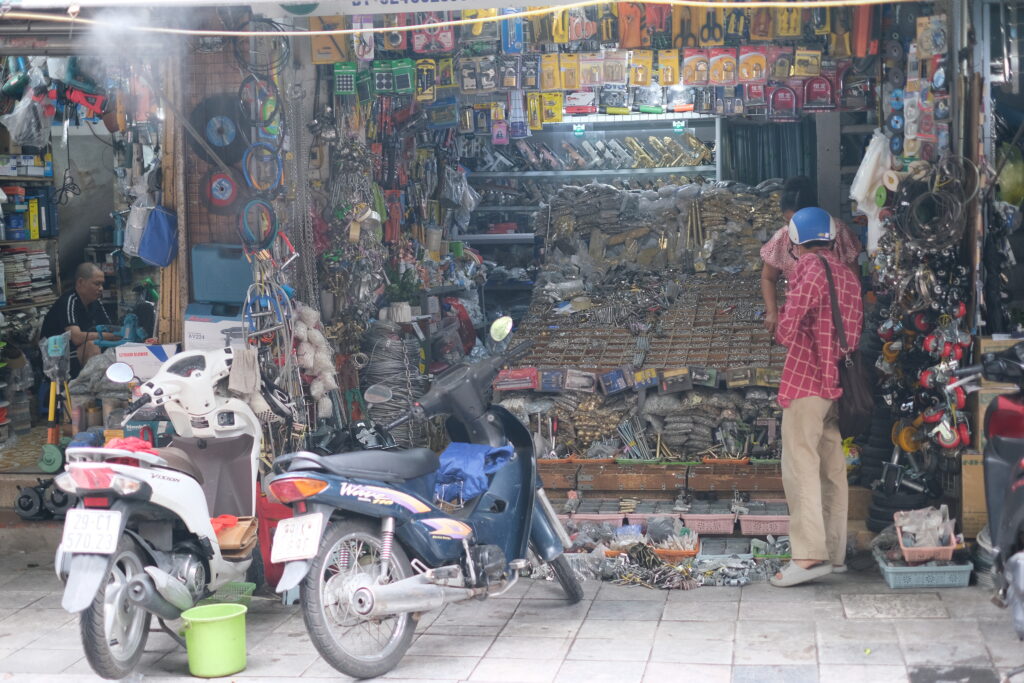
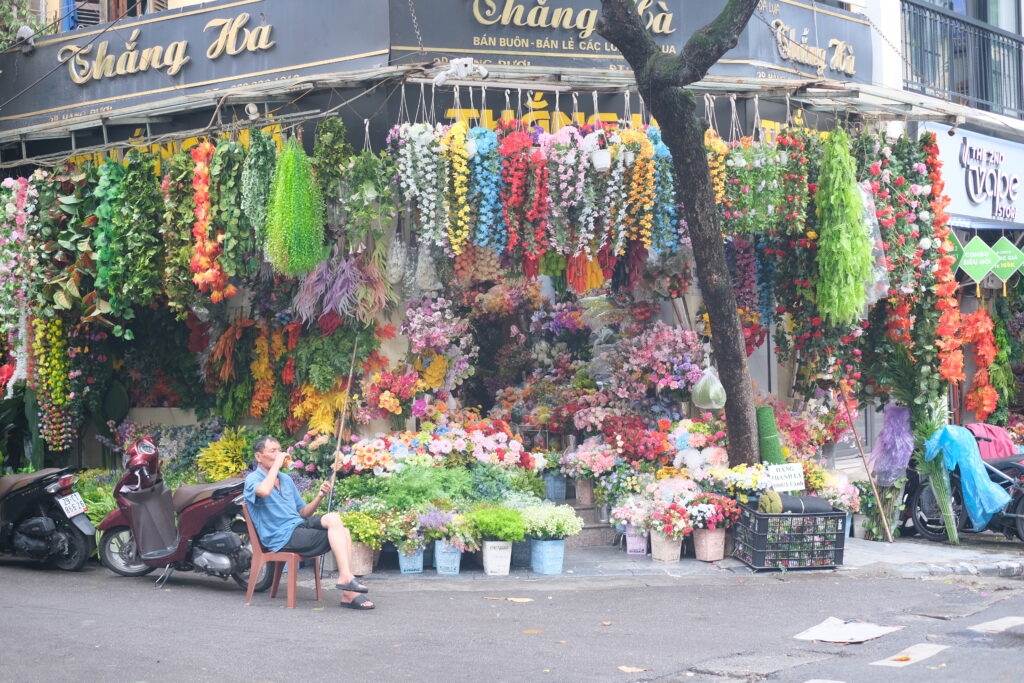
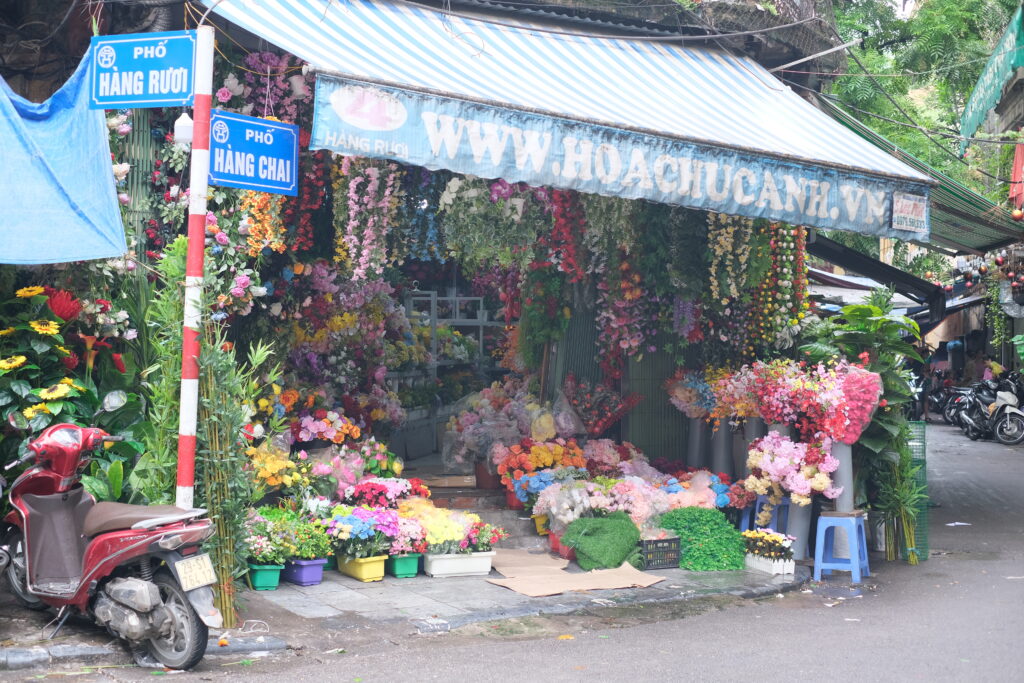
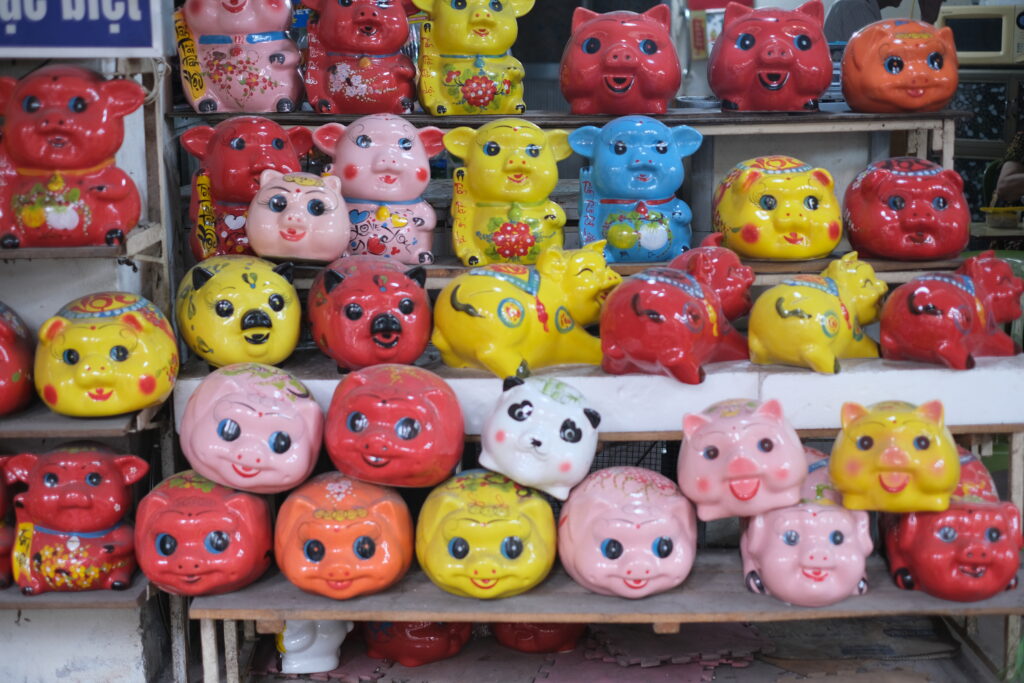
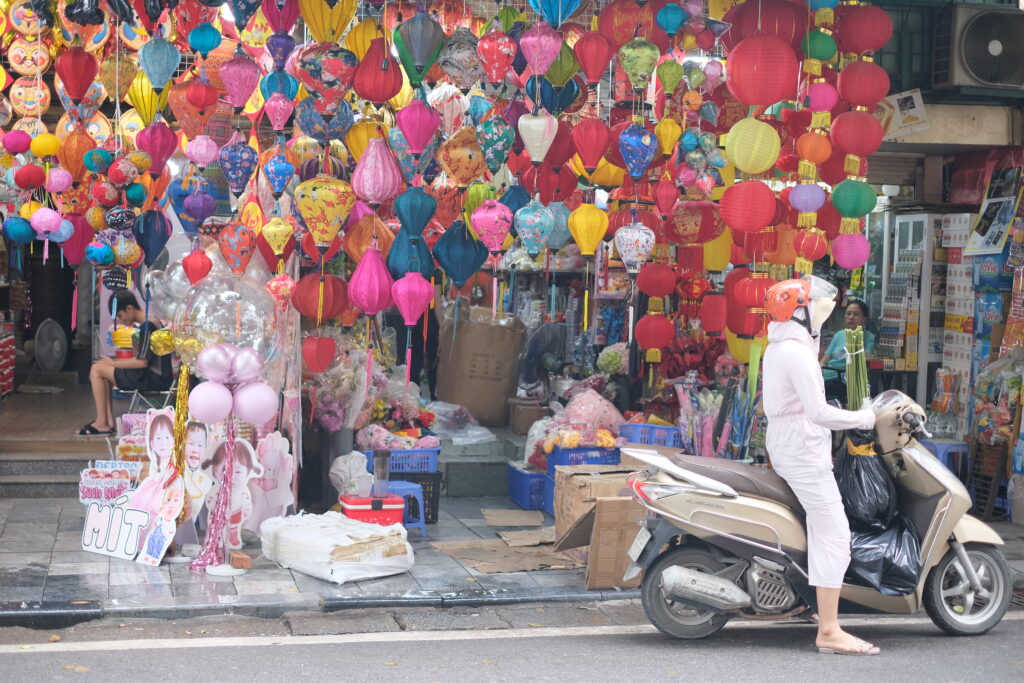
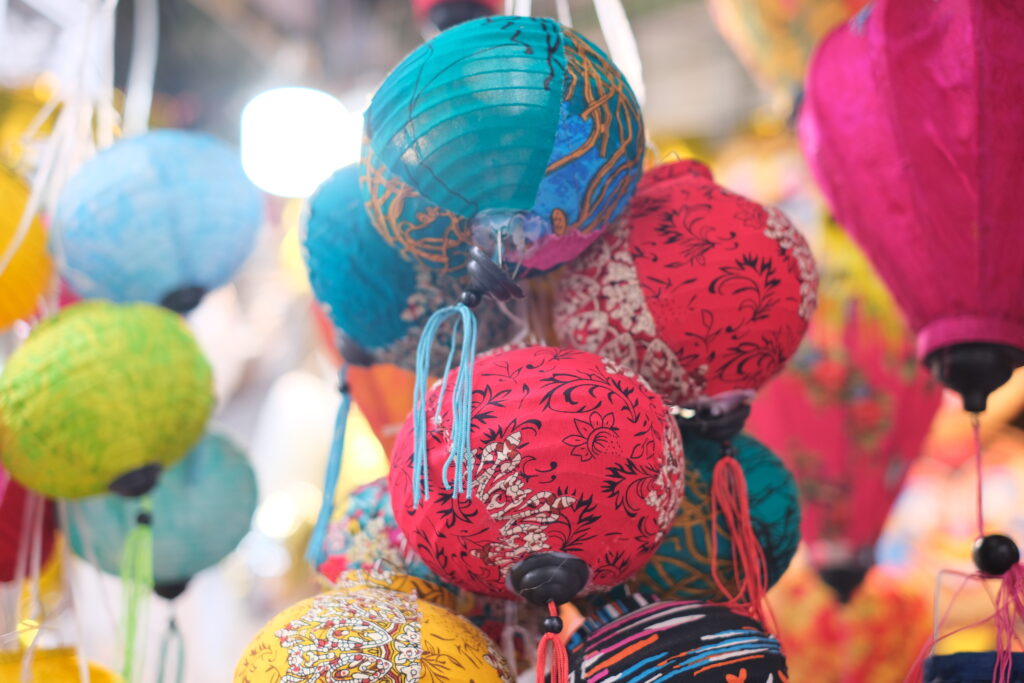
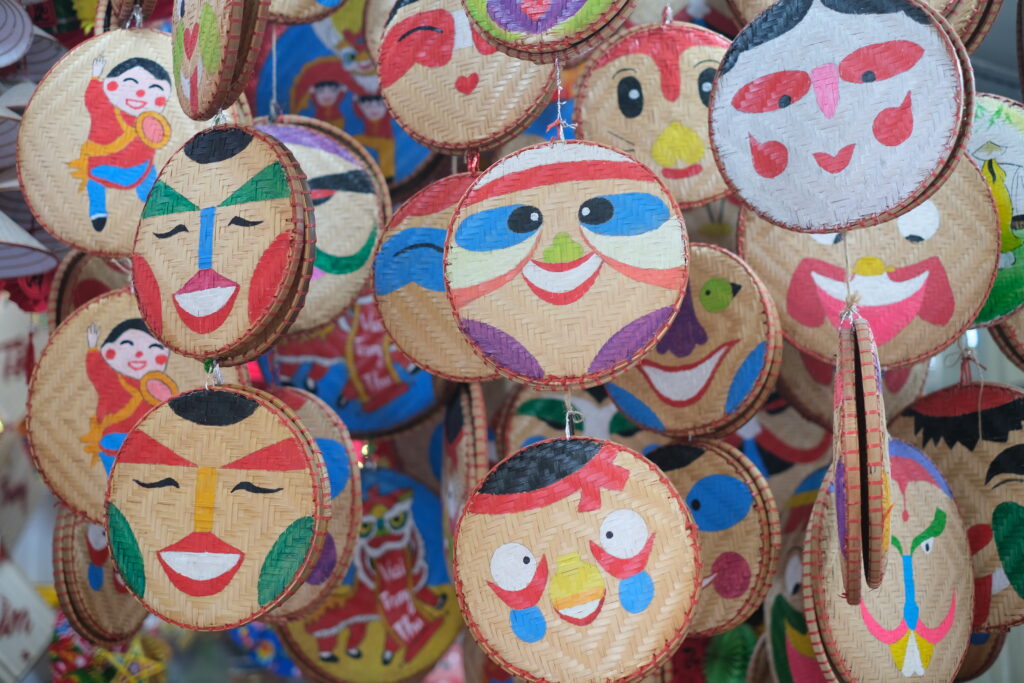
The old town is a maze of narrow streets, each historically belonging to a different craft. Today you can buy everything here: silk, fake brands, magnets or T-shirts with the Vietnamese flag. The houses here are narrow and tall, the so-called “tube houses”, because in the past a tax was paid according to the width of the facade. So the Vietnamese built houses as narrow as noodles.
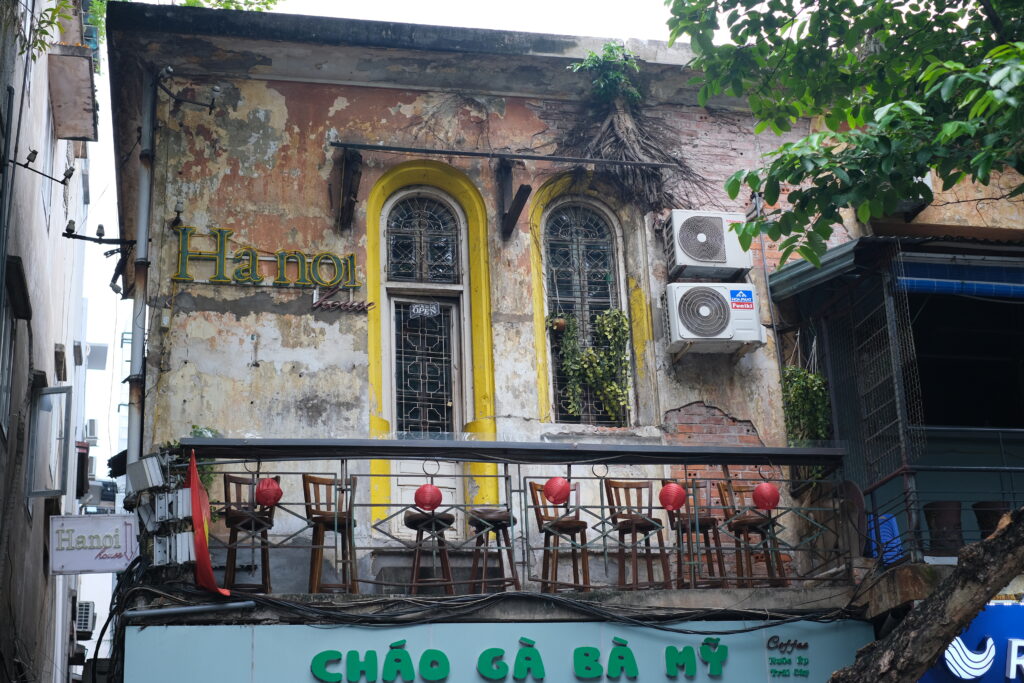
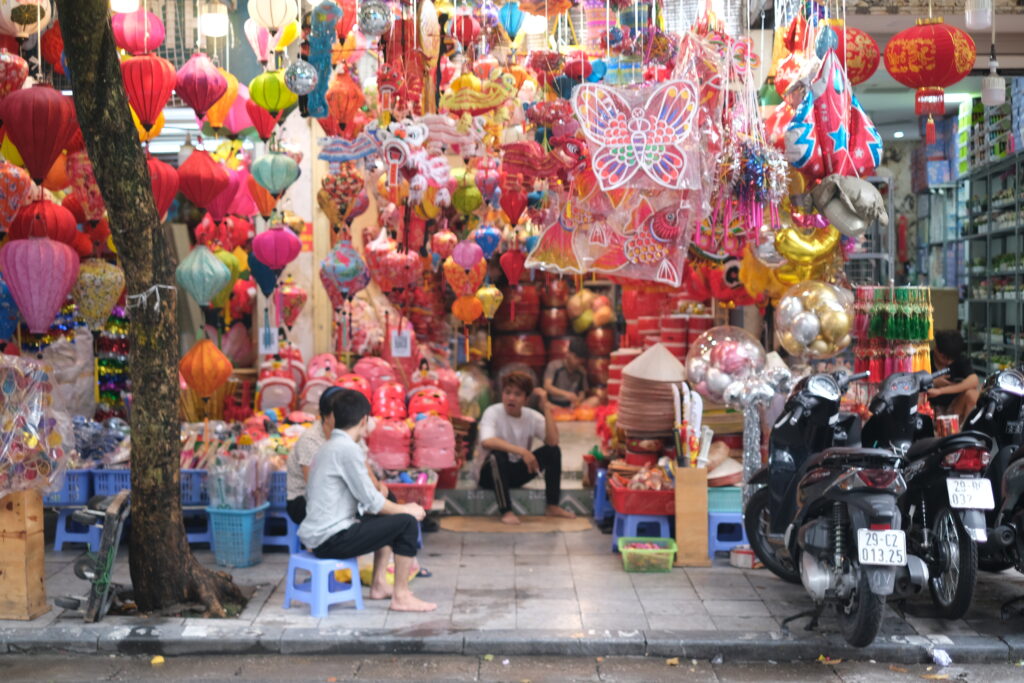
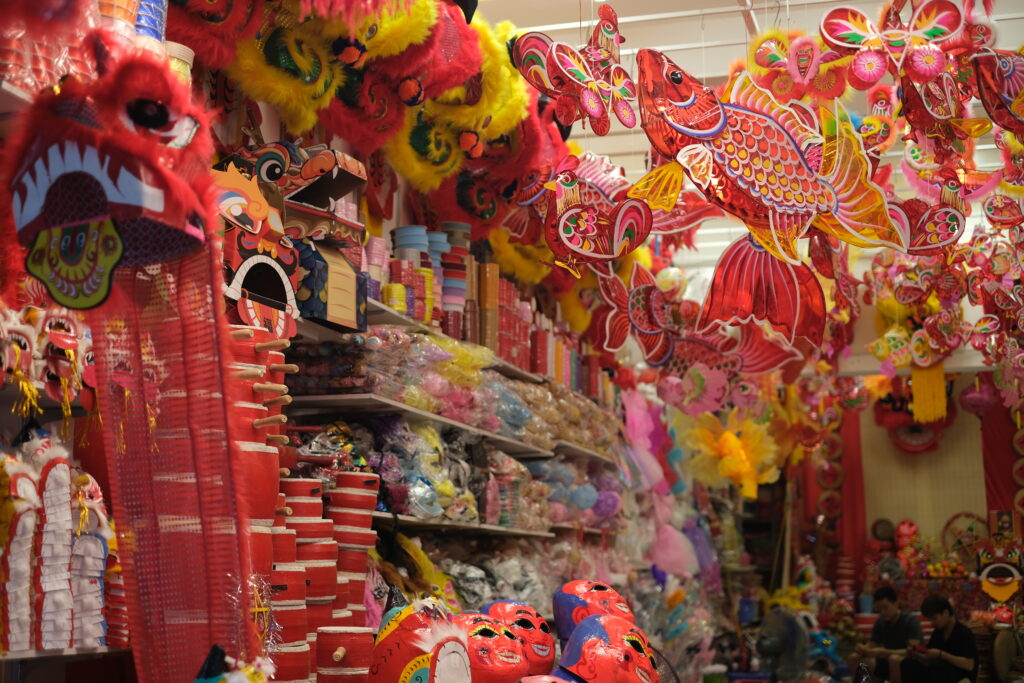
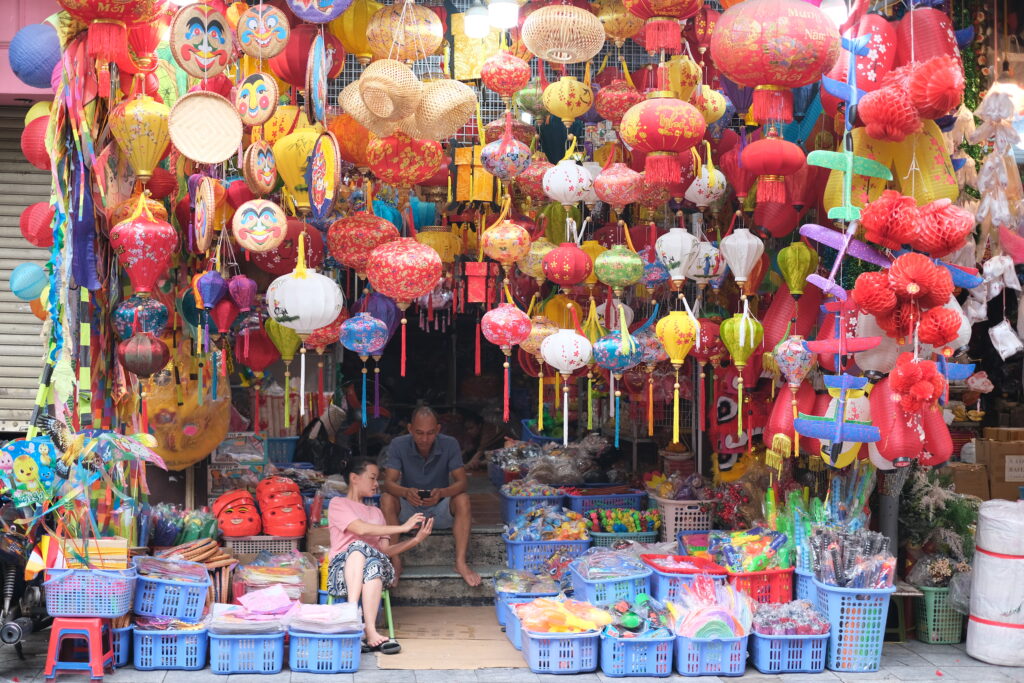
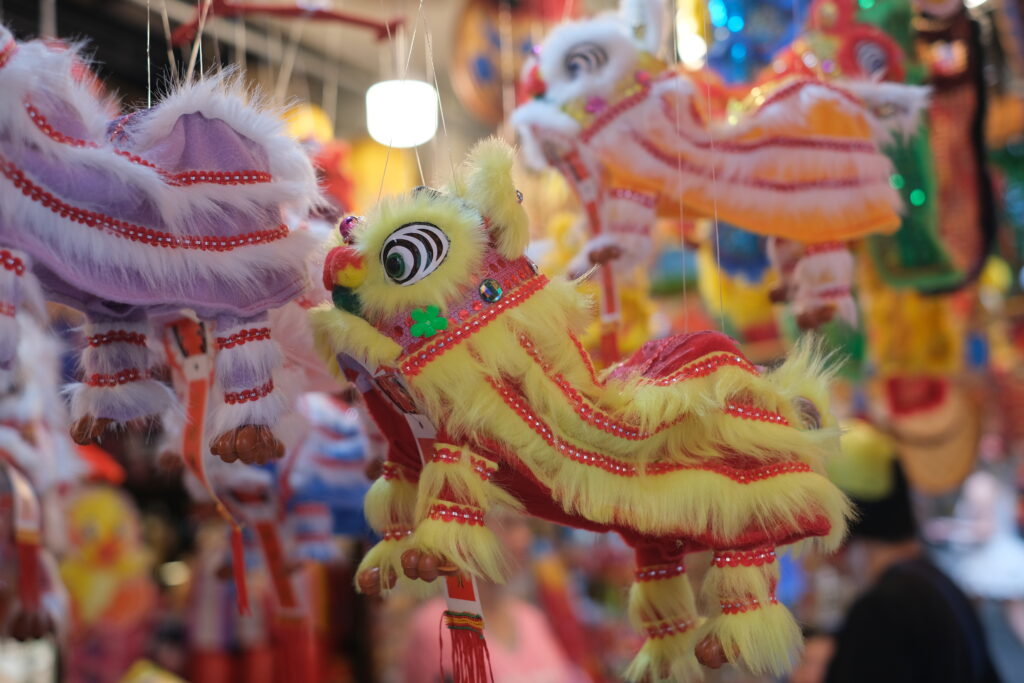
If you stay outside the Old Quarter, it’s like you’re not even in Hanoi. This historic area, also known as the “36 Streets”, is a living museum. Each street historically specialized in one type of goods. For example, on Hang Bac Street you can find silver, while on Hang Ma you can find colorful paper decorations and ritual objects.
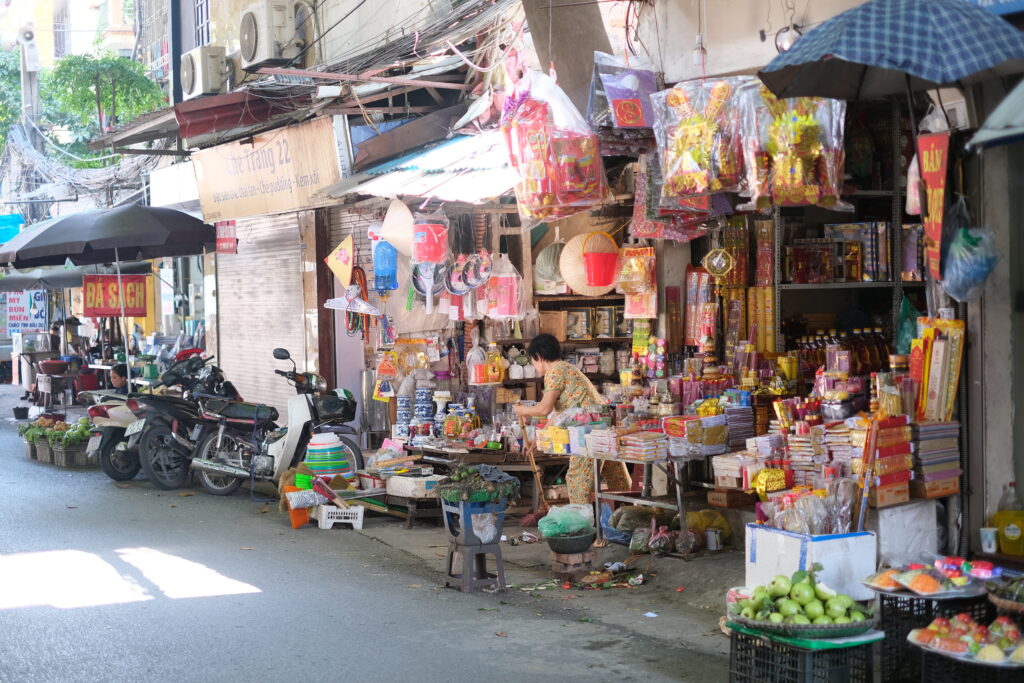
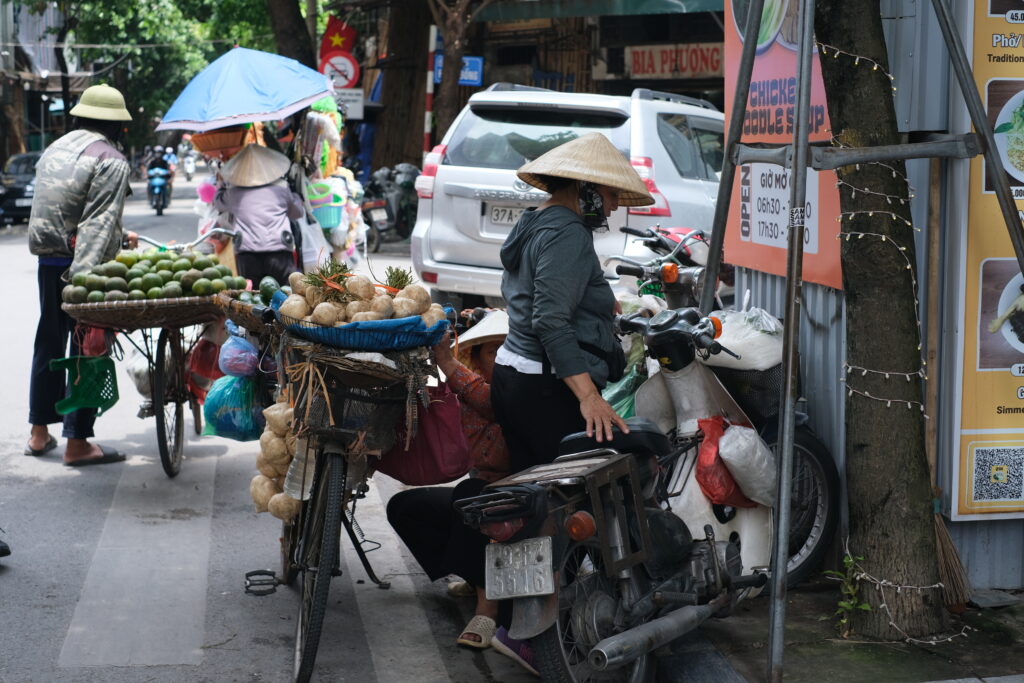
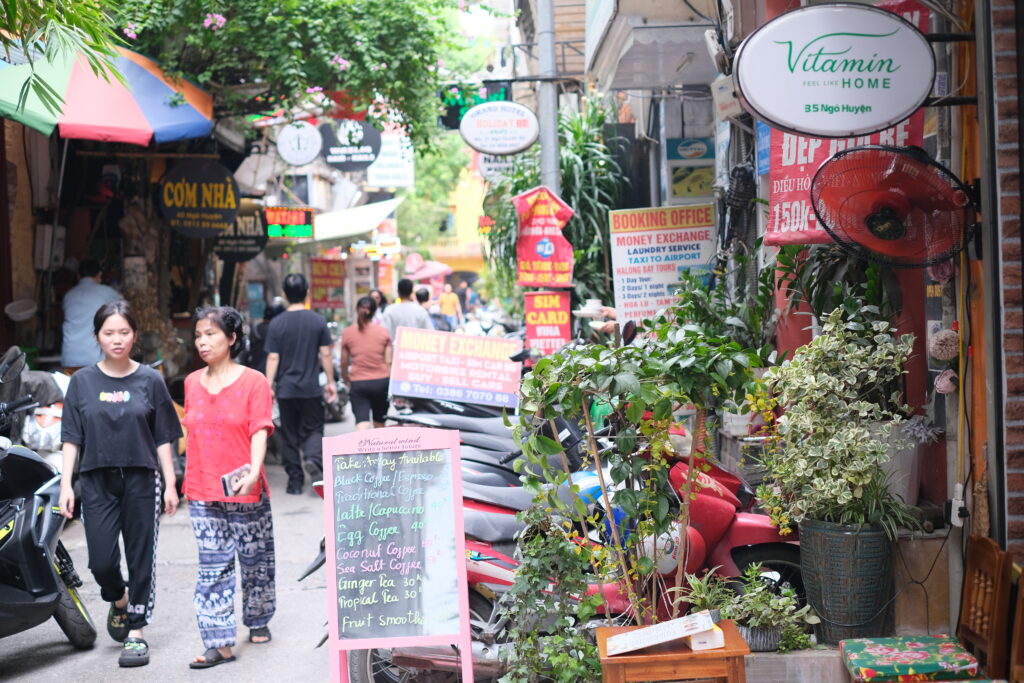
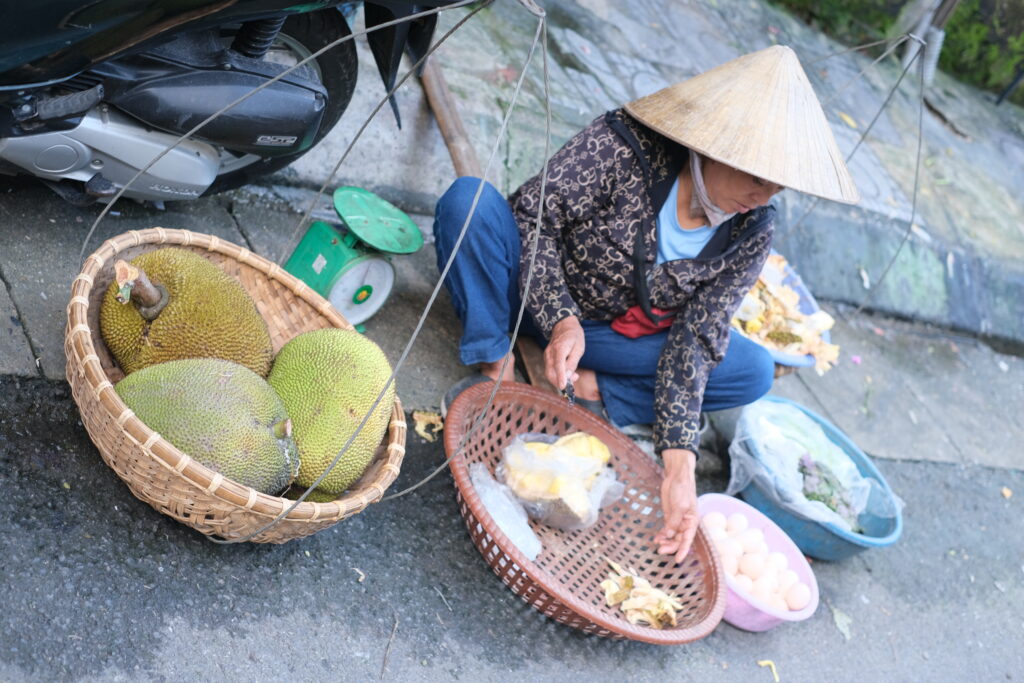
Today, tradition blends with modern tourism. The facades of the houses are narrow and high (called “tunnel houses”). This was historically a way to pay lower property taxes. Leave the map in your pocket and just get lost. Watch out for the vendors with bamboo poles over their shoulders (nòn lá) offering fresh fruit, and avoid the motorbikes that park everywhere. The sidewalk in Hanoi is not for walking, but for parking, cooking and socializing.
WHERE TO STAY?
If you’re looking for the perfect place to stay, the Old Quarter is the place to be. This historic part of the city offers a wide range of options for all types of travelers, from affordable hostels to premium five-star hotels.
WHY WILL YOU FIND THE BEST CUISINE IN ASIA IN HANOI?
Hanoi cuisine is all about balance. It’s not as spicy as Thai, nor as sweet as southern Vietnam. It’s all about fresh herbs and the art of the broth.
THE BUN CHA PHENOMENON
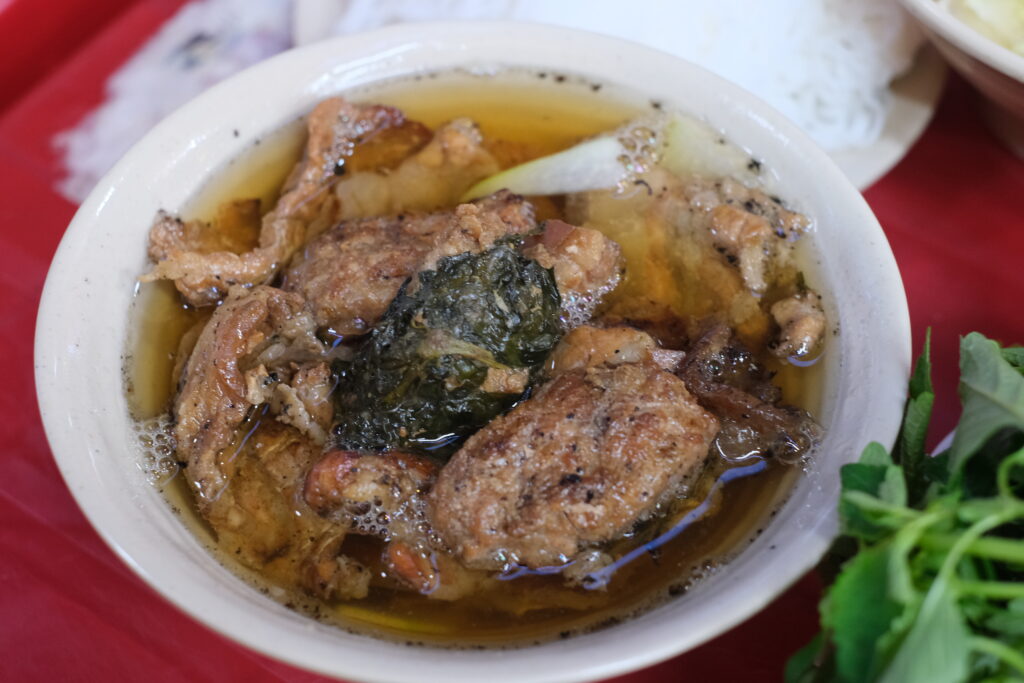
Forget Pho, Hanoi is all about Bun Cha. Grilled pork belly and meatballs in a bowl of warm fish sauce, a mound of rice noodles, and a heap of herbs (perilla, coriander, mint). The best place? The legendary Bún Chả Hương Liên, where Barack Obama ate. Although it’s now a tourist magnet, the quality remains top-notch.
Phở SOUP AS A NATIONAL RELIGION
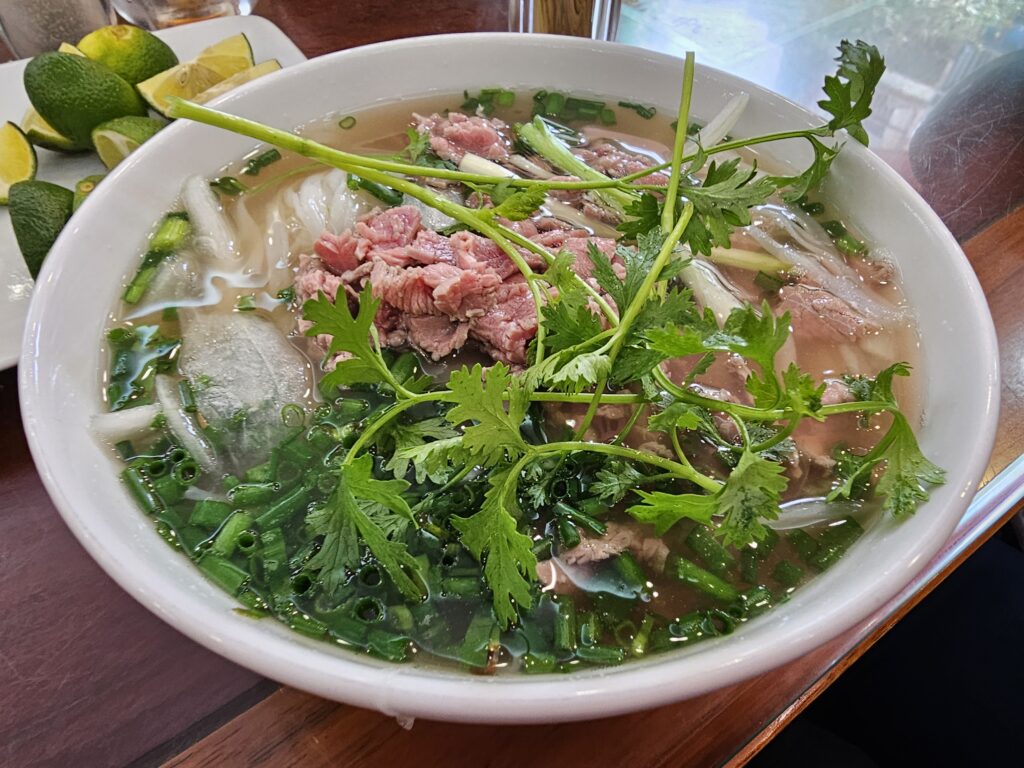
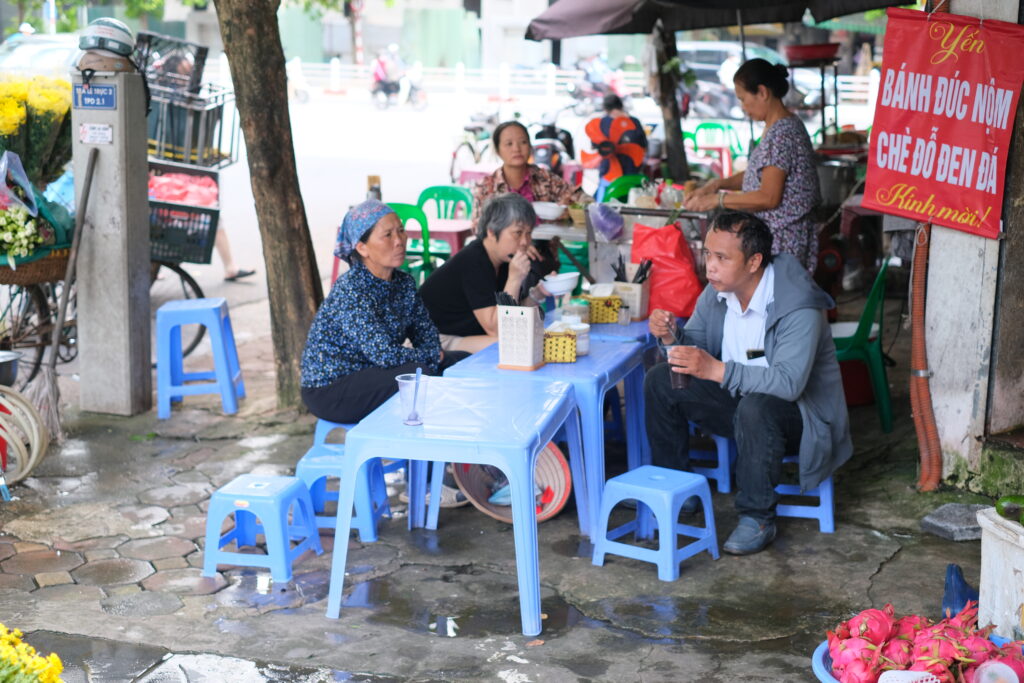
Hanoi is the birthplace of “phở” soup and it remembers it well. You can get the soup here on every corner, often on a plastic stool that is so low that your knees are at your chin. The broth is clear, fragrant and the taste is completely different from in the Czech Republic. The beef slices are slightly colored in it and the fresh herbs give it lightness. Here you sit on a small plastic chair and eat, while looking at the street. Motorbikes pass by so close that you could give the driver chopsticks. And yet it is calm. No one is in a hurry more than necessary. The Vietnamese eat quickly, but they live somehow smoothly.
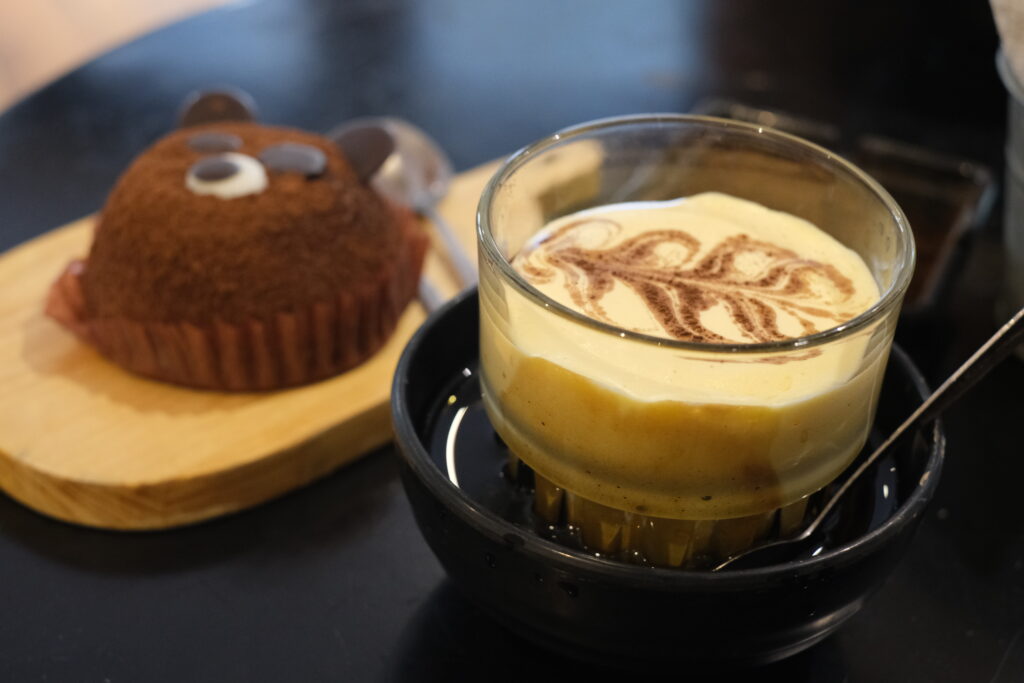
THE STORY OF EGG COFFEE (Cà Phê Trứng)
In 1946, there was a milk shortage, so the bartender at the Metropole Hotel, Mr. Giang, tried whipping egg yolks with sugar. The result is a thick, sweet cream on a strong robusta. Visit Café Giang. It looks like a cave, you sit on small chairs, but the taste is heavenly.
BIA HOI: The cheapest beer in the world
On the corner of Ta Hien and Luong Ngoc Quyen streets you’ll find “Bia Hoi Junction”. Fresh beer brewed daily and priced at a few korunas. It’s more of a social affair than a gourmet experience, but sitting on a miniature stool amidst the crowd is a Hanoian ritual.
WATER PUPPET THEATRE
A THOUSAND-YEAR-OLD TRADITION THAT COMES TO LIFE ON THE SURFACE
If there’s one cultural performance you shouldn’t miss in Hanoi, it’s the water puppet show, Múa rịch nước. This unique art form, found nowhere else in the world, is a fascinating blend of technical skill, folk humor, and deep history.
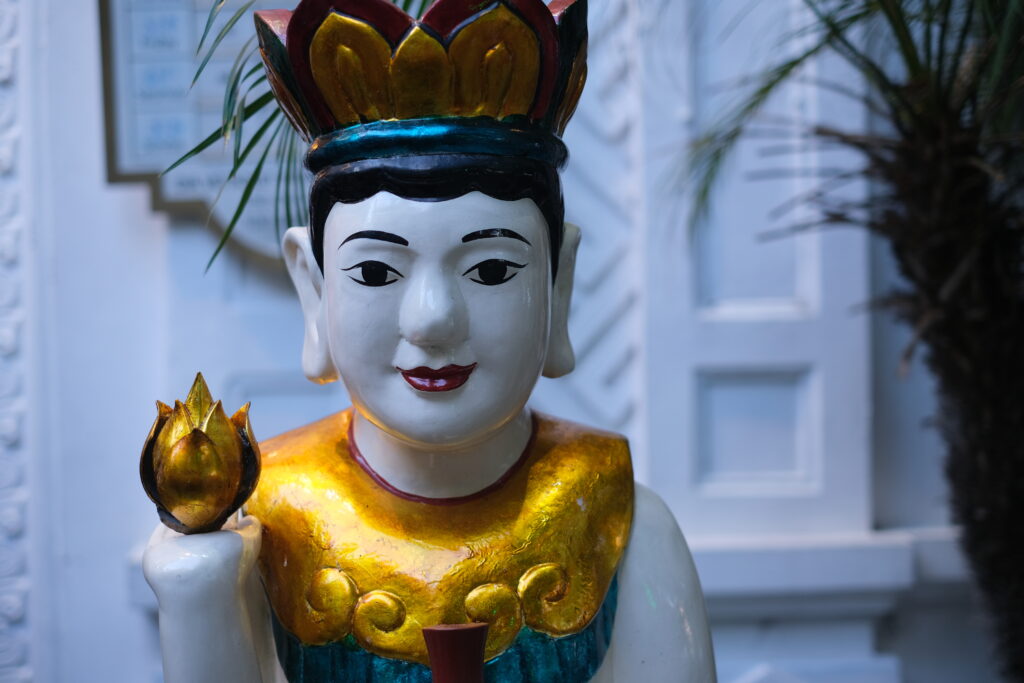
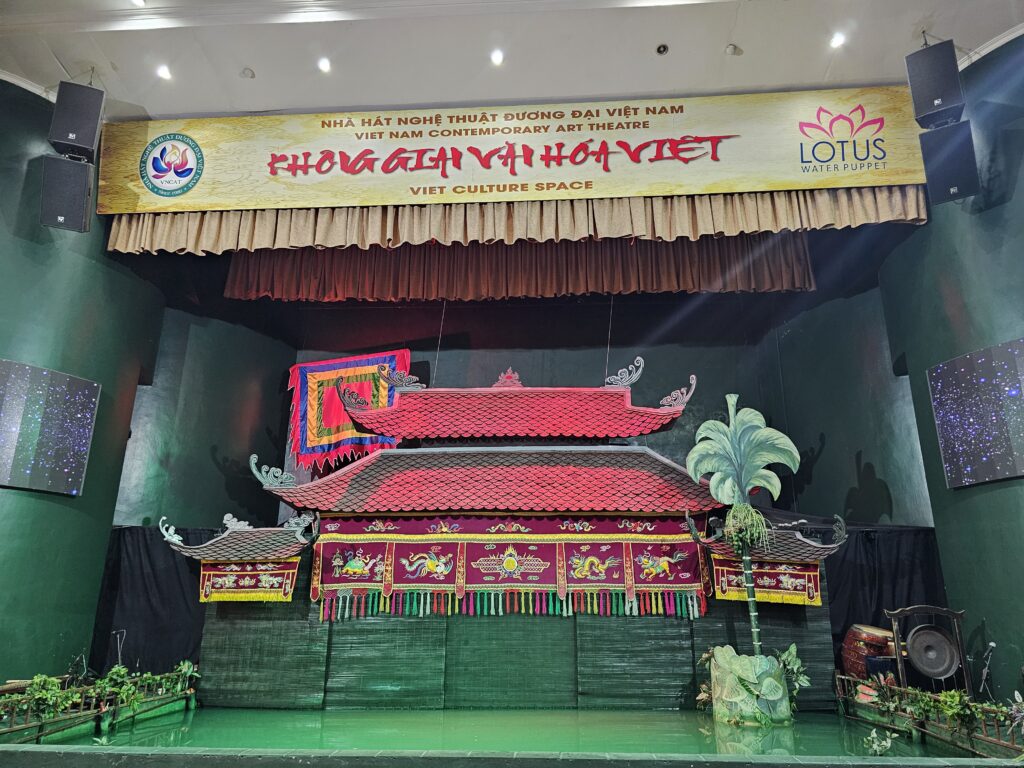
The tradition of water puppetry dates back to the 11th century, during the Ly Dynasty. It originated in the Red River Delta in northern Vietnam, where peasants spent most of their time working in the flooded fields. These fields became the first stage.
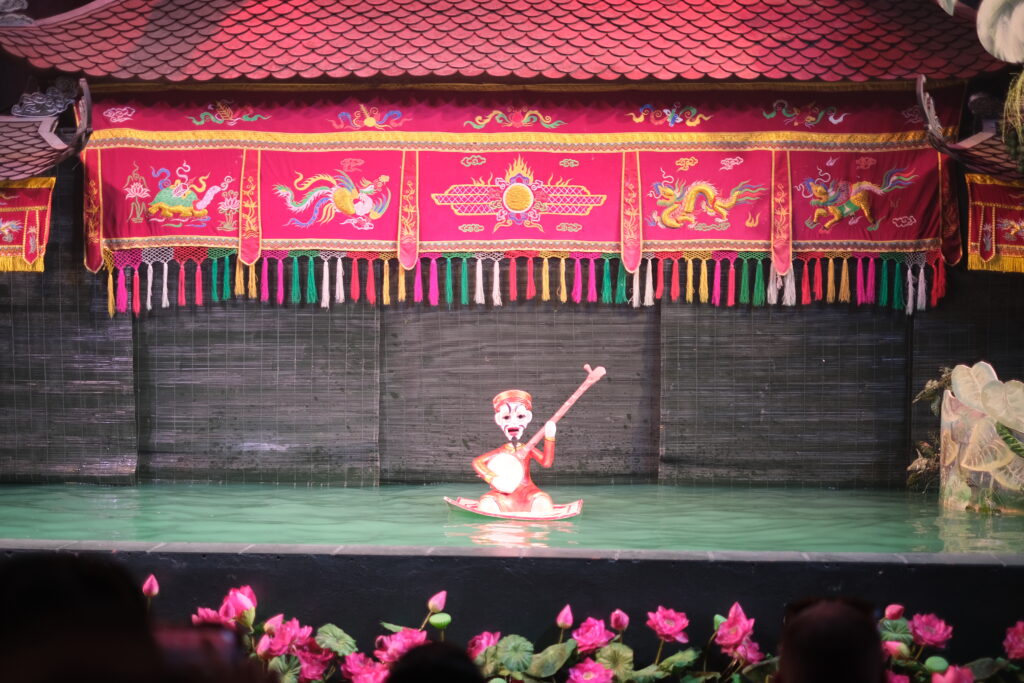
The theater was not only used for entertainment after the harvest, but was also intended to appease the spirits so that they would not cause mischief and ensure a bountiful harvest.
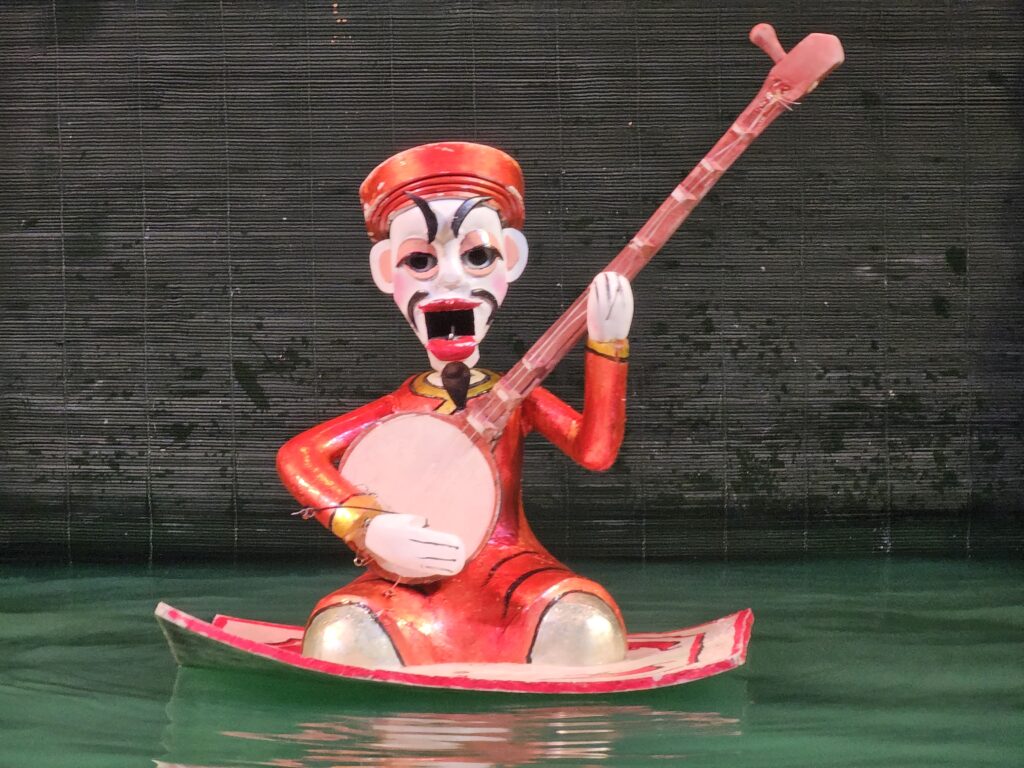
The puppeteers stand waist-deep in water, hidden behind a bamboo screen. Using long bamboo poles and a system of strings below the surface, they control the puppets so skillfully that the characters appear to be actually dancing or swimming on the surface.
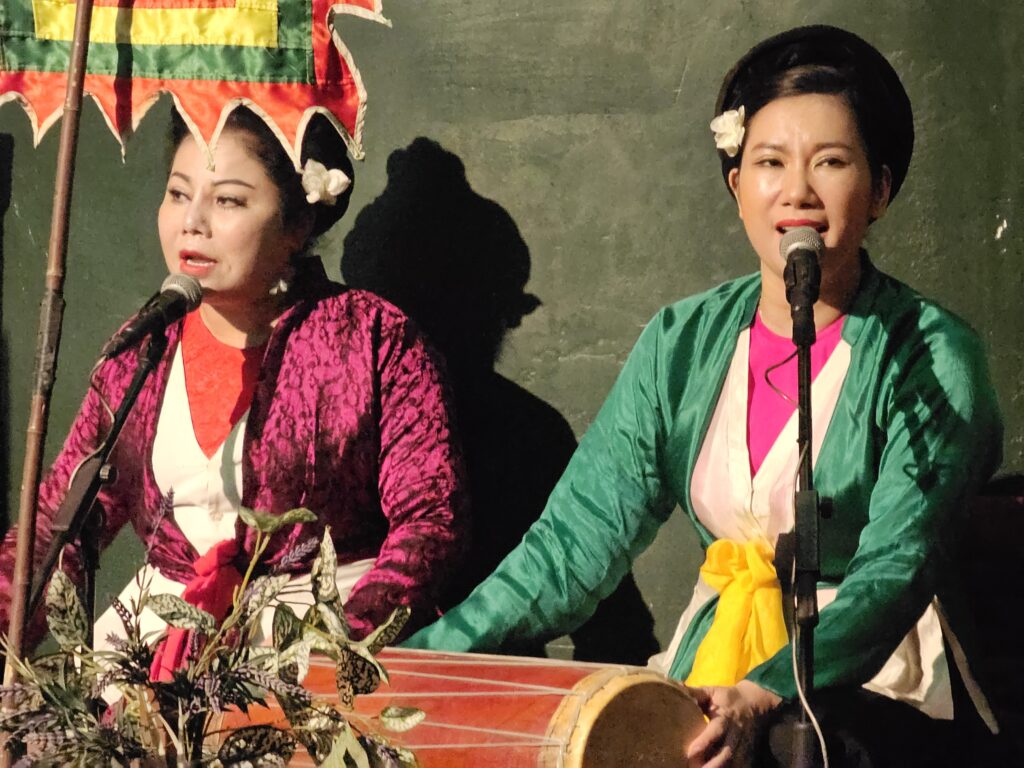
What to expect during the performance? The performance usually lasts around 50 minutes and is accompanied by a live orchestra playing traditional instruments such as drums, gongs and flutes. Although the story is told in Vietnamese, the visuals make the stories easy to understand.
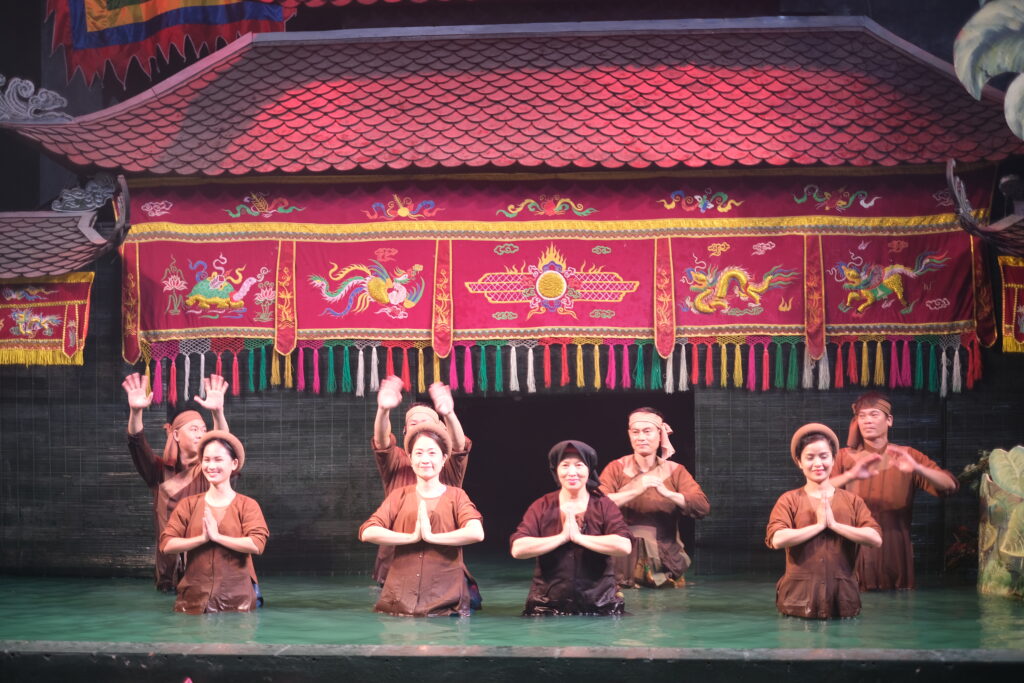
The main character and narrator is an often smiling, half-naked guy named Chú Tễu, who likes to make fun of everything around him. You will see scenes from everyday rural life, such as catching fish, planting rice or buffalo fights. There are also mythical characters, dragon and phoenix dances. And also the famous Legend of the Returned Sword, which takes place right in Hanoi at Hoan Kiem Lake.
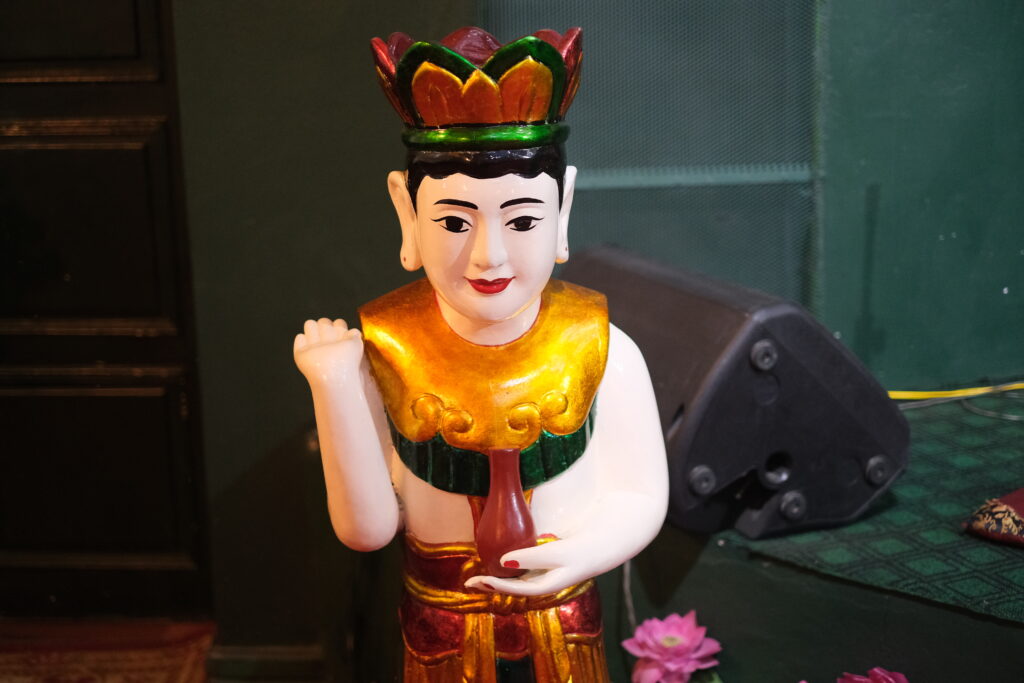
WHERE TO SEE A SHOW IN HANOI?
There are two main theaters in the city center, both right on Hoan Kiem Lake:
Thang Long Water Puppet Theater: The most famous and most visited theater, which plays several performances daily.
MAP:
Lotus (Bong Sen) Water Puppet: A smaller but equally high-quality alternative on the opposite bank of the lake.
MAP:
PRACTICAL TIPS
Buy tickets at least a day in advance or online. Evening slots tend to sell out quickly. If you sit right up front, expect to get a little splashed by dragons or fish.
Price: Admission is between 100,000 and 200,000 VND (approx. 100–200 CZK) depending on the quality of the seat.
TRAIN STREET: WHEN TIME STOPS
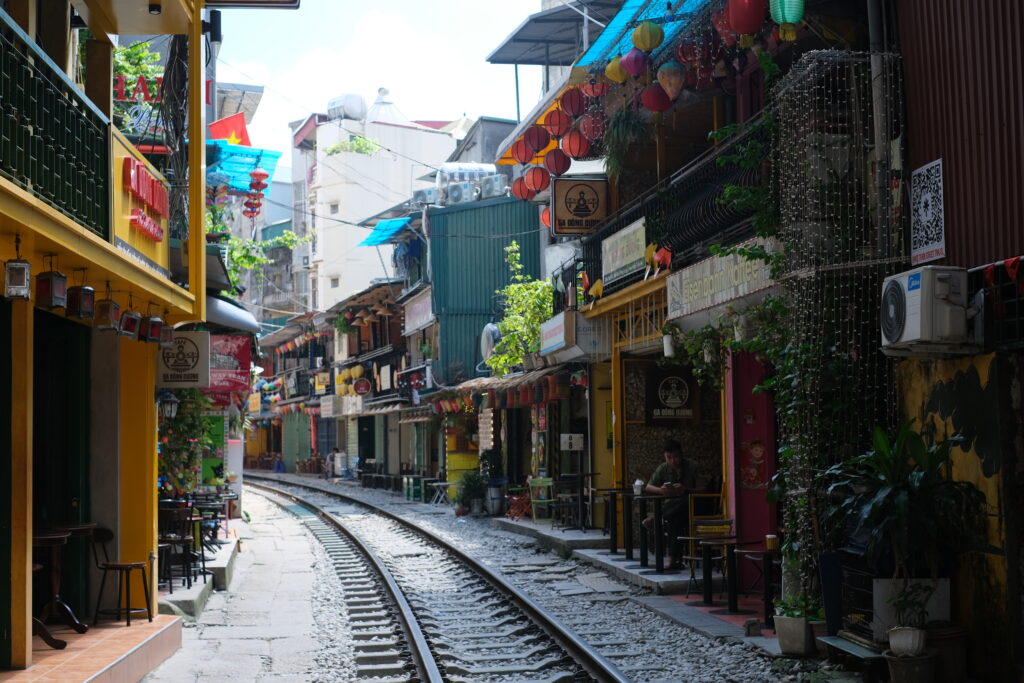
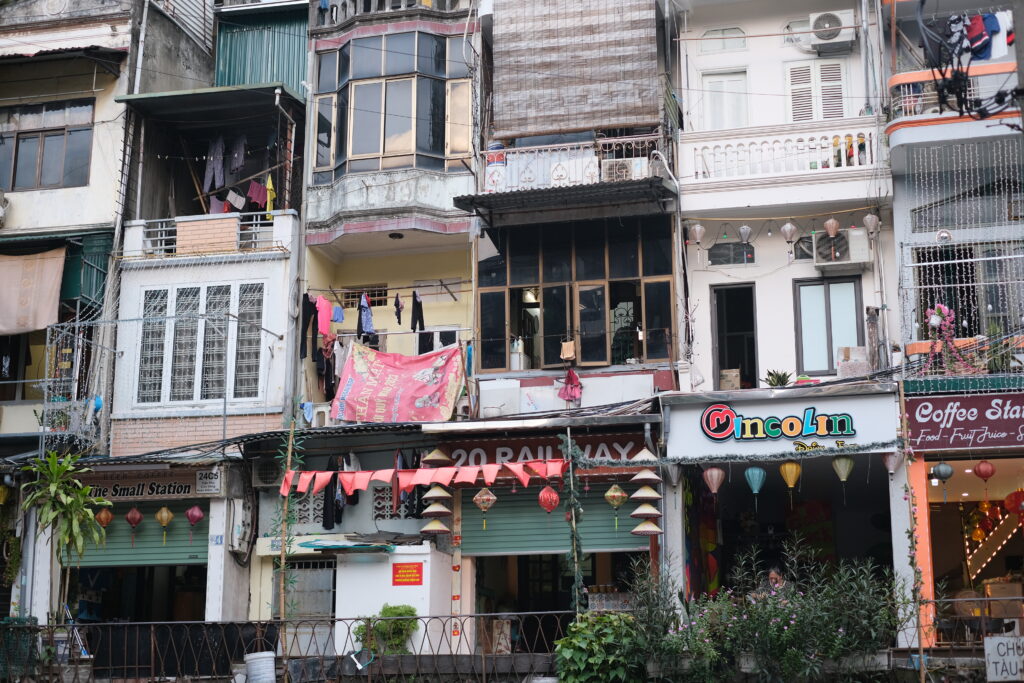
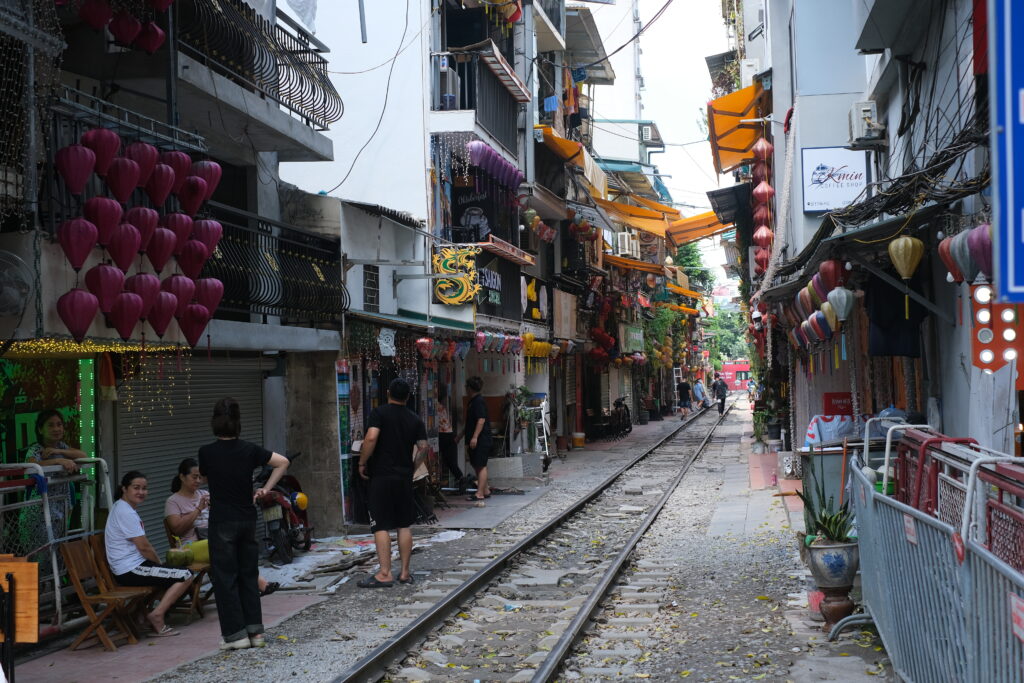
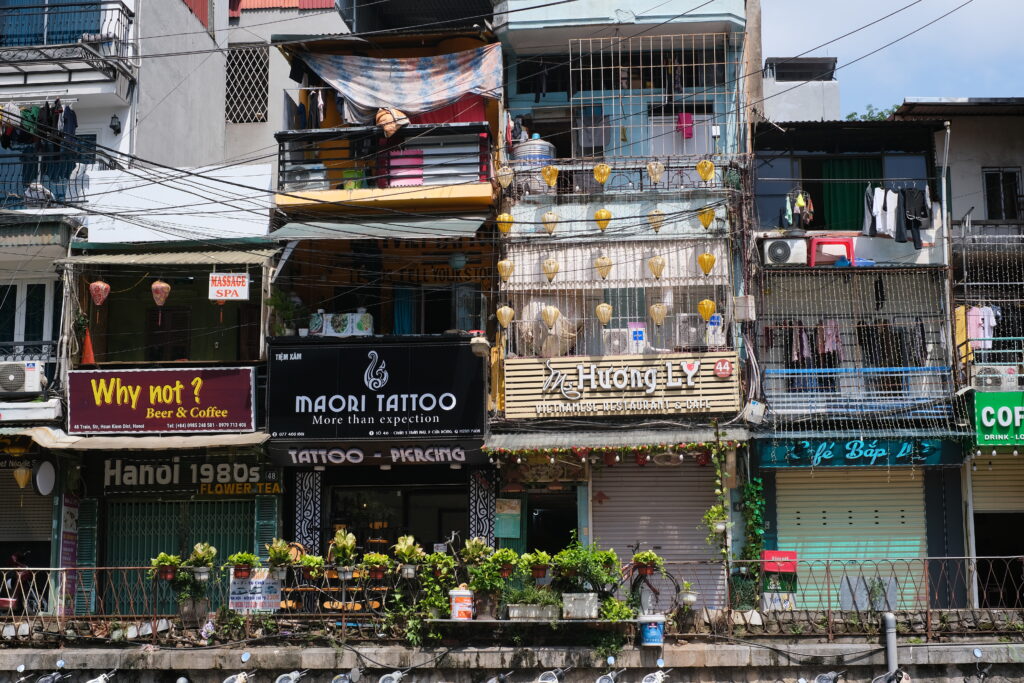
This phenomenon has become a symbol of Hanoi on Instagram. A narrow residential street, which several times a day passes by a train just a few centimeters from the front door. Despite various prohibitions and regulations, small cafes still operate here. It is a fascinating look at how people manage to adapt to an extreme environment. The important thing is to arrive in advance, order a coffee and strictly follow the instructions of the owners when the train whistles.
MARKETS IN HANOI
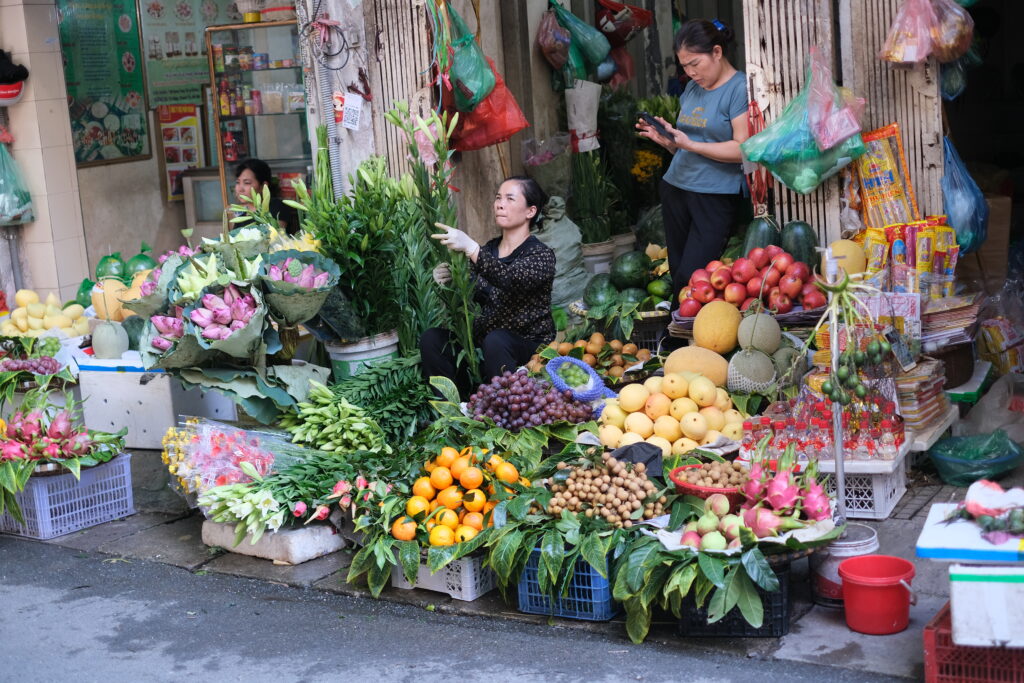
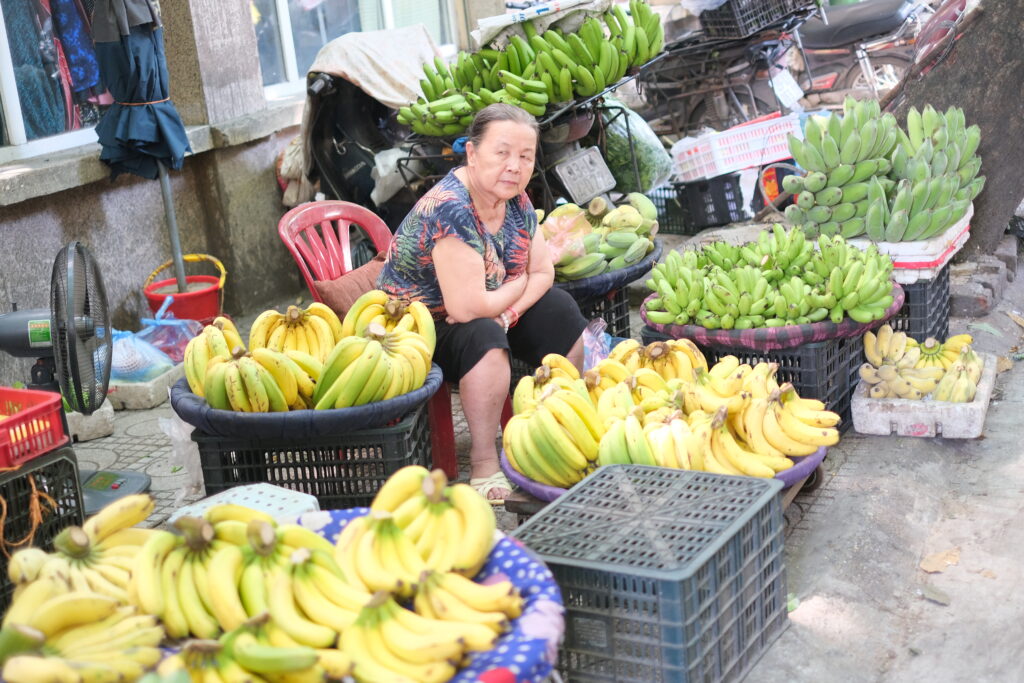
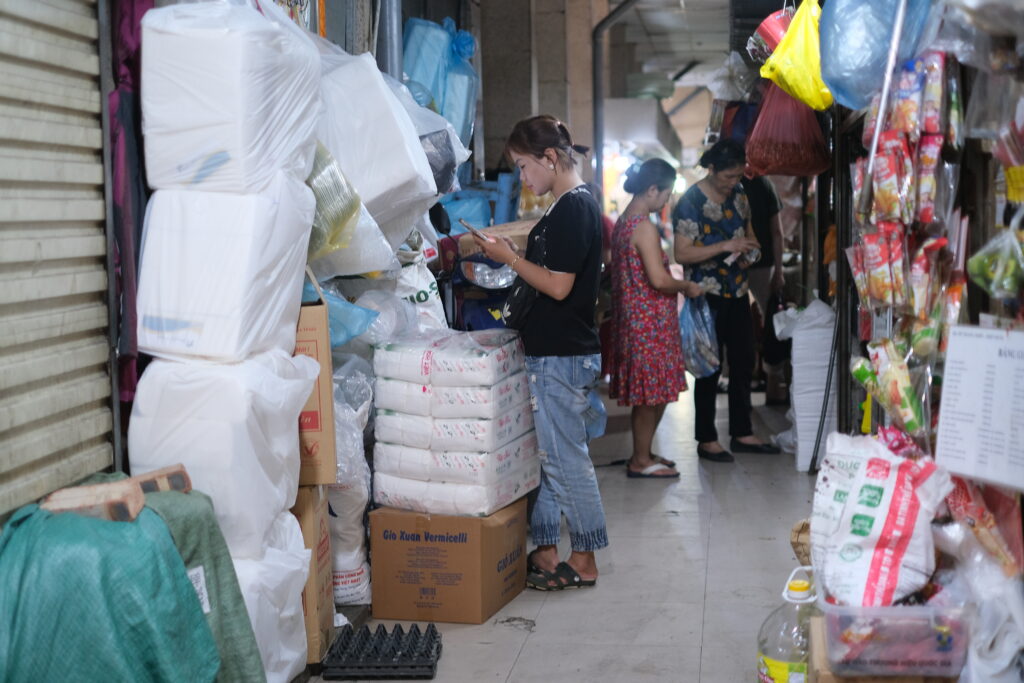
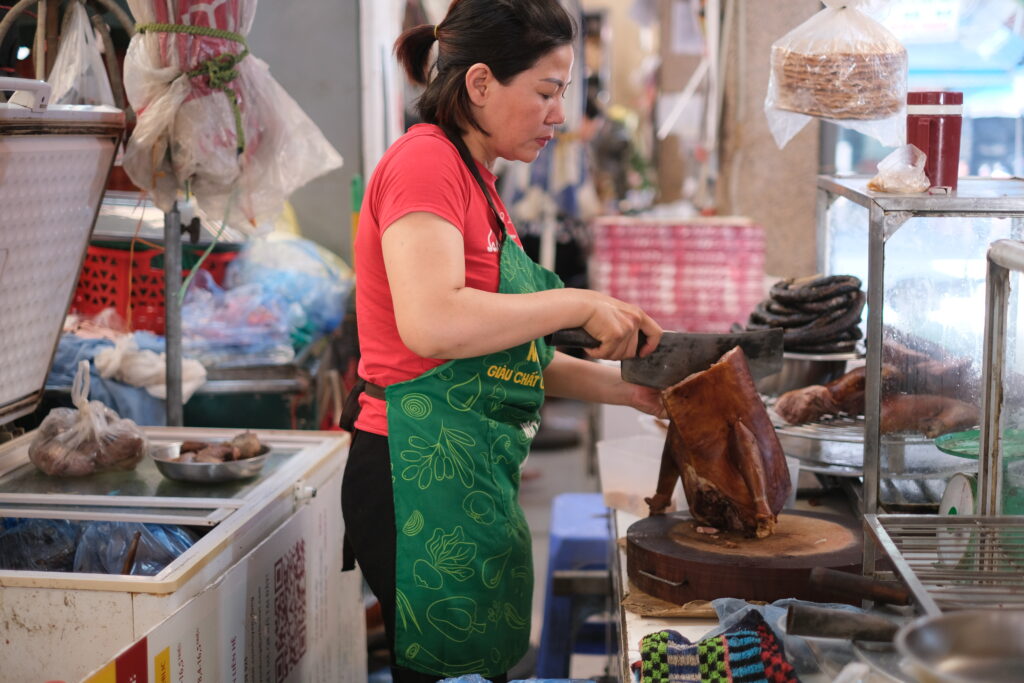
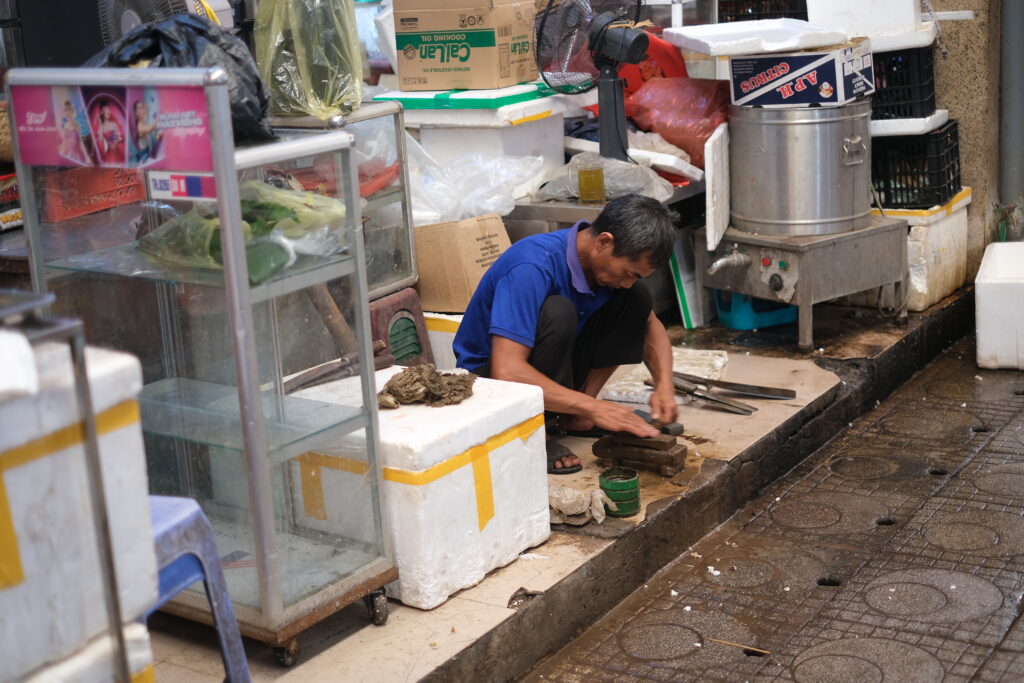
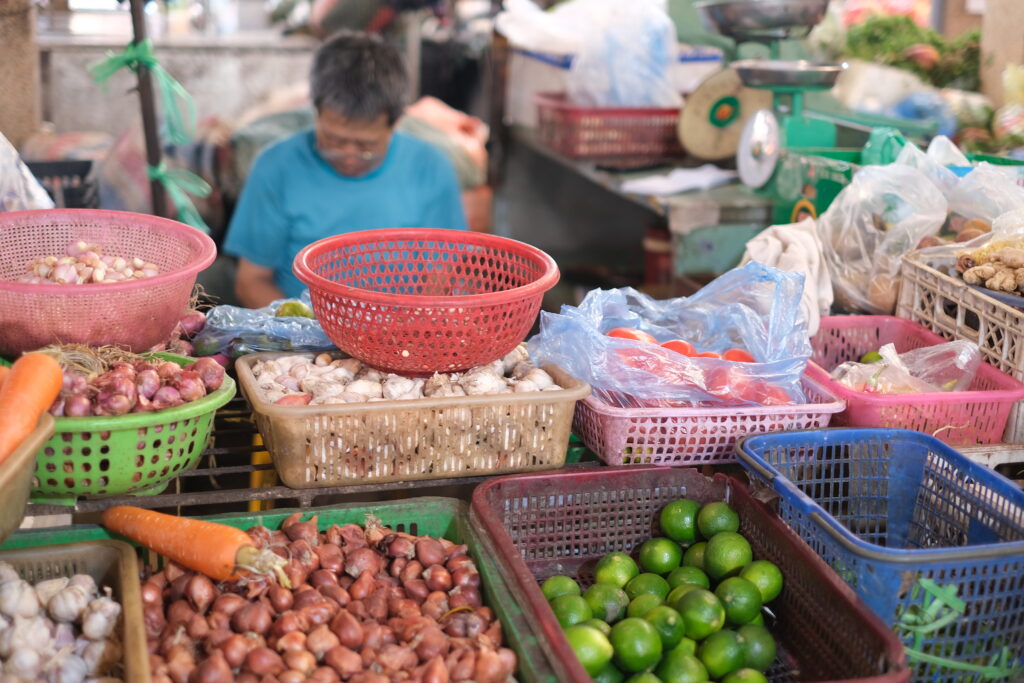
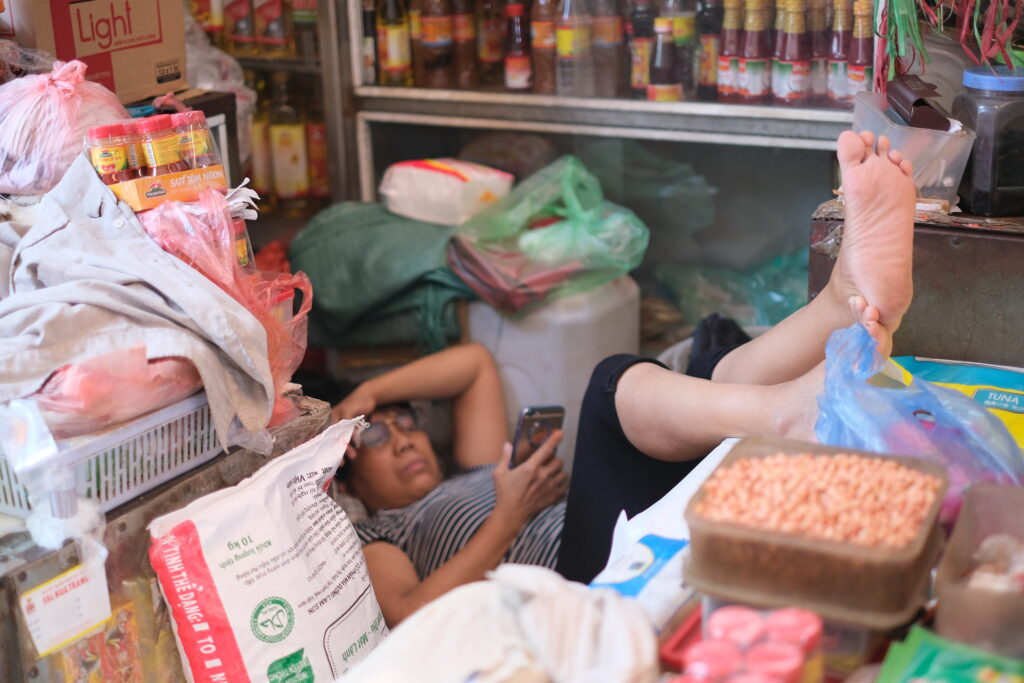
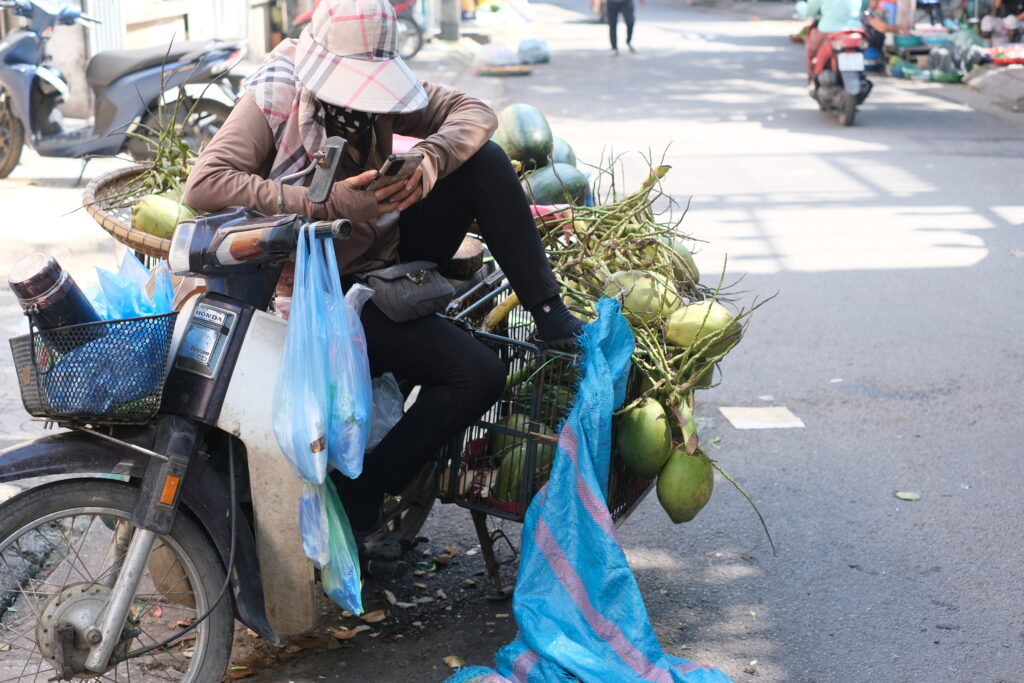
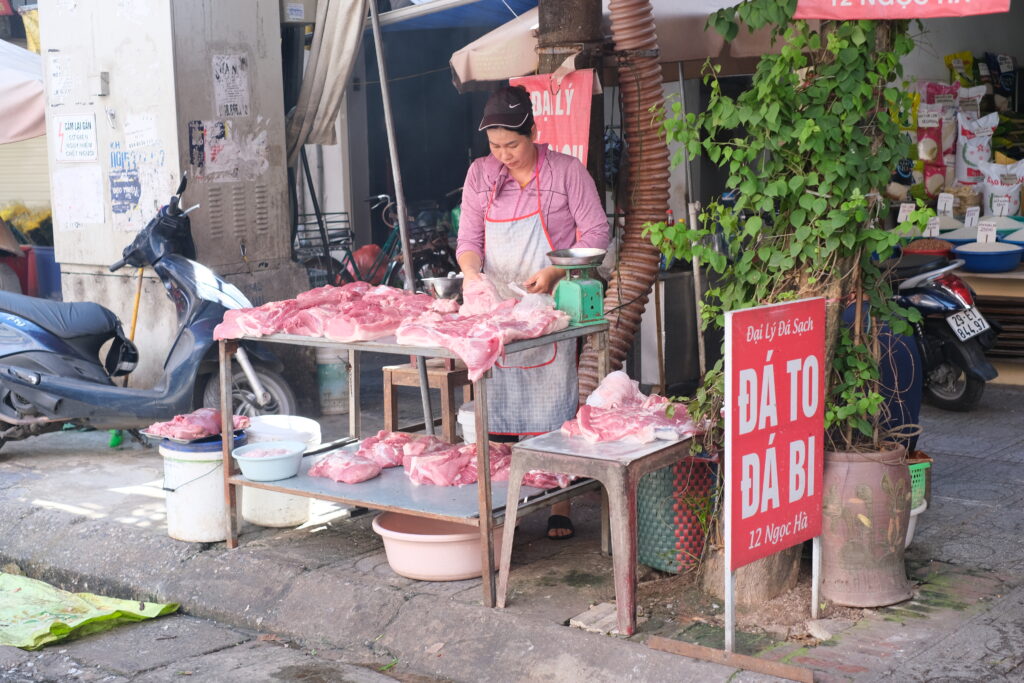
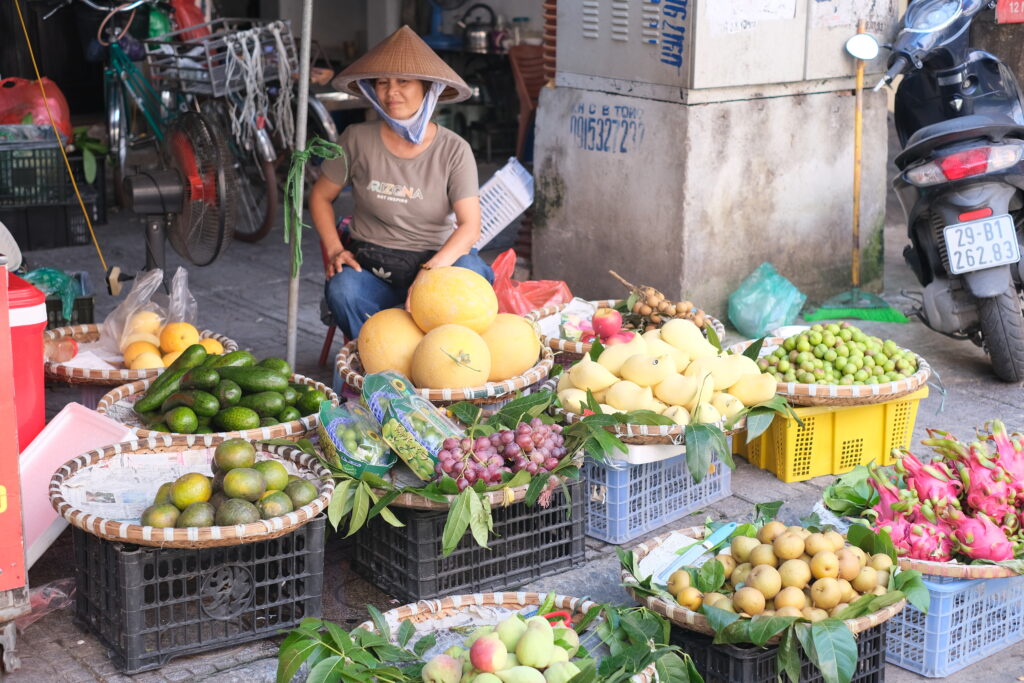
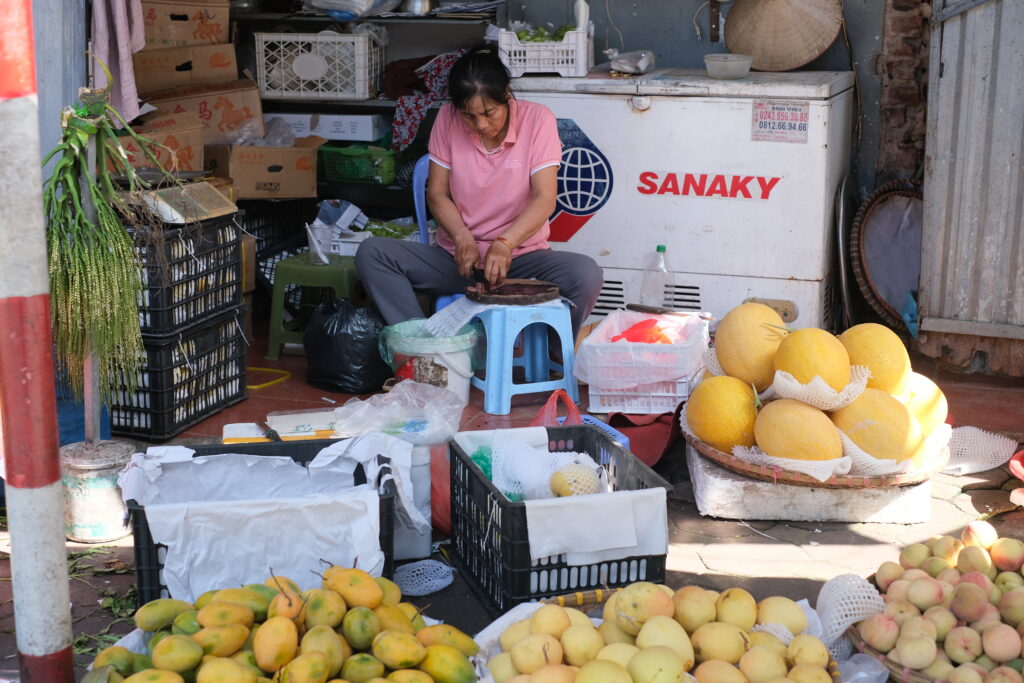
A visit to Hanoi would not be complete without exploring its markets. They are places where time has stood still, yet the beating heart of modern commerce. Forget sterile shopping malls. In Hanoi, shopping is done on the streets, in narrow alleys and in huge halls full of history.
DONG XUAN
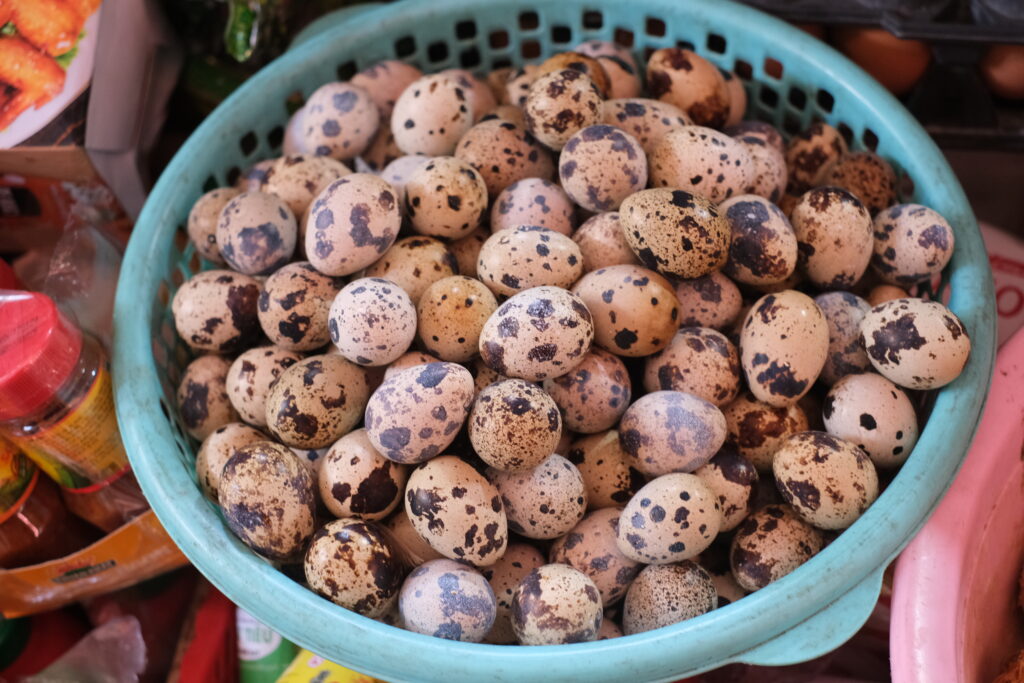
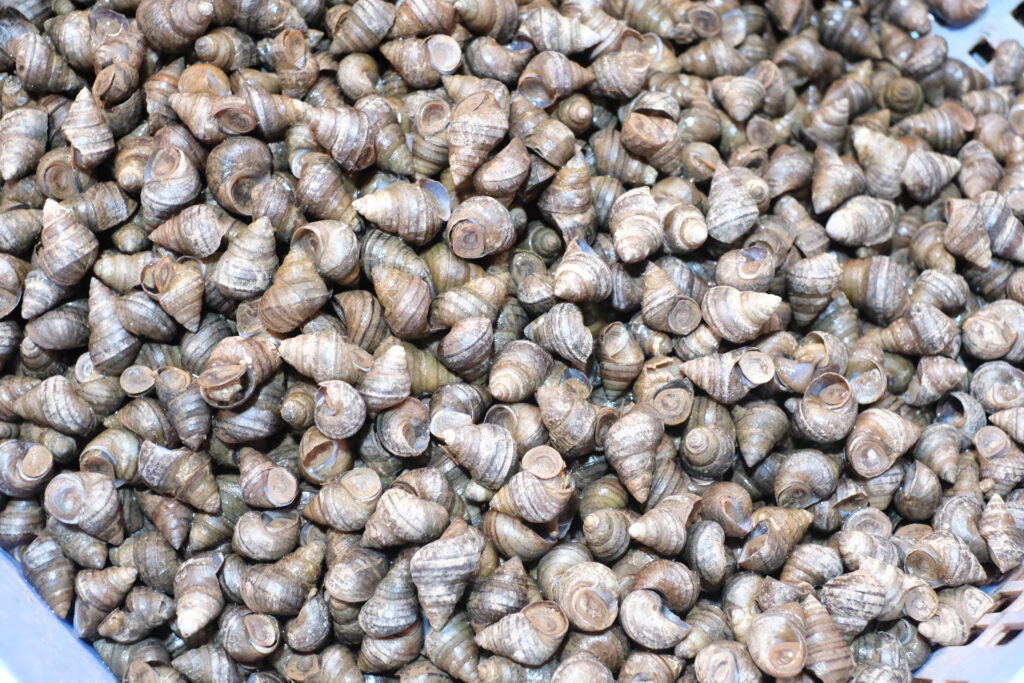
Dong Xuan Market is the oldest and largest covered market in Hanoi, built by the French in 1889. This three-story building on the northern edge of the Old Quarter is a maze of everything. On the ground floor you will find electronics, household goods and souvenirs. On the upper floors there is an endless array of clothes, accessories and fabrics. Behind the building you will find a “wet market” with fresh food, where you will also see exotic ingredients that you will not normally find in Europe.
WEEKEND NIGHT MARKET
Every Friday, Saturday and Sunday evening (from 6:00 PM to about 11:00 PM), the streets from Hoan Kiem Lake to Dong Xuan Market are closed to cars and filled with hundreds of stalls. You can buy cheap clothes, phone accessories, jewelry and souvenirs here. It is the ideal place for street food lovers. Try grilled skewers, banh mi or traditional sweet desserts.
CHO HOM: A FABRIC LOVERS’ PARADISE
If you’re looking for quality silk, cotton or lace, head to Cho Hom Market. The second floor of this market is literally “crammed” with rolls of fabric in all colors and patterns. Many travelers buy fabric here and then have it turned into a custom-made suit or dress by one of Hanoi’s tailors.
QUANG BA: A MIDDLE-NIGHT FLOWER SHOW
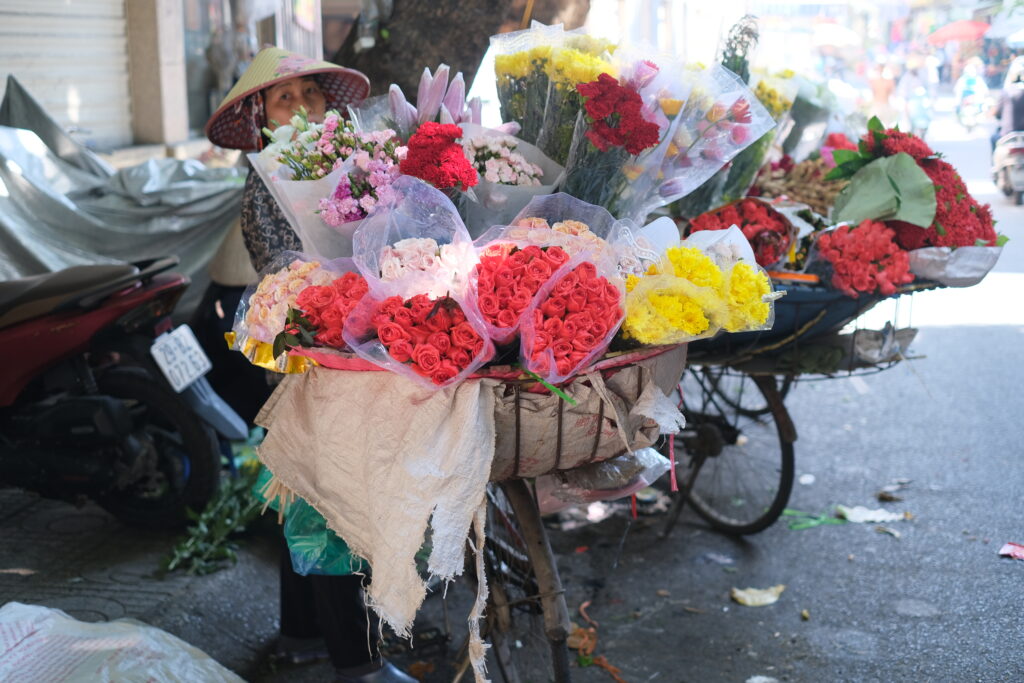
This market is a treat for early birds (or night owls). It’s busiest between 2:00 and 4:00 in the morning. You’ll see thousands of fresh flowers (roses, orchids, lilies) imported from all over Vietnam, sold directly from motorbikes and trucks. The scents and colors in the morning mist are unforgettable.
LONG BIEN: THE HARSH BEAUTY OF WHOLESALE
Right under the historic Long Bien Bridge, the city’s largest wholesale fruit and vegetable market takes place at night. It’s a raw, noisy and fascinating place where you’ll see the true face of the hard work of the locals.
MY TIP:
In markets like Dong Xuan or the Night Market, bargaining is a must. The first price offered to a tourist is usually 30-50% higher. Asian sizing is much smaller than European sizing. If you wear a size L, you will probably need an XXL in Hanoi. Yes, it is a frustrating experience to buy a t-shirt here. 🙂
TEMPLE OF LITERATURE:
A SYMBOL OF EDUCATION IN THE HEART OF HANOI
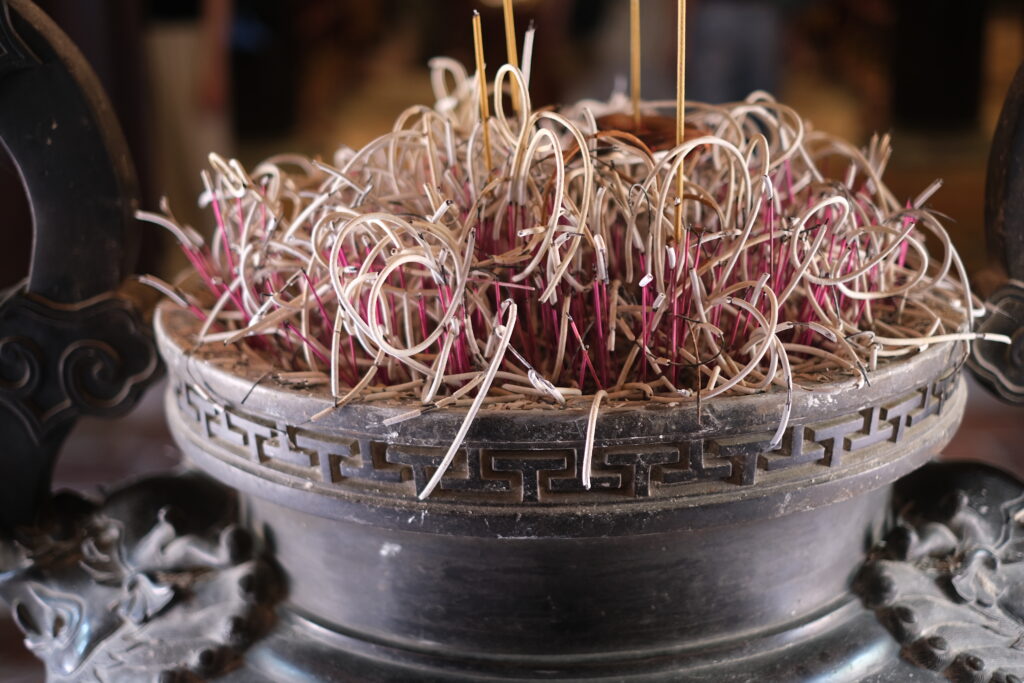
When the noise of the engines tires you, Hanoi offers a sanctuary in its temples. The Temple of Literature is an oasis of peace. Built in 1070, it served as Vietnam’s first university. The architecture of the five courtyards will guide you through the history of Confucian education. You will suddenly find yourself in another world. This oasis of peace and symmetry is not just an architectural gem. Above all, it is the most important symbol of the Vietnamese respect for education, which has lasted for almost a thousand years.
THE FIRST UNIVERSITY IN VIETNAM
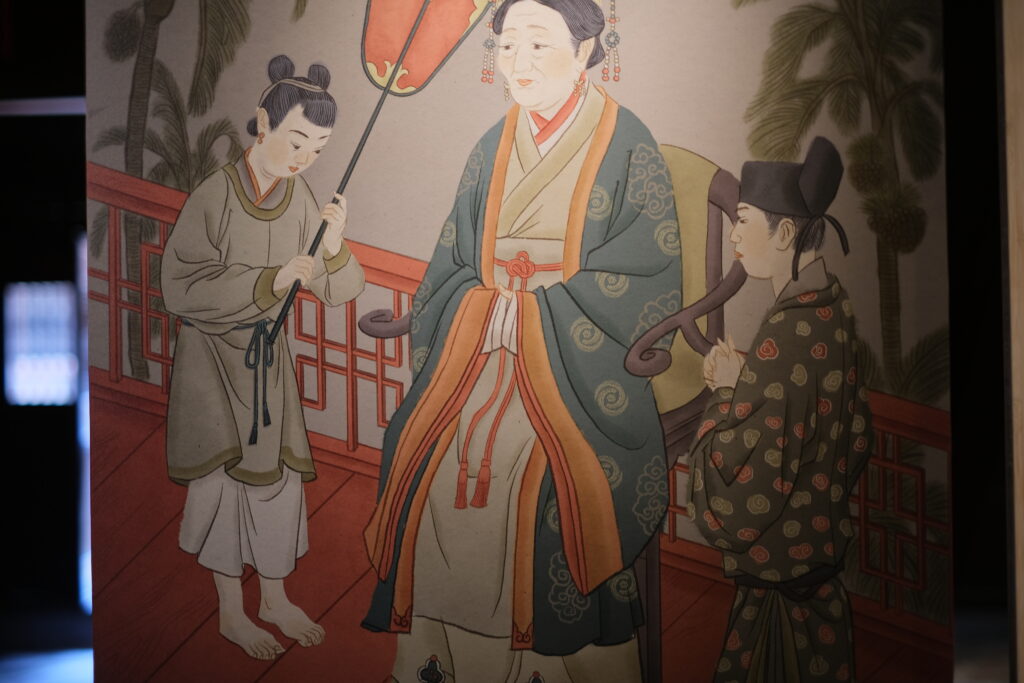
The temple was founded in 1070 by Emperor Lý Thánh Tông and was originally dedicated to the Chinese scholar Confucius. Six years later, the Royal Academy, the country’s first national university, was established here. Originally intended only for the sons of the royal family and the nobility (mandarins). Over time, it opened its doors to all talented students from all over the country. Studying here was extremely demanding. It lasted for years and culminated in the prestigious royal exams.
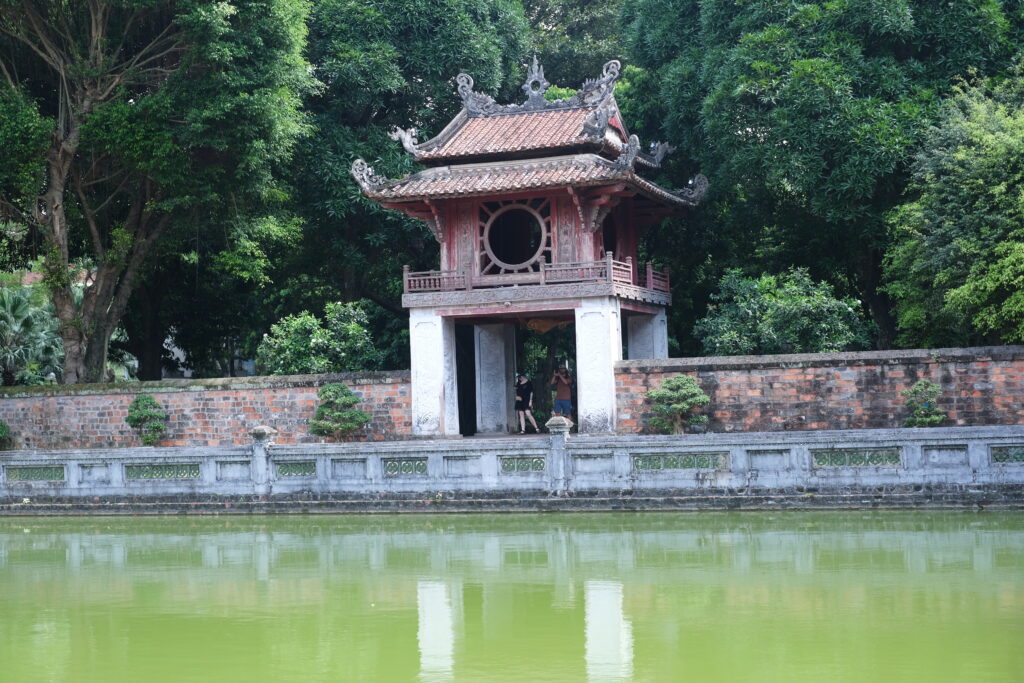
The temple grounds are divided into five courtyards, separated by walls and gates. This structure is meant to symbolize the student’s gradual journey of knowledge.
FIRST AND SECOND COURTYARDS
These are spaces full of greenery, centuries-old trees and precisely cut lawns, which served for contemplation and detachment from the hustle and bustle of the outside world.
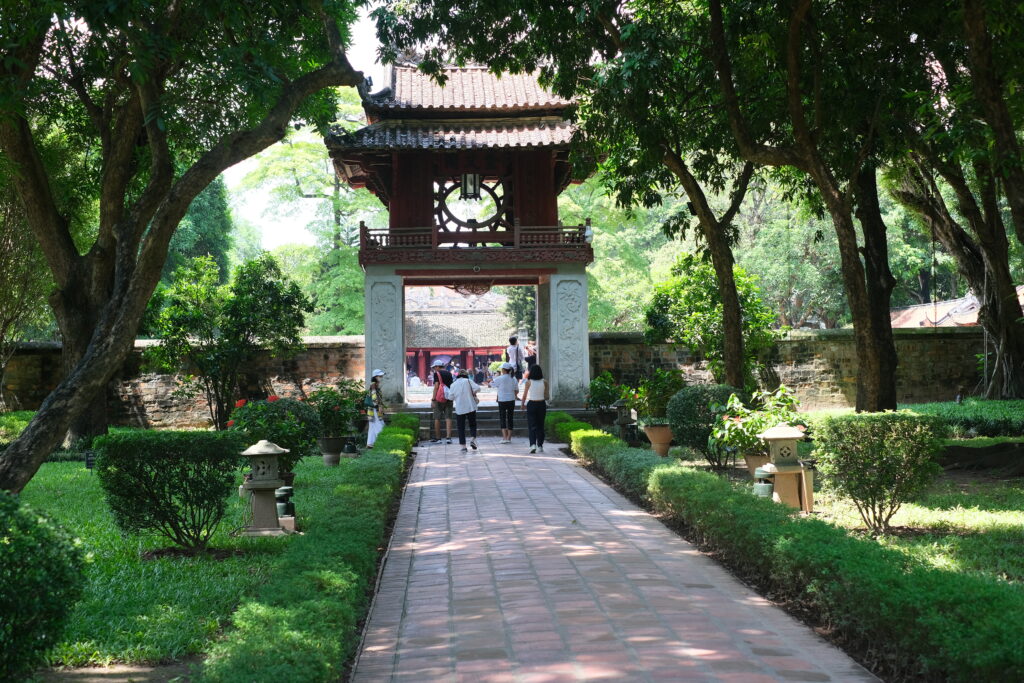
PAVILION KHUE VAN CAC
This red wooden structure on four pillars has become a symbol of Hanoi. It can also be found on the Vietnamese 100,000 dong banknote. Its circular window represents a shining star and harmony.
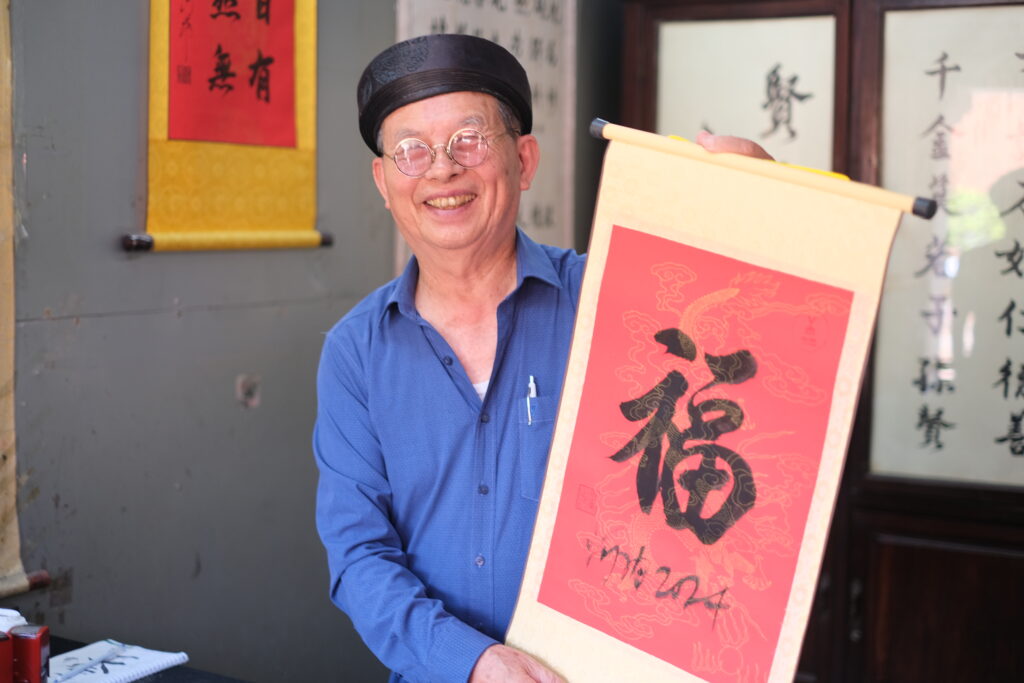
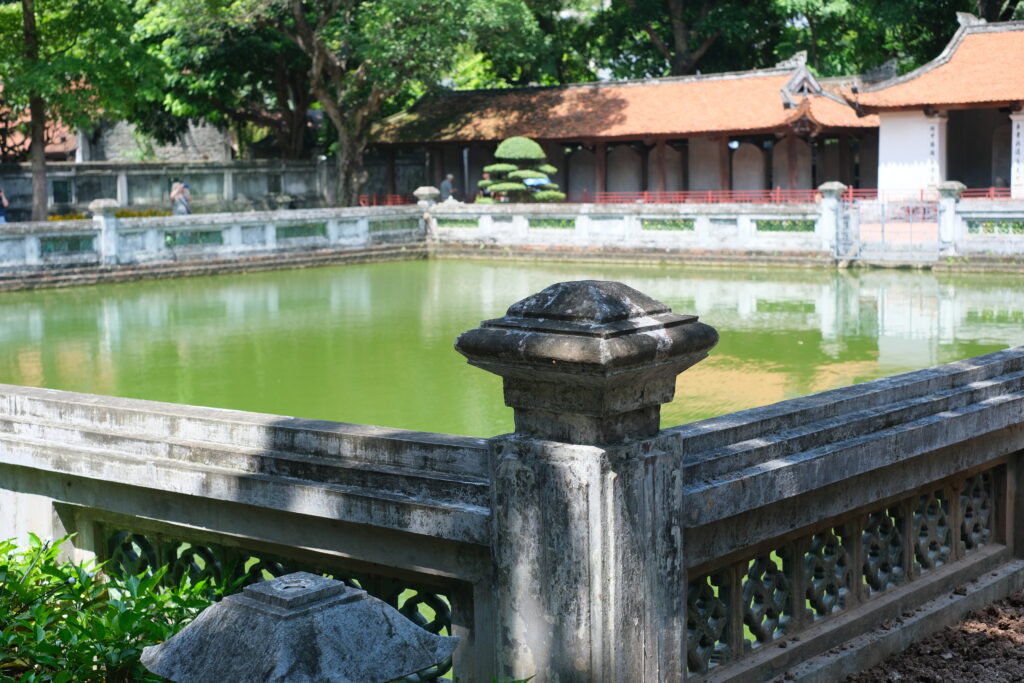
WELL OF HEAVENLY PURITY
A square pond in the middle of the third courtyard that reflects the sky and creates a photogenic mirroring of the surrounding buildings.
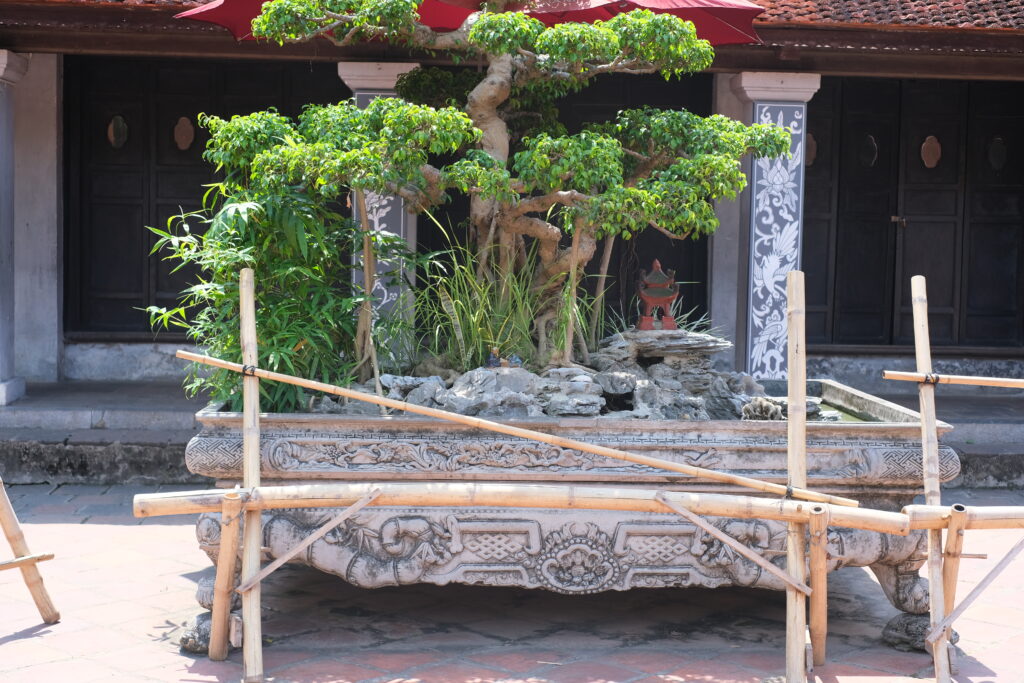
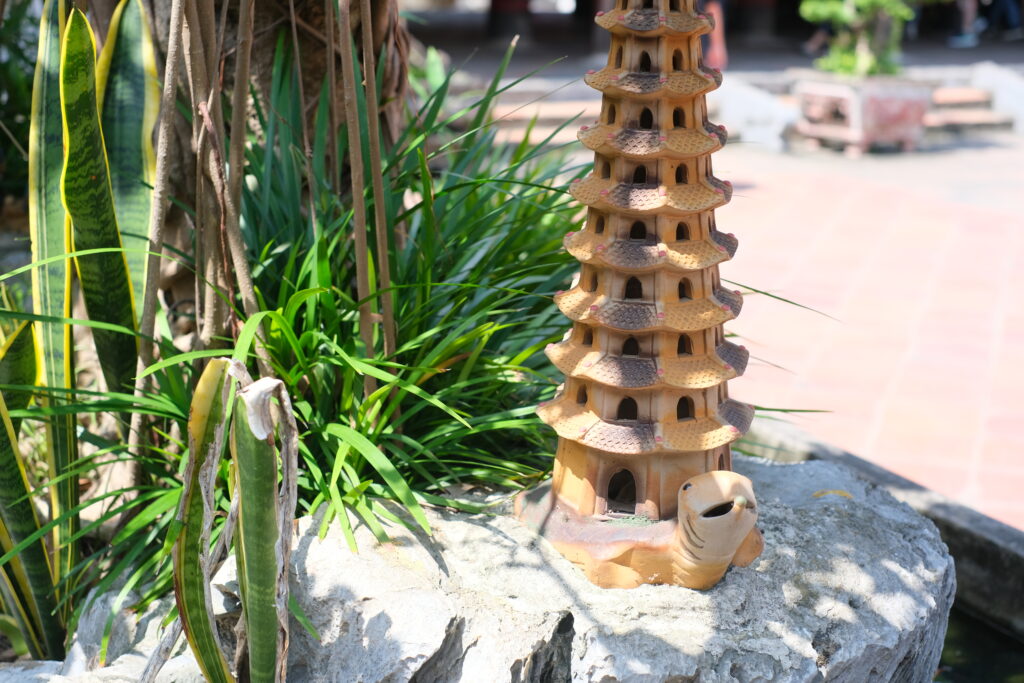
STONE STELES: UNESCO HERITAGE ON THE BACKS OF TURTLES
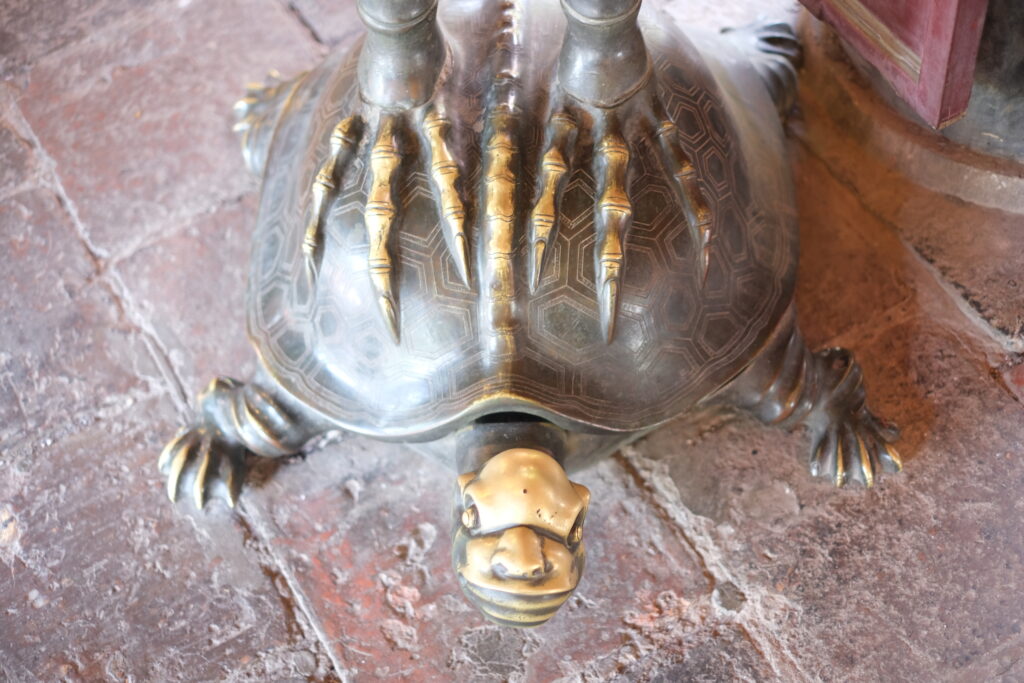
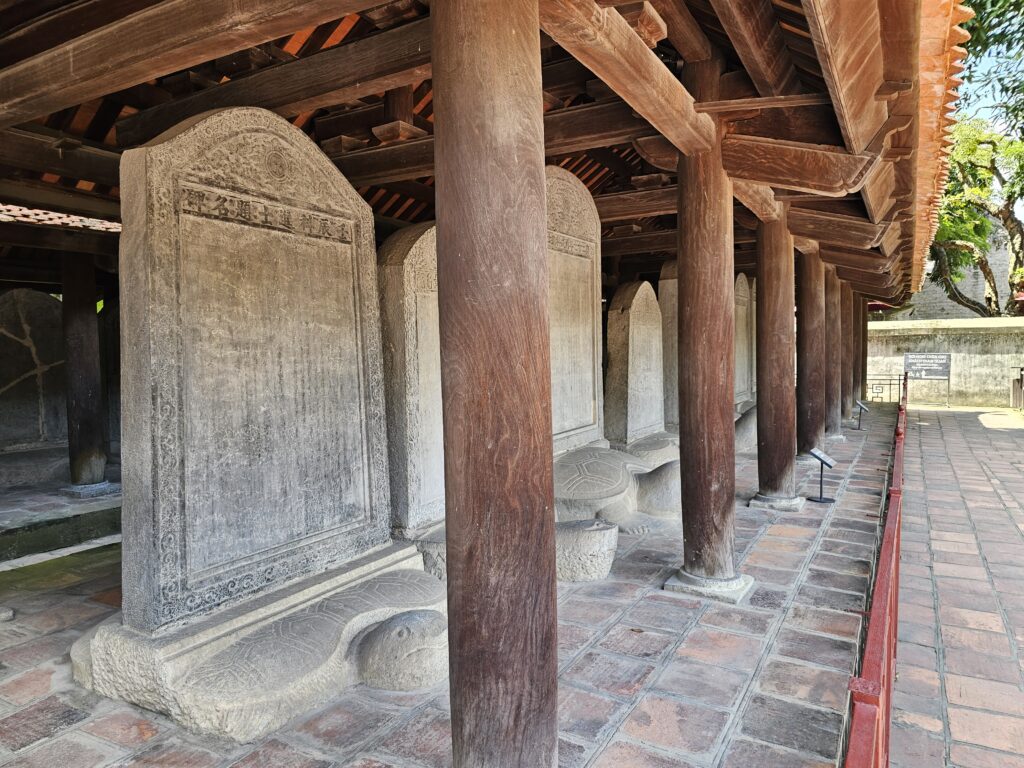
The temple’s most valuable treasure is the 82 stone steles. Each of them stands on the back of a stone turtle (a symbol of longevity and wisdom) and bears the names of successful graduates of the royal examinations from 1442 to 1779. In the past, it was customary for students to stroke the turtles’ heads for good luck. Today, this is strictly prohibited due to the protection of monuments (listed in the UNESCO register), but the belief in the magical power of this place persists among the locals.
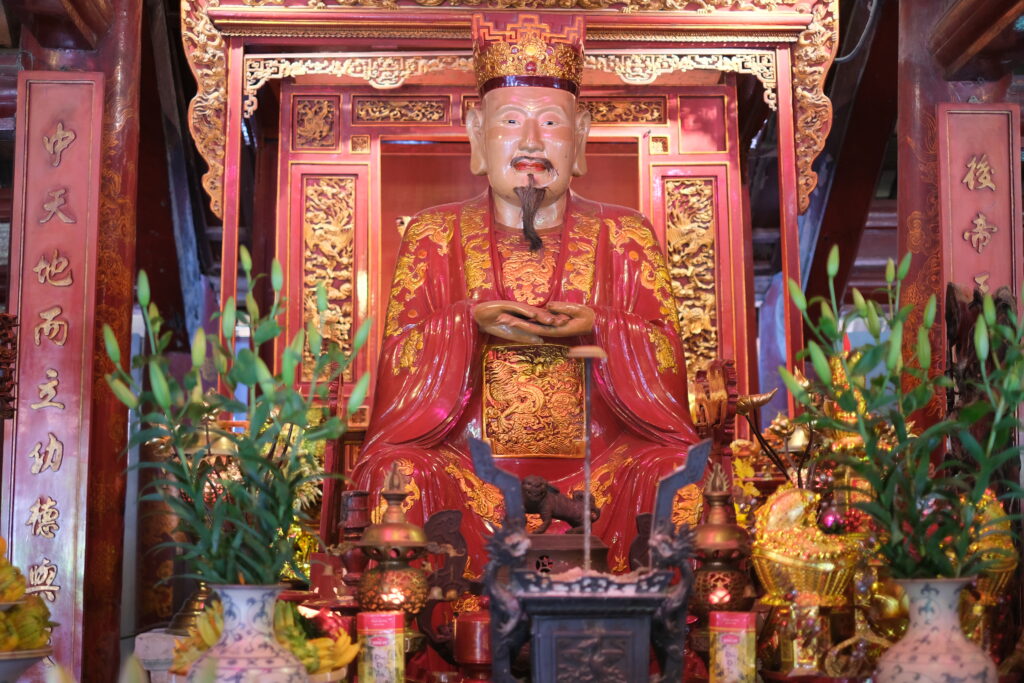
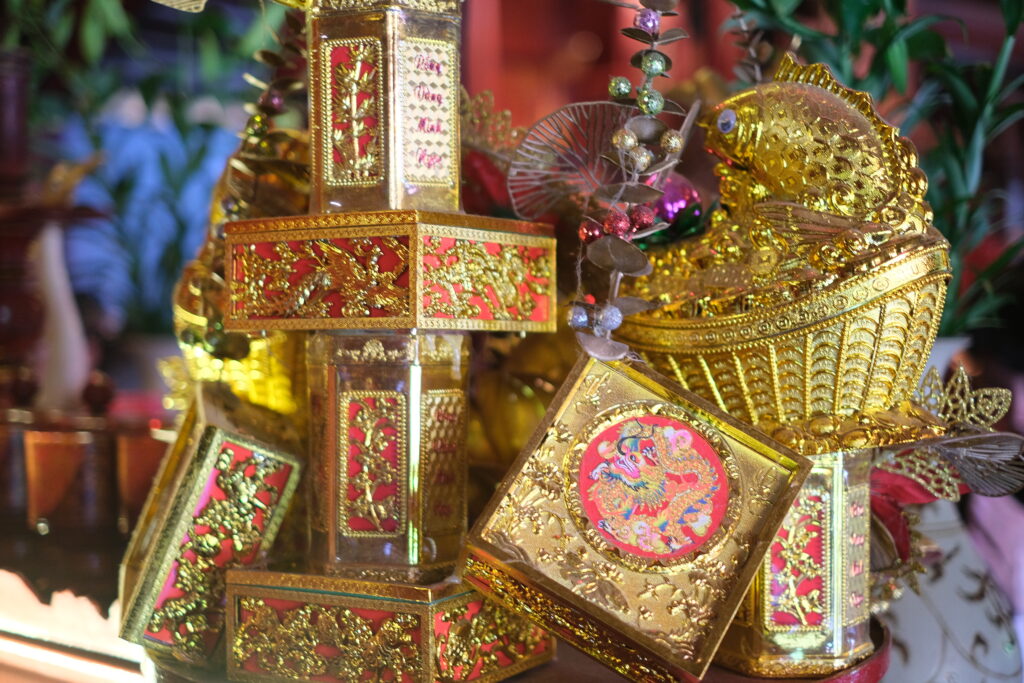
The Temple of Literature is not just a dead museum. Thousands of Vietnamese students still flock here before important exams or after graduation. You will see crowds of young people wearing traditional Áo dài dresses, taking photos with their diplomas or praying for good results. The atmosphere of reverence for learning is almost tangible.
PRACTICAL INFORMATION FOR VISITORS
Opening hours: Daily 8:00-17:00 (open longer in summer).
Admission: Very affordable, about 30,000 VND (about 30 CZK).
Dress code: As in any Vietnamese temple, you should have your shoulders and knees covered.
Location: The temple is located a short distance from the Ho Chi Minh Mausoleum, about 2 km west of Hoan Kiem Lake. It is ideal to get here by Grab.
MAP:
The Temple of Literature is a must-see for anyone wanting to understand Vietnamese culture. It is a place where time has stood still and where the beauty of architecture meets the depth of human knowledge.
HOA LO PRISON: KNOWN BY THE IRONIC NICKNAME “THE HANOI HILTON”
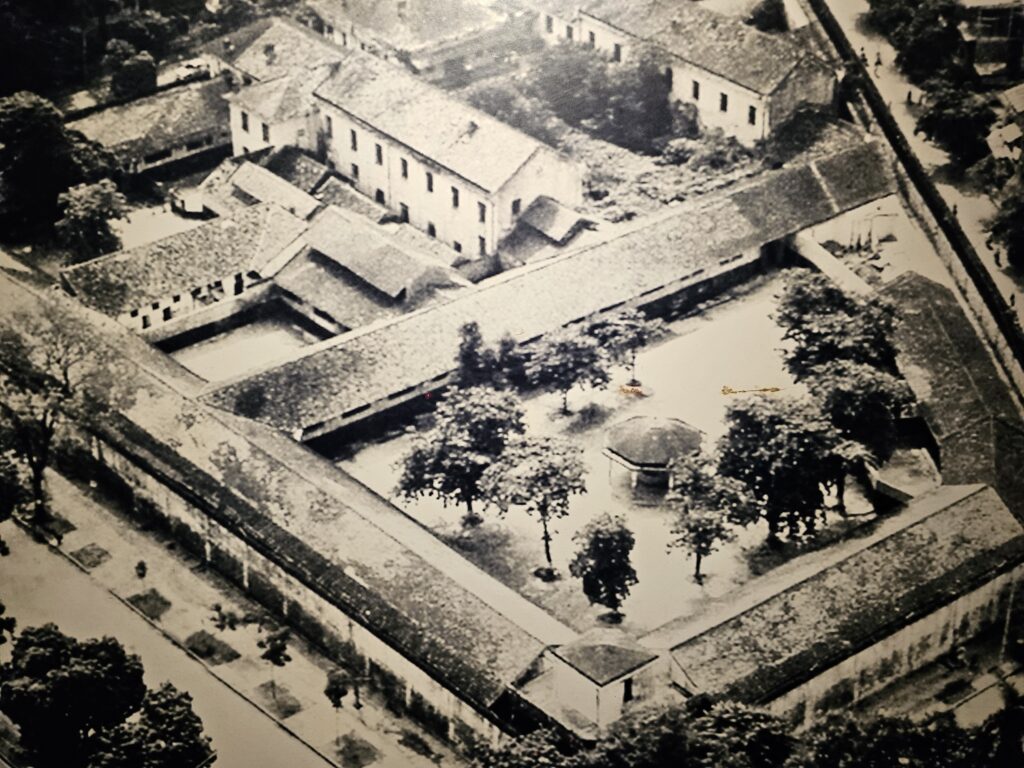
Known ironically as the “Hanoi Hilton,” Hoa Lo Prison is one of the most impressive and chilling places in Vietnam. It stands amidst a modern district full of skyscrapers like a silent exclamation point, recalling the dark chapters of Vietnamese history, from French colonial cruelty to the war with the Americans.
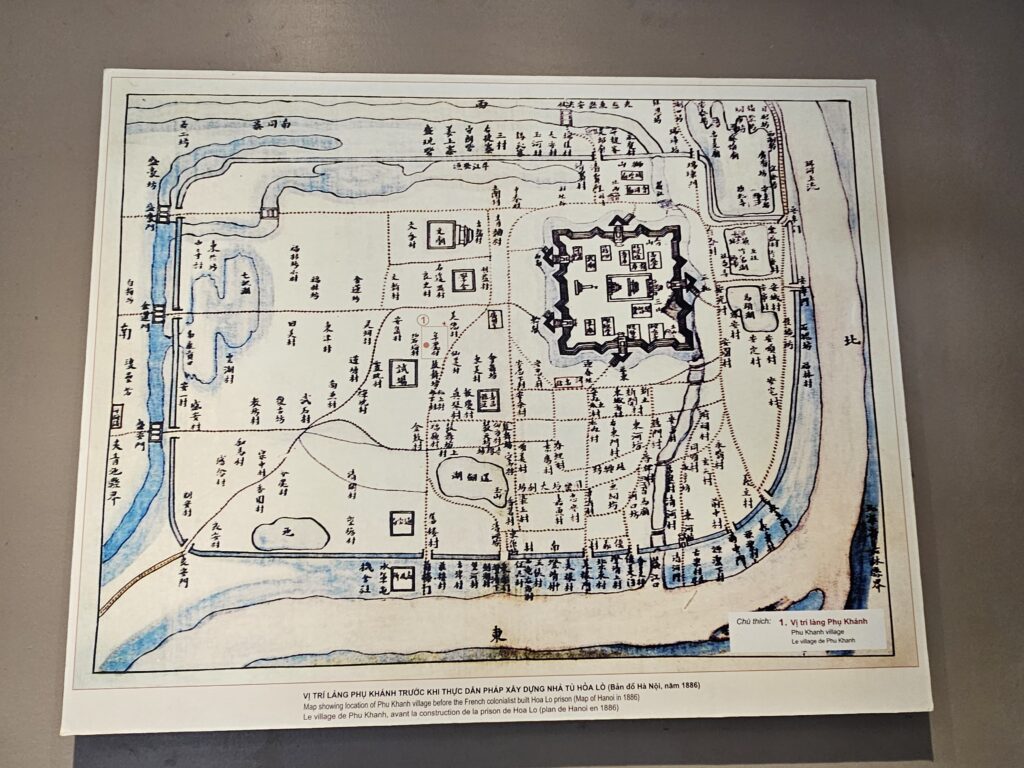
Here is a view behind the high walls with barbed wire that you shouldn’t miss when visiting Hanoi.
THE HELL OF FRENCH INDOCHINA
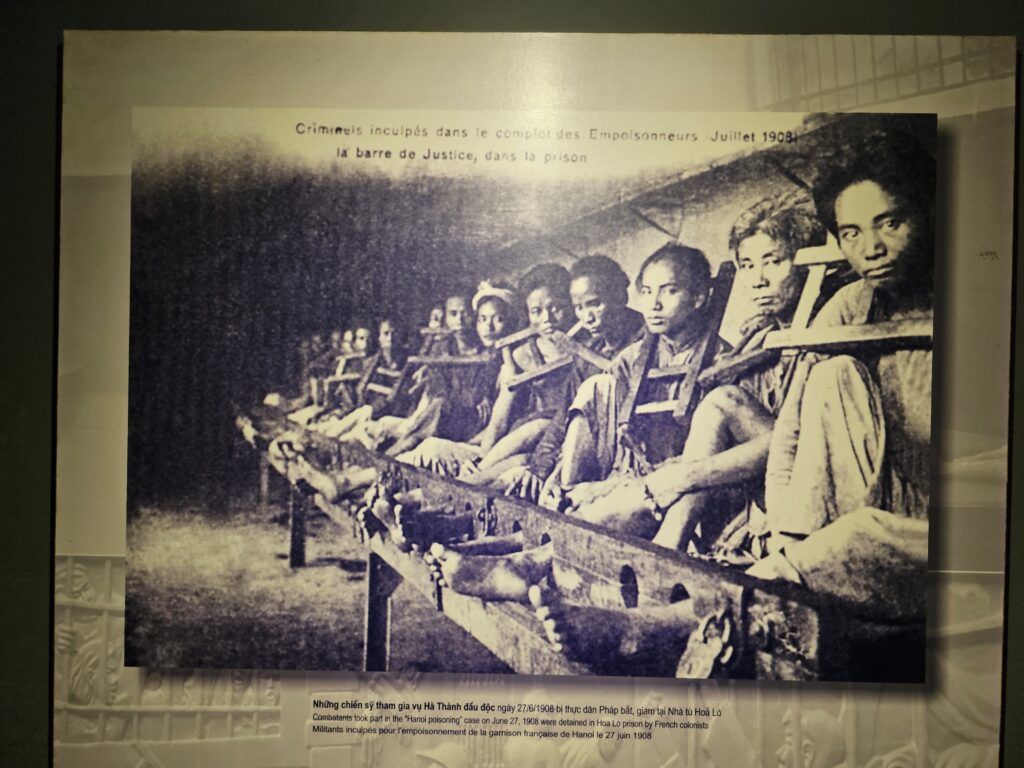
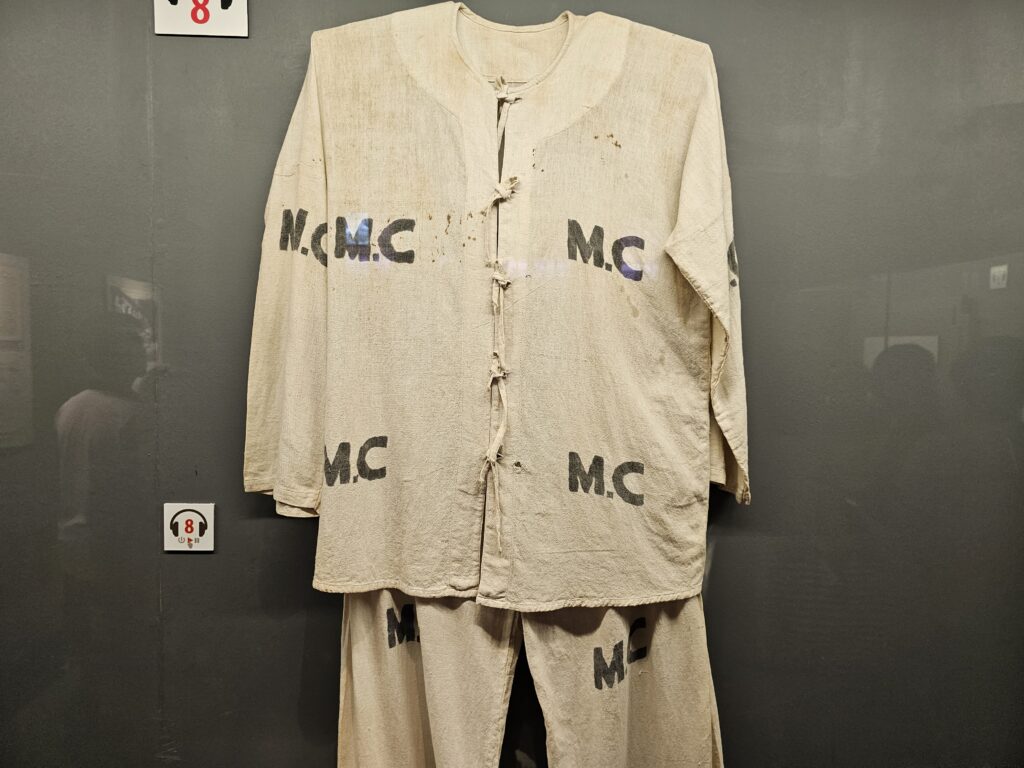
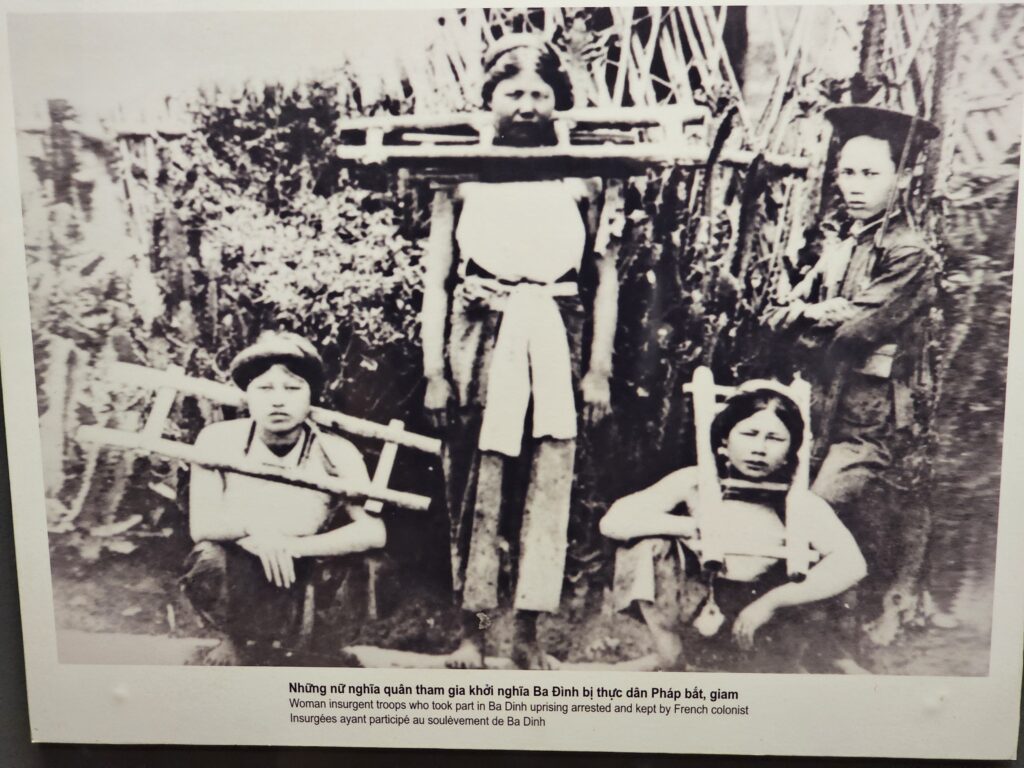
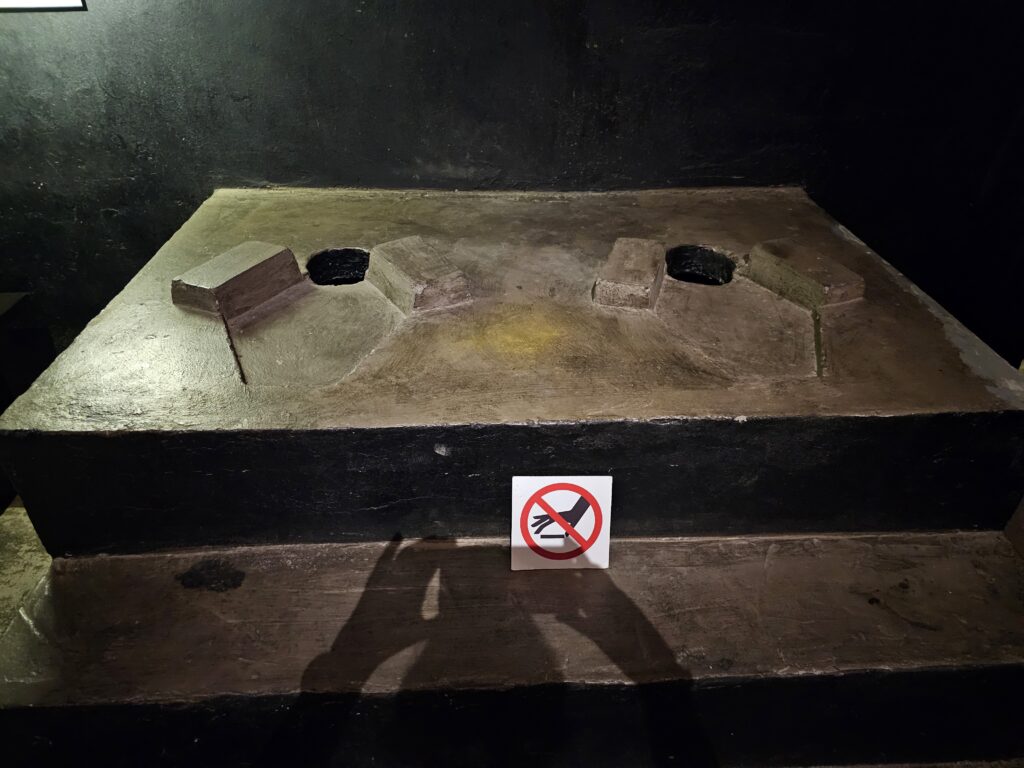
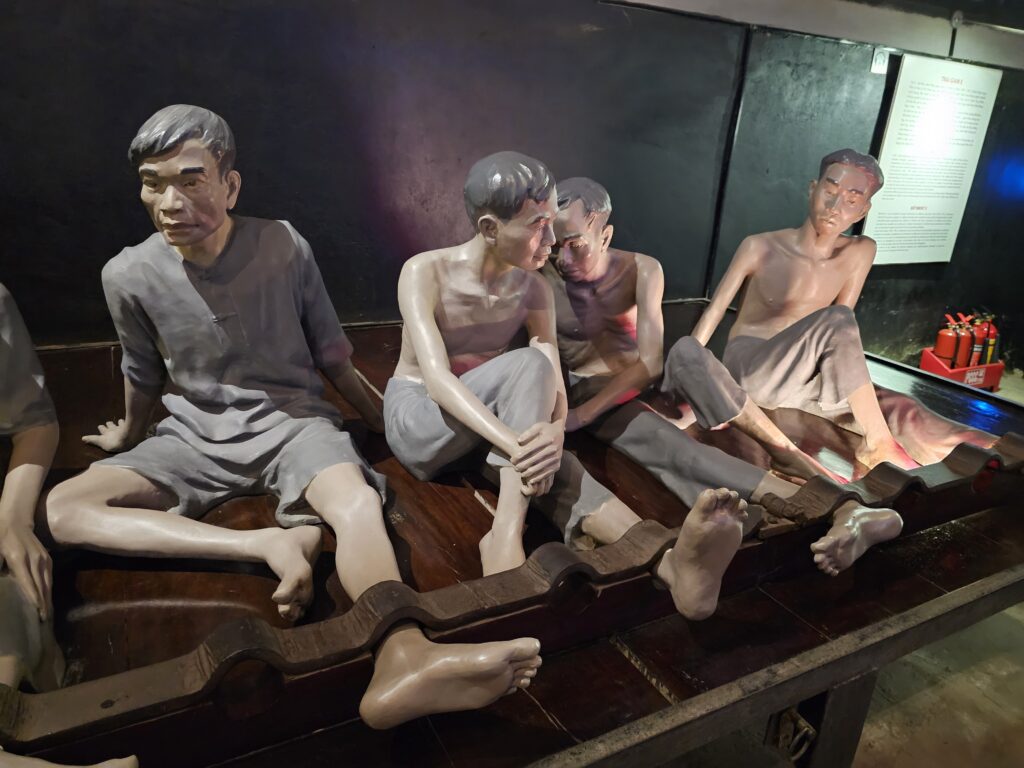
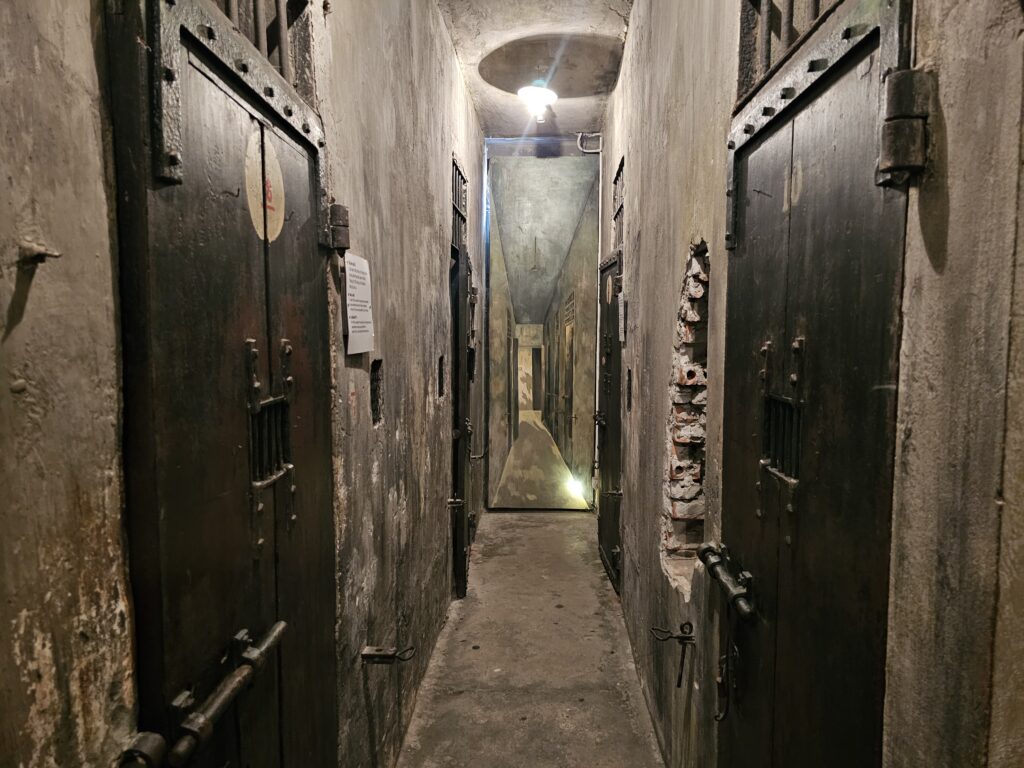
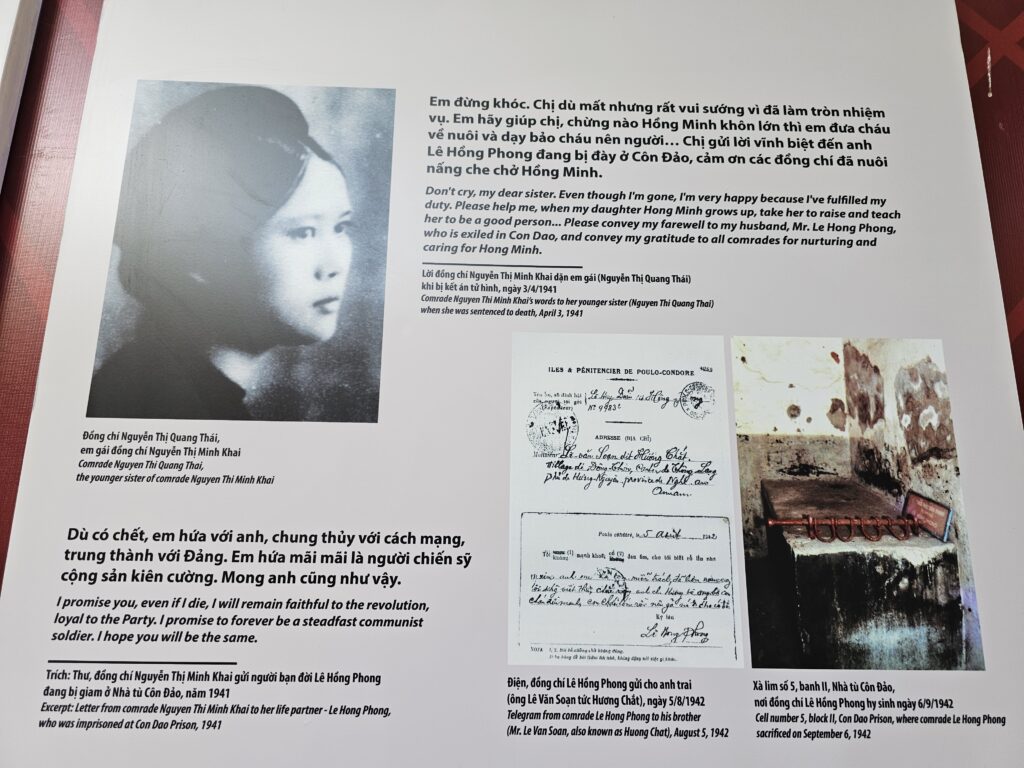
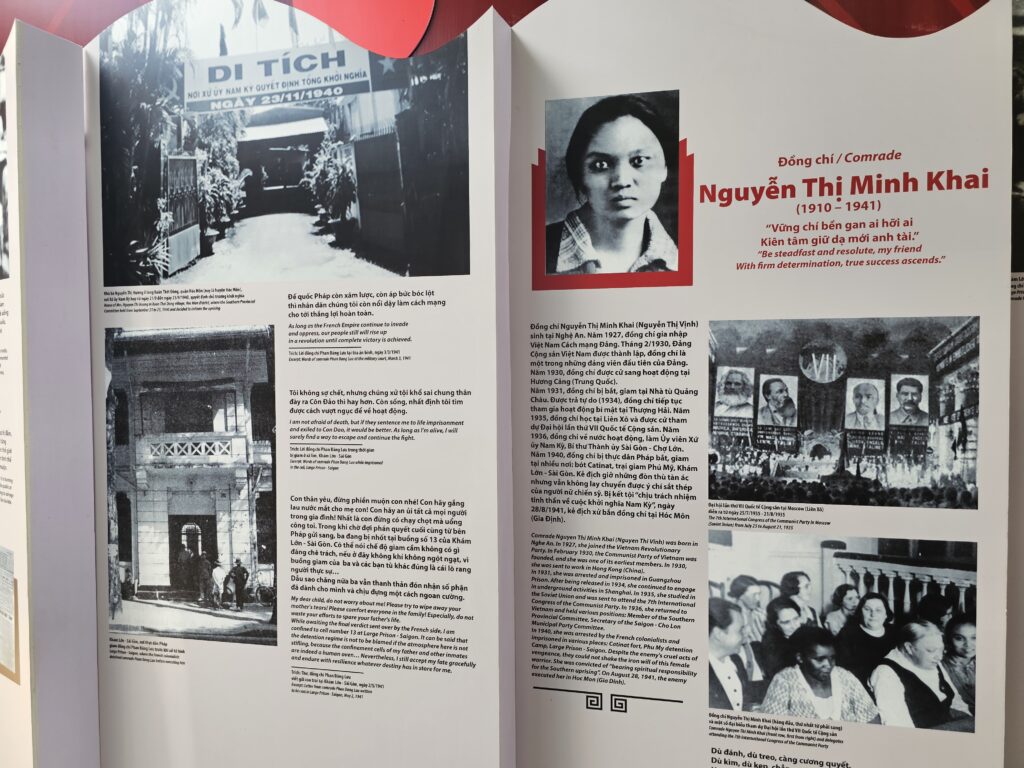
The prison was built by the French in 1896 to imprison Vietnamese patriots and revolutionaries. The name “Hoa Lo” translates to “fiery furnace”. Originally, it was a district of ceramic and stove manufacturers. The conditions were inhumane. The cells were overcrowded and had a capacity of 450 prisoners. In 1954, over two thousand were crammed in. One of the most terrifying exhibits in the museum is the guillotine. The French used it to execute Vietnamese resistance fighters.
The death cells were dark. They were narrow concrete cells where prisoners were kept in chains on a dirty floor.
HANOI HILTON AND AMERICAN PILOTS
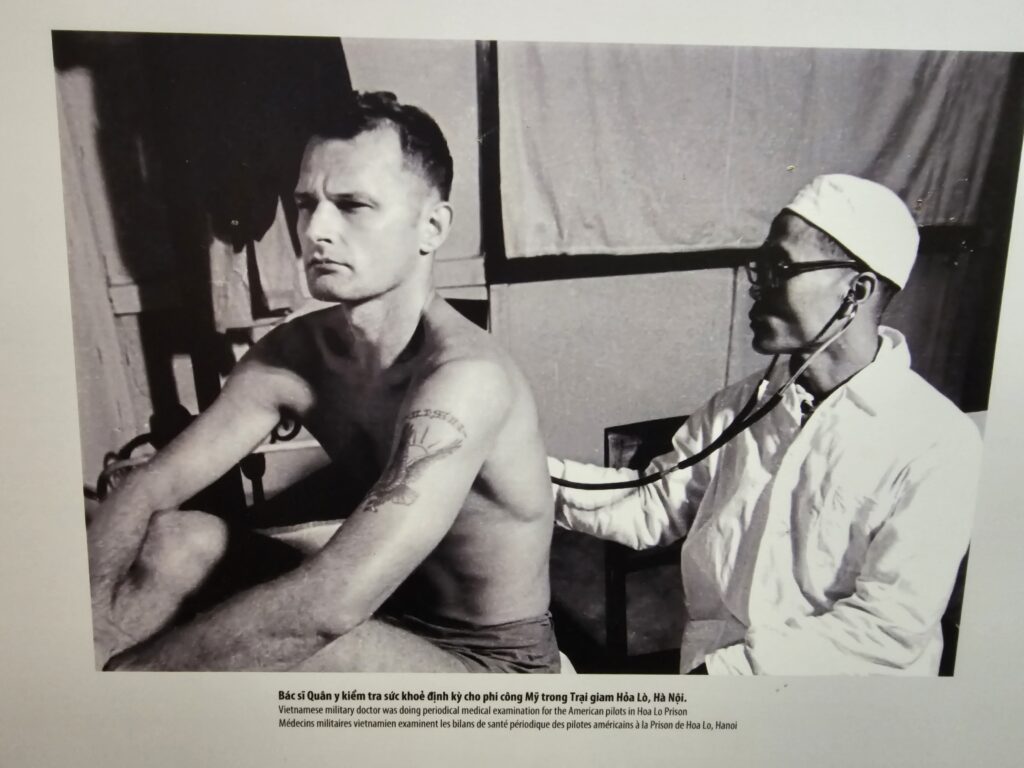
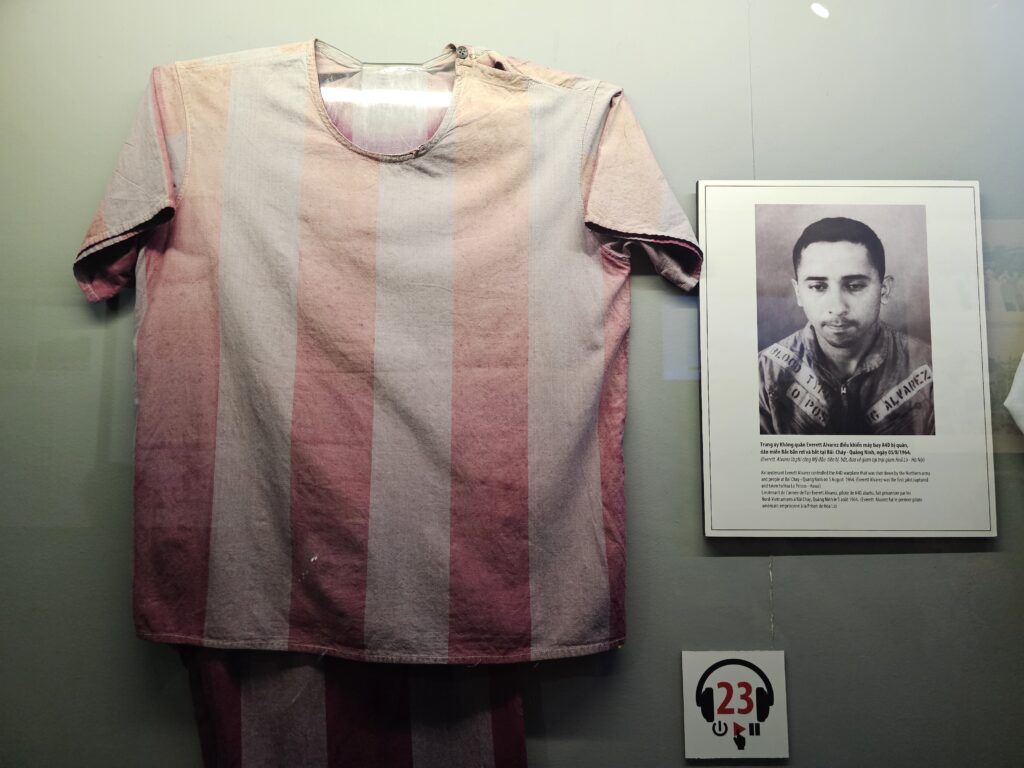
The prison’s other face began to be written during the Vietnam War (1964–1973). The North Vietnamese army held American pilots captive here. The ironic nickname “Hanoi Hilton” was coined by the prisoners themselves because of the harsh conditions, which were far from luxurious.
FAMOUS PRISONERS
The most famous resident was future senator and presidential candidate John McCain, whose plane was shot down over Hanoi’s Truc Bach Lake. You can still see his original flight suit and helmet in the museum today.
PROPAGANDA VS. REALITY
The exhibition in this part of the prison shows photos of Americans playing basketball or celebrating Christmas, which sharply contrasts with the prisoners’ own accounts of torture and solitary confinement. Most of the original complex was demolished in the 1990s to make way for the Hanoi Towers skyscraper. However, the gate and the south wing, which now serve as a museum, were preserved. The cells feature life-size, realistic mannequins sitting in shackles. Combined with the dim lighting, it’s a very powerful experience.
In the courtyard grow huge almond trees, which were essential for the prisoners. They made medicine from the bark and leaves, and the nuts were a rare dietary supplement. You can see the narrow sewer pipe through which dozens of Vietnamese prisoners managed to escape in 1945.
Hoa Lo is not a “fun” monument. However, it is essential to understand the incredible resilience and pride that the Vietnamese feel for their history. After your visit, have a strong coffee in one of the modern cafes right across the street. The contrast between the past and the present will make you think.
PRACTICAL TIPS FOR VISITORS
Opening hours: Daily 8:00–17:00 (note the lunch break between 11:30 and 13:30, which is sometimes observed).
Audio guide: I highly recommend paying extra for headphones with Czech or English commentary. The stories of specific prisoners add a completely different dimension to the place.
Night tours: Special night “immersive” tours with light effects and actors are often organized (must be booked in advance).
MAP:
HO CHI MINA MAUSOLEUM: UNCLE HO’S SACRED PLACE
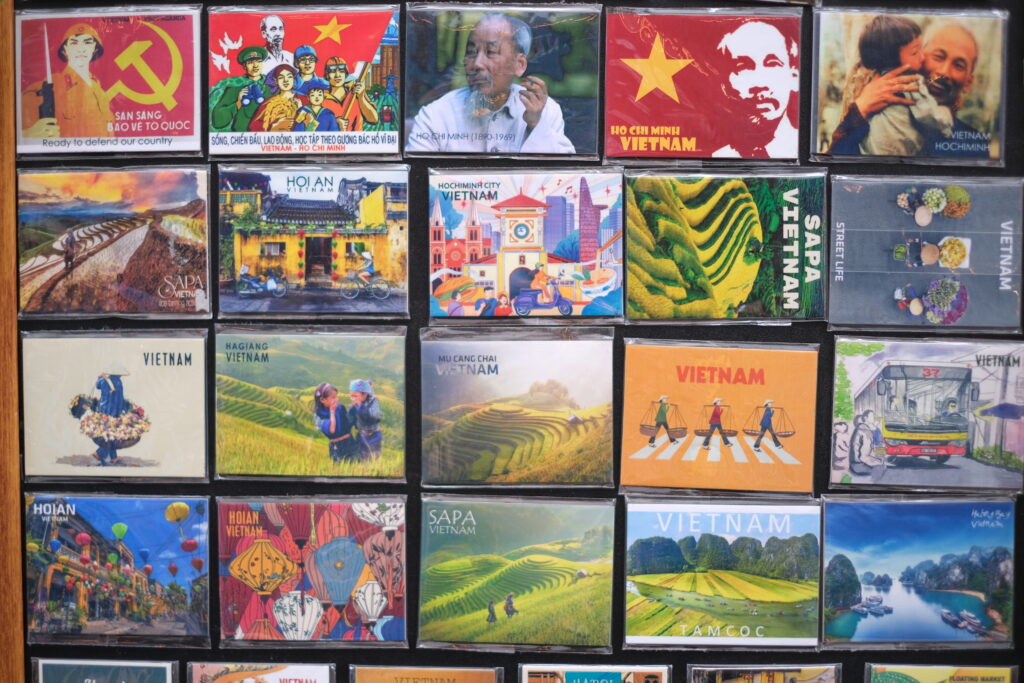
Dominating Hanoi’s Ba Dinh Square is a monumental structure of gray granite that resembles a fortress rather than a resting place. The Ho Chi Minh Mausoleum is a sacred place for the Vietnamese. For travelers, it is one of the most fascinating and austere experiences in all of Southeast Asia.
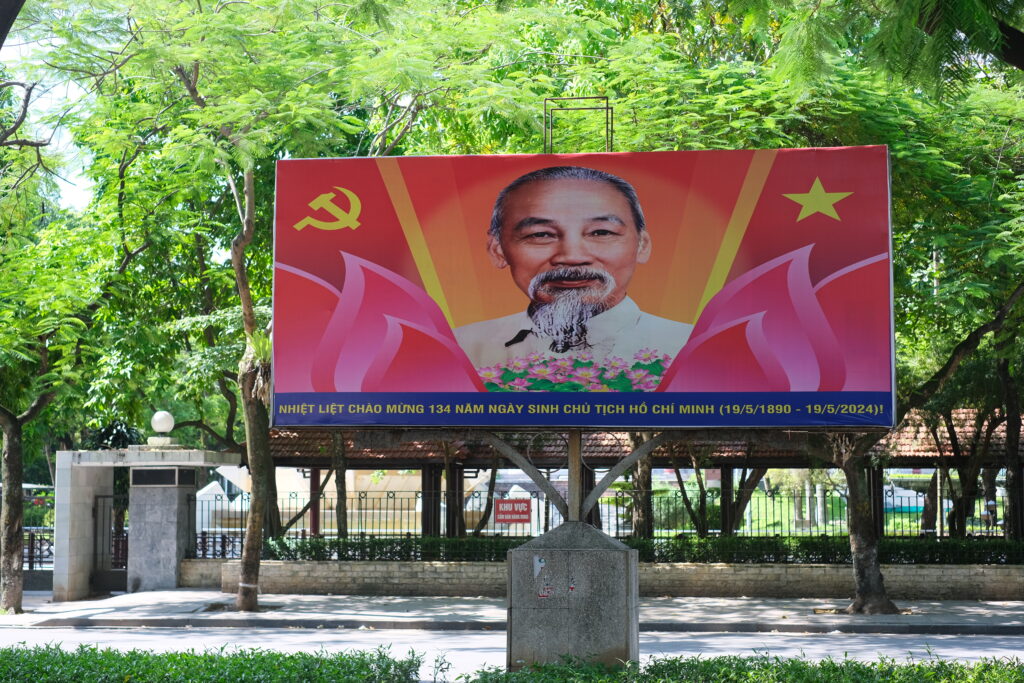
Here’s everything you need to know before you line up to see “Uncle Ho.”
THE END OF A LEADER WHO WANTED TO BE CREMED
Ironically, Ho Chi Minh himself requested in his will a simple burial and the scattering of his ashes in the north, center, and south of the country to symbolize the unification of Vietnam. However, the Communist Party decided otherwise. Following the example of Lenin in Moscow, it built a grandiose mausoleum, where his embalmed body is displayed in a glass coffin under the constant supervision of an honor guard.
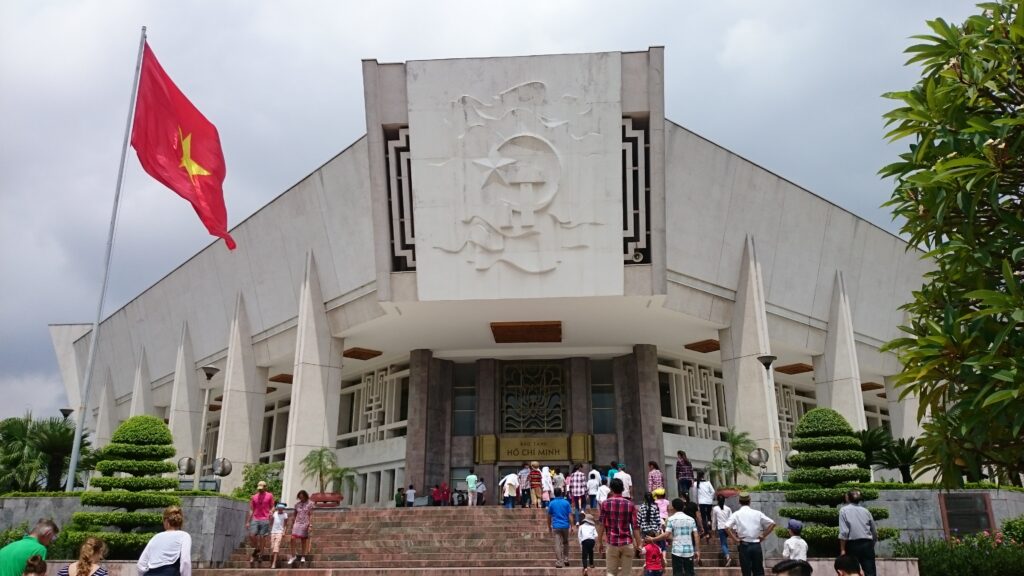
ARCHITECTURE WITH A RUSSIAN HANDMADE ARCHITECTURE
Completed in 1975, the building’s design is a unique blend of Soviet modernism and traditional Vietnamese elements. The three floors of the mausoleum are designed to symbolize a blooming lotus. The entire complex is surrounded by 240 green squares of lawn and gardens with plants from all over Vietnam.
A MUST-WATCH RITUAL: CHANGING OF THE GUARD
If you don’t want to wait in a long line to get inside, definitely don’t miss the changing of the guard in the square in front of the mausoleum. It takes place every hour, but the biggest and most solemn one takes place at 6:00 in the morning (raising the flag) and at 21:00 in the evening (lowering the flag). Soldiers in white uniforms march with absolute precision to the sounds of revolutionary marches.
RULES THAT ARE NOT WORTH BREAKING
A visit to the mausoleum is not a regular museum tour, it is a show of respect. Be prepared for the guards to be strict. No bare shoulders, short skirts or shorts. If you are not dressed appropriately, you will not be allowed inside. You must walk quietly, in double file, with your hands at your sides (not in your pockets or crossed over your chest). Taking pictures, talking or stopping inside is strictly prohibited. Mobile phones and cameras must be left in the storage room before entering the premises.
Every year (usually from September to November), the mausoleum is closed for several months, as the body is sent to Russia for regular maintenance and embalming.
PRESIDENTIAL PALACE AREA
A ticket to the mausoleum also allows you to explore the surrounding garden, where you’ll see the Presidential Palace, a beautiful yellow colonial building (entry is not allowed inside). Then there’s Ho Chi Minh’s House on Stilts, a modest dwelling where the leader actually lived and worked, as he rejected the luxuries of a palace. And of course, the One Pillar Pagoda (Chùa Một Cột), one of the oldest and most photogenic temples in Hanoi, built on a single stone pillar in the middle of a lotus pond.
PRACTICAL INFORMATION
Admission: Free (only for the museum and garden area, approx. 40,000 VND).
Opening hours: Mornings only (usually 7:30–10:30 or 11:00). Lines can be very long, we recommend arriving before 7:00 AM.
Location: Ba Dinh Square.
MAP:
A visit to the mausoleum is an intense insight into the Vietnamese mentality and the deep cult of personality of the “Father of the Nation.” Even if you are not a history buff, the atmosphere at Ba Dinh Square is unforgettable.
LIFE AT HOAN KIEM LAKE
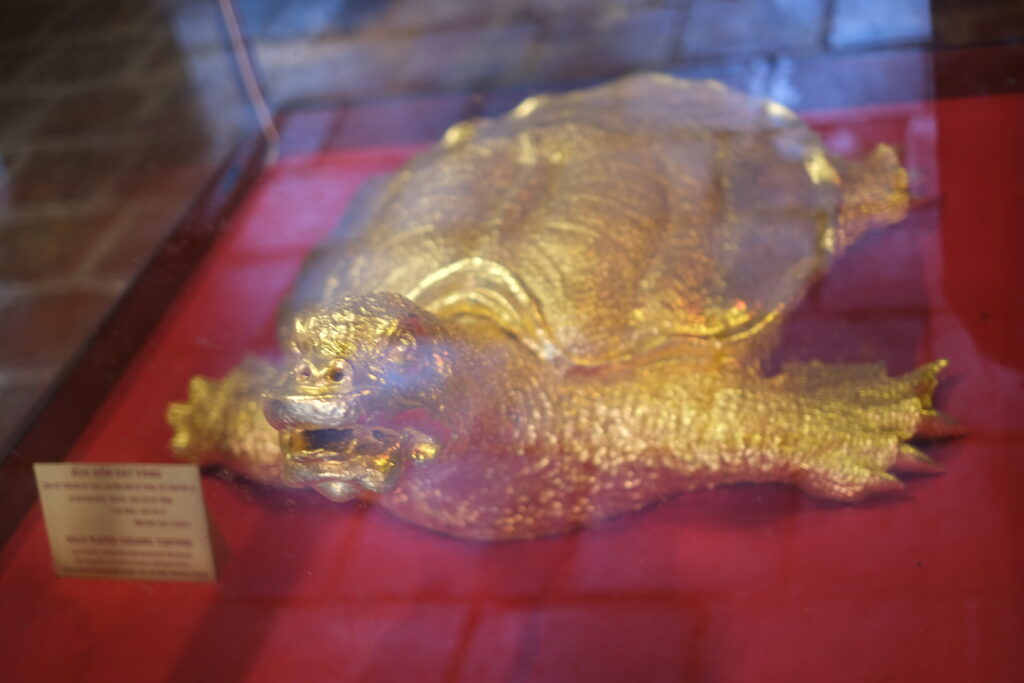
In the middle of all this hustle and bustle lies the green Hoan Kiem Lake (Lake of the Returned Sword). It is the heart of the city. According to legend, the emperor received a magic sword here, with which he drove out the Chinese invaders, and then returned it to a golden turtle that emerged from the water. In Hanoi, no one refutes legends. They somehow work here. In the middle stands the Turtle Tower, and on an island accessible via the iconic red bridge, The Huc, you will find the Ngoc Son Temple.
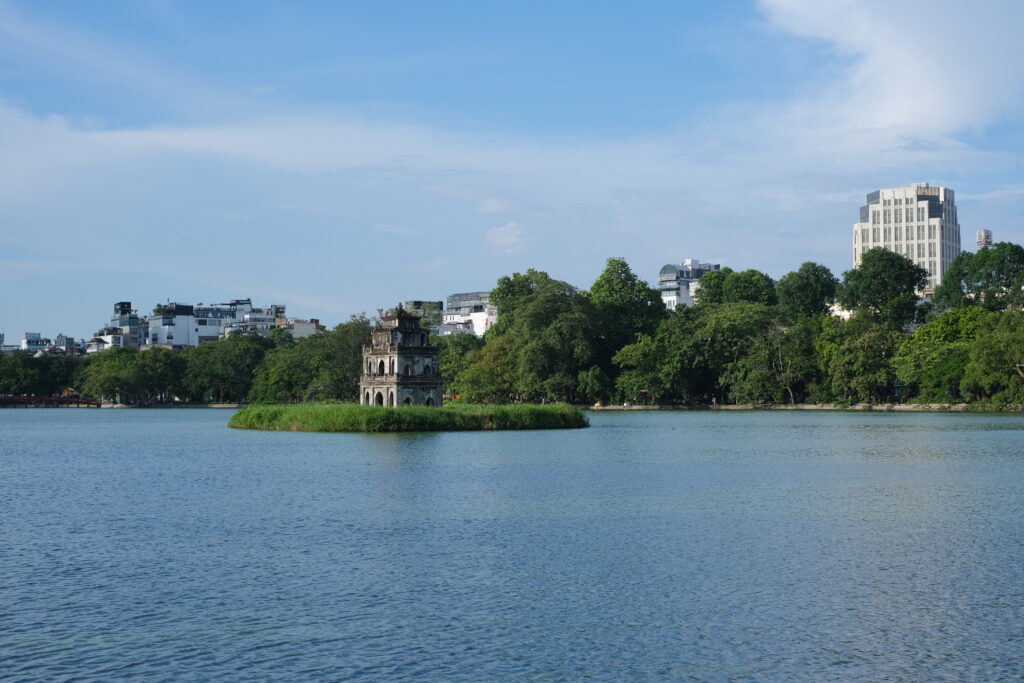
Early in the morning, around the lake, old people practice tai chi, women dance aerobics, and someone plays romantic Vietnamese ballads on their mobile phones. It’s quiet, gentle, almost meditative. A few streets away, oil is splattering in a frying pan again. If you spend the weekend in Hanoi, the area around the lake is closed to cars from Friday evening. It turns into a giant playground where children ride in toy cars, people dance salsa, play traditional games, and the atmosphere is incredibly friendly and relaxed.
STREET ART
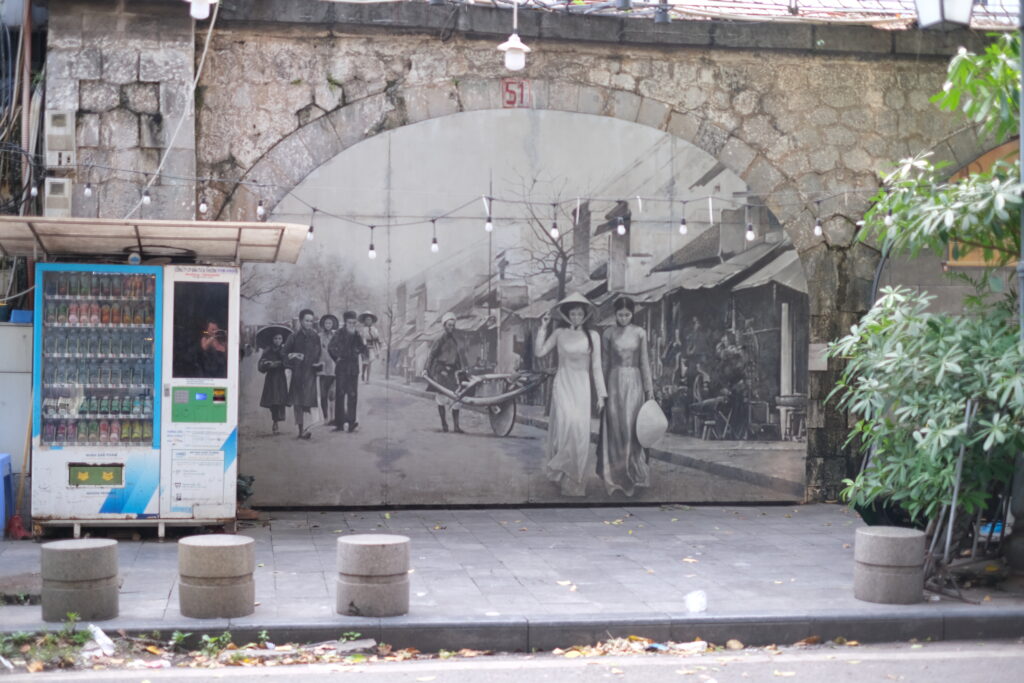
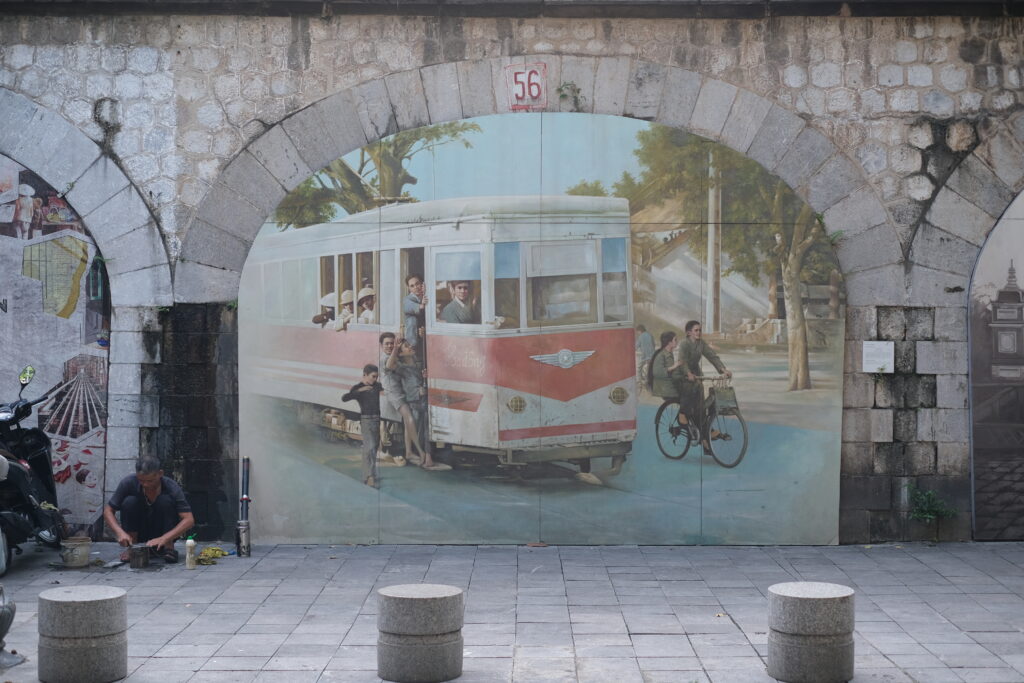
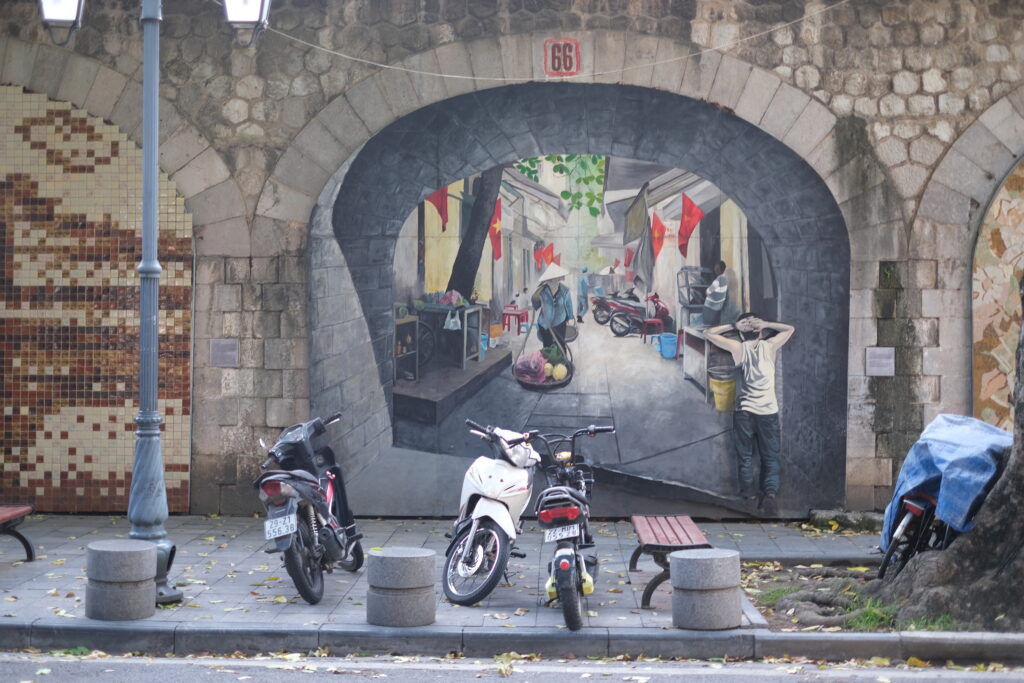
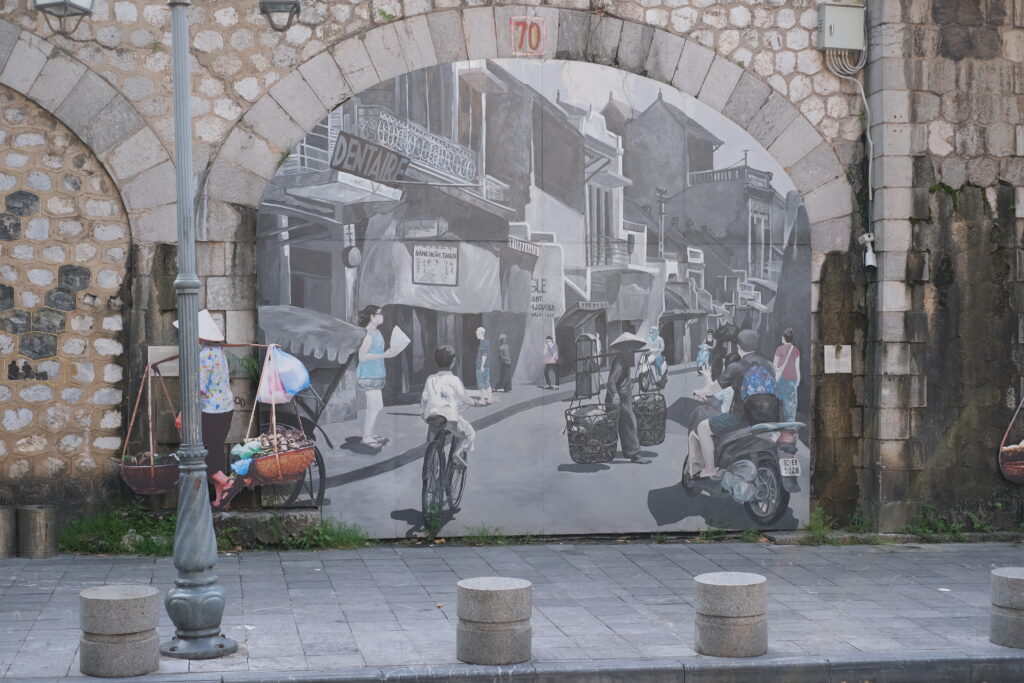
Street art in Hanoi offers a fascinating glimpse into Vietnamese history and culture, from record-breaking mosaics to interactive paintings in historic alleyways.
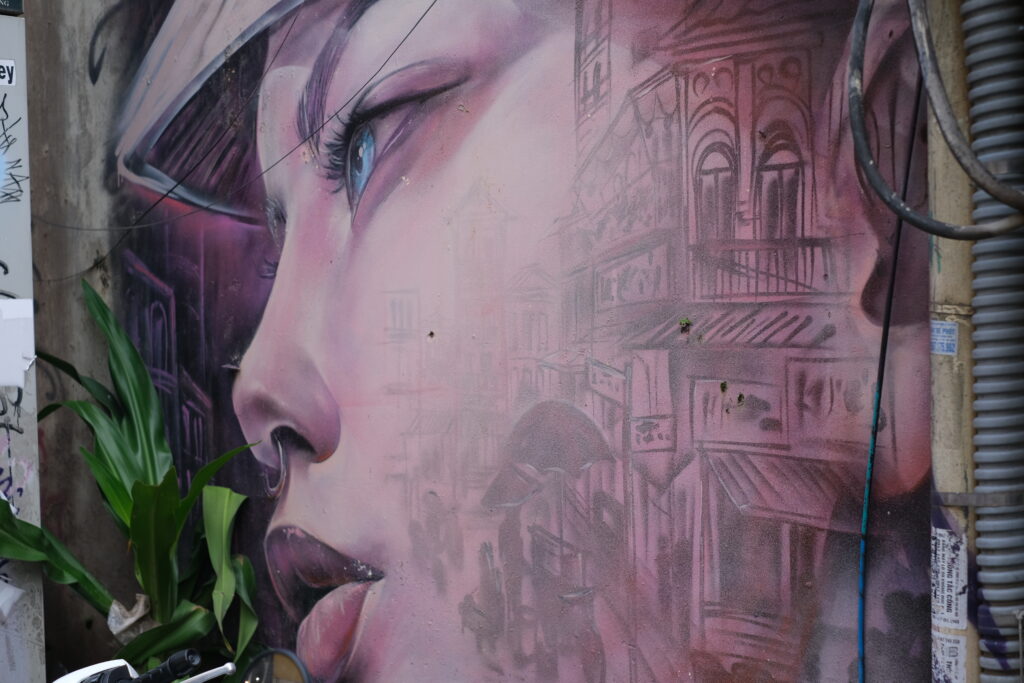
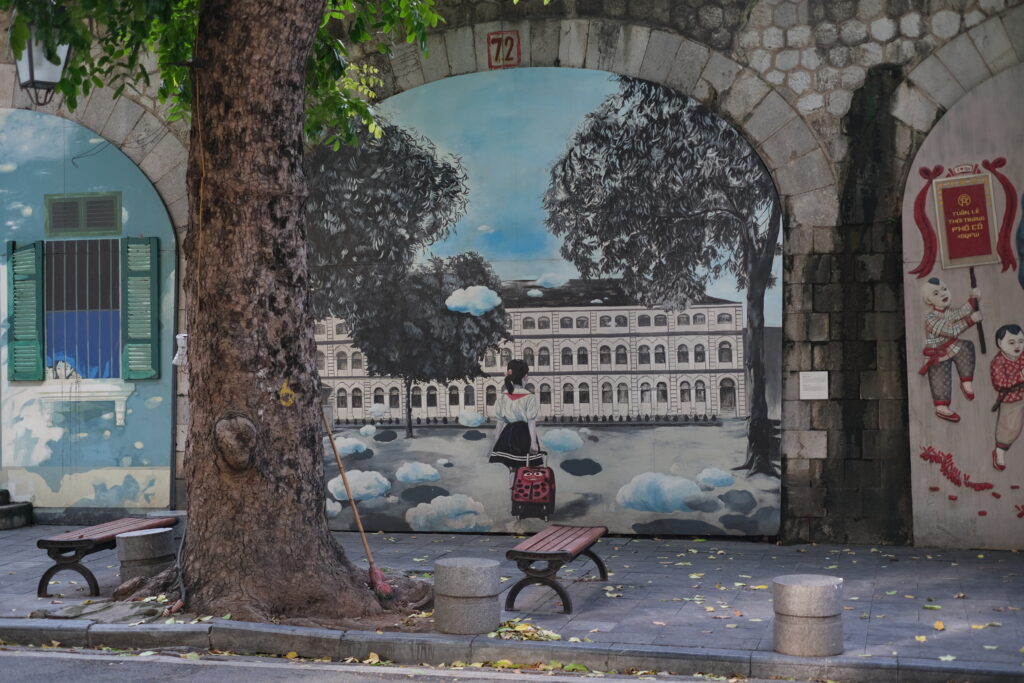
PHUNG HUNG MURAL STREET
This 200-meter-long stretch of street in Hoan Kiem District is lined with 17 murals in historic arches beneath a railway line. The artwork depicts scenes from old Hanoi, traditional crafts, and festivals. Some of the paintings are interactive and are perfect for taking photos.
HANOI CERAMIC MOSAIC
Listed in the Guinness Book of Records as the world’s longest (over 6 km), this mosaic stretches along the Red River floodplain. It depicts different eras of Vietnamese history and modern motifs created from tiles from the Bat Trang ceramic village.
VIETNAMESE ETHNOLOGICAL MUSEUM
The Vietnam Museum of Ethnology is considered one of the best museums in the country. Covering an area of approximately 4.5 hectares, it documents the culture and customs of all 54 recognized ethnic groups of Vietnam. The main exhibition is divided into three main sections.

OUTDOOR EXHIBITION (GARDEN)
The most popular part of the museum, where authentic life-size replicas of traditional houses stand. You can enter the tall Bahnar Gông community house, the Ede longhouse, or the Giarai tomb.
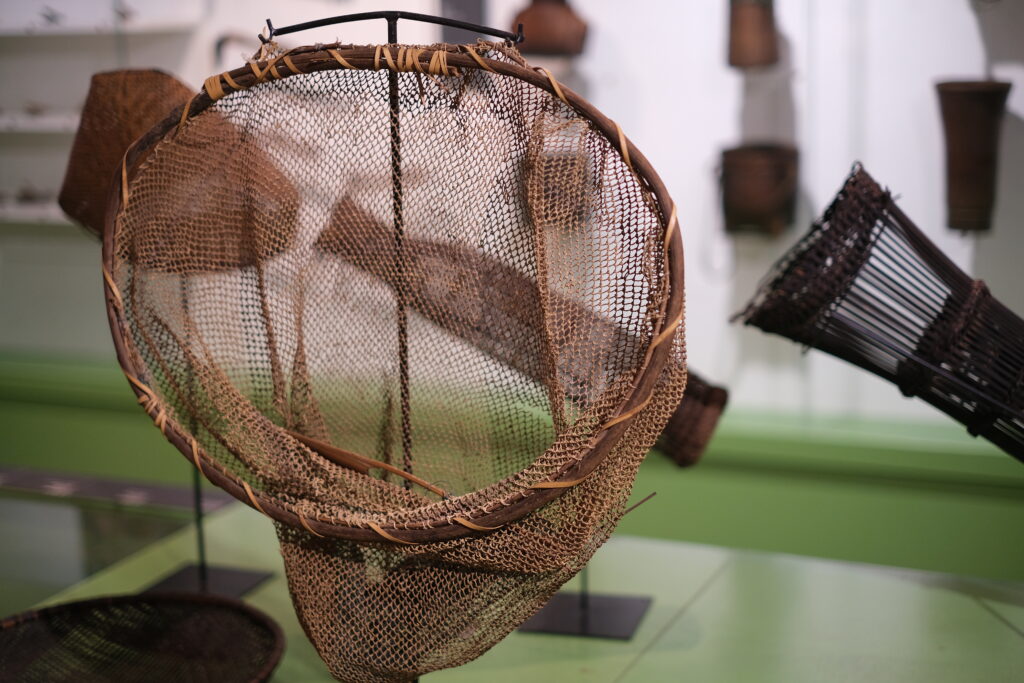
INTERIOR EXHIBITION (BRONZE DRUM BUILDING)
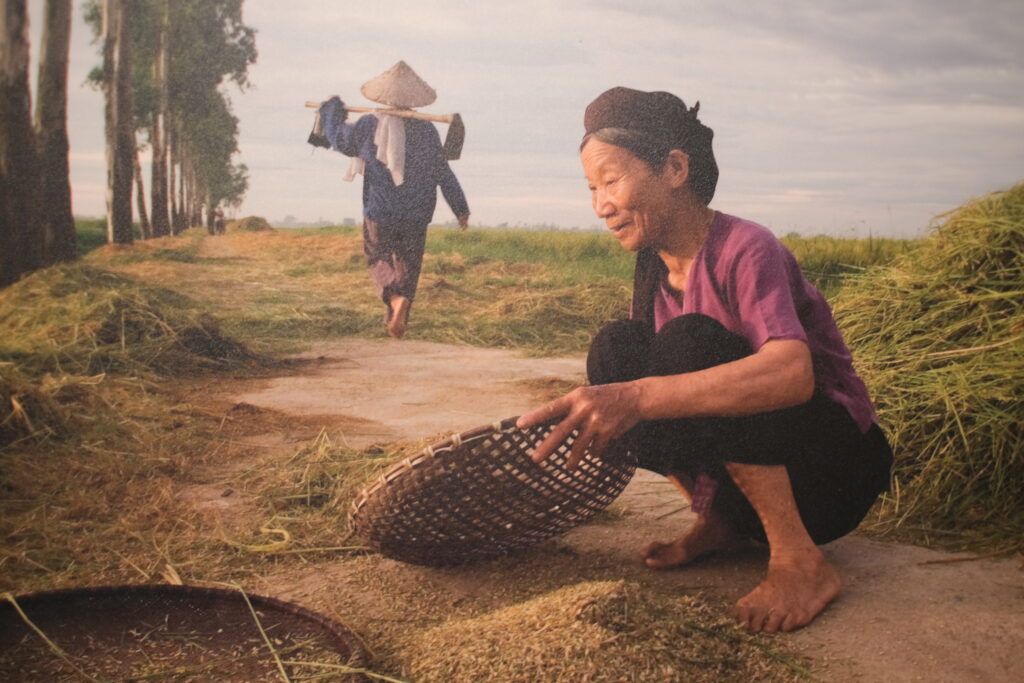
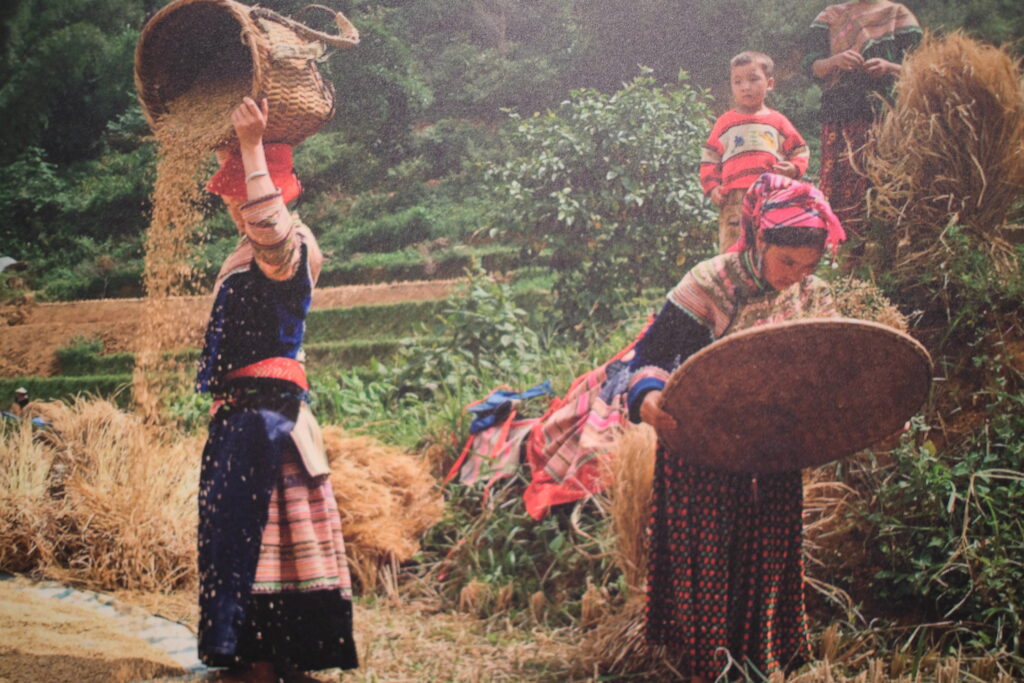
Focuses on the 54 ethnic groups of Vietnam. You will see traditional clothing, agricultural tools, religious objects and photographs of daily life.
KITE BUILDING
A modern wing dedicated to the cultures of other Southeast Asian countries. If you are going to mountainous areas (such as Sapa or Ha Giang), this museum can be very useful for you. It provides the necessary context to understand the diversity and history of local minorities. The descriptions of the exhibits are available in Vietnamese, English and French.
PRACTICAL INFORMATION
The museum is about 8 km from the Old Quarter, it is recommended to use a taxi or Grab. Opening hours are Tuesday – Sunday, 8:30 – 17:30. The museum is closed on Mondays.
Admission
Adults: 40,000 VND (approx. 40 CZK).
Students: 15,000 VND.
Children (6-18 years old): 10,000 VND.
Location: Cau Giay District, Nguyen Van Huyen Street
MAP:
VIETNAMESE WOMEN’S MUSEUM
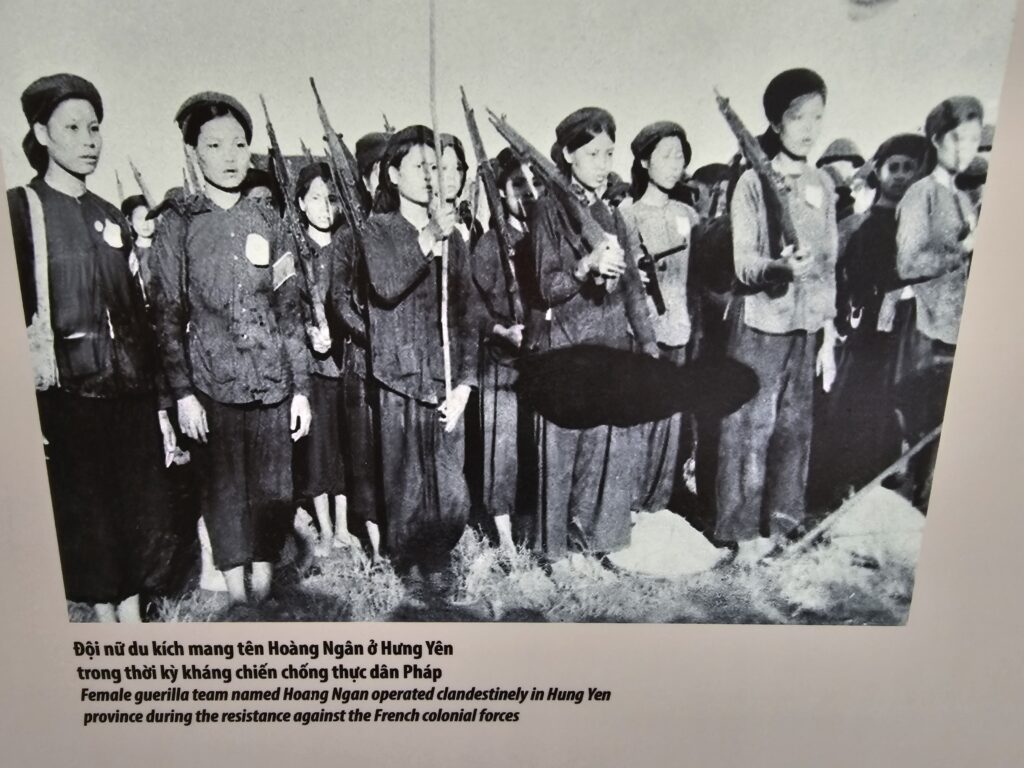
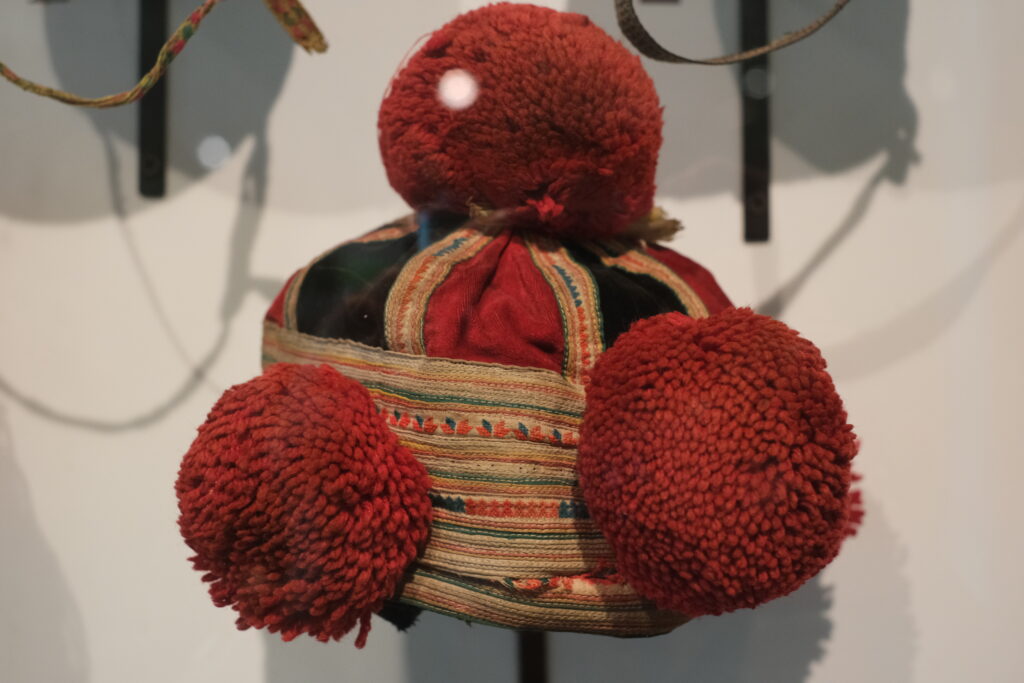
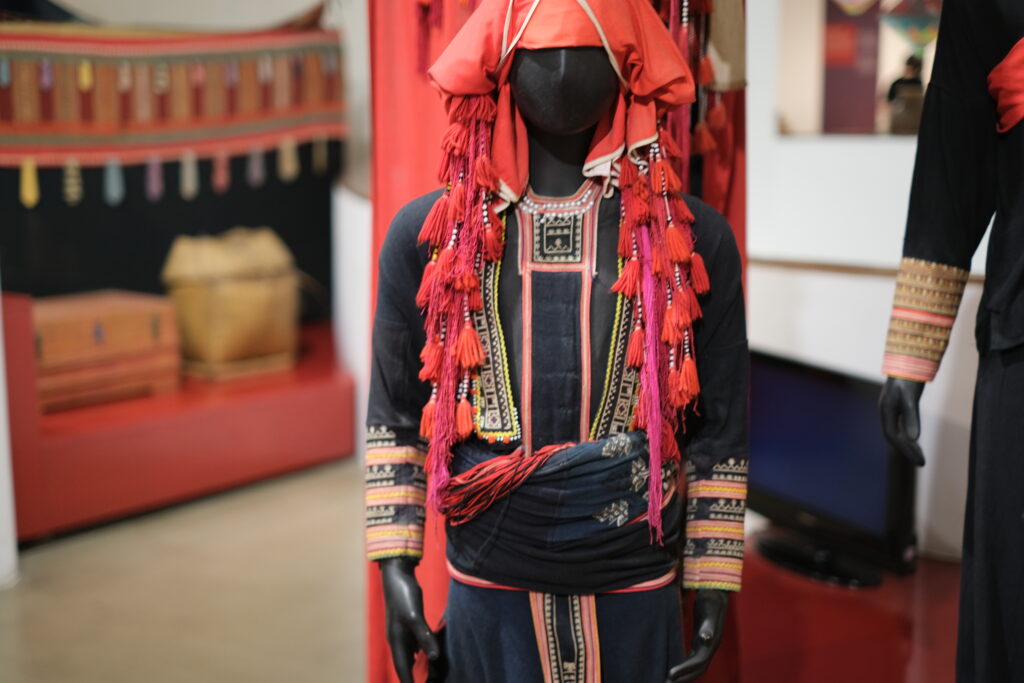
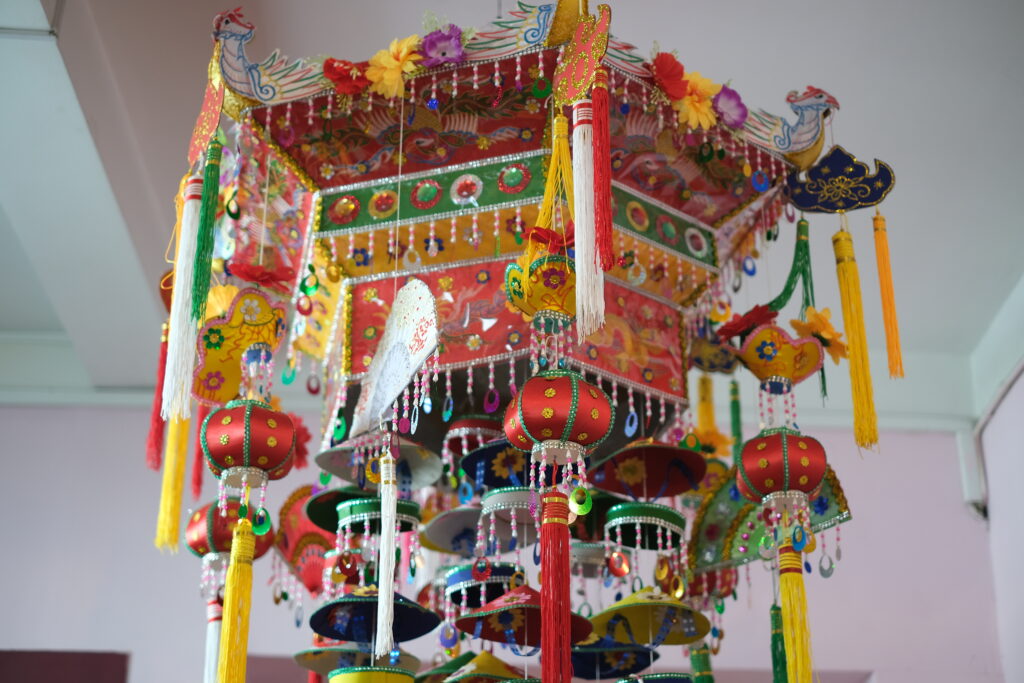
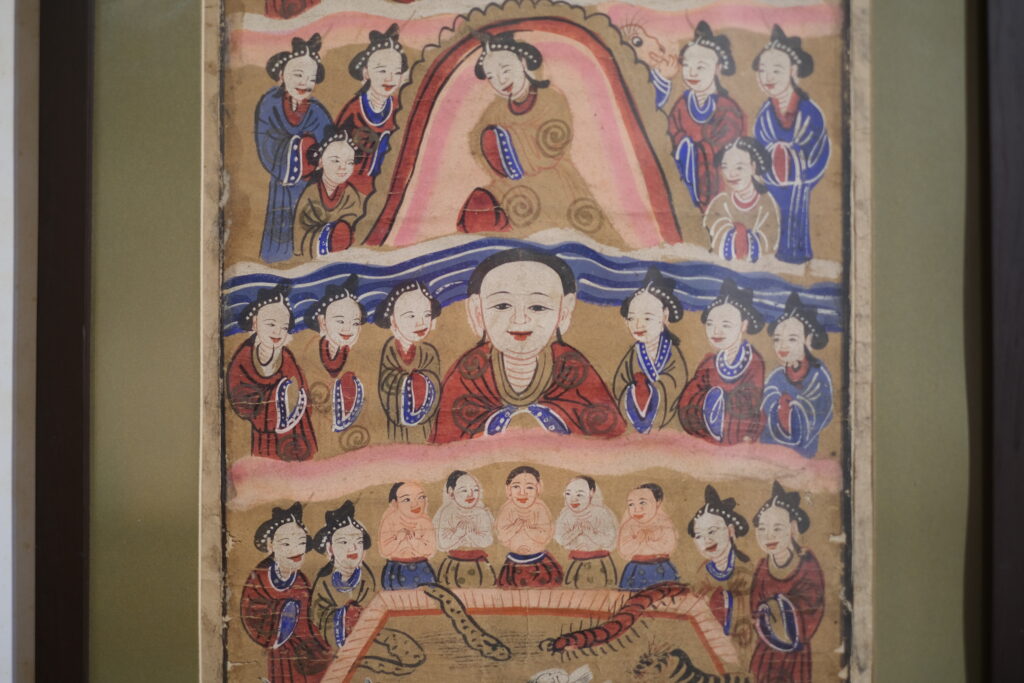
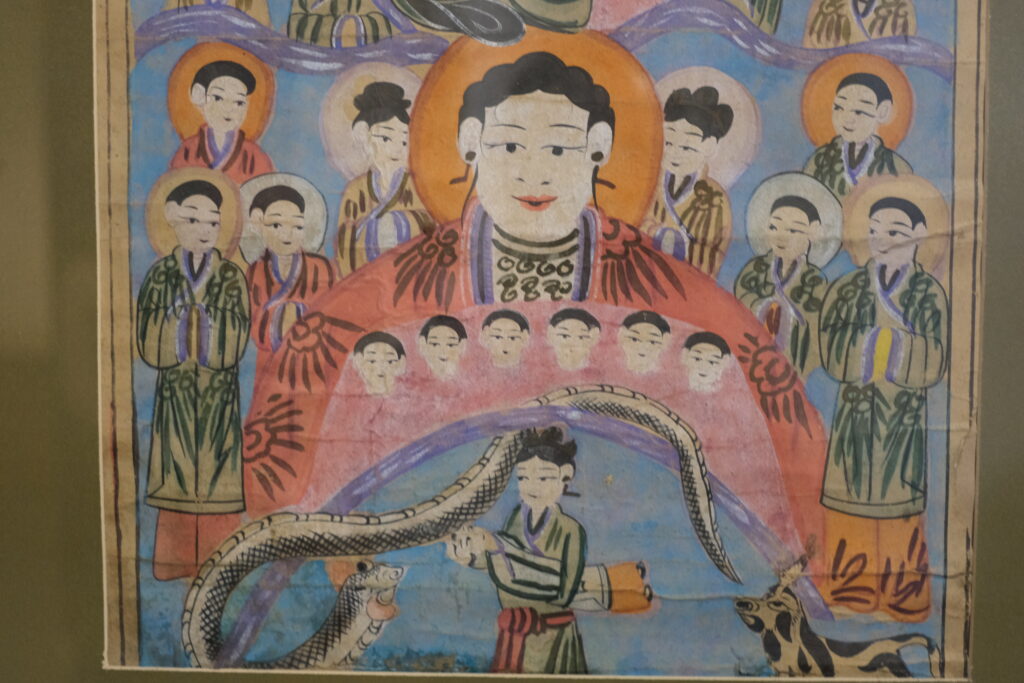
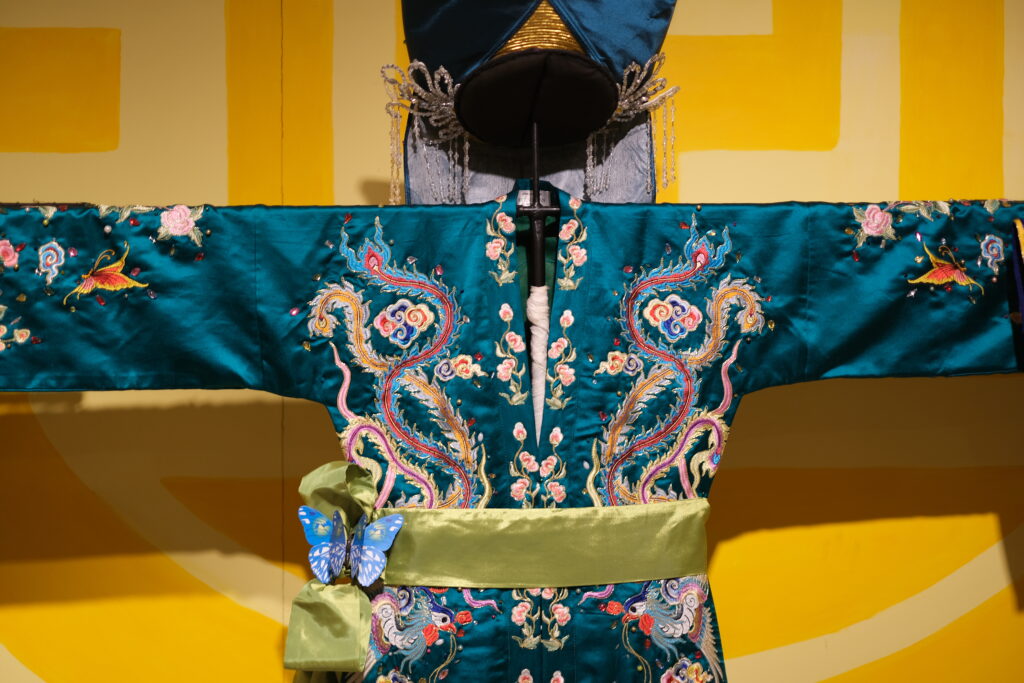
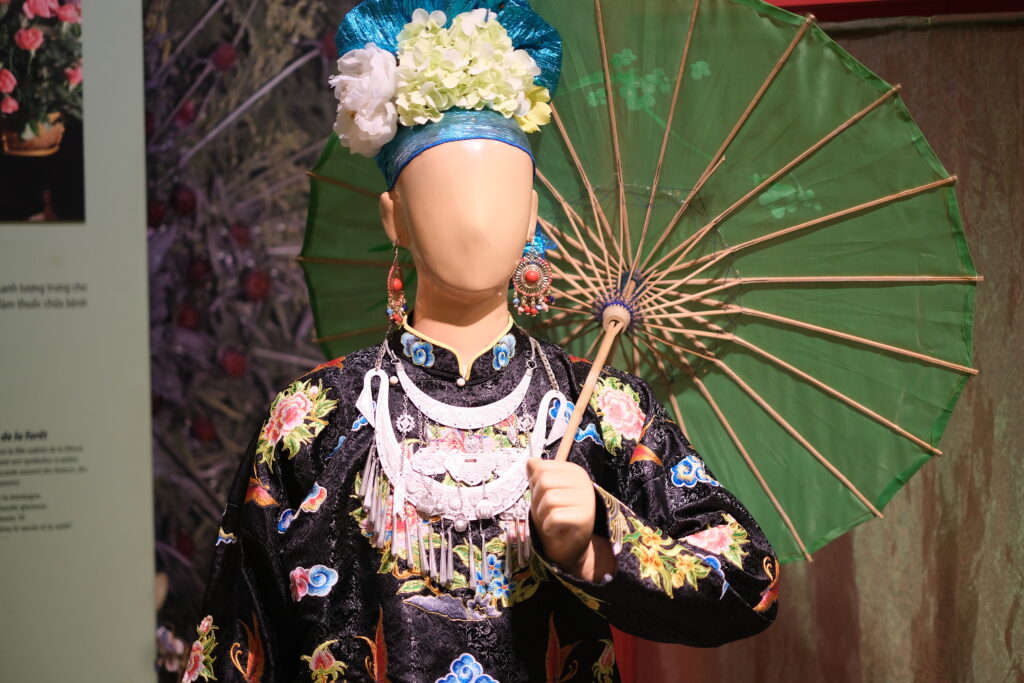
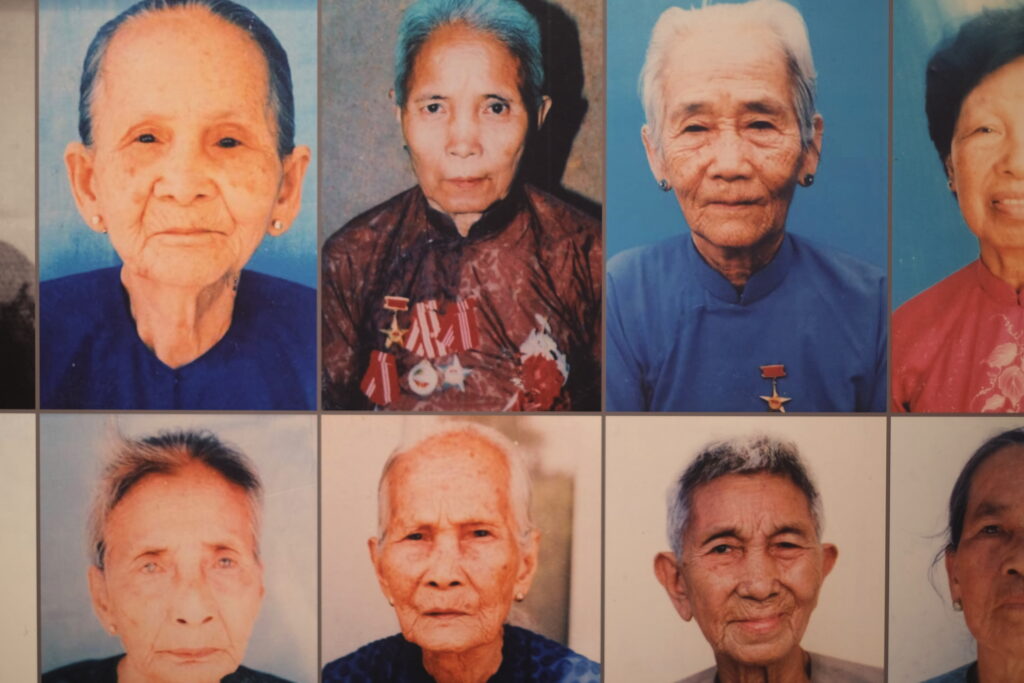
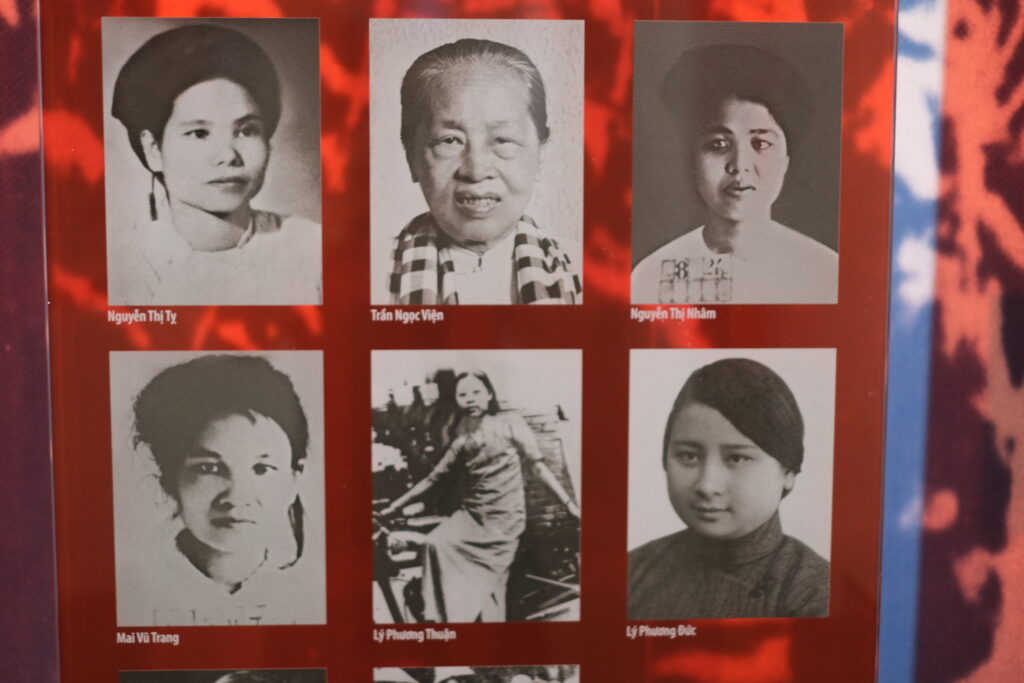
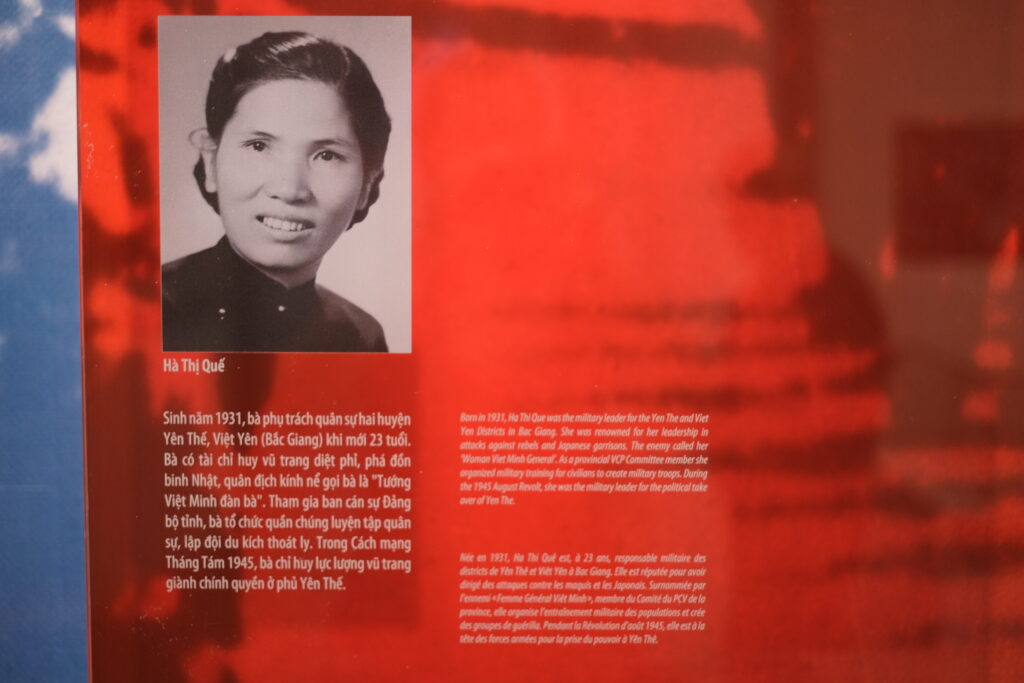
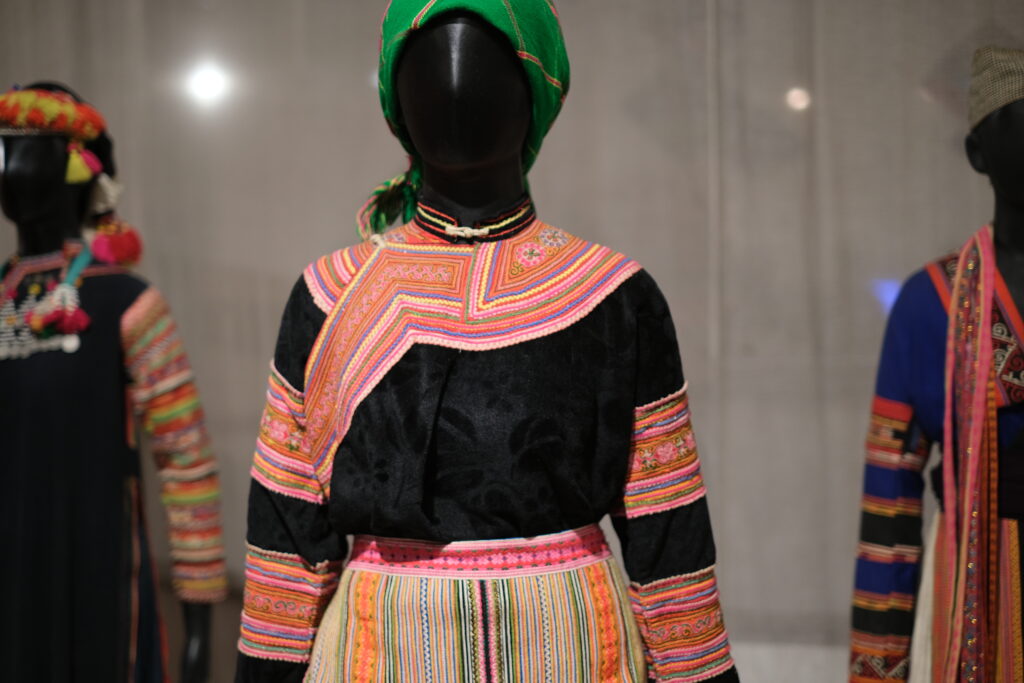
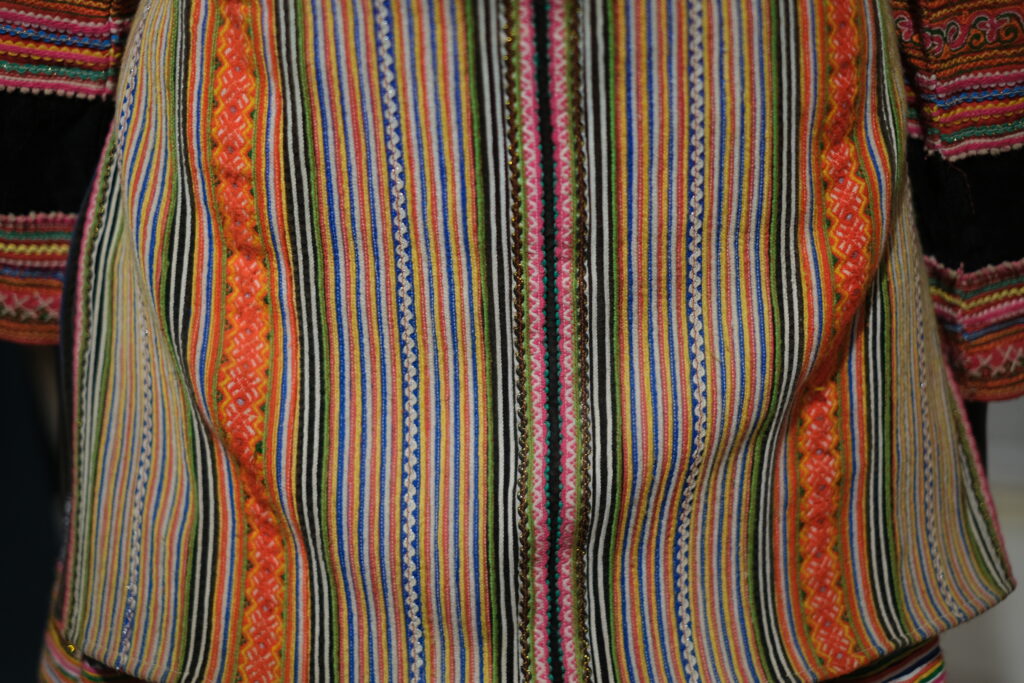
This museum is one of the best-rated cultural institutions in Vietnam. It maps the role of women in family, history and culture through more than 40,000 artifacts, photographs and personal stories. The exhibits are divided into four floors according to main themes such as women in the family, women in history, women’s fashion and the cult of the mother goddess. You can see rituals associated with engagement, wedding, motherhood and daily life of different ethnicities. Powerful stories of women during the wars of independence, examples of their courage, imprisonment and leading the resistance. A display of traditional costumes, jewelry and fabric decoration techniques (e.g. batik) of 54 Vietnamese ethnic groups. A special section dedicated to Vietnamese folk religion and the worship of mother deities (Đạo Mẫu).
PRACTICAL INFORMATION
Opening hours: Daily from 8:00 to 17:00.
Admission: Adults approx. 40,000 VND (approximately 40 CZK), children under 16 years old 10,000 VND.
Services: Audio guide (in English, French and other languages), cafe and souvenir shop available.
Address: 36 Ly Thuong Kiet Street, Hoan Kiem District, Hanoi (a few minutes walk from Hoan Kiem Lake).
MAP:
NIGHT HANOI
When the sun goes down, Hanoi doesn’t turn off. It just switches modes. The streets fill with plastic stools and kegs of beer. Fresh draft beer, light and refreshing, costs a few crowns. You sit next to locals who chat, laugh and occasionally toast each other after work. No one cares where you’re from. Everyone cares if you’ll have another.
WHAT TO WATCH OUT FOR IN HANOI
BEWARE OF STREET TRAPS

- In the historic center, you will come across smiling vendors who may innocently put a fruit basket on your shoulder for a photo or start cleaning your shoes without you asking. And how to do it? As soon as someone starts cleaning your shoes or handing you fruit, firmly but politely say “No, thank you”. If you let your photo be taken or your shoes be cleaned, be prepared for them to ask you for an exorbitant amount of hundreds of crowns.
- Copying hotels, hostels or travel agencies under the same name.
- Tap water? Better not! The tap water in Hanoi is not drinkable. Even the locals filter and boil it before drinking. And how to do it? Drink only bottled water. Also be careful with the ice in drinks at street stalls. In stylish cafes, it is usually from proven sources. At small tables on the sidewalk, it is a lottery bet.
- Bargaining and double prices: In tourist areas, it is common for the first price you hear to be double the real price. How to do it? Bargain with a smile. Don’t be aggressive. If you don’t like the price, move on. Often, the seller will call you back with a better offer. For transportation, use the Grab app (local Uber), where you know the price in advance and avoid haggling with taxi drivers.
- Be respectful of traditions and clothing. The Vietnamese are tolerant. Hanoi is more conservative than Saigon in South Vietnam. How to do it? Always keep your shoulders and knees covered when visiting temples, pagodas, or the Ho Chi Minh Mausoleum. If you don’t dress this way, you will probably not be allowed into sacred places.
HOW TO GET FROM THE AIRPORT TO THE CENTER OF HANOI
Noi Bai Airport is approximately 30 km from Hanoi city centre. The easiest ways to get there are:
EXPRESS BUS No. 86
I used this method too. This orange air-conditioned bus is ideal for tourists, as it has a dedicated luggage area and stops right at Hoan Kiem Lake and in the Old Quarter.
The price is 45,000 VND (approx. 45 CZK) and the journey takes 45–60 minutes depending on traffic. The bus runs approximately from 6:30 to 22:15. You can find it in front of the arrivals hall of both terminals T1 and T2. From January 2024, it will also accept contactless payments.
GRAB APP (Local “Uber”)
I think this is a very convenient and transparent option. I use it often throughout Asia. You can see the price in advance in the app, which eliminates the risk of fraud.
The price is usually 250,000–350,000 VND (approx. 250–350 CZK). It will take you directly to the door of your hotel. You can use the free airport Wi-Fi to order.
AIRPORT TAXI
The standard price is 300,000 – 400,000 VND. Use only official companies such as Mai Linh or Taxi Group. Always insist on turning on the meter or agree on a price in advance (about 15 USD).
AIRLINE MINIBUSES
Airline minibuses such as Vietnam Airlines or Vietjet operate minibuses that cost about 40,000 – 70,000 VND and take passengers to their offices in the city center or to hotels.
CITY BUSES (No. 7 and 17)
The cheapest option (about 9,000 VND) are city buses, which are often crowded, have no space for suitcases, and take longer due to the many stops.
Why love Hanoi? Hanoi is not “beautiful” in the classic European sense. It is shabby, noisy and sometimes dirty. It has incredible depth. It is a city of morning flower markets, a city where even in the heaviest rain you can drink coffee on the street under a plastic bag, and a city where people have not lost their optimism despite all the historical hardships.
Hanoi teaches you to be in the present moment, because in this chaos there is simply nothing else to do. Even that makes Hanoi seem lively, young and, above all, determined. There are lots of young smiling people here. Yes, Vietnam has one of the youngest populations in Asia. The cafes are full of students with laptops and iced coffee in their hands. And there is nothing better than just sitting in one of those cafes in the morning and watching the hustle and bustle around you.
I would like to come back here again, because this city has completely enchanted me. Hanoi is not a city for one day. It is a city to be experienced. And the longer you stay, the more they let you see beneath their noisy, chaotic, but immensely lively exterior.

If you liked the article, I would be happy if you share it or leave a nice comment below the article.

I would also like to invite you to join me on Instagram and Facebook.