
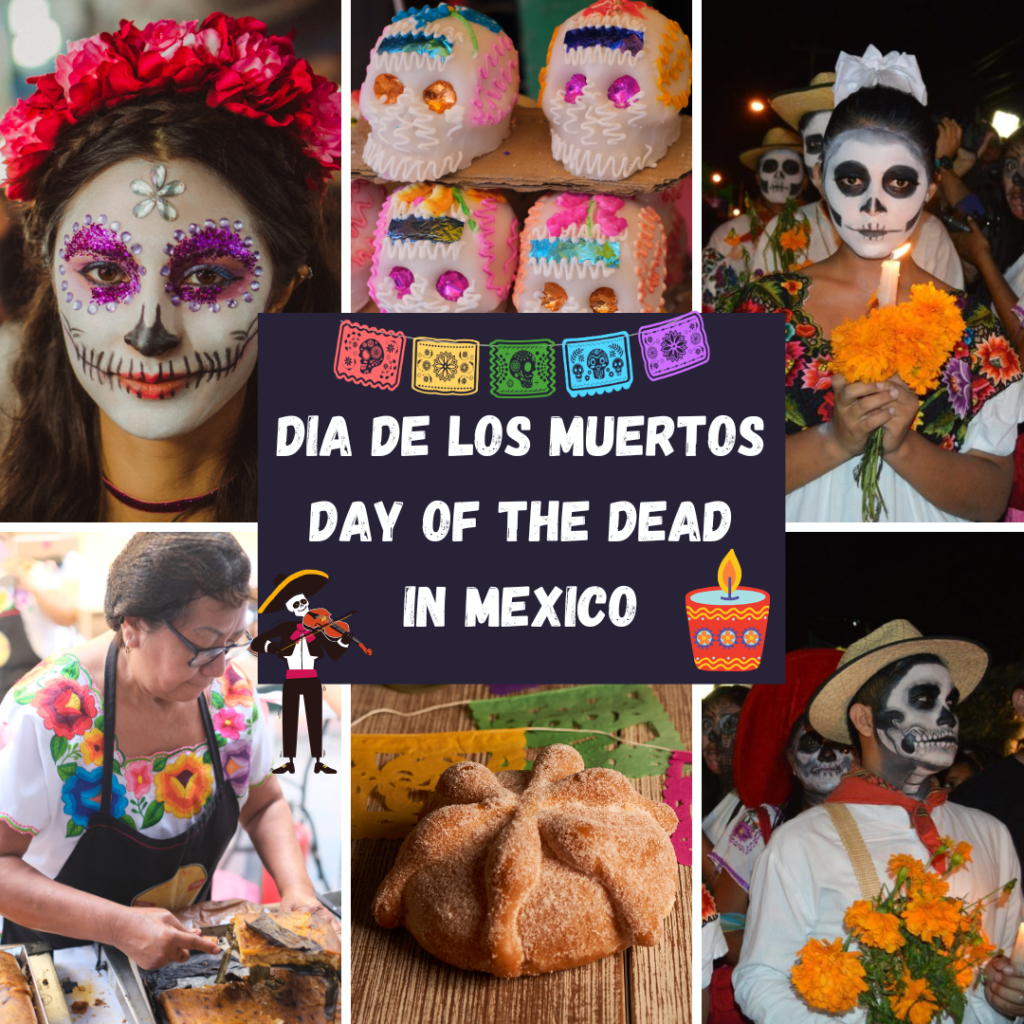
Death is usually sad and serious in Europe. In Mexico, it’s the opposite. There, they laugh at it, invite it to a celebration, and even build an altar for it. Día de los Muertos, the Day of the Dead, is one of the most colorful and expressive holidays in the world, and it’s no wonder it was inscribed on the UNESCO Intangible Cultural Heritage List. I wanted to experience this holiday at least once, and I have to say, it was simply amazing.
DAY OF THE DEAD IN MEXICO
Día de los Muertos (Day of the Dead) is one of the most important Mexican holidays. It is celebrated annually on November 1 and 2, but preparations begin several days in advance. In Mexico, it is a joyful celebration of life and the return of the souls of the deceased to their families. The holiday has its origins in pre-Columbian cultures, especially the Aztecs, who worshipped the goddess of death Mictecacihuatl. It was later linked to the Christian All Souls’ Day brought by the Spanish.
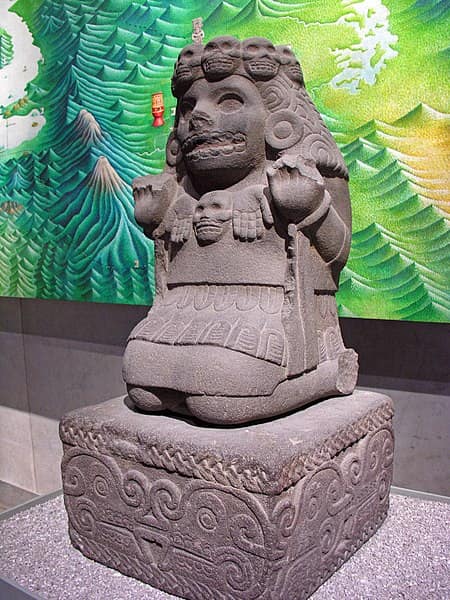
WHO WAS MICTECACIHUATL?
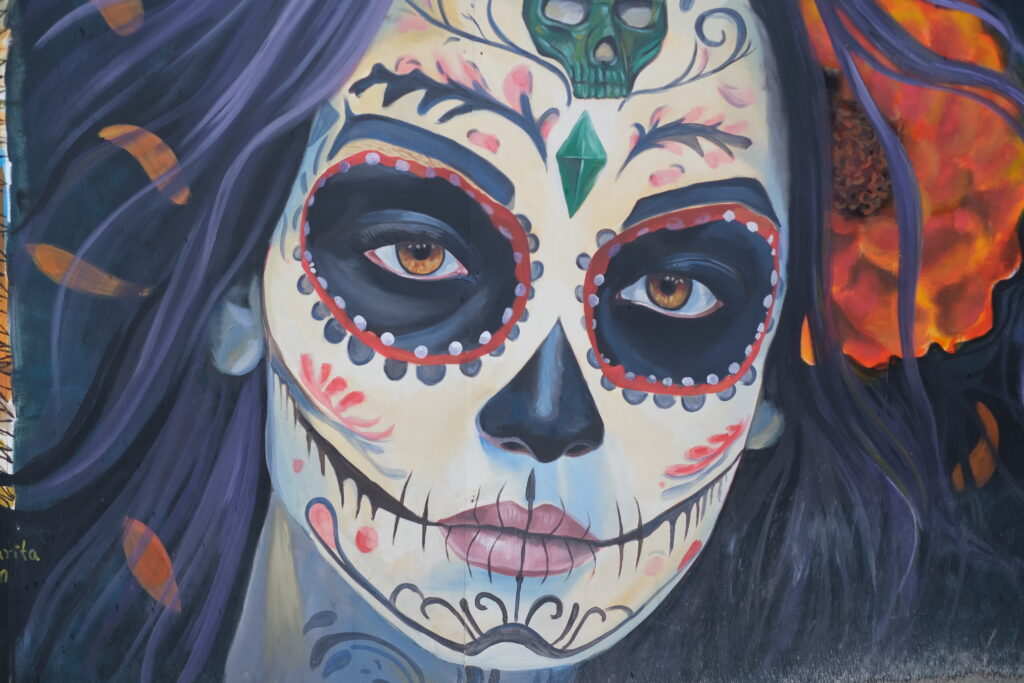
Mictecacihuatl was the Aztec goddess of death and queen of the underworld called Mictlan. She ruled with her husband, Mictlantecuhtli. She is responsible for guarding the bones of the dead and for administering ancient festivals for the deceased. She is often depicted with a skull and with her jaws wide open so that she can “swallow the stars” during the day. Her appearance includes a skull and is usually depicted wearing clothing and adornments typical of Aztec goddesses, such as a snake skirt and ornate headdresses.
A BIT OF HISTORY
Pre-Hispanic culture believed that death was a natural and necessary stage in the long cycle of life. When a person died, a ceremony was held to guide their soul on its journey to Mictlán. Therefore, offerings and altars were created to mark the path the souls would take.
With the arrival of the Spaniards, the celebrations evolved. The dates were adjusted to the Christian calendar to November 1 and 2, the Feast of the Dead and the Feast of All Saints. This also coincided with the end of the agricultural cycle of corn, the country’s main crop.
HOW IS IT CELEBRATED TODAY?
It is a celebration of sharing funny stories about the deceased, eating grandma’s favorite soup, and remembering relatives in photos on altars. In short, families get together, tell stories about those who are no longer alive, and instead of tears, laughter and music are heard. Sometimes people stay overnight in cemeteries. People picnic, sing, and celebrate with their ancestors.
In cities all over Mexico, people dress up in costumes and make-up, there are parades and parties, music and dancing. Markets sell sweets such as the famous sugar skulls and bread of the dead, copal incense, papel picado for decoration, cemeteries are filled with candles… All of this is decorated with thousands and thousands of flowers, such as marigolds, which according to tradition help create paths and guide loved ones to the altars.
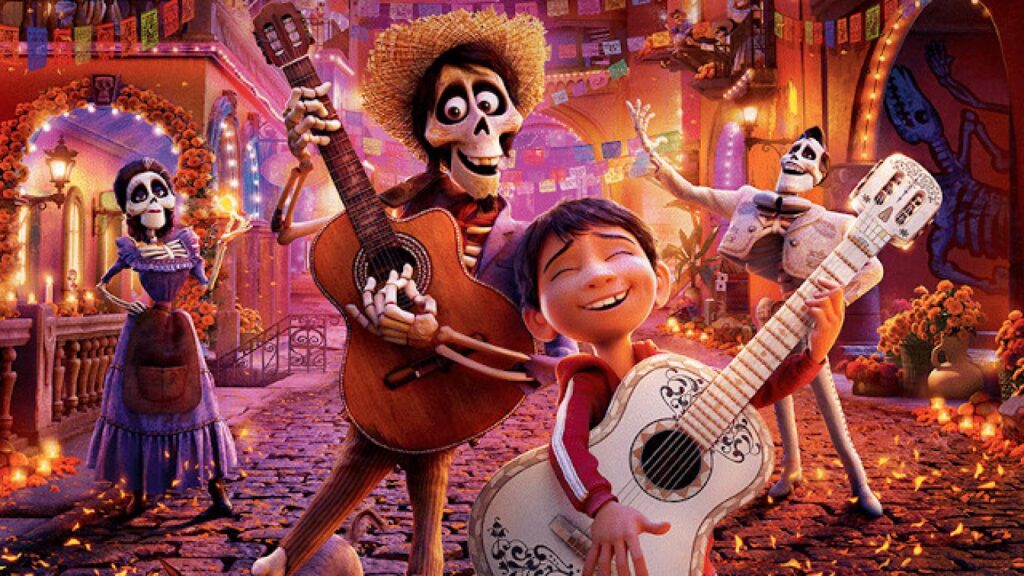
FILM COCO
A few years ago, Pixar released the film Coco, which illustrates this Mexican holiday in a beautiful and moving way. If you haven’t seen it yet, don’t miss it!
SYMBOLS AND TRADITIONS
OFRENDAS – ALTARS
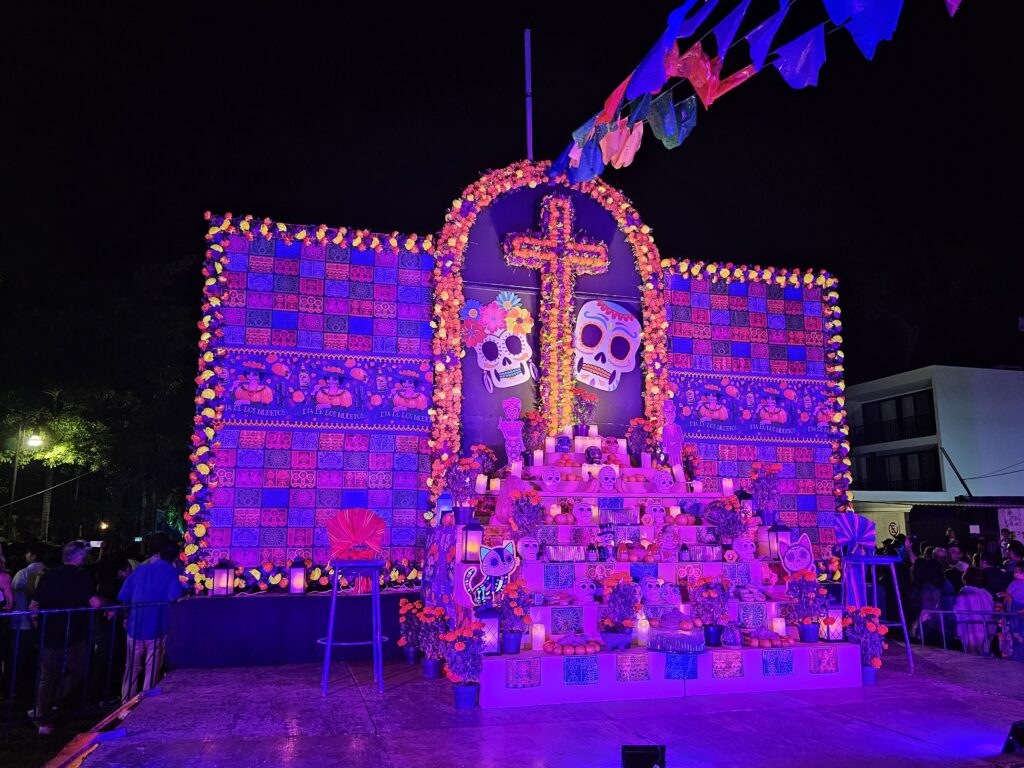
The heart of the celebrations are the altars that families build at home or in cemeteries. A typical ofrenda has several tiers, symbolizing the journey of the soul.
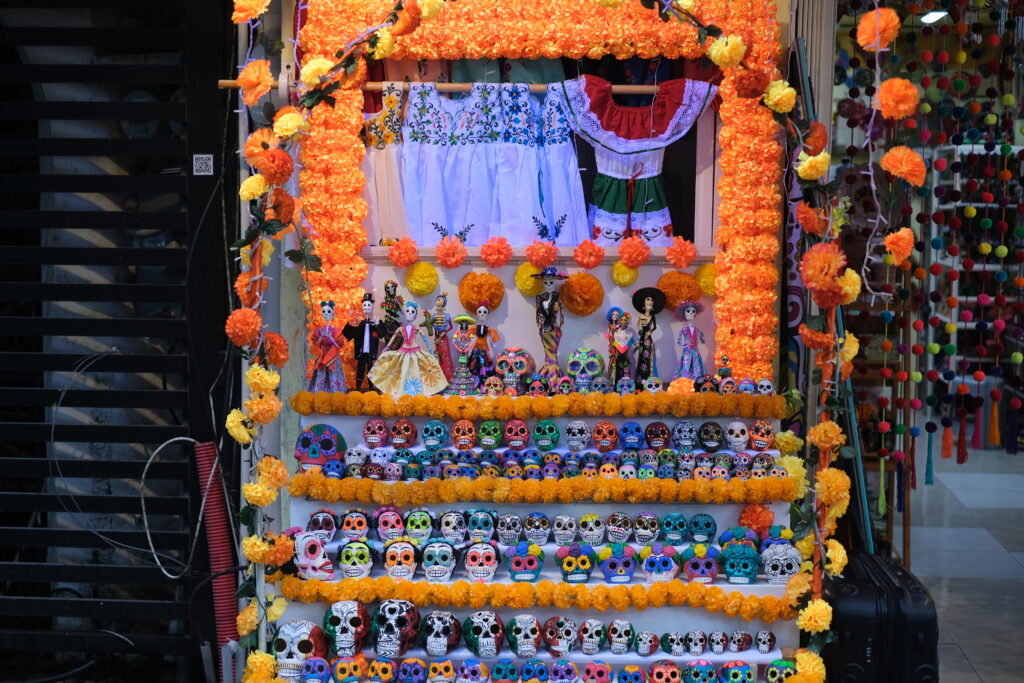
They must not be missing:
- photographs of the deceased – to whom the altar is dedicated, because the holiday is primarily about remembering
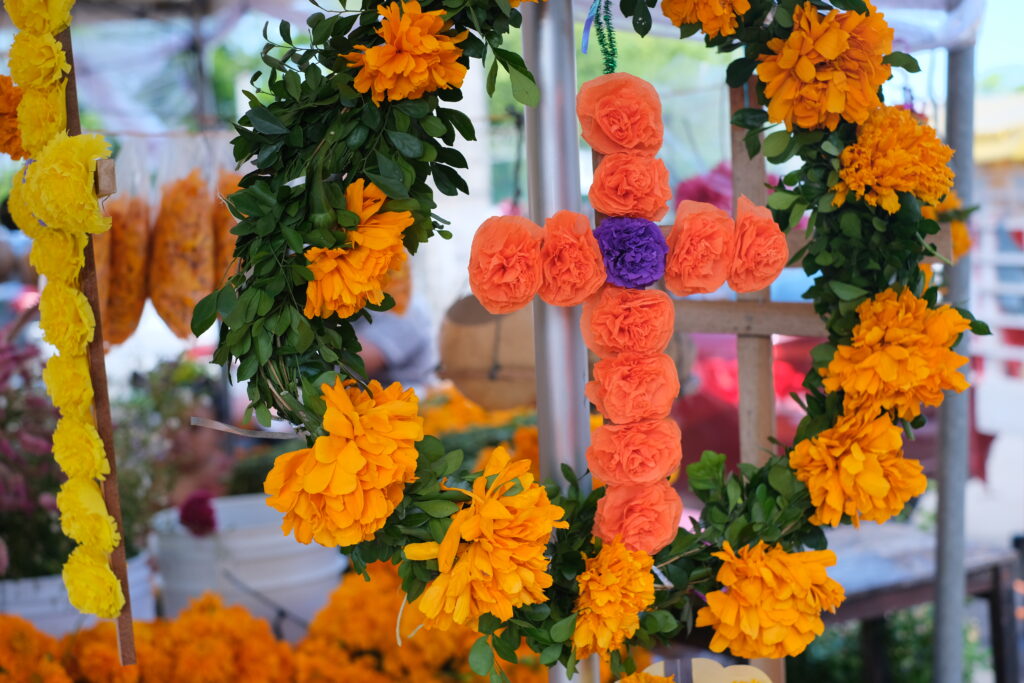
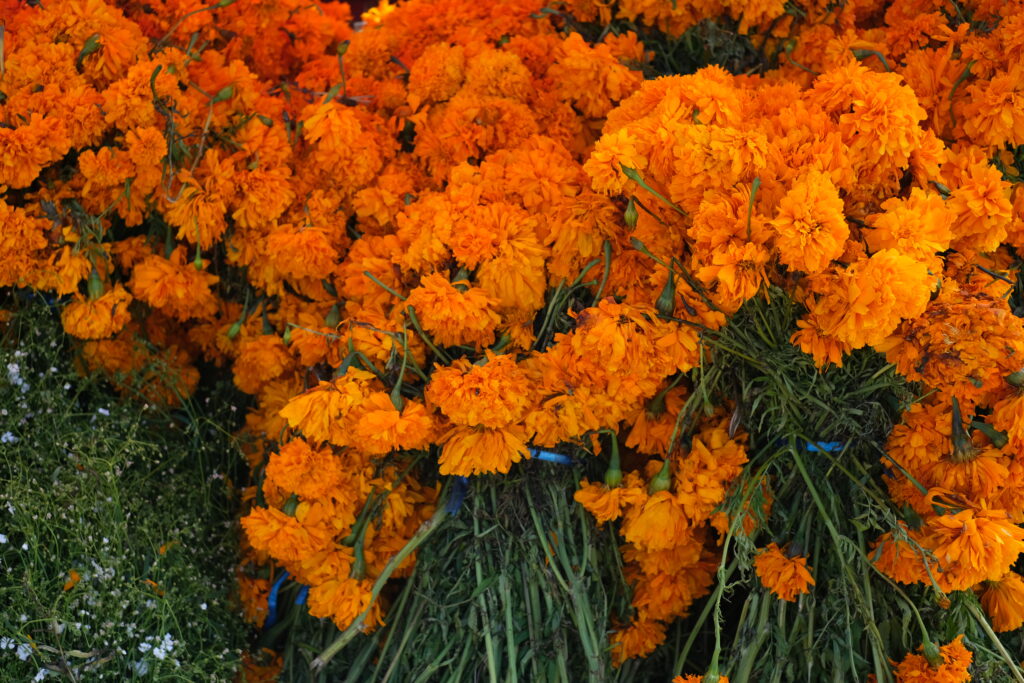
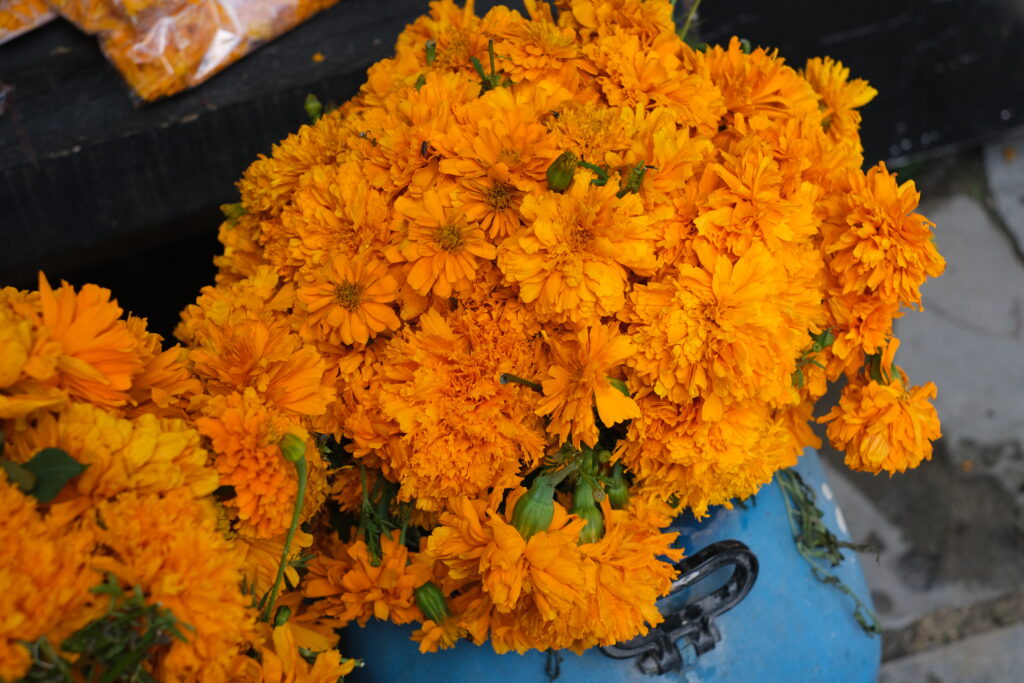
- cempasúchil flowers (Afrikaans, Tagetes erecta) – orange marigolds, whose distinctive orange color and scent are supposed to guide souls back home
- sugar skulls (calaveras de azúcar) – with colorful icing, a symbol of joy and playfulness, a sweet reminder that death is not the end
- candles – represent the light that illuminates the path
- copal resin incense – cleanses the space
- traditional foods and drinks popular with the deceased – from tamales to tequila
- pan de muerto – a special sweet bread sprinkled with sugar and decorated with the shape of bones
SUGAR SKULLS
(CALAVERAS DE AZÚCAR)
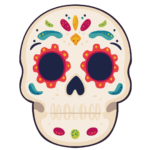
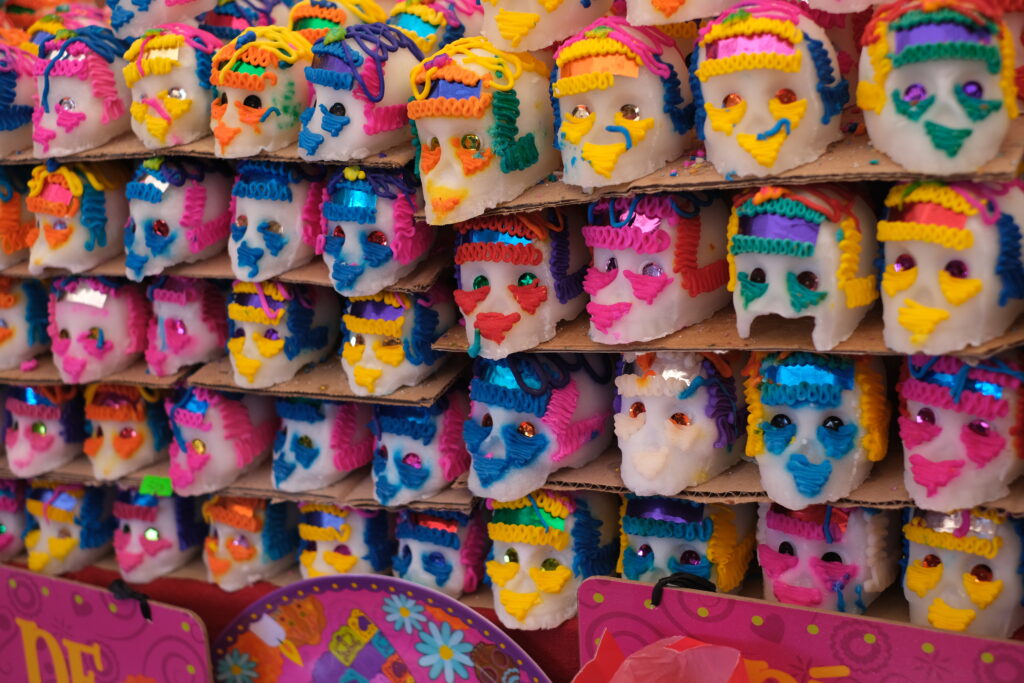
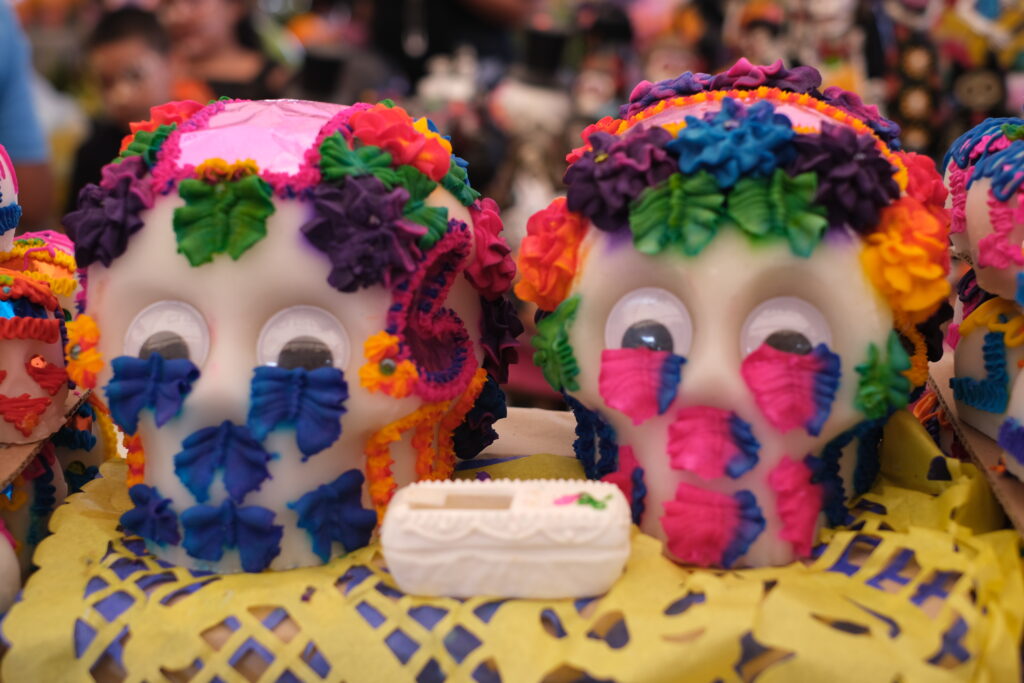
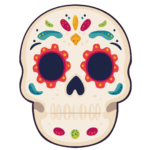
Sugar skulls are not a symbol of death, but a celebration of the lives of the deceased. They are made from sugar, decorated with colorful icing and decorative patterns. They bear the names of the deceased and are placed on altars to honor and welcome the souls. They are made from a mixture of white sugar, water and egg white powder. The sugar mixture is filled into special skull-shaped molds and allowed to harden. They are then decorated with colorful royal icing and other decorations such as glitter, feathers or beads.
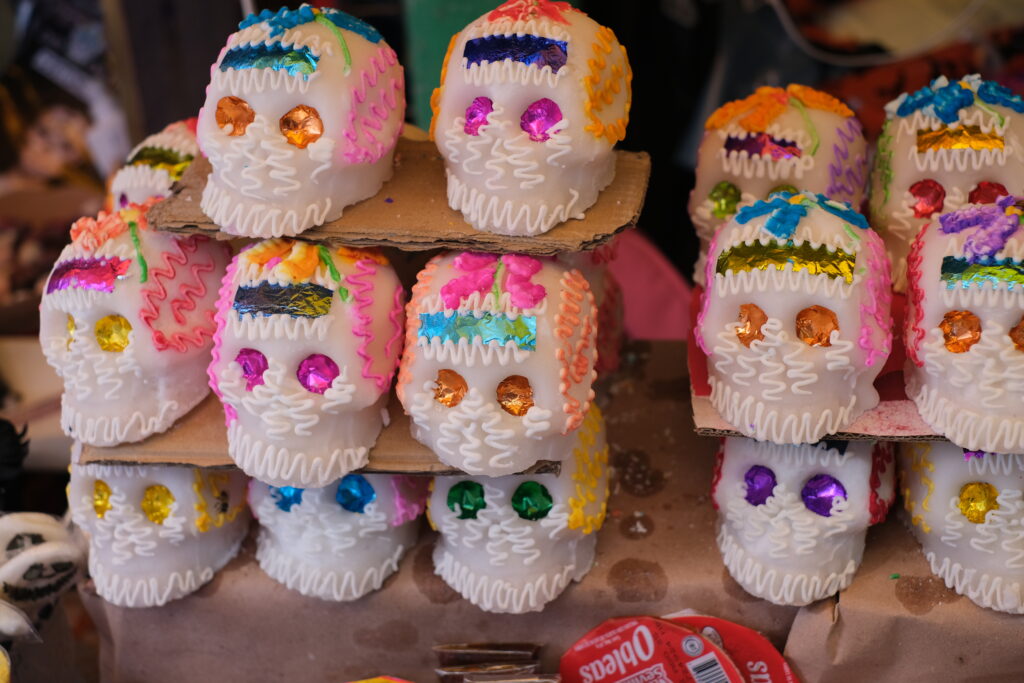
Each color on the skull has its own meaning. Red represents love and life, yellow death and memories, blue protection and spirituality, and purple sadness and respect.
According to the original Aztec believers, the skull represented the temple of the god of death and the seat of the soul.
CEMPASÚCHIL FLOWERS
OR MEXICAN MARIGOLDS
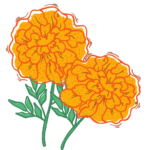
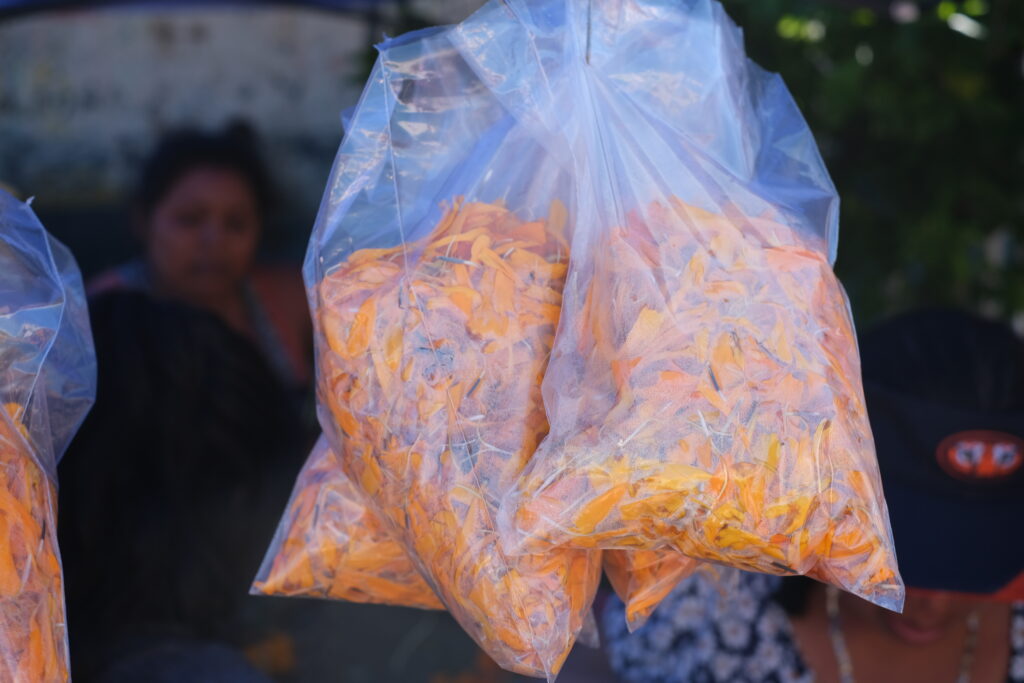
The bright orange petals and scent of these flowers are believed to help the souls of the deceased find their way back to earth to meet their living loved ones. Cempasúchil are seen as the “flowers of the dead” and are used to decorate altars and graves, becoming an important symbol of the connection between the worlds of the living and the dead.
LA CATRINA
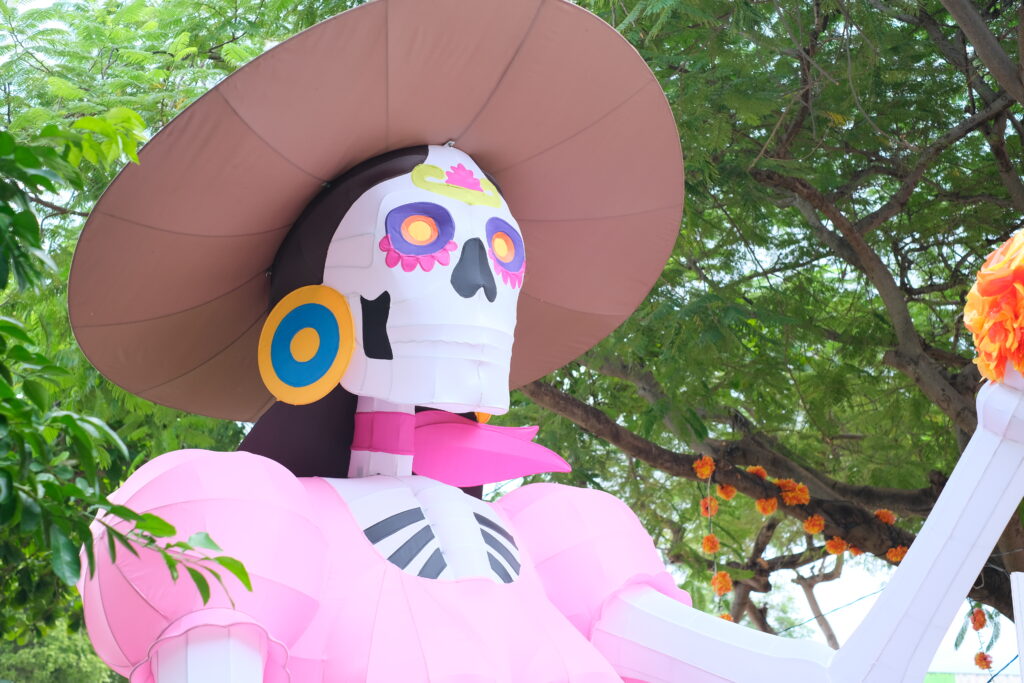
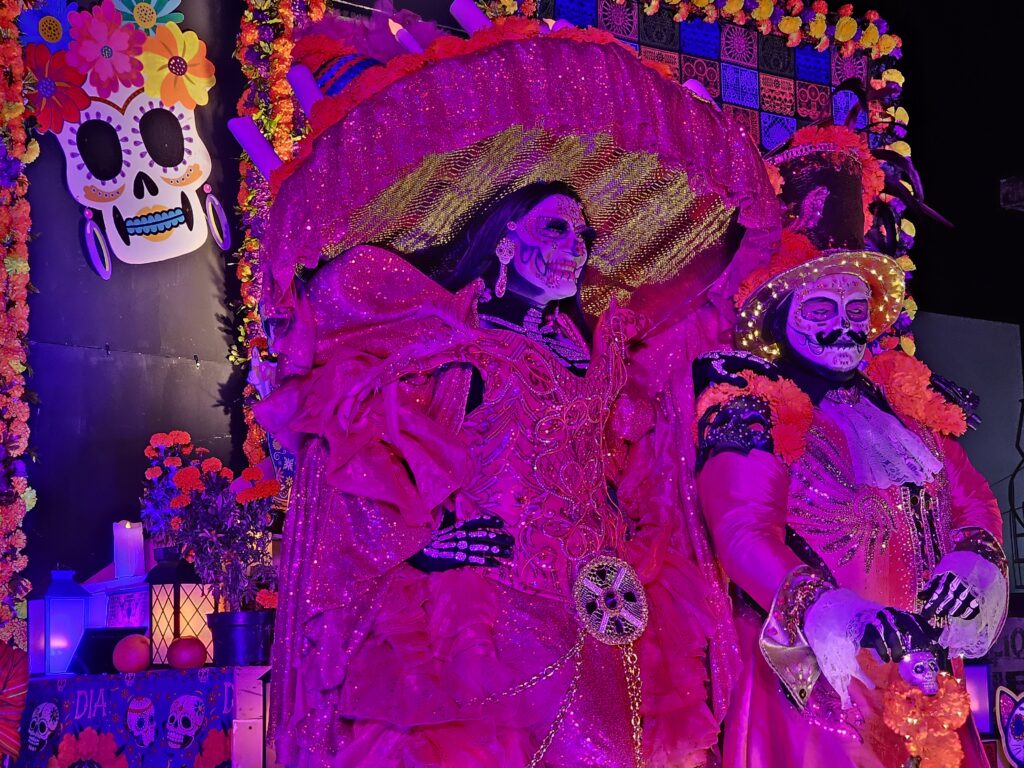
Another symbol is La Catrina. She is an elegant lady with a skull instead of a face.
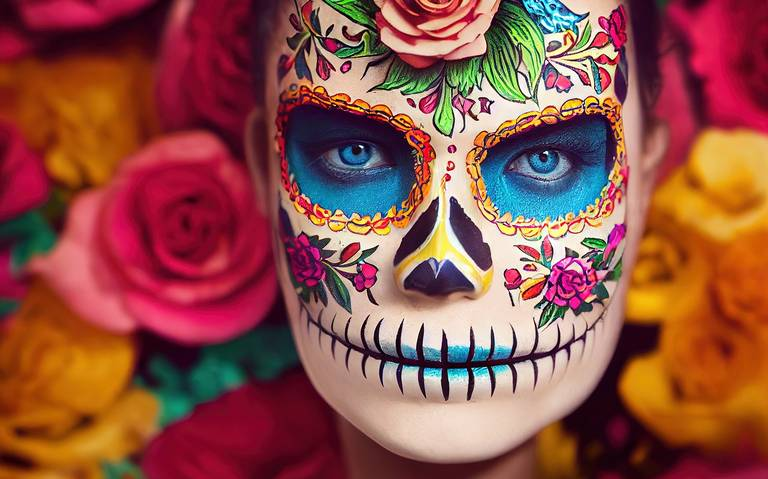
Created in the early 20th century by cartoonist José Guadalupe Posada, the character has become an icon of the holiday. Today, people paint their faces like La Catrina during the celebrations.

In the early 20th century, José Guadalupe Posada created the character La Calavera Garbancera (The Chickpea Skull). He created engravings of skeletons (calaveras) with which he criticized the social and political situation in Mexico at that time. It was a satirical criticism of the rich, who, following the European model, abandoned their Mexican roots and behaved arrogantly. Posada’s original character was a smiling skull with a hat, which was intended to point out that death is the same for everyone, regardless of wealth.
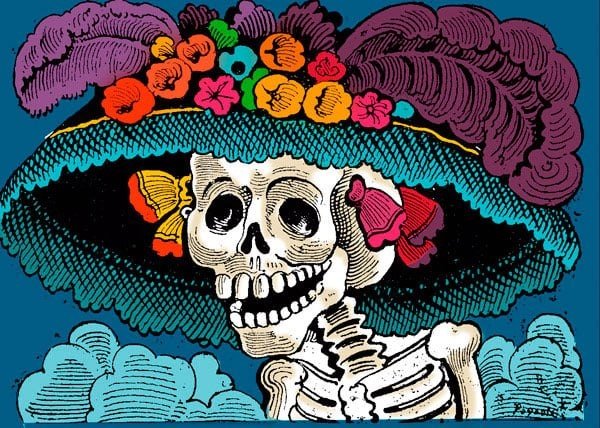
Decades later, in 1946, artist Diego Rivera popularized the character and renamed her La Catrina. He gave the character the elegant look we know today.
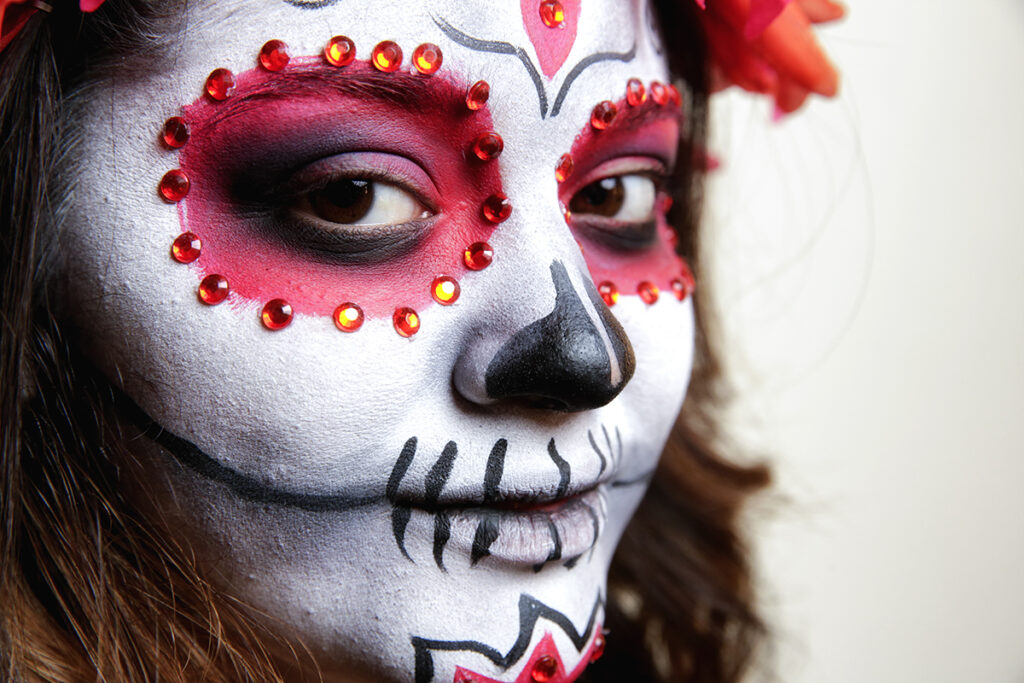
Interestingly, the tradition of painted skulls has made its way into the films not only Coco, but also Spectre with James Bond, where the opening scene shows a large parade in Mexico City.
COLORS, COSTUMES AND PARADE
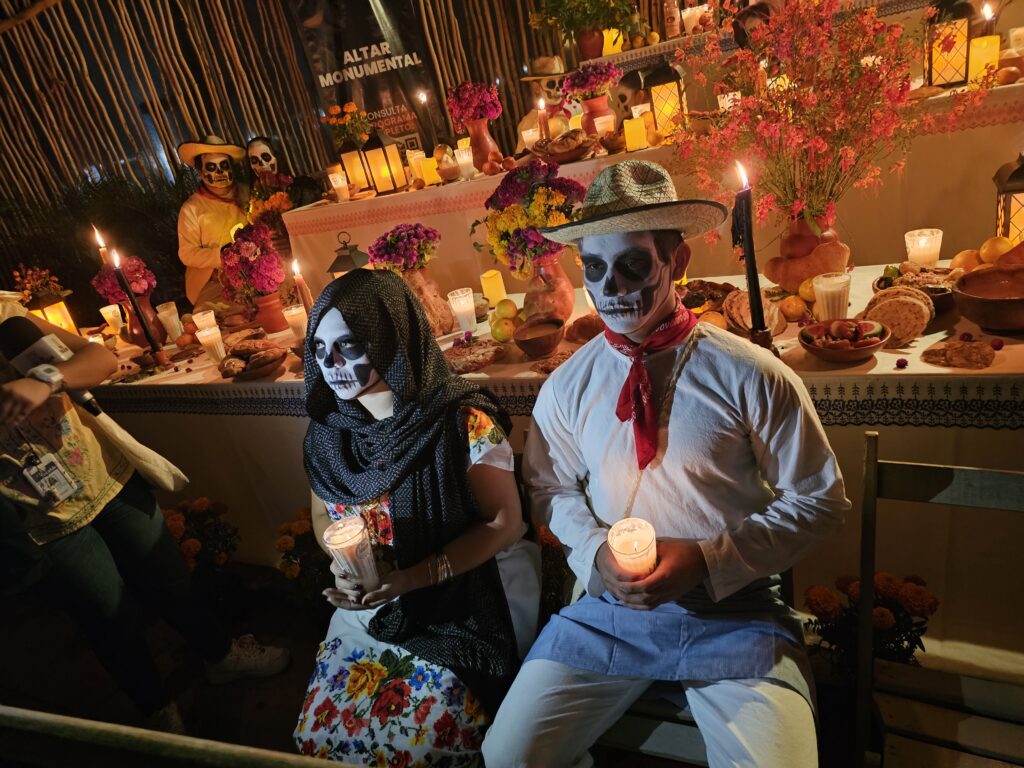
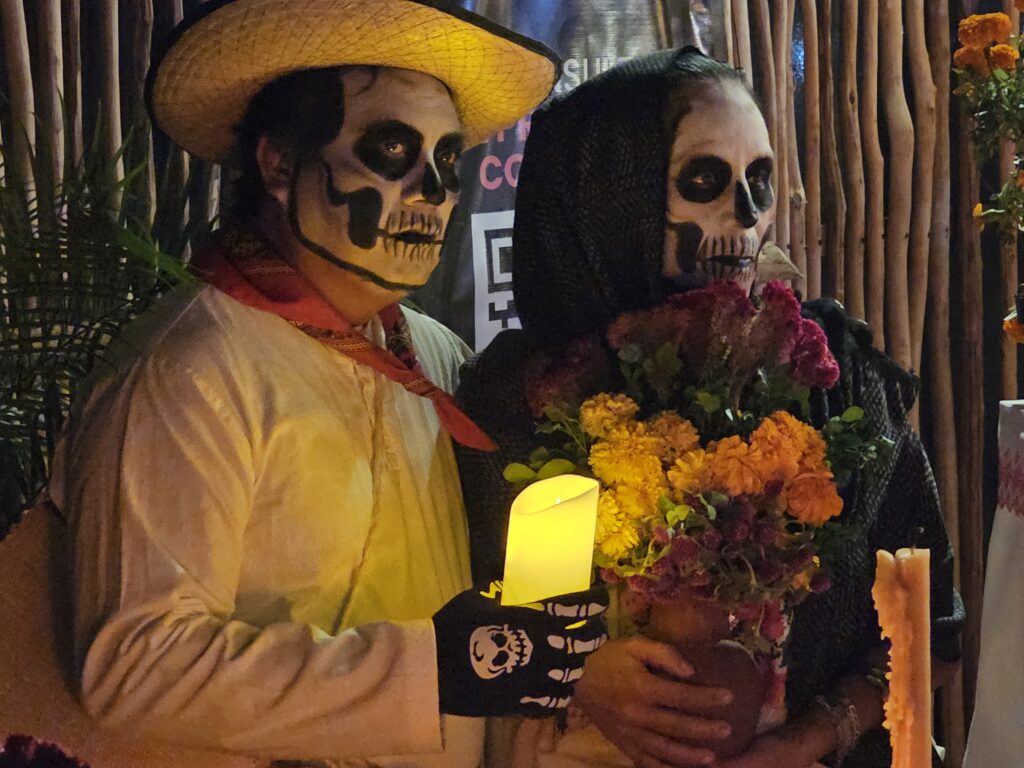
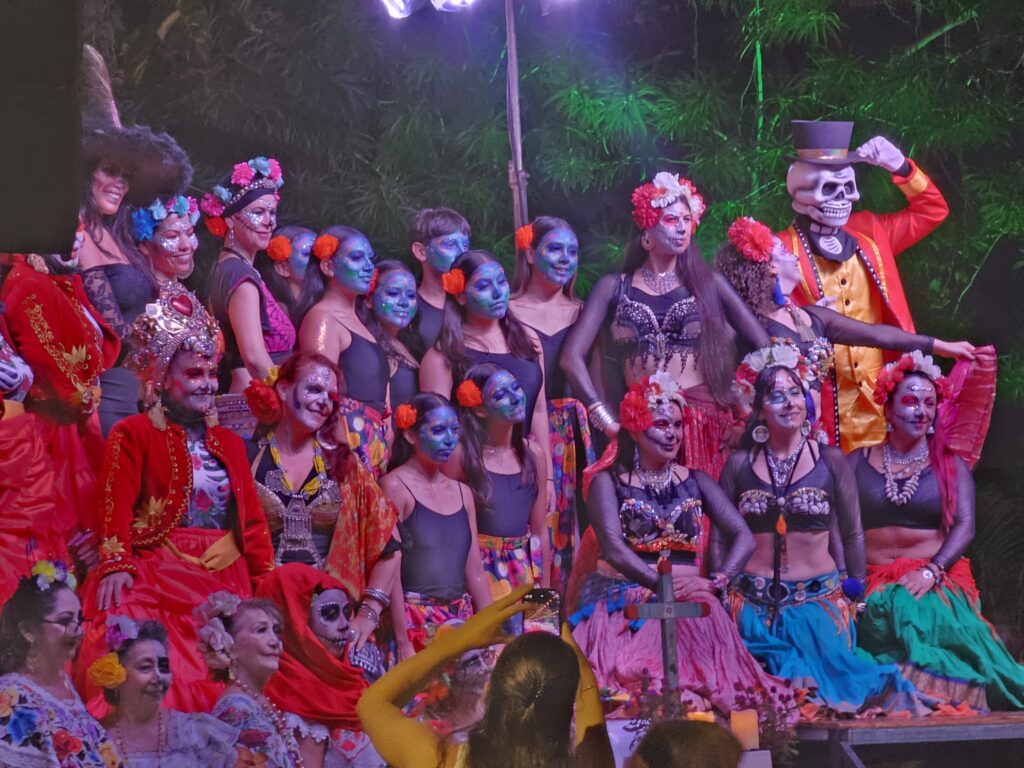
Walking through the streets of the Mexican city of Merida during Día de los Muertos, I felt like I had fallen into a Tim Burton fairy tale. During the holiday, paper garlands (papel picado), colorful cut-out flags that flutter in the wind, are everywhere. People paint their faces like La Catrina. They all look like the elegant lady with a skull instead of a face, who has become a symbol of the holiday. In many cities, there are parades and festivals where mariachis play, people dance, and candy is handed out.
THE MEANING OF COLORS
ON DAY OF THE DEAD

The colors used during the Day of the Dead have deep meanings. They are used on altars and cemetery decorations.
Purple – Symbolizes sadness and grief for the deceased.
White – Represents purity and hope.
Orange – Associated with marigold flowers and symbolizes life and death.
Red – Represents the blood and sacrifice of Christ.
Yellow – Symbolizes light and guidance for souls.
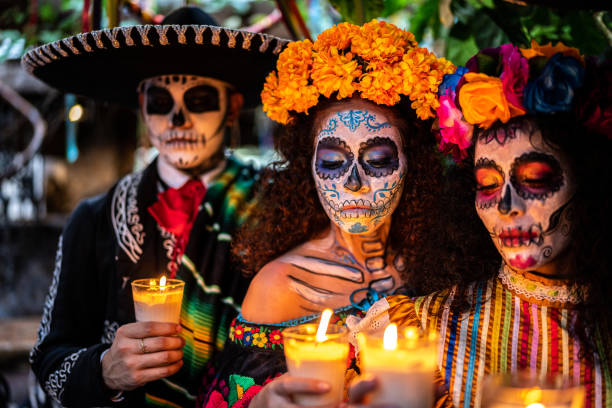
DAY OF THE DEAD IN MERIDA
In Yucatán, Day of the Dead is celebrated a little differently than in the rest of Mexico. It is called Hanal Pixán, which means “soul meal” in the Mayan language. For the local Mayans, it is one of the most important traditions of the year, combining Catholic All Souls’ Day with pre-Columbian rituals.
While carnival parades and the colorful La Catrina dominate elsewhere in Mexico, in Mérida the holiday has a more spiritual and intimate atmosphere.
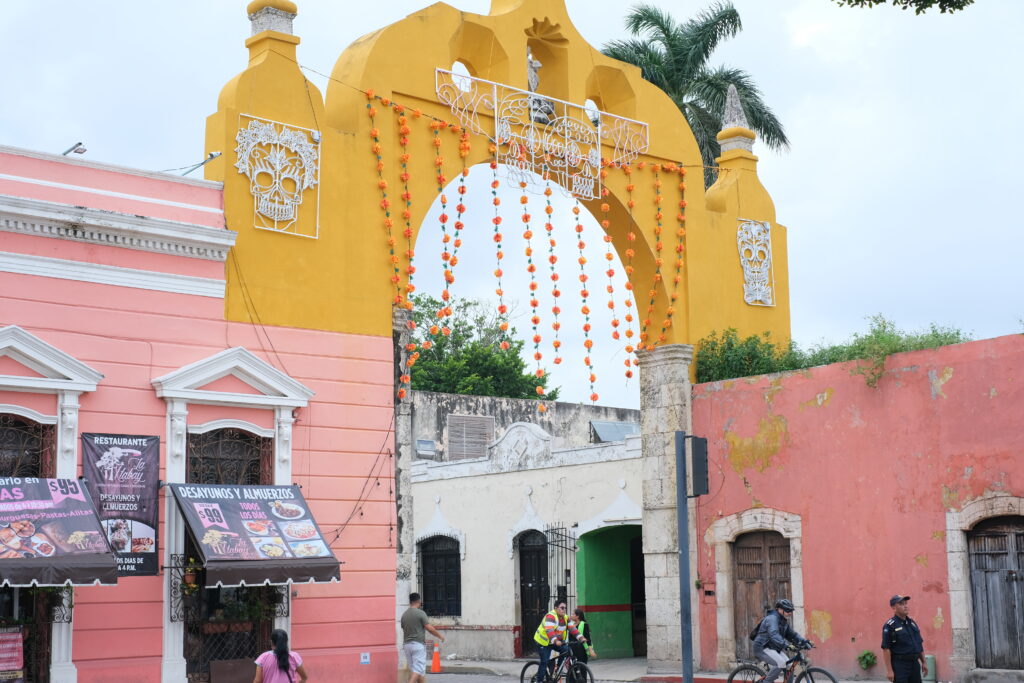
WHAT CELEBRATIONS IN MÉRIDA LOOK LIKE
HANAL PIXAN
Hanal Pixan, or Day of the Dead, is a tradition that dates back to pre-Hispanic times and reflects Mayan ideas about life, death, and the afterlife. The Mayans did not see death as the end, but rather as a continuation of the cycle of life. According to their worldview, during Hanal Pixan, the souls of the deceased are allowed to return to the world of the living and enjoy food and gifts prepared by their families.
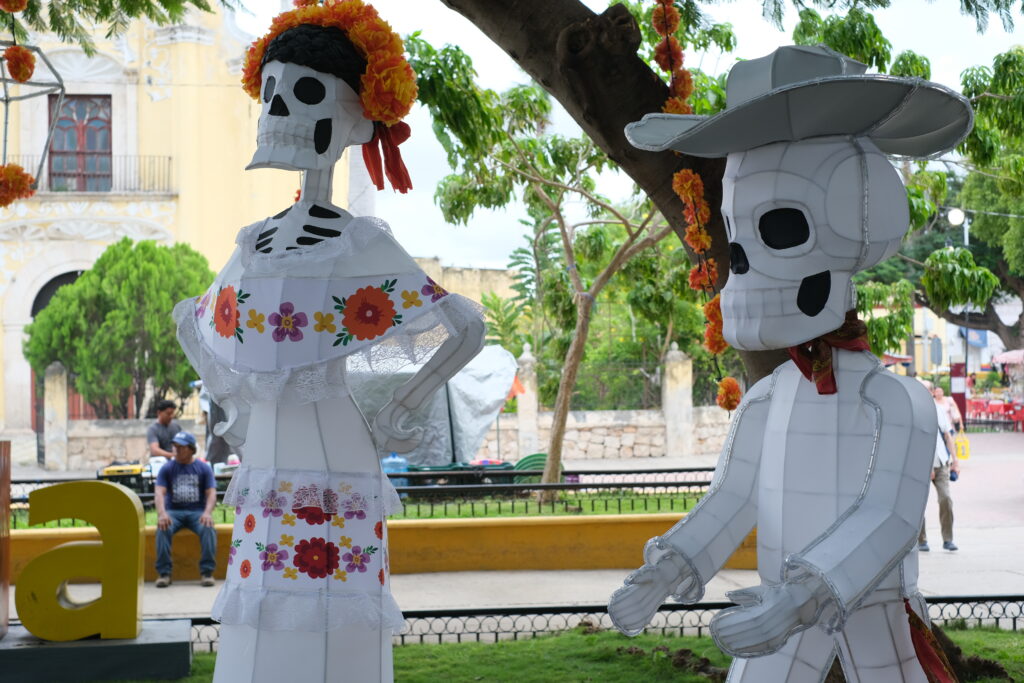
Day of the Dead is celebrated in Mérida from October 31 to November 2. It also hosts the popular Festival de las Ánimas, which usually takes place from October 26 to November 3.
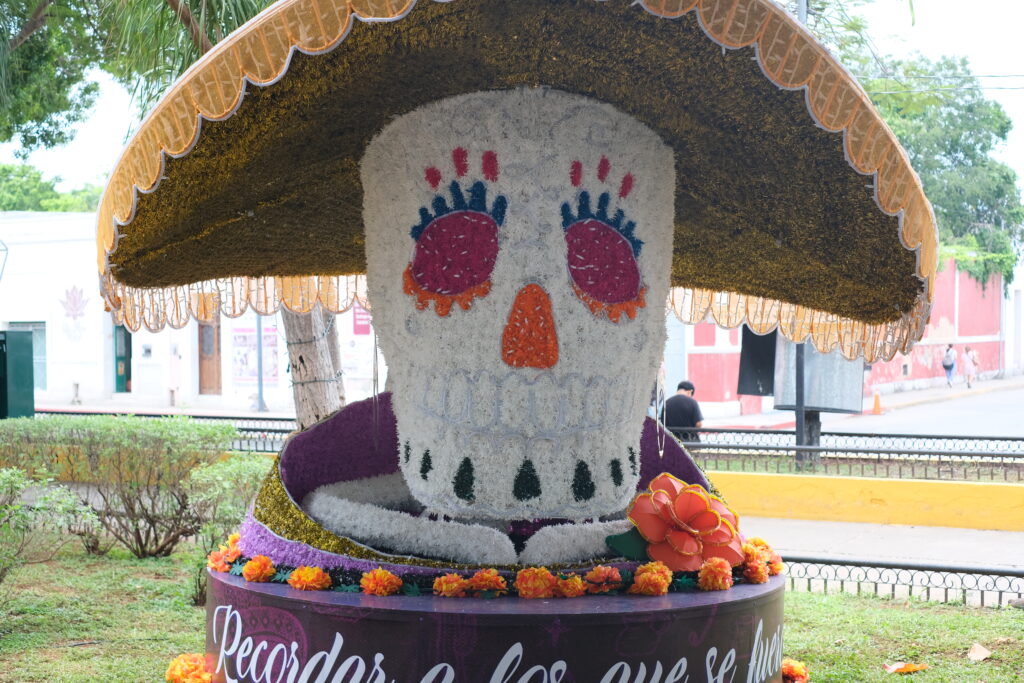
Hanal Pixán lasts for three days:
October 31: Hanal Palal – A day dedicated to the souls of children, known as pixanitos.
November 1: Hanal Nucuch Wiinico’ob – A day to honor deceased adults.
November 2: Hanal Pixano’ob or Misa Pixan – This day includes a mass in honor of the souls of all the deceased, usually held in cemeteries.
During these days, Yucatan families build altars in their homes and cemeteries, creating a space where the living and the dead can symbolically meet.
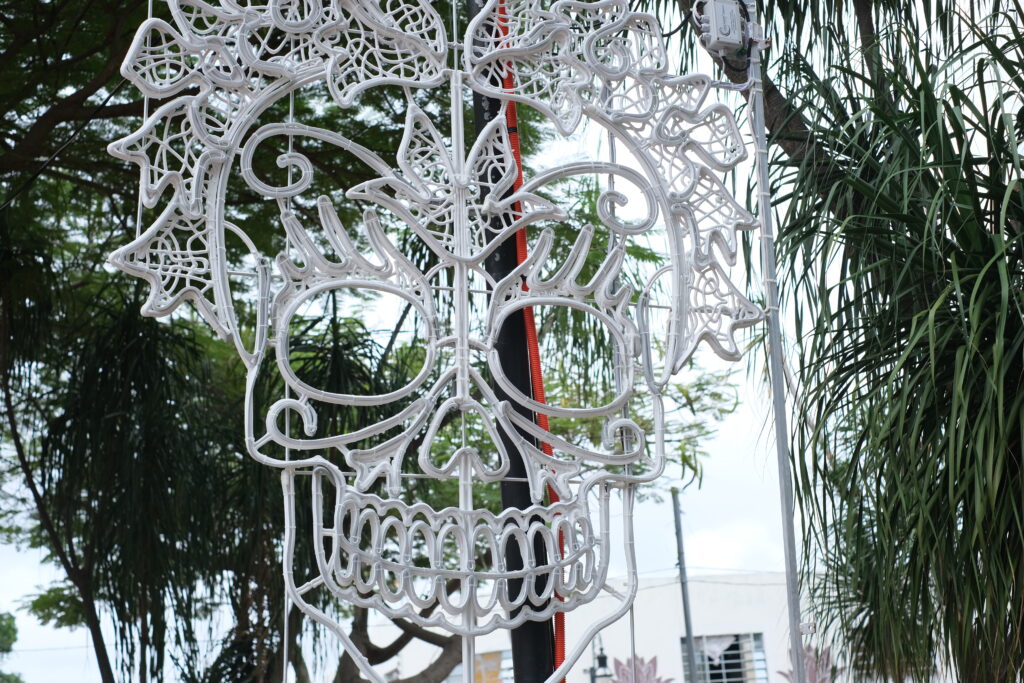
ALTARS (OFRENDAS)
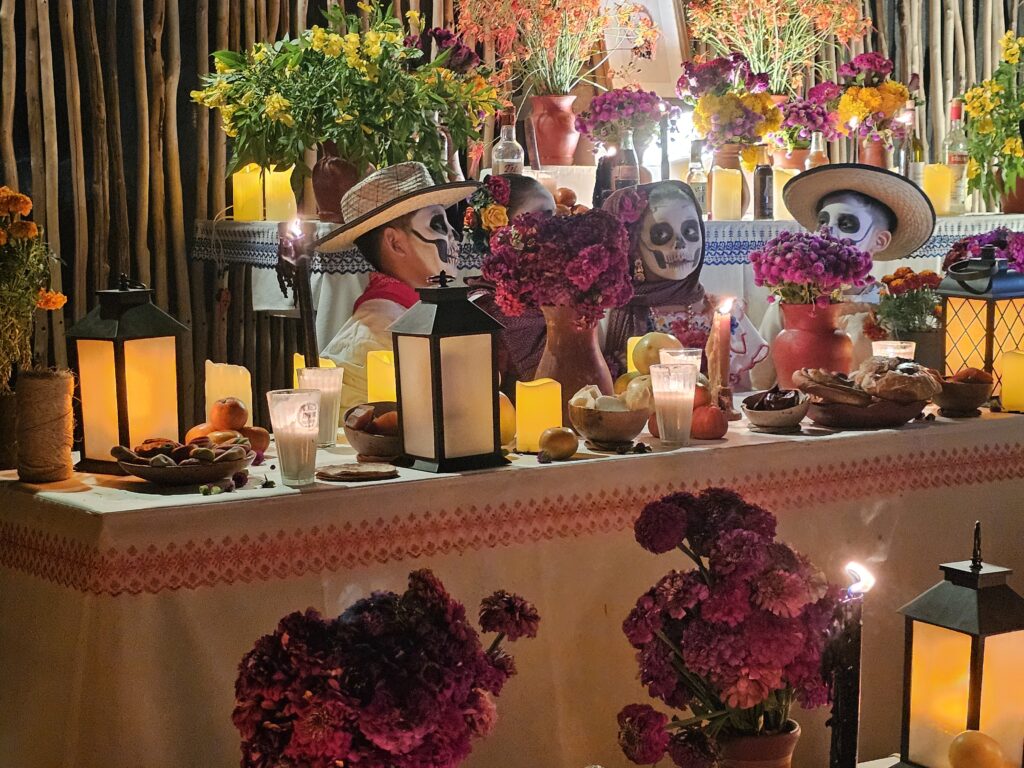
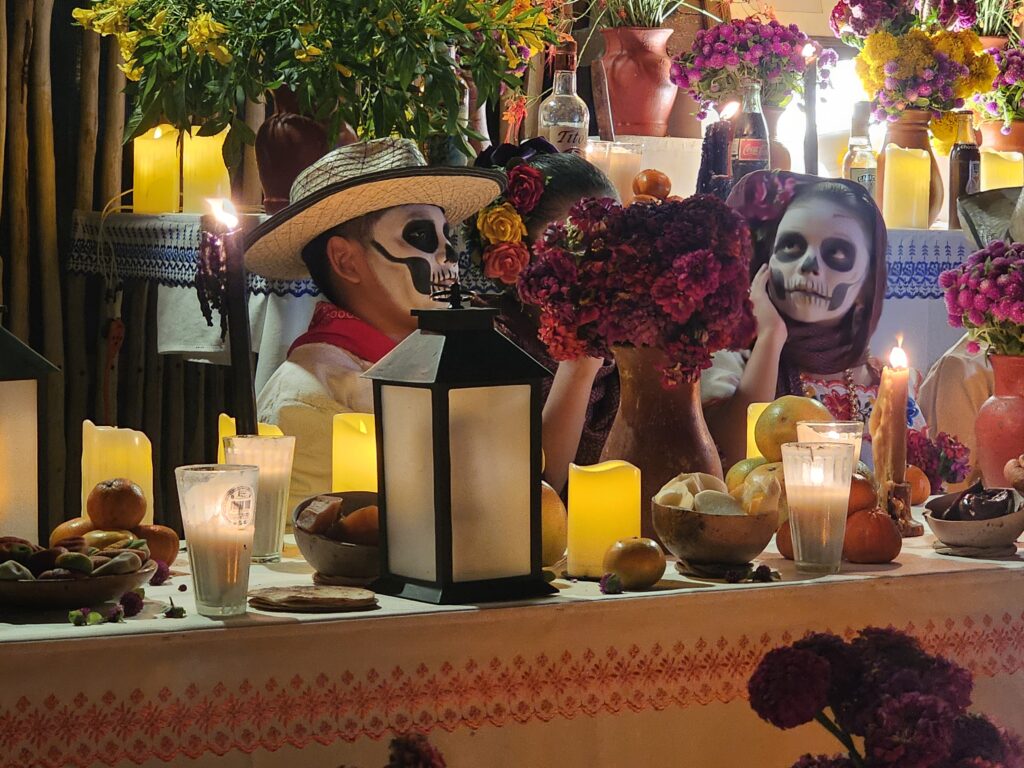
Families build altars (ofrendas), often in their homes. Unlike central Mexico, where cempasúchil (orange afrikaner) is mainly used, in Yucatán altars are also decorated with:
- tropical fruits – oranges, papayas, pineapples
- favorite dishes of the deceased
- incense
- and of course candles and photographs
The altars here have a distinctly Mayan character. Sometimes symbols of the four cardinal directions (white, black, red and yellow) are placed on them, as is consistent with Mayan cosmology.
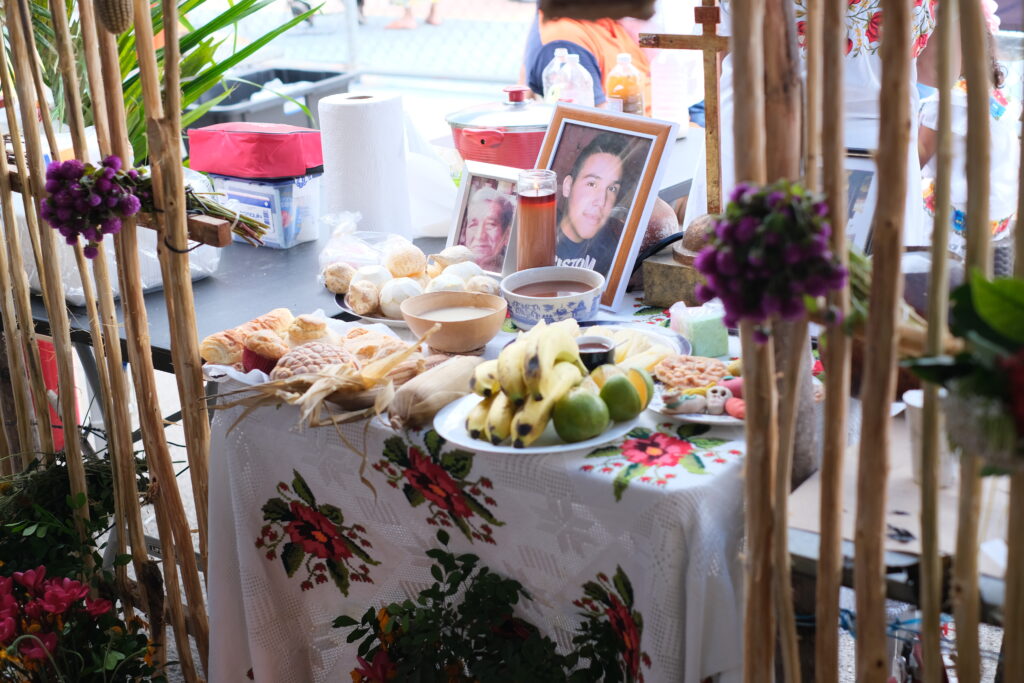
Altars in Mérida consist of several symbolic elements:
- White cloth: Instead of the purple and orange colors prevalent in other regions, altars in Yucatán are often decorated with white cloth, symbolizing purity.
- Local flowers: In addition to the traditional marigolds (cempasúchil), families also use local flowers such as xpujuc (wild yellow flower) and xtés (red flowers).
- Black and colored candles: Candles play an important role, as they light the way for souls returning to the world of the living. Black candles are placed for adults, while colored ones are placed for deceased children.
TRADITIONAL FOOD
PAN DE MUERTO
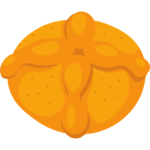
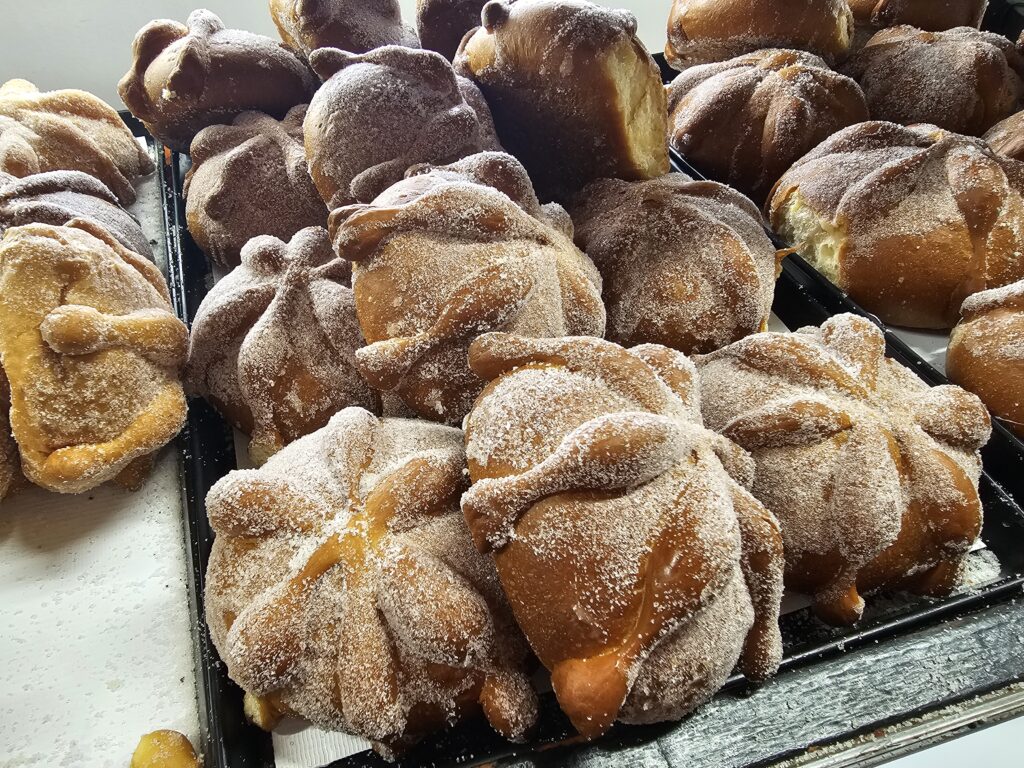
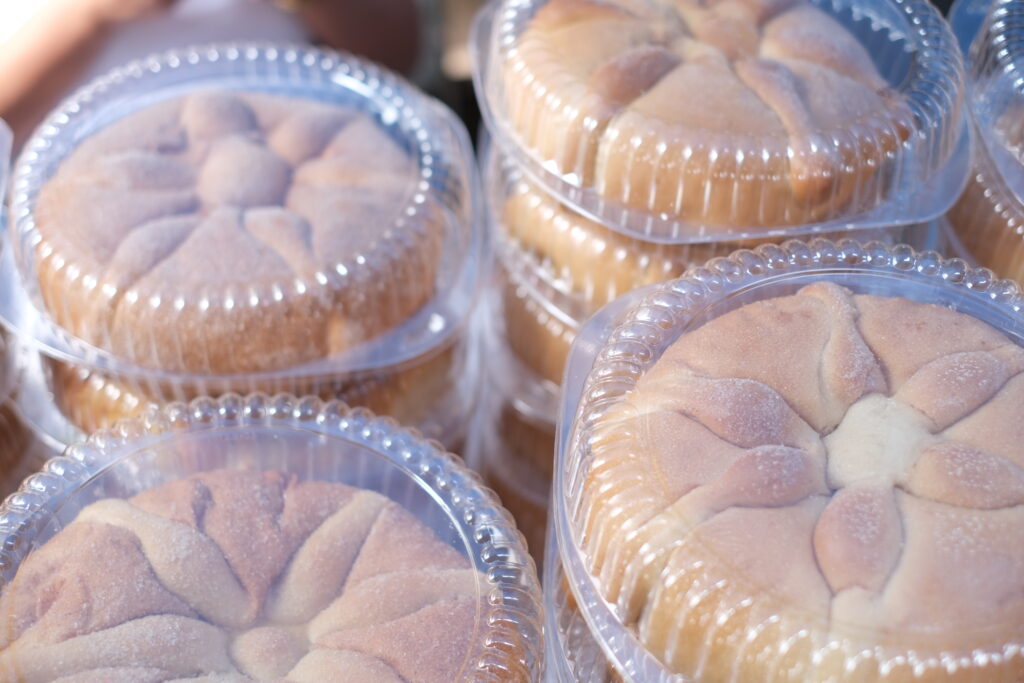
Pan de Muerto, or “bread of the dead,” is a traditional sweet Mexican loaf. It is symbolic of the cycle of life and death. The round shape represents the cycle of life. The dough is shaped into the shapes of crossbones and a small ball, symbolizing the skull and bones of the deceased, as well as tears. It is typically flavored with anise seeds and orange peel or orange blossom. It is a lightly puffed, sweet bread similar to brioche. After baking, it is often buttered and sprinkled with sugar.
MUCBIPOLLO
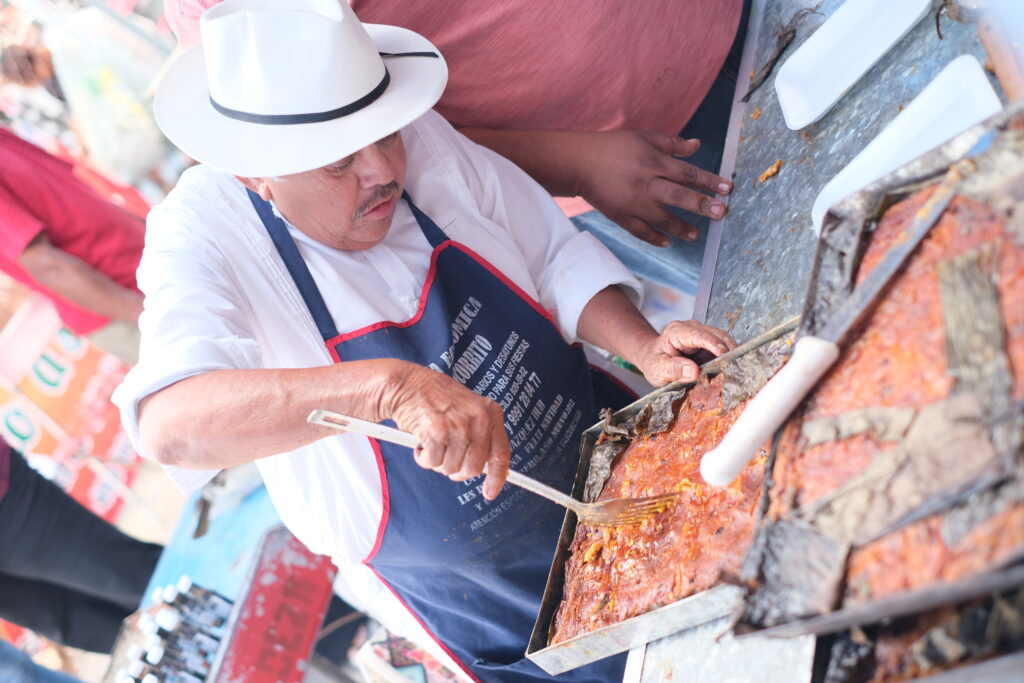
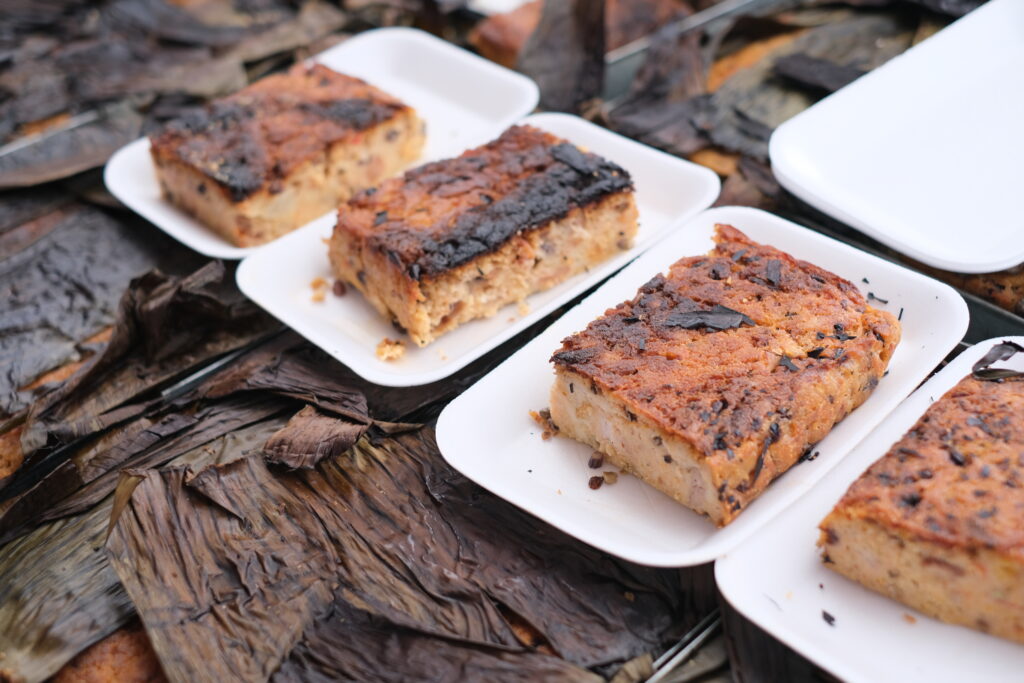
One thing that sets Day of the Dead celebrations in Mérida apart from other regions is the food. Instead of the traditional pan de muerto or sugar skulls, the people of Yucatán prepare mucbipollo, a dish that plays a central role in the holiday. It has its roots in the pre-Columbian era, when the Mayans prepared meals to honor their ancestors.
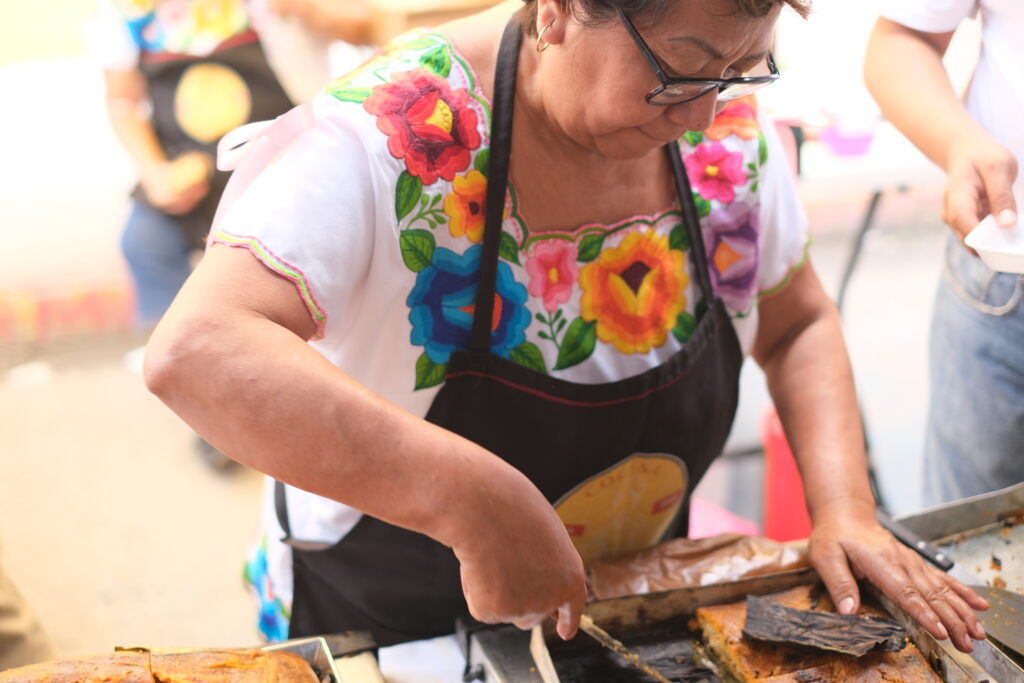
The name “mucbipollo” means “buried chicken” in the Mayan language. It is prepared in a very similar way to meatloaf, but the dough is corn.
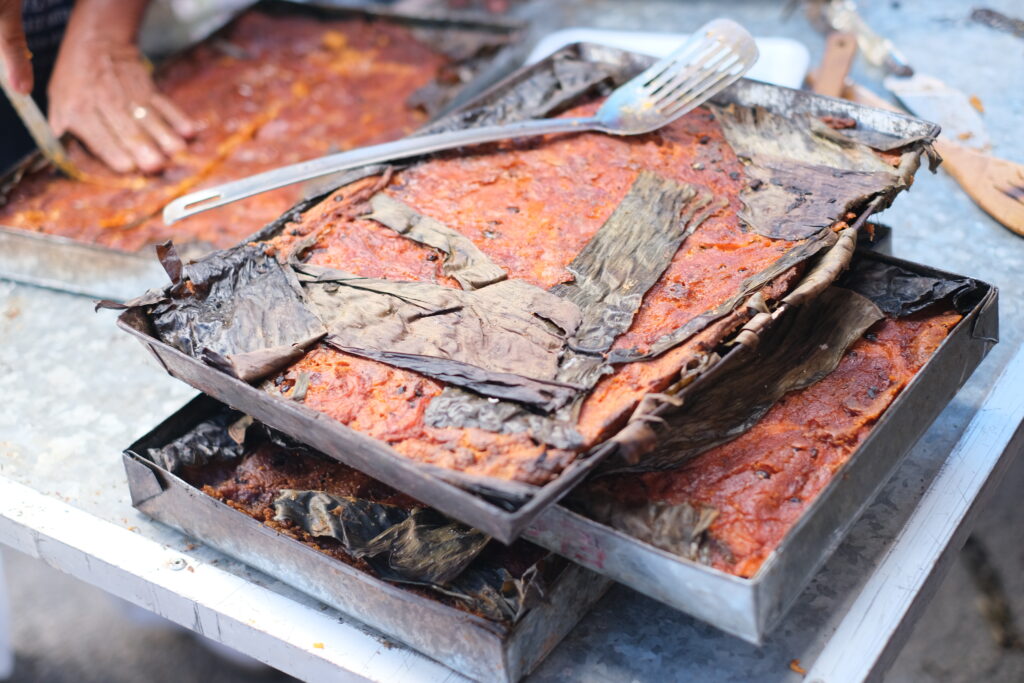
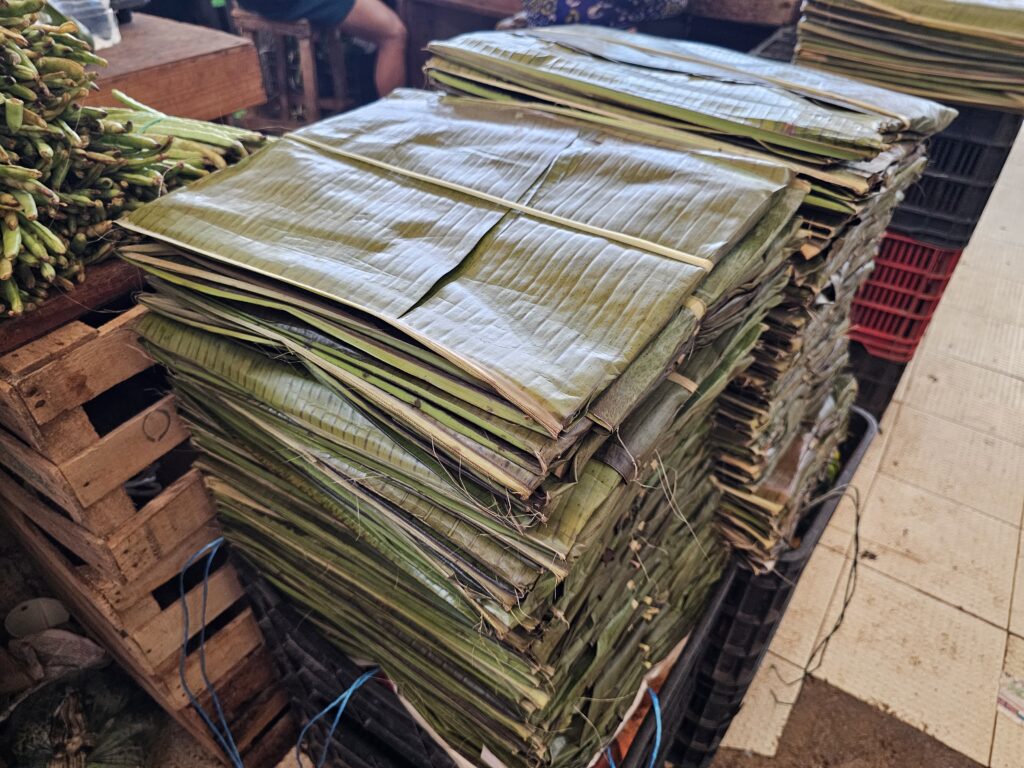
Its name comes from the words “pollo” – chicken and “piib“, which is an underground oven used in the Yucatan Peninsula. The dish is cooked buried in a bed of hot coals and stones. It is usually wrapped in banana leaves. In terms of ingredients, most recipes call for lard, which makes the dough light and fluffy.
PASTA RECADO RAJO
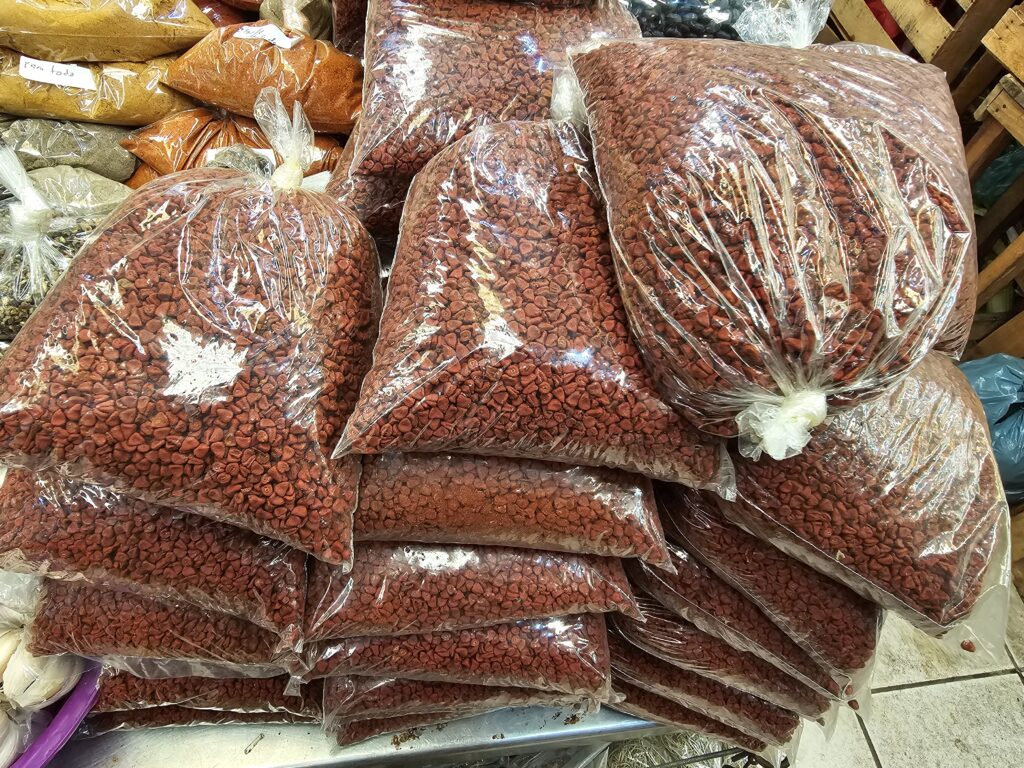
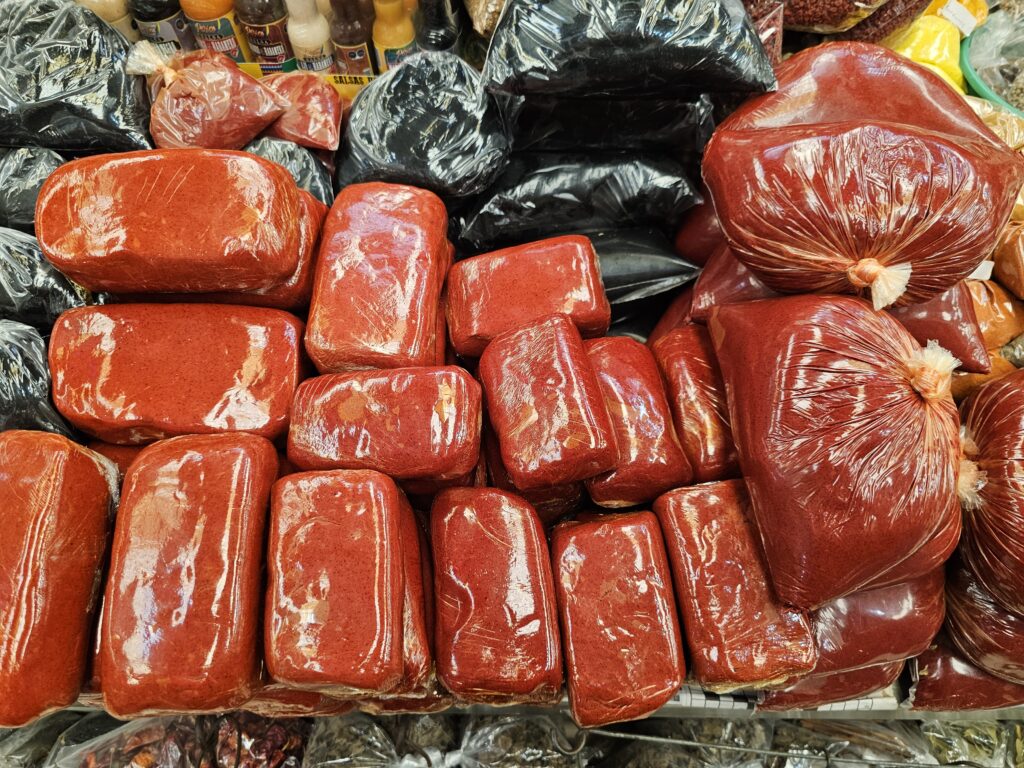
Finally, a special spice paste called recado rojo made from annatto (achiote), black pepper, garlic, epazote, tomatoes and habanero chilies is used in all layers of this cake. It is mixed with sour orange juice (a fruit from the Yucatán region). The mixture thus mixed gives it a pleasant reddish color, but also a characteristic flavor. Recado rojo can be purchased already prepared as a paste (usually as a cube).
WHAT IS ANNATTO?
Annatto is a natural dye and spice extracted from the seeds of the Bixa orellana tree, which imparts orange to red hues to food. It is also known as achiote. It has a mild, earthy, slightly peppery and nutty flavor with a hint of tomato. It was originally used by indigenous tribes for ritual and decorative body painting, as an insect repellent and for medicinal purposes. Today, it is most commonly used to color foods such as cheeses, margarines, oils, baked goods, rice and stews. It is a key ingredient in many traditional Mexican and Caribbean recipes. It is often served with atole (a sweet corn drink) or traditional cocoa.
It is wrapped in a banana leaf and baked in an underground clay oven – similar to Hawaiian kalua pig.
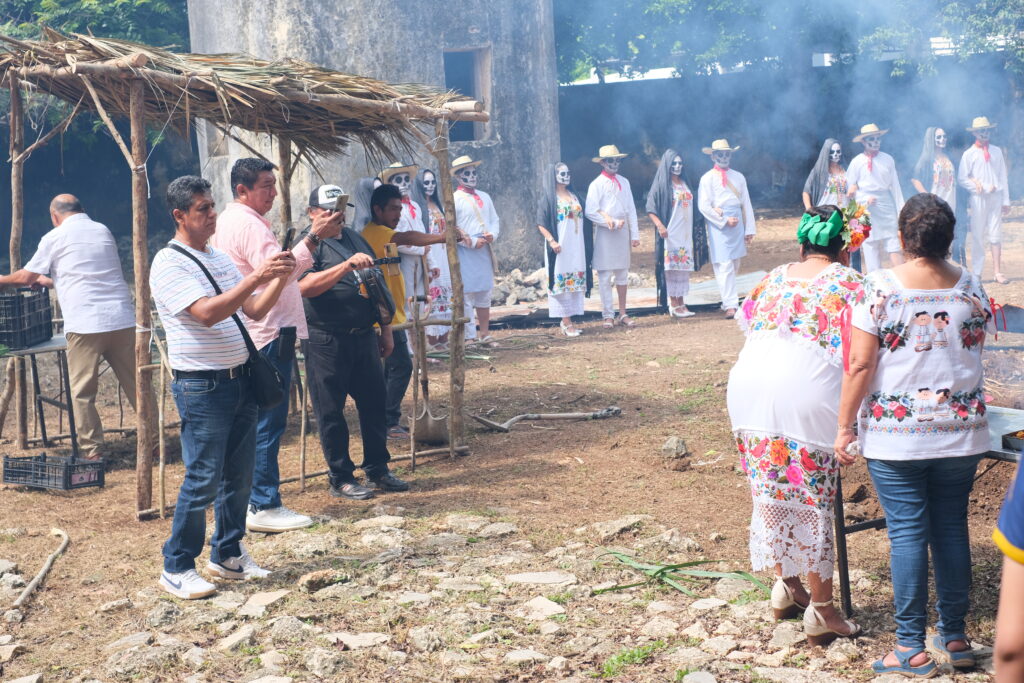
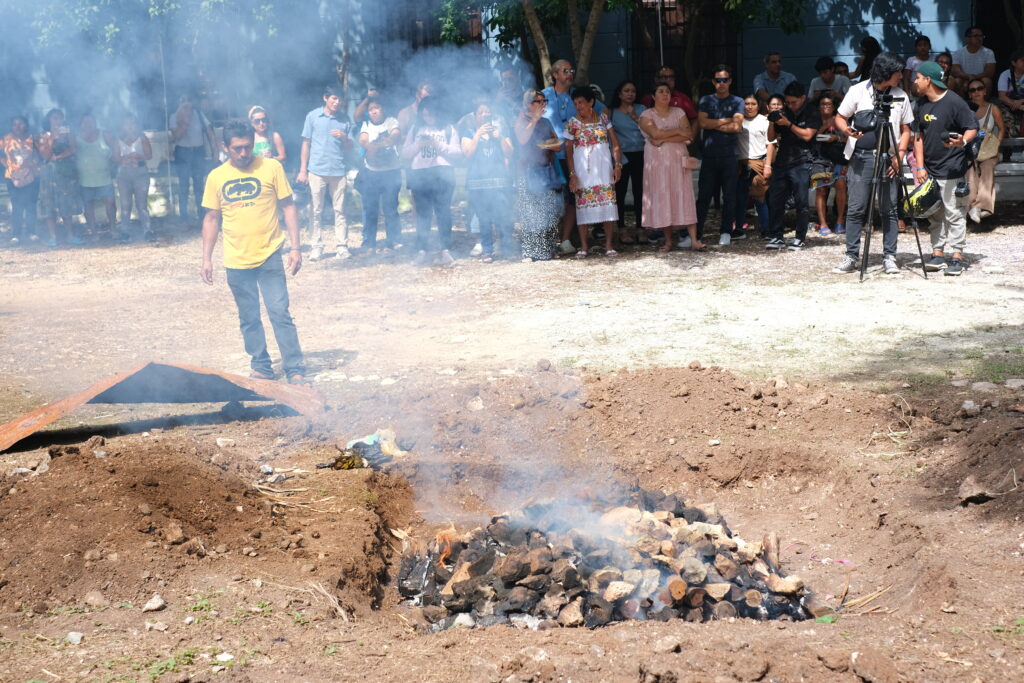
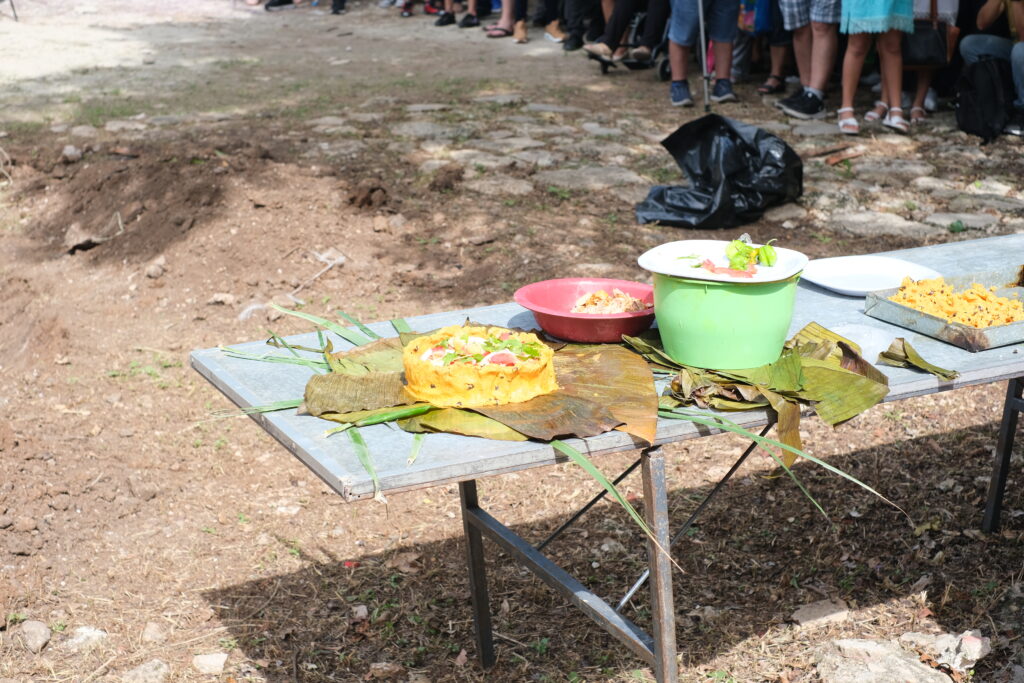
I have to admit that preparing this dish, and especially being able to taste it, is a truly unique experience.
PASEO DE LAS ÁNIMAS
(CONCERT OF SOULS)
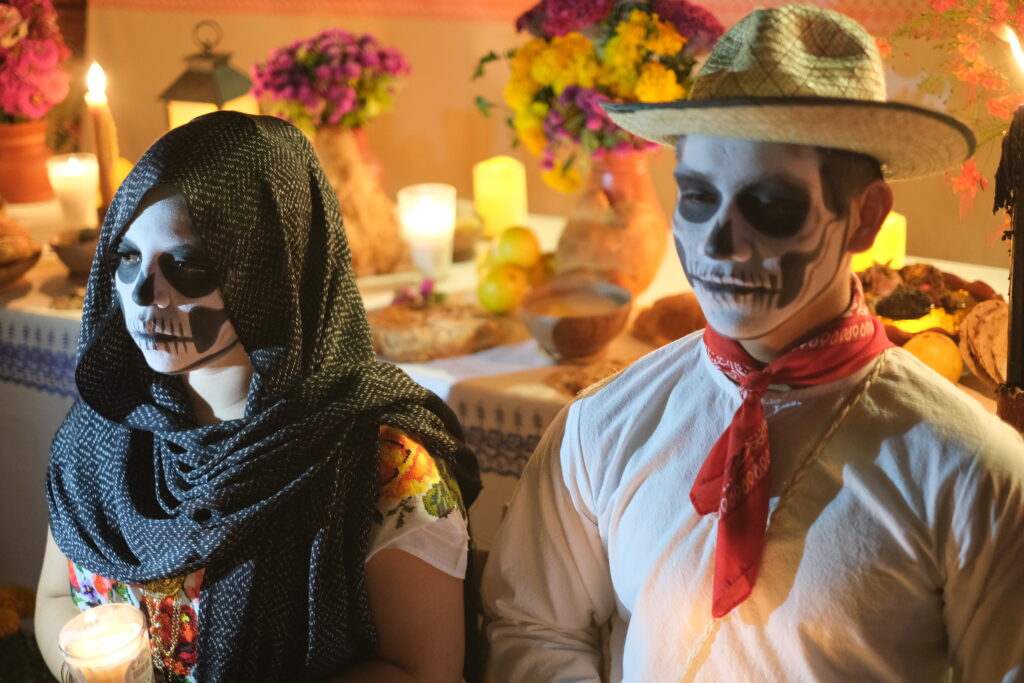
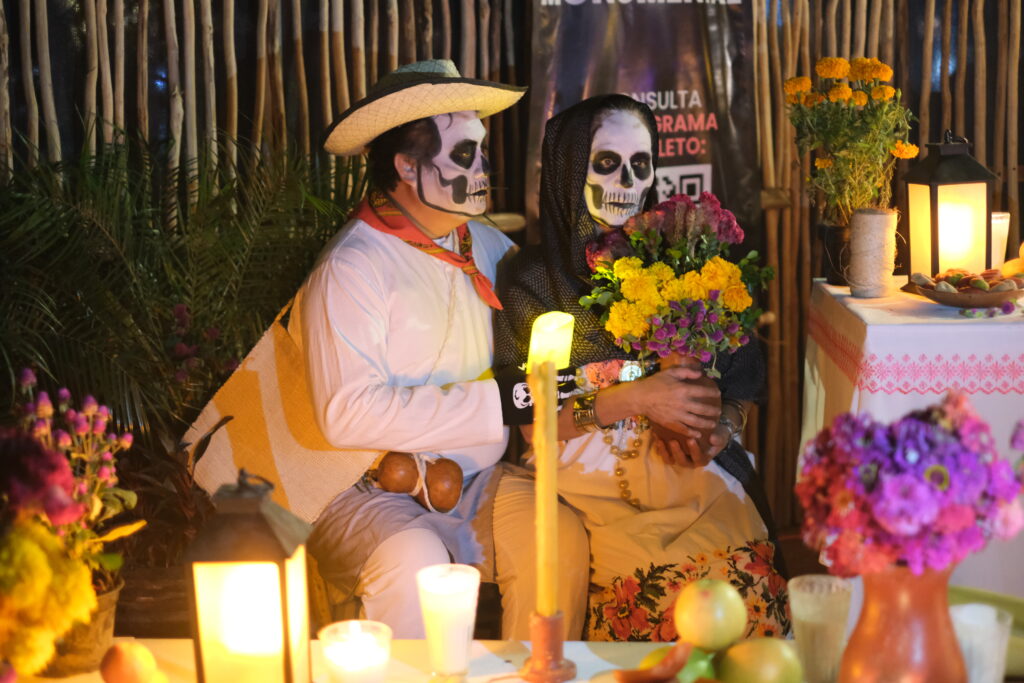
One of the highlights of the celebrations in Mérida is the Paseo de las Ánimas, or “Passage of the Souls.” It takes place in the evening, usually the last weekend of October. People with painted faces, mostly in the form of skulls, march through the streets of Mérida towards the city cemetery. The path is lined with candles, altars and music. The atmosphere here is truly mystical, more ritualistic than carnival-like. Unlike the noisy parades in Mexico City or Oaxaca.
PASEO DE LAS ANIMAS
The highlight of the festival is when hundreds of people dressed as ghosts walk from the General Cemetery to San Juan Park. The streets of Mérida are lit with candles and altars are built along the route. They are built by local communities, schools or artists.
CEMETERY AND SPIRITUAL DIMENSION
Families in Yucatán visit cemeteries with food and candles, similar to other places in Mexico. Unlike the tourist-filled Pátzcuaro, the celebrations here are more family-friendly and intimate. If a traveler comes here, they should respect that this is a spiritual moment. Taking photos in cemeteries without permission is considered impolite.
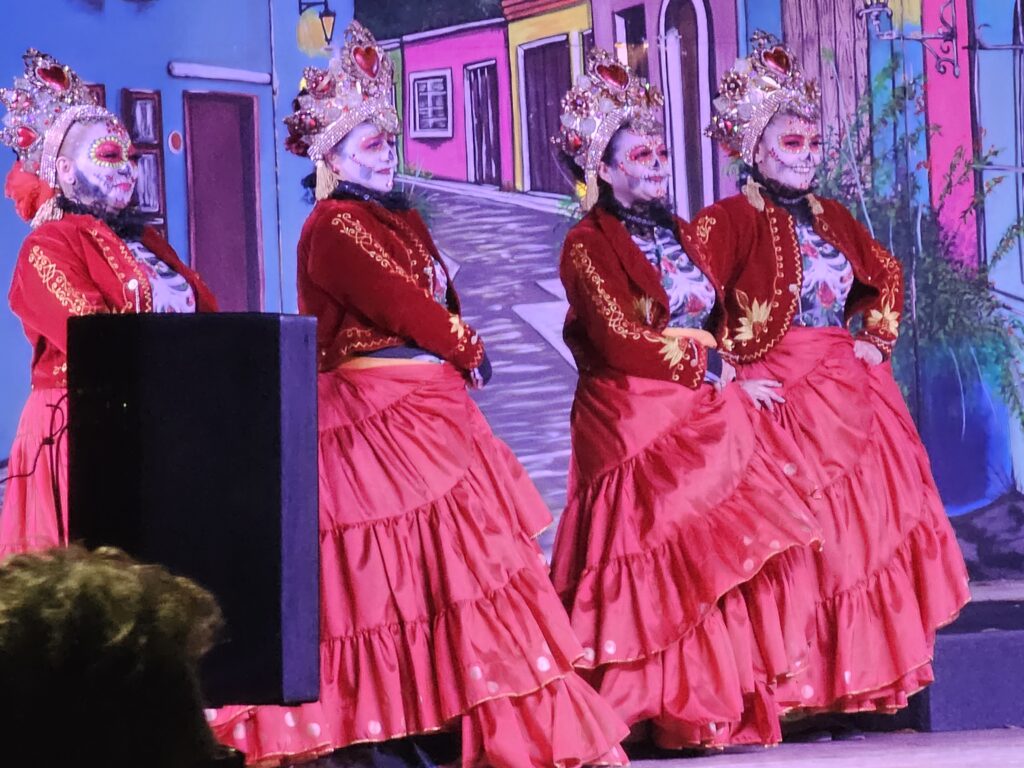
FESTIVAL CATRINAS
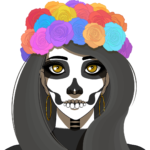
A parade where local artists dress up and paint themselves as Catrinas, connecting the culture of Yucatán with this traditional character from the Day of the Dead in other parts of Mexico. However, if you don’t speak Spanish, you won’t learn much. The whole show is in Spanish without any translation into English. So I recommend taking someone with you who speaks Spanish. 🙂 But the whole show is mainly about dancing, so you don’t have to worry too much.

MY TIP:
If you are planning a trip to Mérida during the Day of the Dead:
- Book your accommodation in advance, the city is popular and capacity sells out quickly
- Take part in the Paseo de las Ánimas – this is the highlight of the celebrations
- Taste mucbipollo – you can find it in the markets and stalls during Hanal PixánVisit the Gran Museo del Mundo Maya – it will help you understand the spiritual background of the holiday
- And most importantly: respect local traditions – for the Maya, Hanal Pixán is a deeply personal and spiritual matter
WHERE ELSE TO EXPERIENCE
DAY OF THE DEAD
IN MEXICO
If you would like to see the Day of the Dead with your own eyes, here are some other interesting places:
- Mexico City – since 2016 they have been organizing a huge parade inspired by the Bond film, but smaller neighborhoods also offer more traditional celebrations.
- Oaxaca – a city in southern Mexico where the holiday has deep roots. The streets are full of altars, processions, music and masks.
- Pátzcuaro (Michoacán) – perhaps the most authentic experience. The celebrations on Janitzio Island on Lake Pátzcuaro are magical – the lit candles, chants and rituals of the local communities seem almost supernatural.
WHY IS IT WORTH EXPERIENCED BY DAY OF THE DEAD IN MEXICO?
Day of the Dead offers a unique opportunity to experience Mexican culture in its purest form. Day of the Dead is not a scary holiday here. On the contrary, it is a reminder that life is short and should be lived to the fullest. Mexicans do not worship death as an end, but as part of a cycle that is as much a part of life as laughter, dancing or good food.
For us travelers, it is not only a visual experience (garlands, paintings, processions), but also a deep cultural and spiritual experience. Día de los Muertos celebrations show that Mexico is a country where history, faith and the joy of life are intertwined in a truly unique way.
If you find yourself in Mexico in early November, you might as well paint a skull on your face, pick up a candle and light it on an altar. And you will understand that death is not something to be afraid of, but can even be celebrated. Death is not the end, but a part of life, and that remembering the deceased can be joyful, colorful, and full of music.

If you liked the article, I would be happy if you share it or leave a nice comment below the article.

I would also like to invite you to join me on Instagram and Facebook.

MORE ARTICLES
FROM THE AMERICAS


