

Luang Prabang is one of those places where you feel like time has slowed down and everything around you breathes peace and tradition. This Laotian city, listed as a UNESCO World Heritage Site, is one of the most beautiful destinations in Southeast Asia. I was completely captivated by this town. As I walked through its streets, I passed monasteries full of monks in orange robes, French colonial houses and fragrant cafes where it is a pleasure to sit. And when I visited the morning market, my jaw dropped. The night markets are also magical with an endless supply of souvenirs and street food. It felt like I had returned twenty years ago to the first time I came to Asia, specifically to Thailand.
If you are planning a trip to Laos, Luang Prabang should definitely not be missing from your list.Whether you are looking for a peaceful atmosphere, adventurous trips to nature or want to taste Lao cuisine, this city offers something for everyone.
A LITTLE HISTORY KILLS NO ONE
The history of Luang Prabang is fascinating. The city was founded in the 8th century as the Land of a Million Elephants (Kingdom of Lane Xang). It later grew into the Kingdom of Laos. Over the years, Laos came under French colonial rule and Luang Prabang became part of French Indochina. The French influence is still visible in the architecture of the city. Another visible feature is Buddhism, which is reflected in the daily life of the locals. There are many meditation centers here. Many visitors come to the city to learn about Buddhism or to practice meditation.
From my own experience, I must say that one feels somehow relaxed here. I perceived Buddhist traditions and rituals somehow more intensely than elsewhere in Southeast Asia. This treasure, inscribed on the UNESCO World Heritage List, boasts a rich and enchanting culture, breathtaking natural landscapes and a peaceful atmosphere.
BEWARE OF UNEXPLODED BOMBS
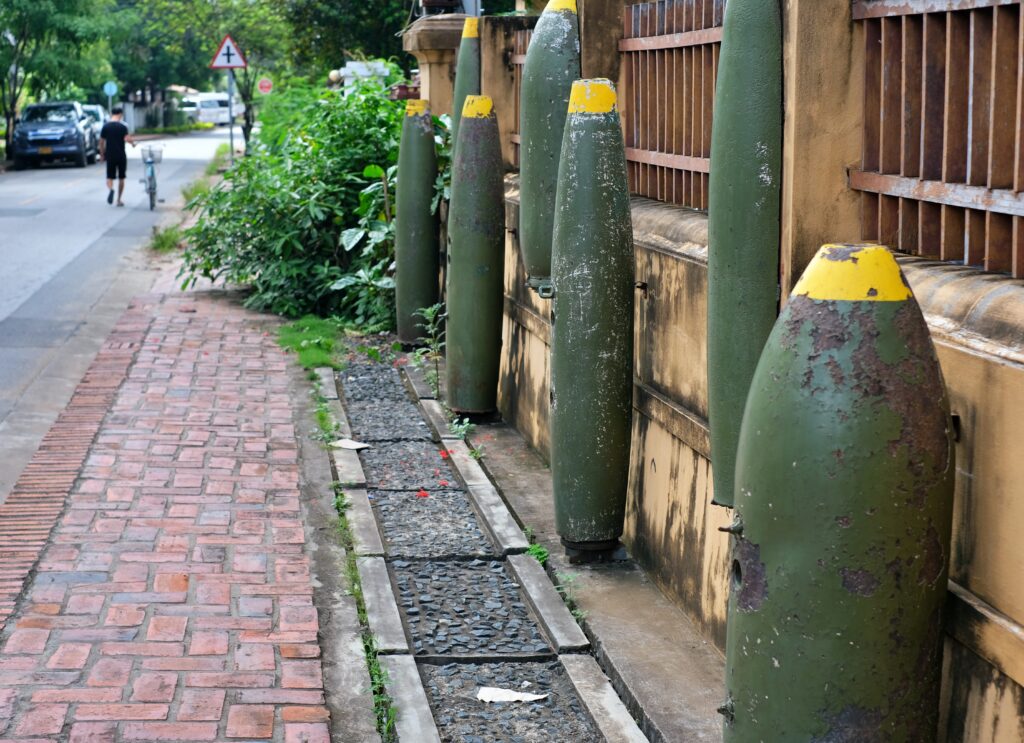
Did you know that Laos is the country that has been bombed the most in history? The Americans dropped around two million tons of ammunition here in the 1960s and 1970s. There are reportedly still many unexploded bombs in Laos. It is therefore not recommended to go somewhere in the wilderness far from civilization. And if you are in the city, you can find some here as decorations.
YOU ARE IN LAOS, ACT PROPERLY
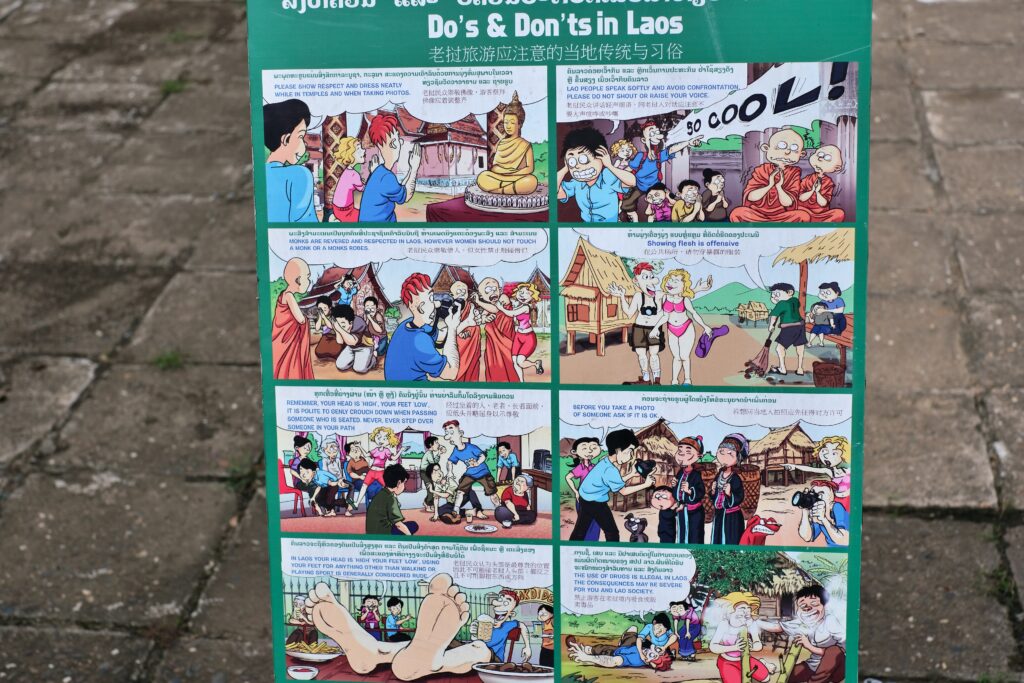
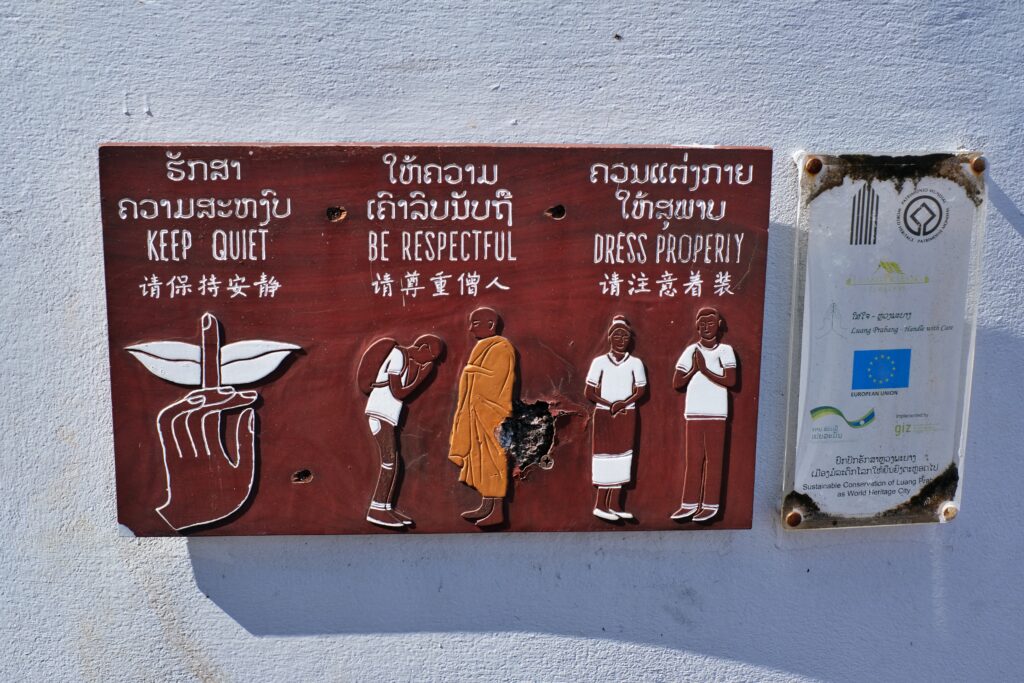
Once you enter a Buddhist temple, remember to dress appropriately, covering your shoulders and knees.
CITY ATMOSPHERE
The city lies at the confluence of the Mekong and Nam Khan rivers, which gives it a unique location and charm. Walking through the streets of Luang Prabang is like entering another world. In the morning you will be awakened by the singing of birds and the gentle noise of motor boats on the Mekong. In the evening the streets will light up with red lanterns and the smell of grilled fish. Everything is slow here, no one is in a hurry, and yet the city has a special energy that draws you in.
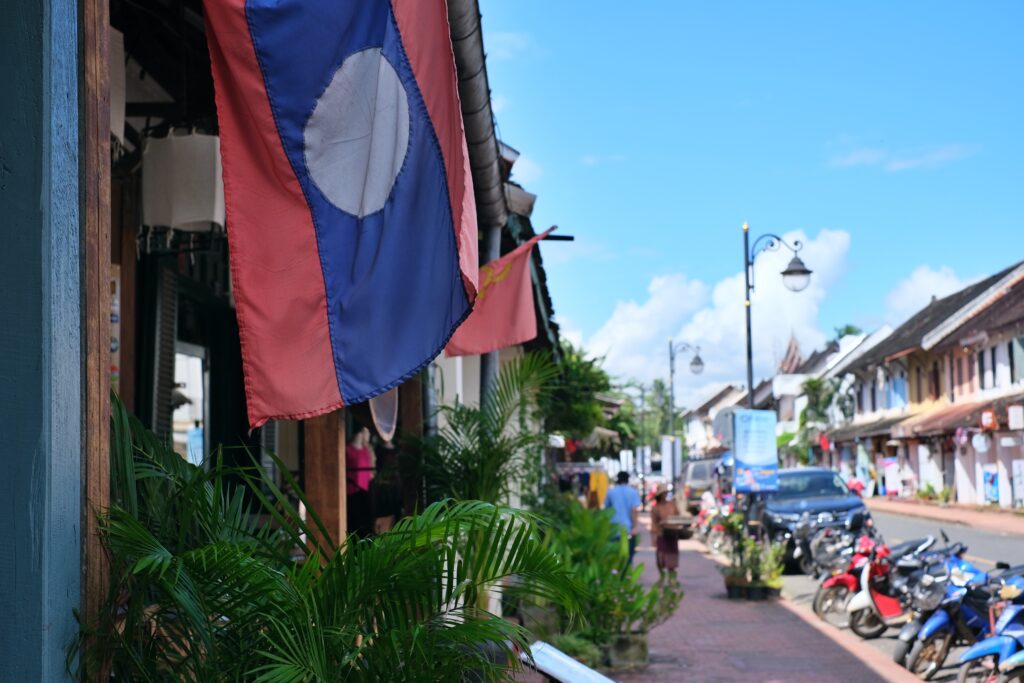
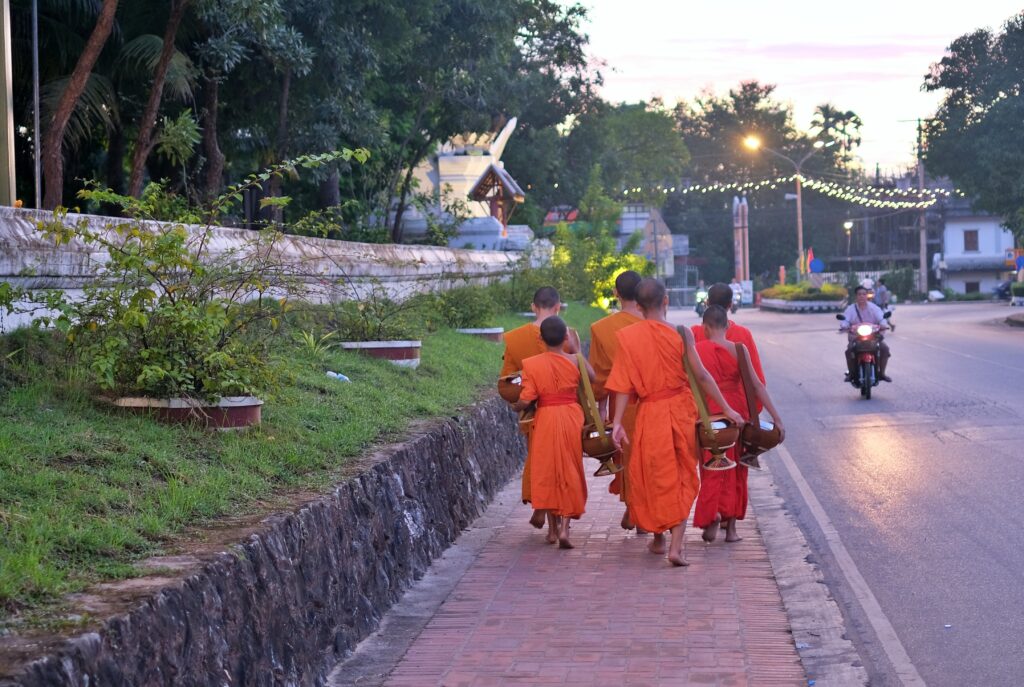
When the sun rises in the morning and the first rays hit the water surface, you can see a procession of monks walking through the streets and accepting food from the locals.
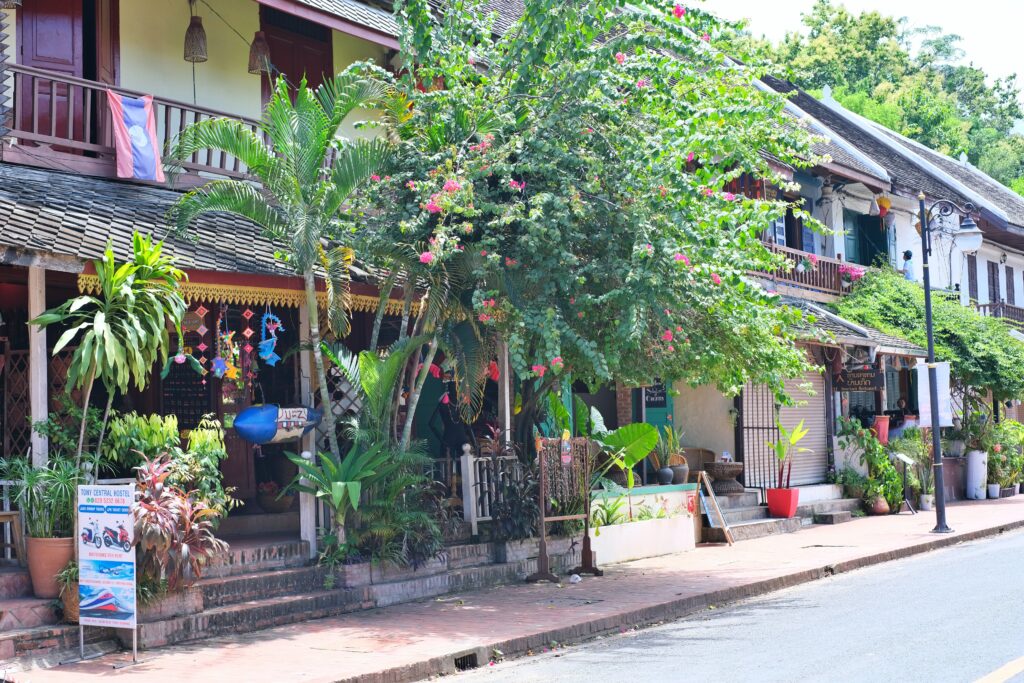
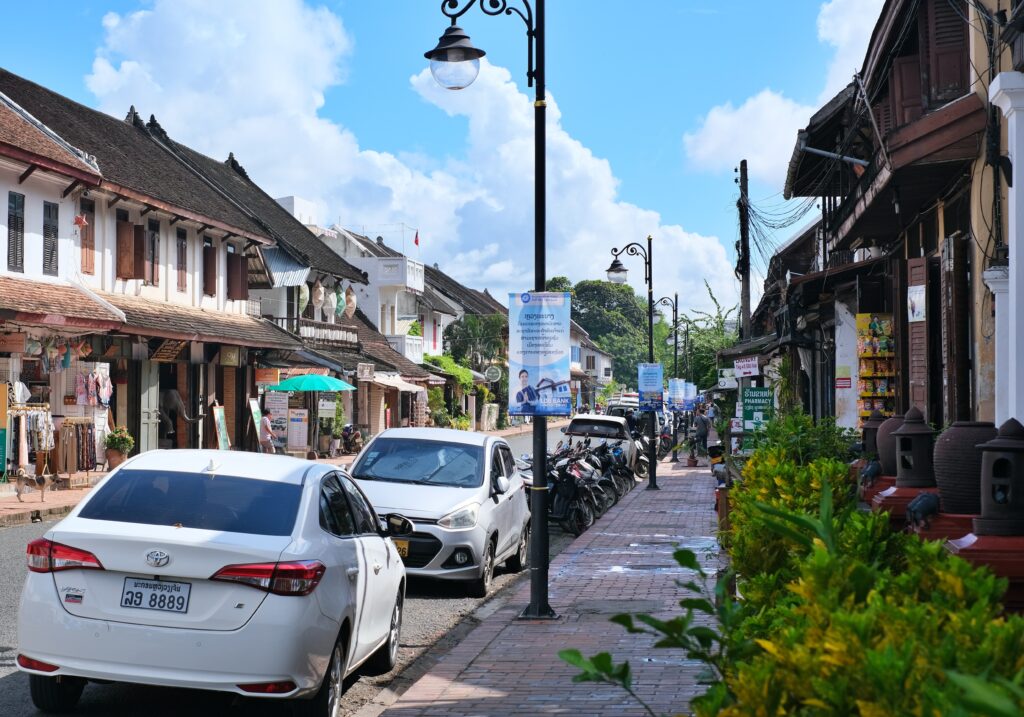
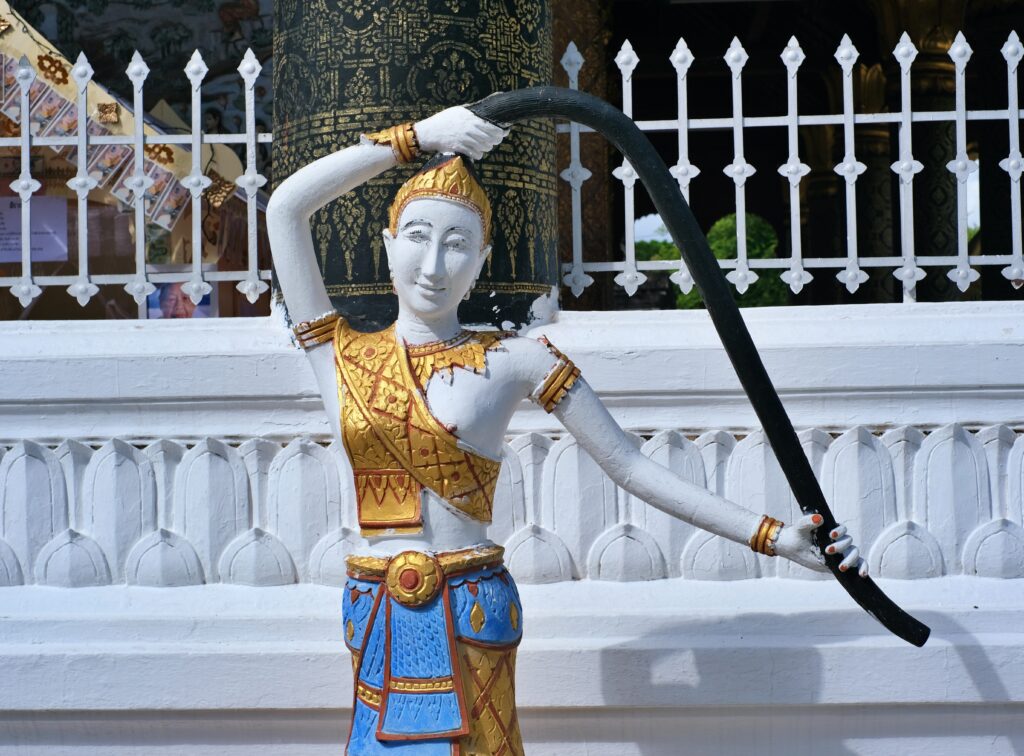
The city’s streets are peaceful, filled with cafes, galleries and small shops. You’ll find a mix of Lao culture and French colonialism. This is the perfect combination for anyone who loves history and a romantic atmosphere.
MONKS IN LUANG PRABANG
Buddhist monks in Laos are an integral part of the city. Their orange robes are the first thing you notice on the streets. Several hundred monks, mostly young boys who come from remote villages, live and study in the city.
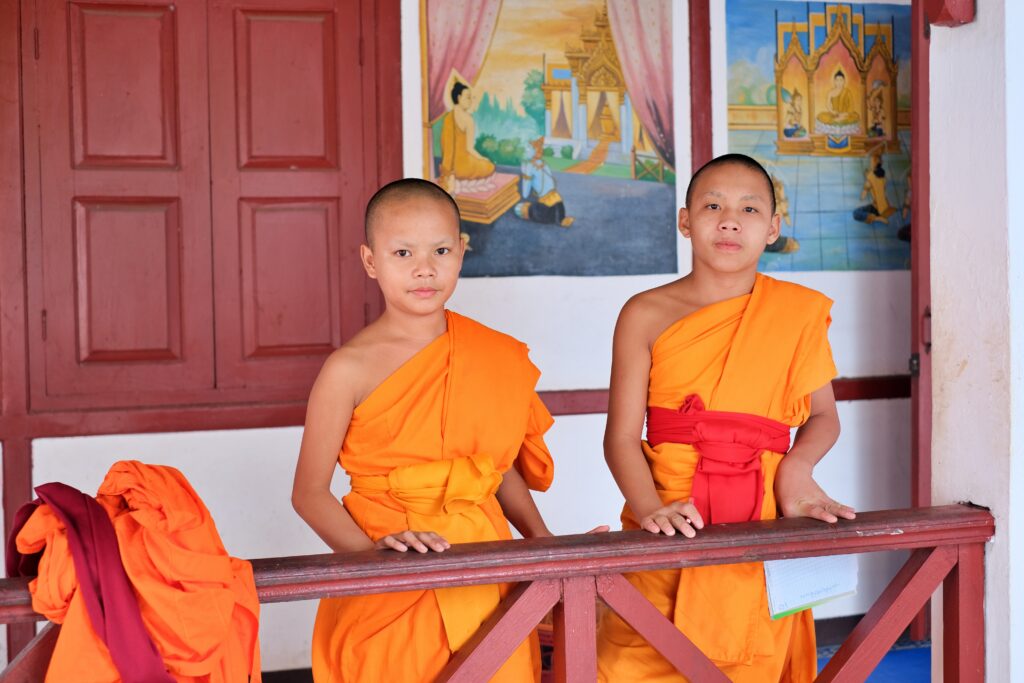
Their day begins before sunrise. After the morning alms ceremony, they return to the monastery, where they eat their first meal of the day together. What people have given them. They spend the afternoon studying, meditating, and often talking to visitors.
HAVE RESPECT FOR THE MONKS
Because there are so many temples, you will encounter Buddhist monks on the streets. Although they are very friendly, keep in mind that they are the most respected people in society. However, don’t be surprised if they start talking to you to practice their English. However, remember that women are not allowed to touch monks or stand too close to them.
MORNING CEREMONY OF THE MONKS
TAK BAT
The most famous spiritual tradition in Luang Prabang is undoubtedly the morning alms ceremony. It takes place every day, usually around five or six in the morning.

The entire city falls silent for a moment and the streets are filled with long lines of monks. It is an experience that will move you with its simplicity and depth.
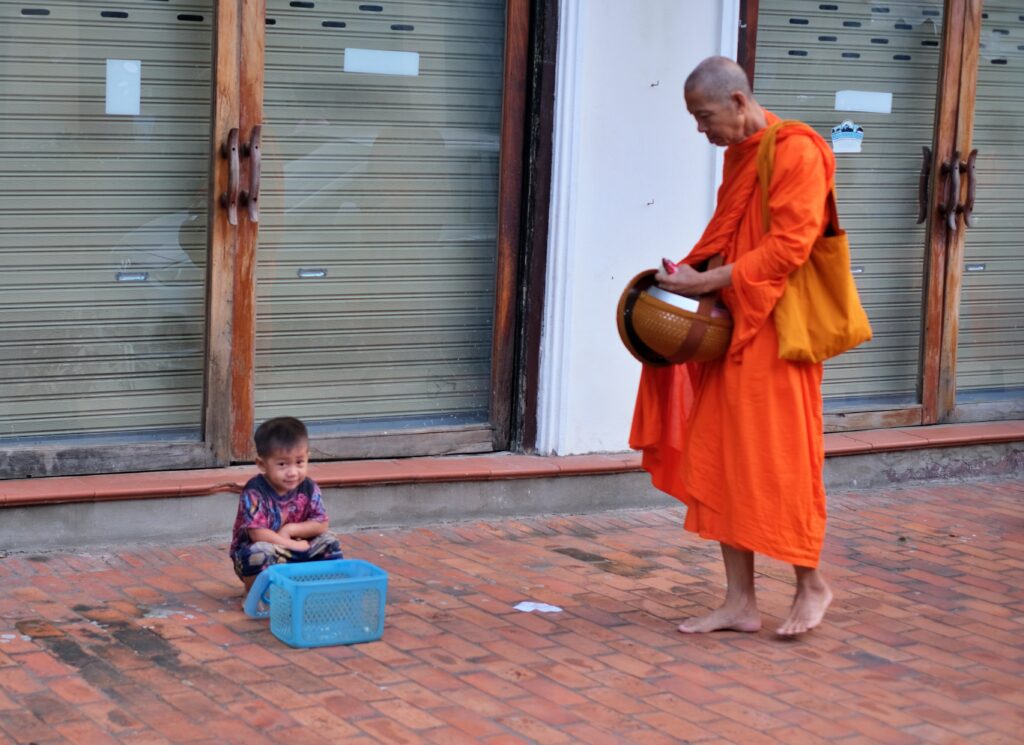
The alms-giving ceremony of the monks in Luang Prabang (tak bat) is one of the greatest experiences, during which dozens to hundreds of monks in orange robes take to the streets at dawn. Local people, often entire families, wait with bowls of rice, fruit or sweets and calmly offer them their gifts. It is a quiet, humble and extremely impressive moment that shows how deeply Buddhism is rooted in everyday life in Laos.
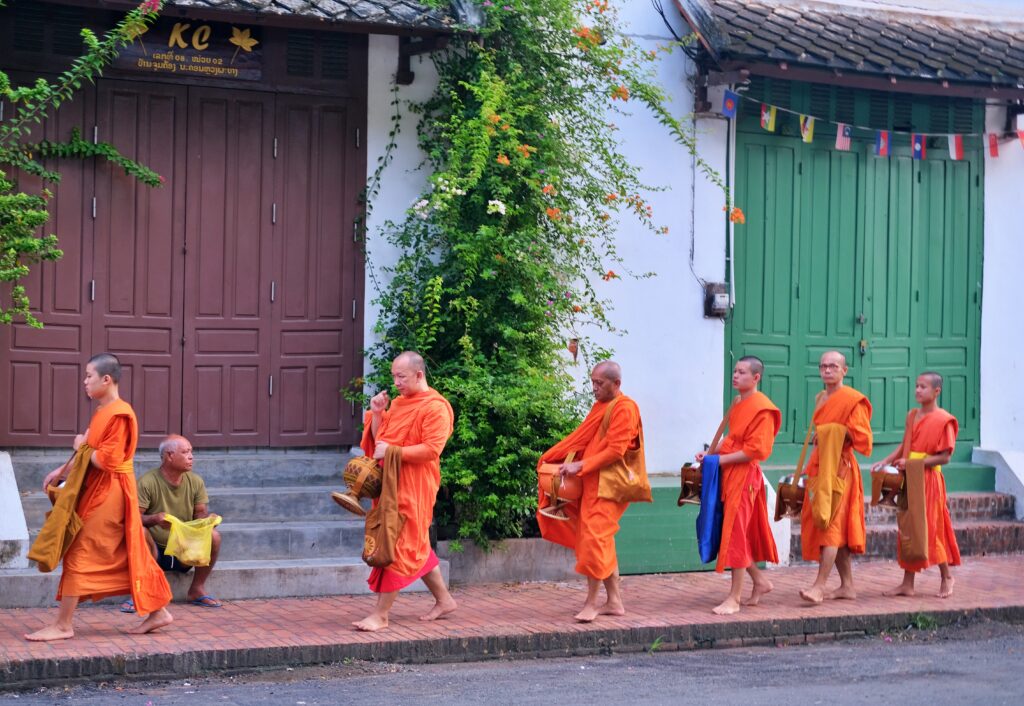
For locals, almsgiving is not a tourist attraction but a sacred ritual. They believe that donating food to monks brings good karmic merit, while also allowing them to be part of the community.
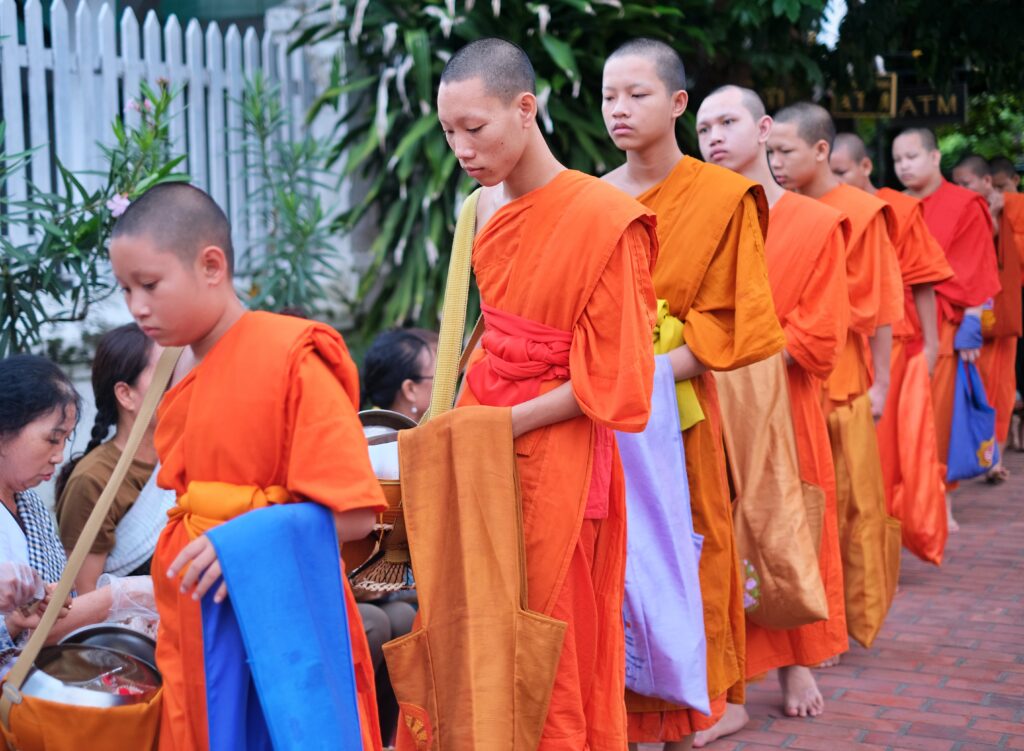
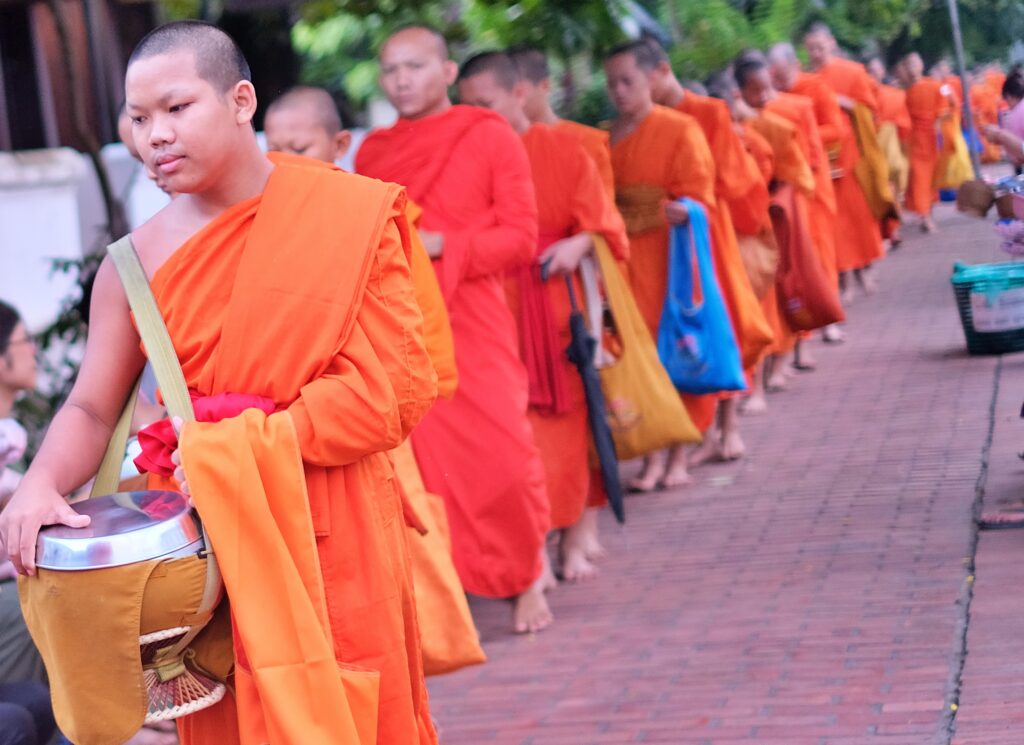
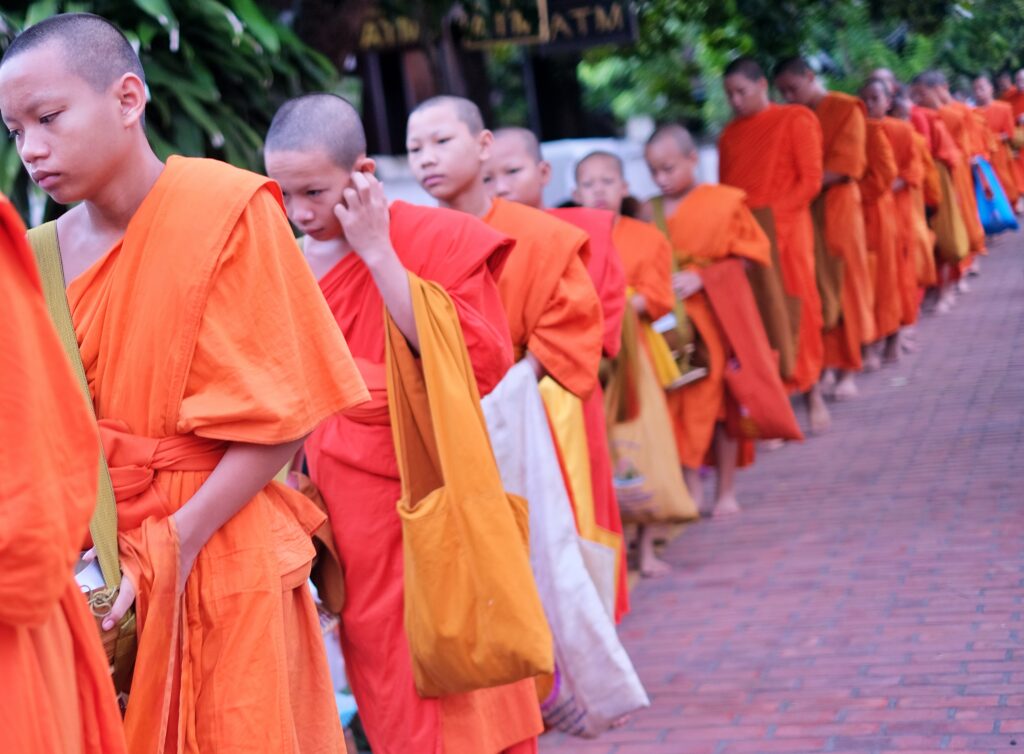
If the ceremony taught me anything, it’s one important thing: in modern times, the simple act of giving has immense power.
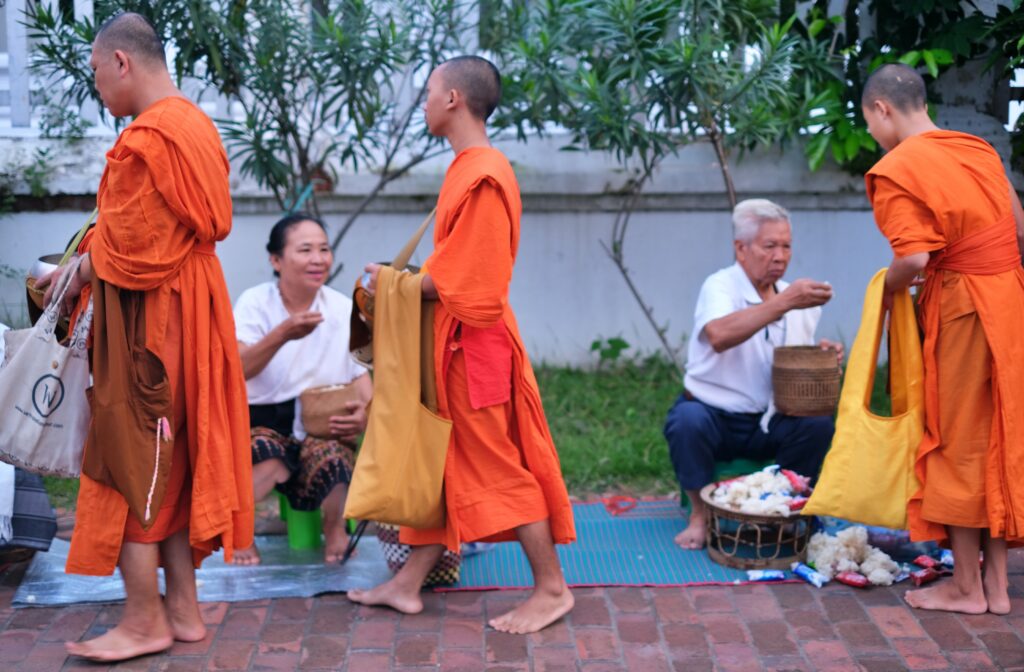
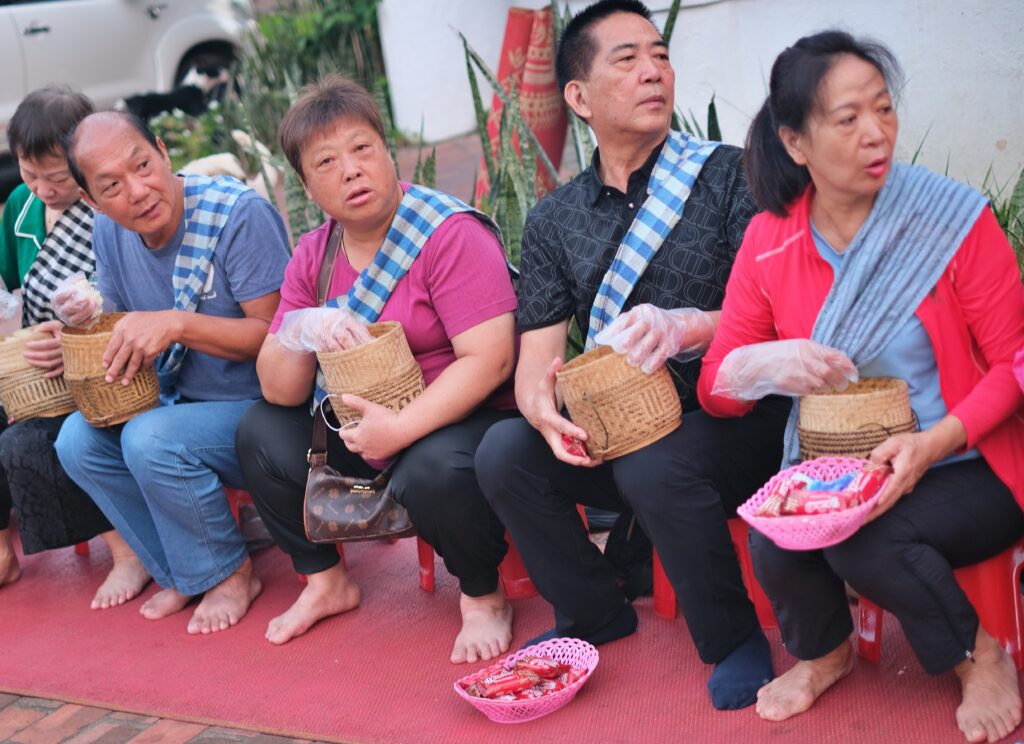
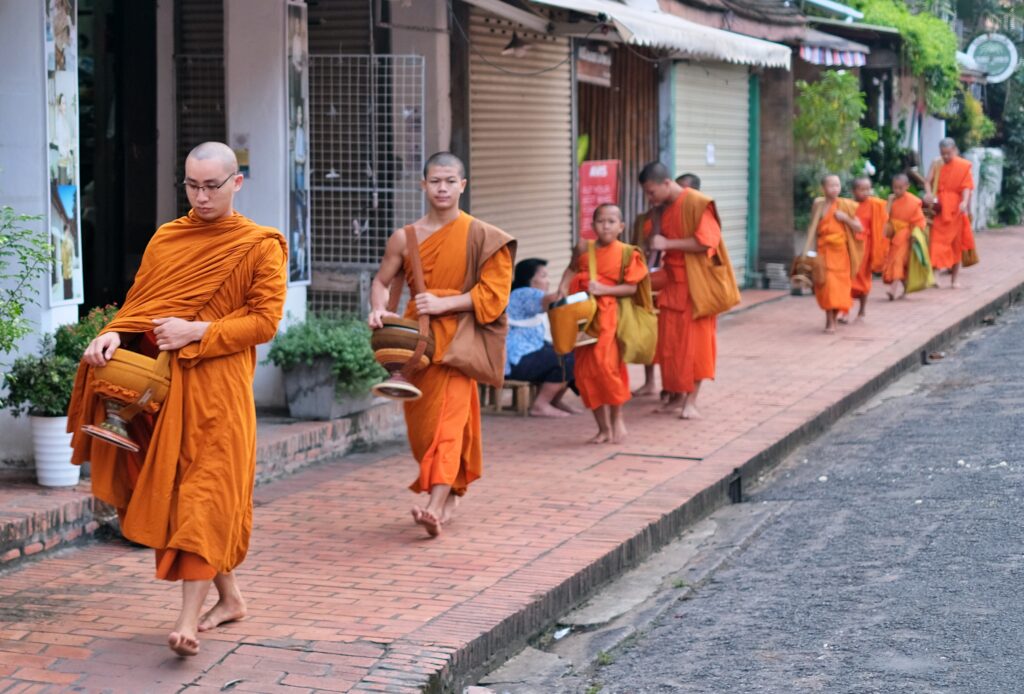
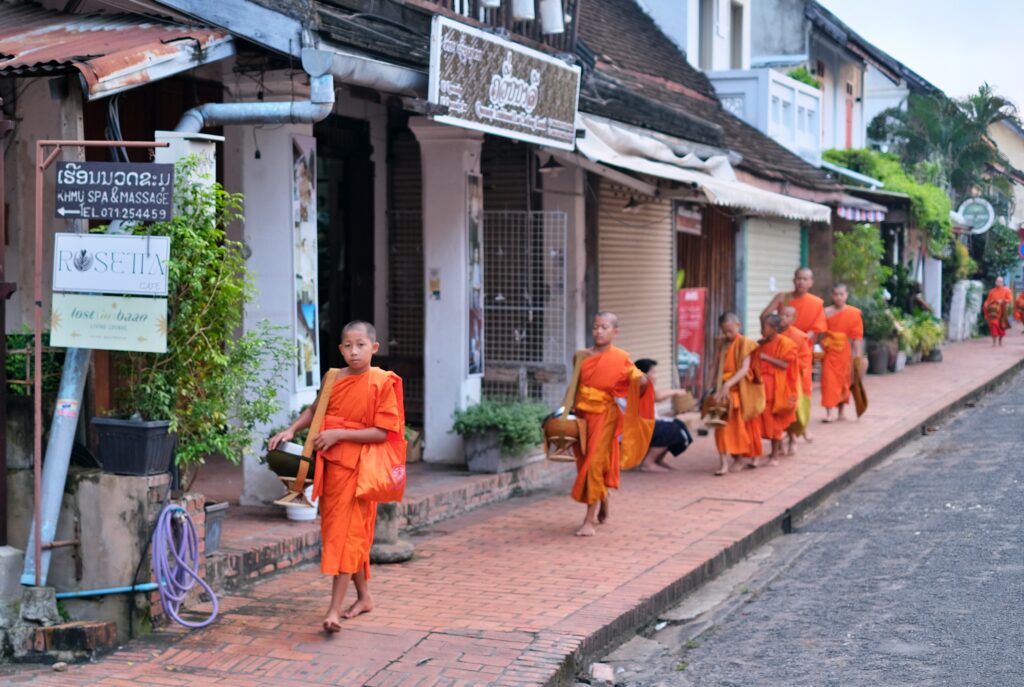
I couldn’t help but wonder what they were doing with all the food they received. They would keep some of it, but they would also give some away along the way.
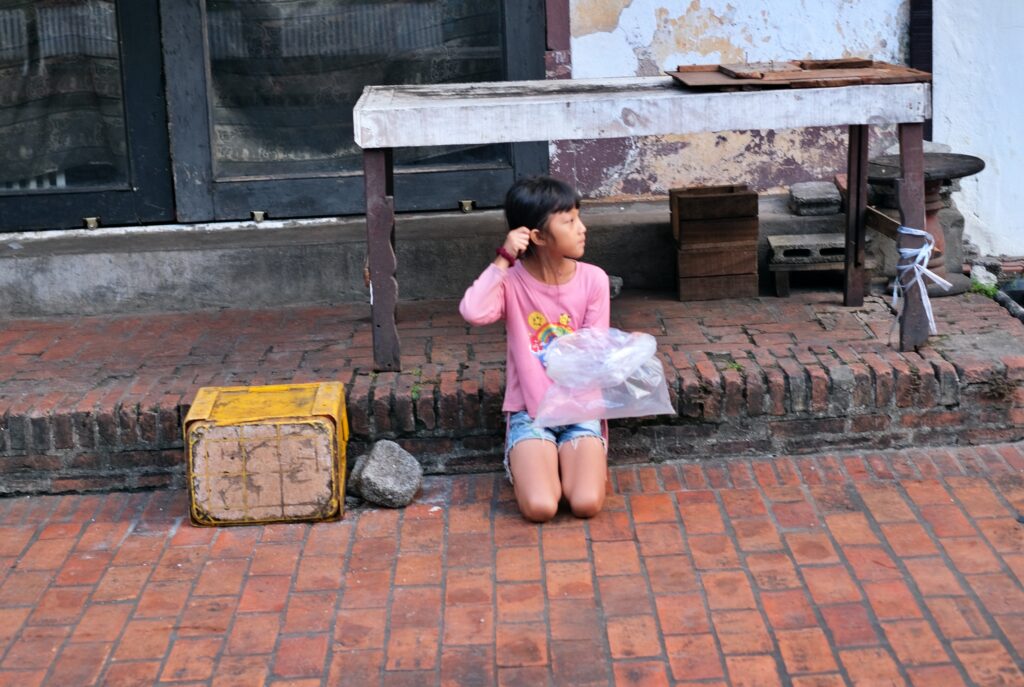

MY TIP:
You should be respectful. Don’t take close-up photos of the monks, be quiet, and if you want to donate food, buy it fresh from the locals. And get up really early, or you won’t see any of the ceremonies.
MORNING MARKET
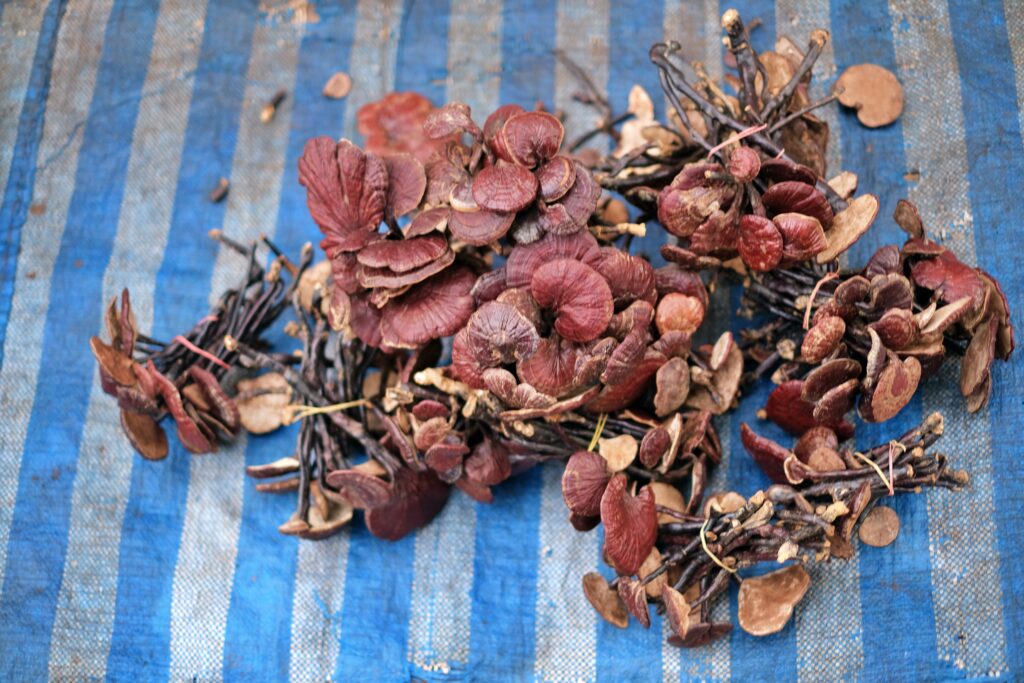
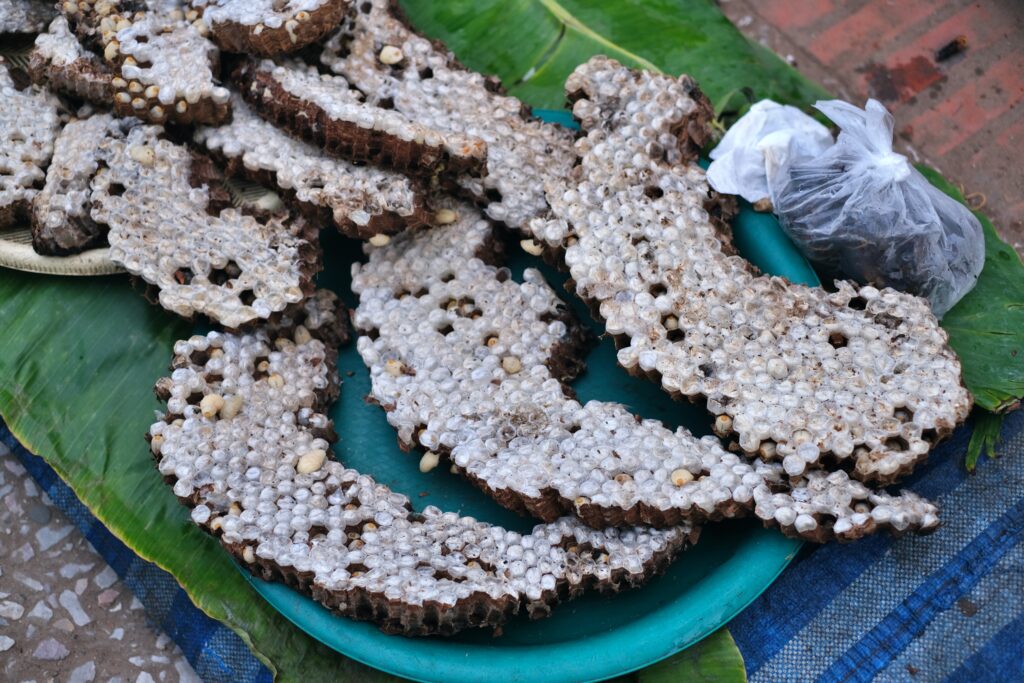
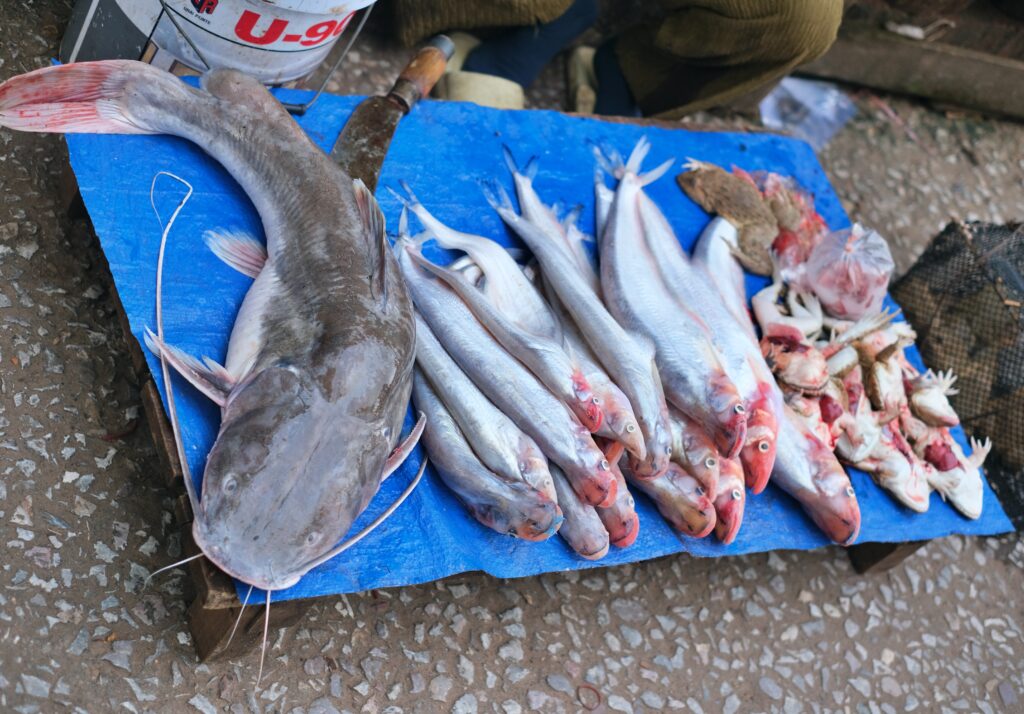
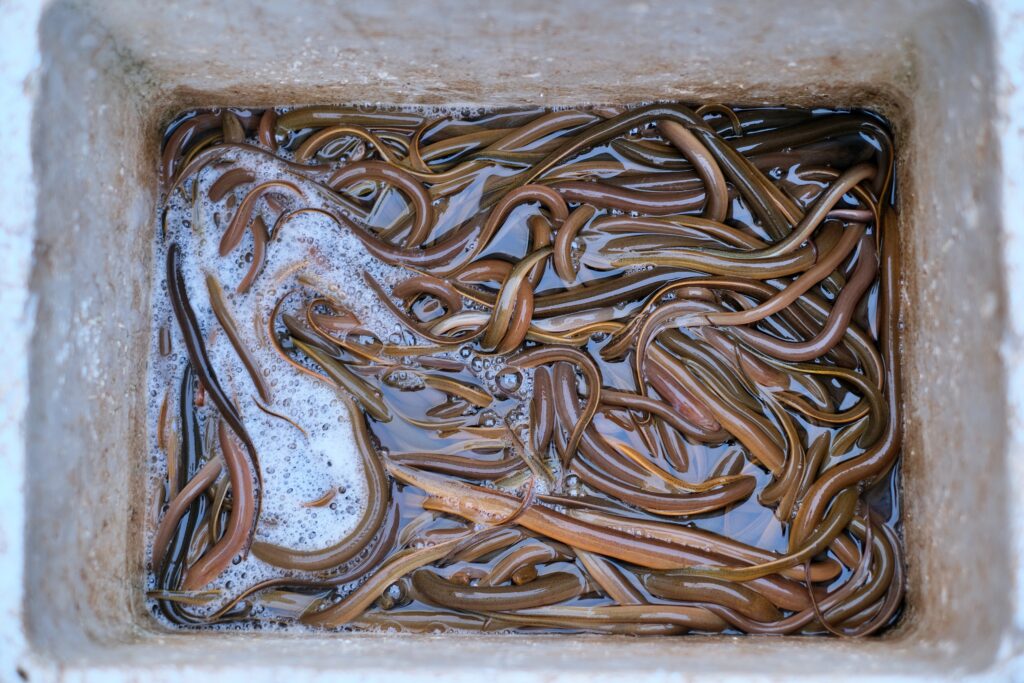
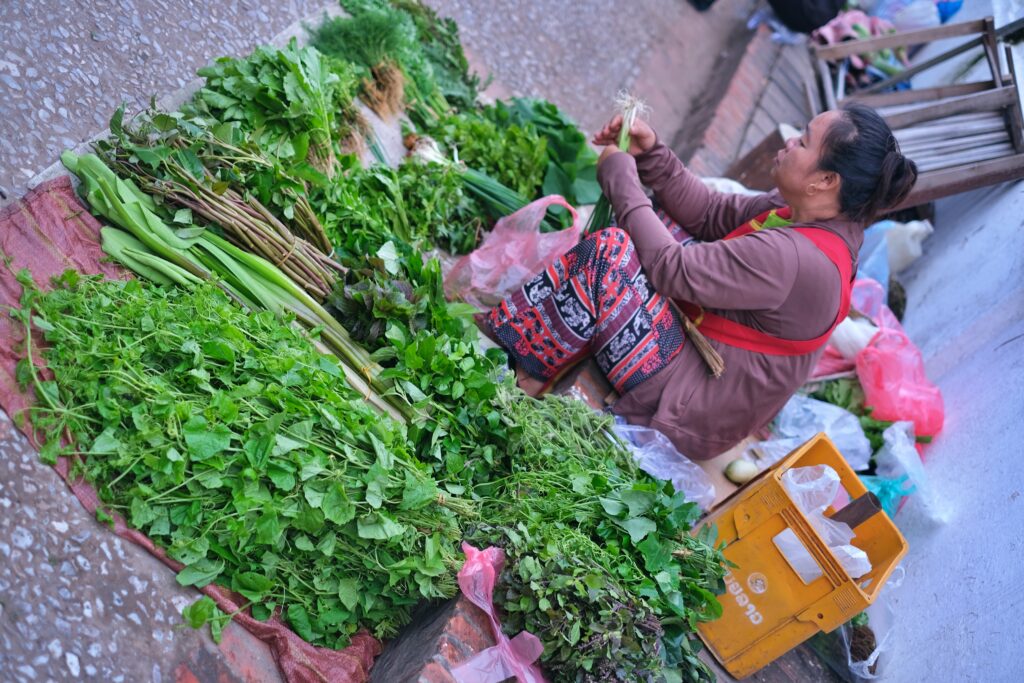
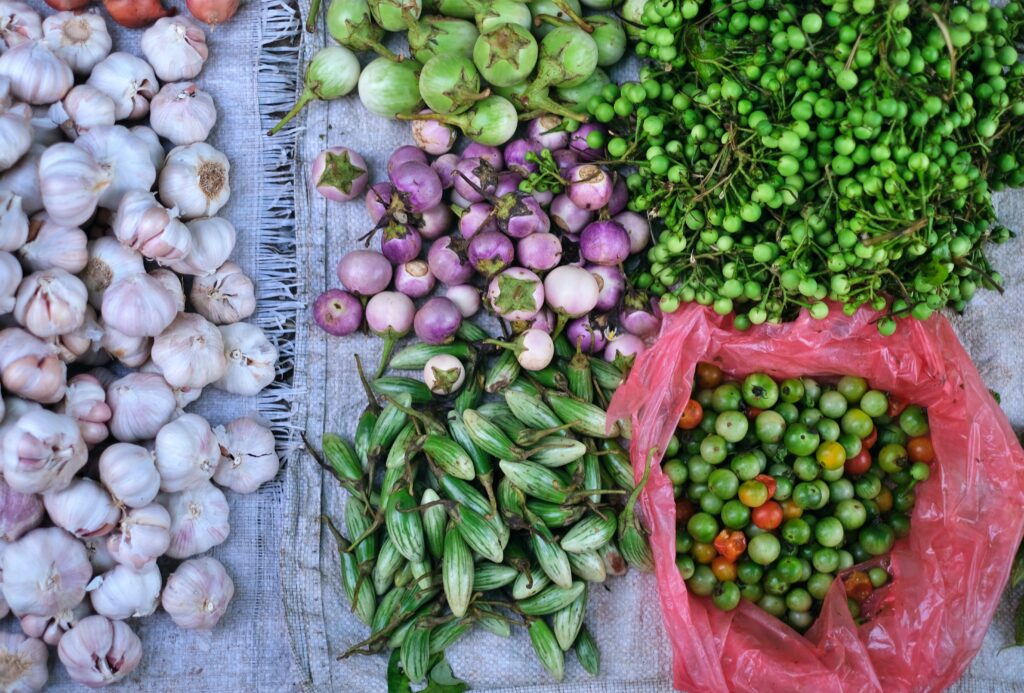
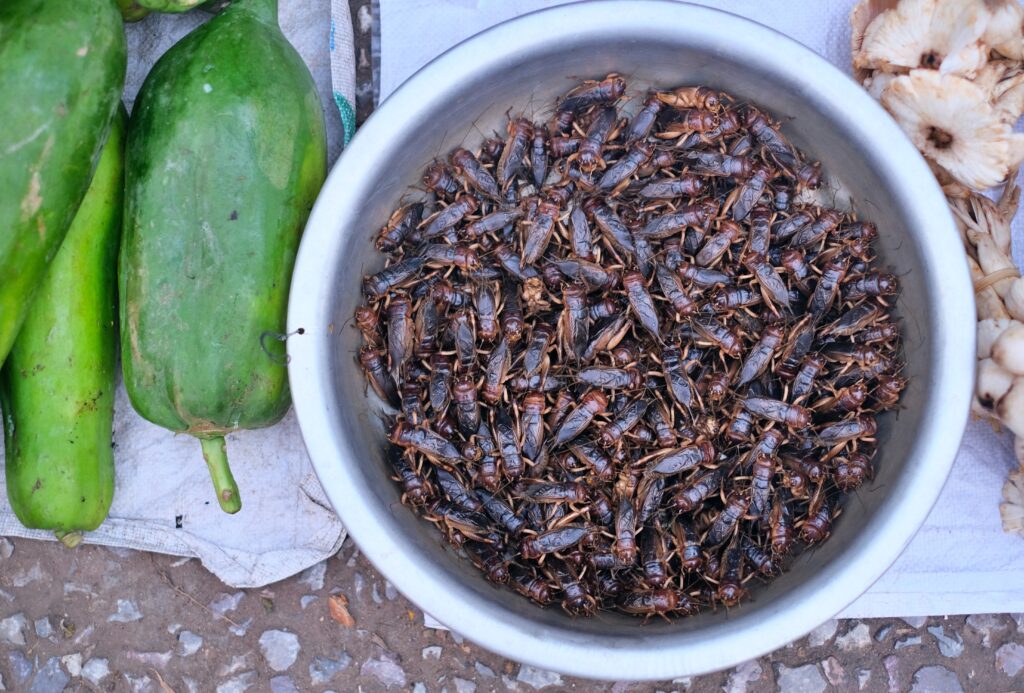
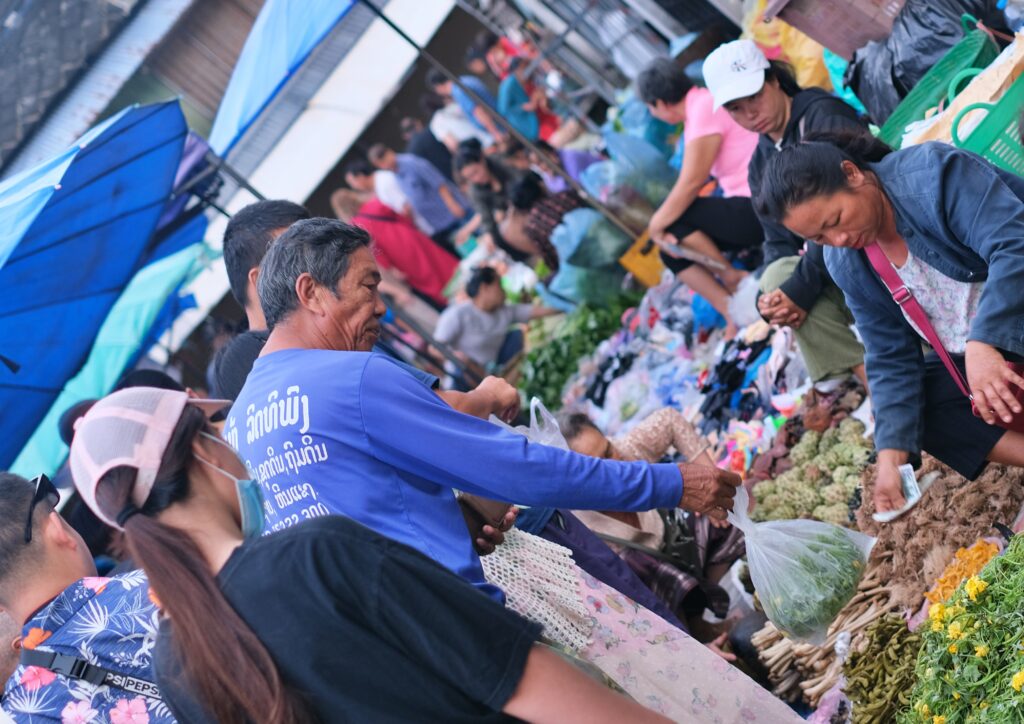
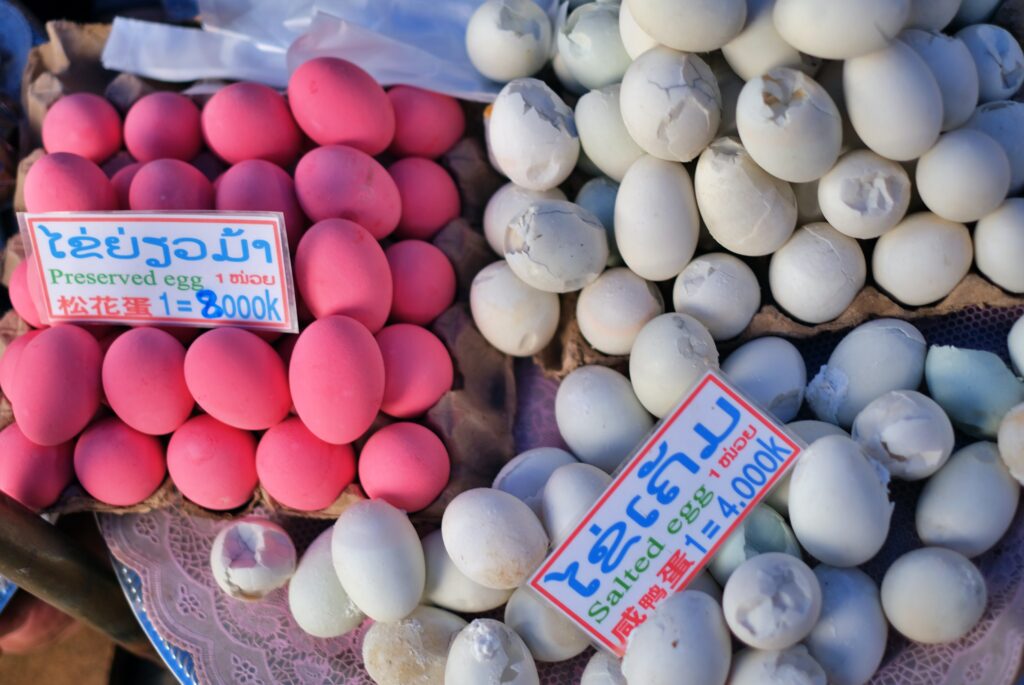
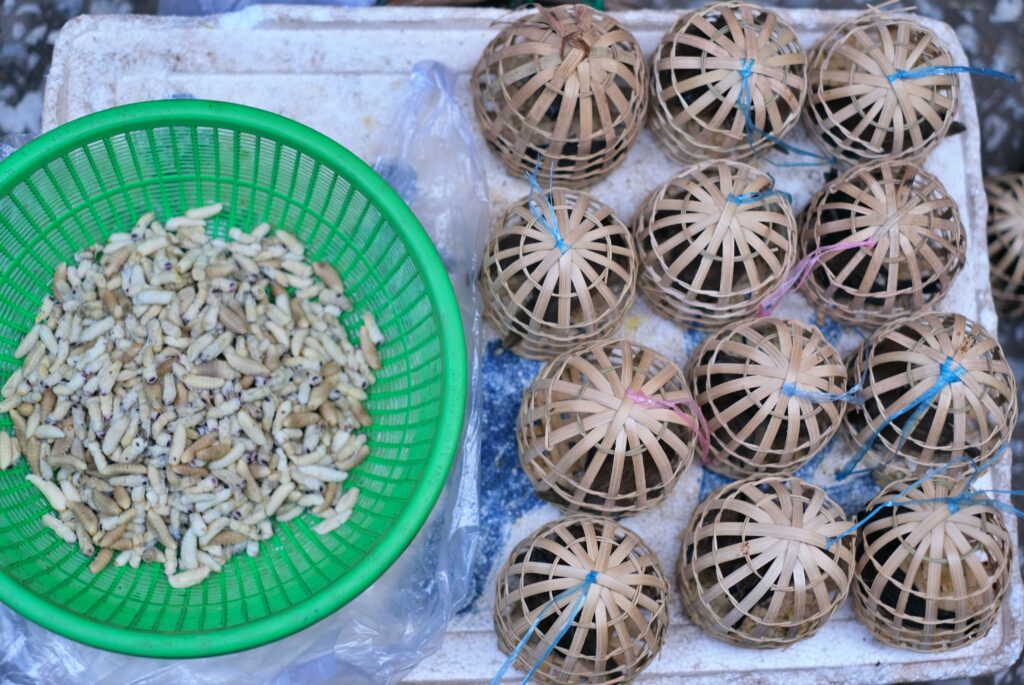
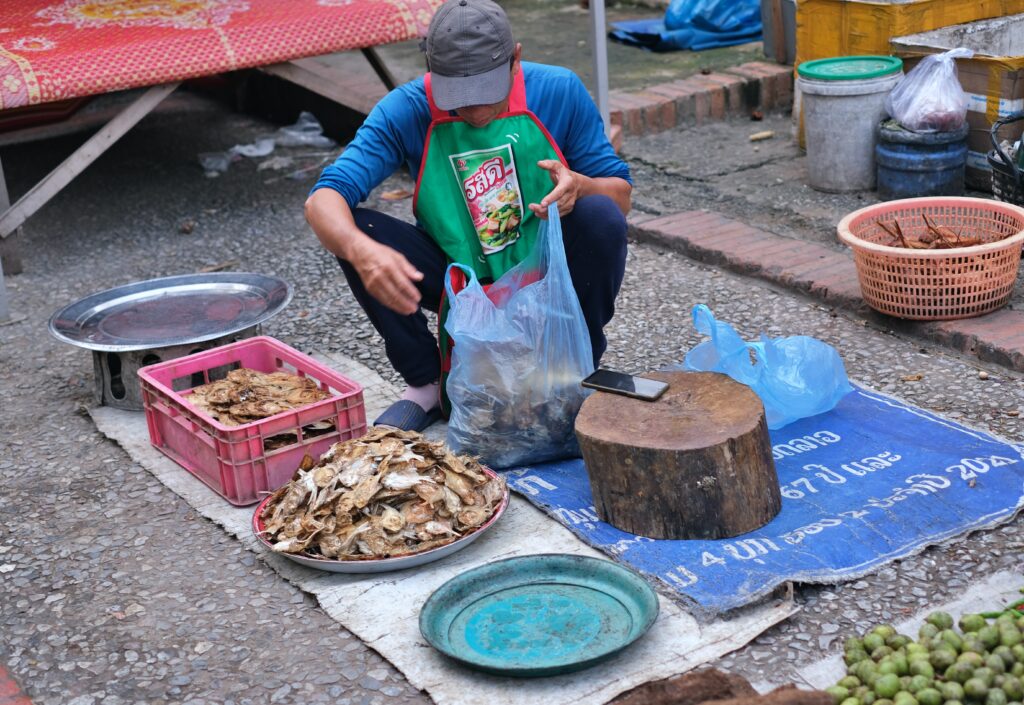
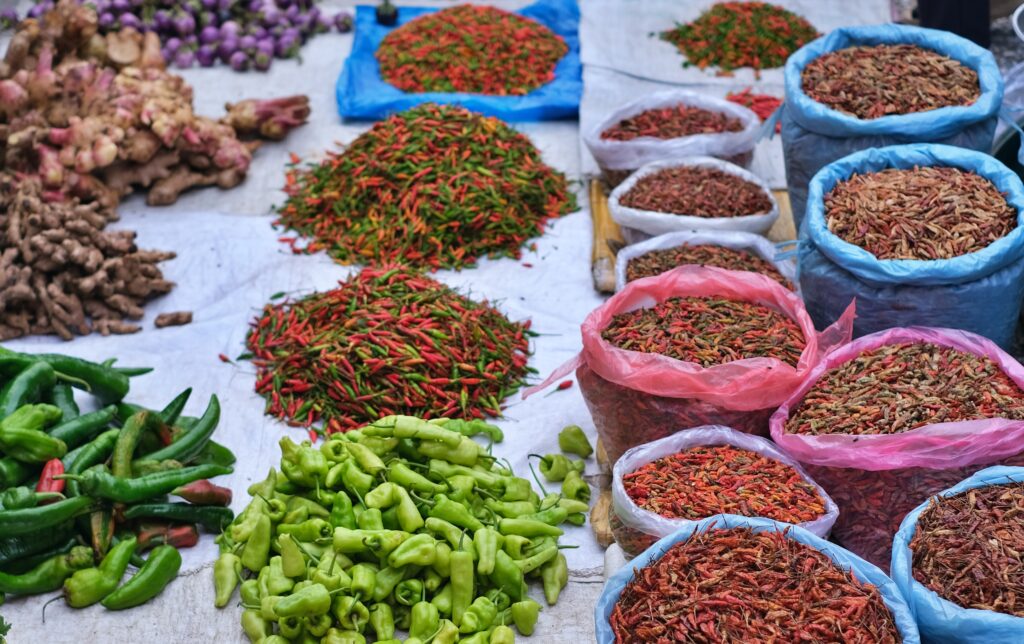
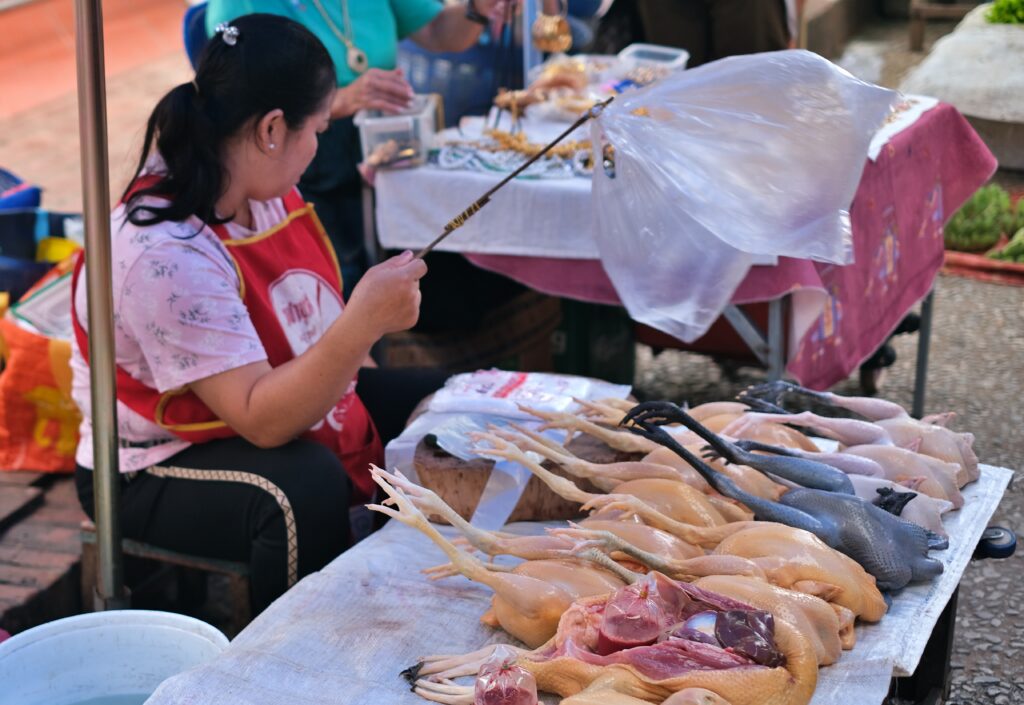
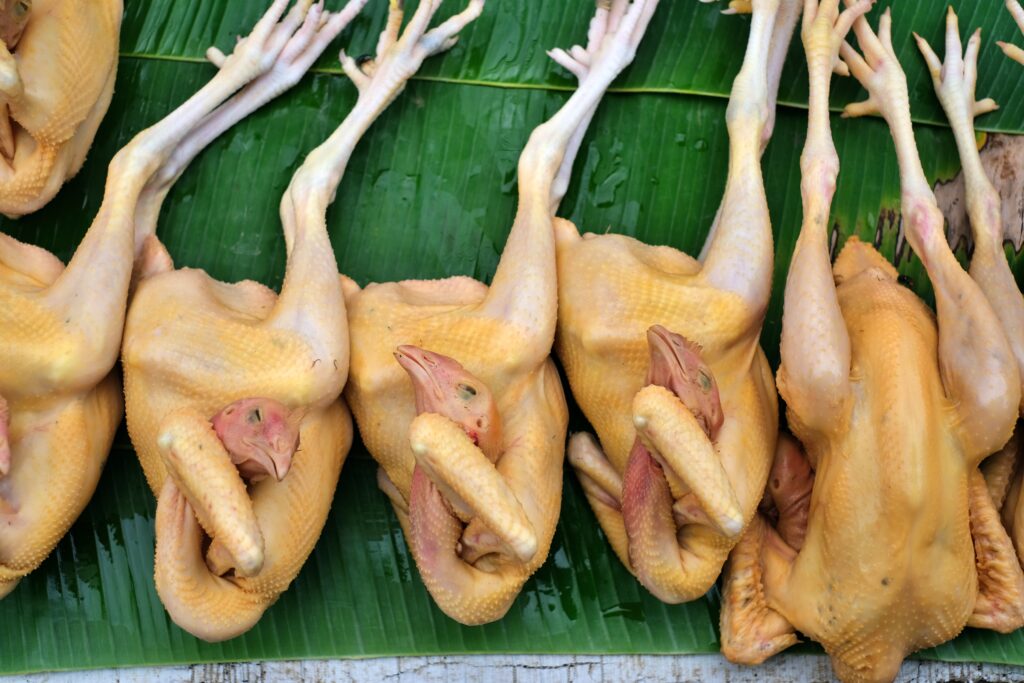
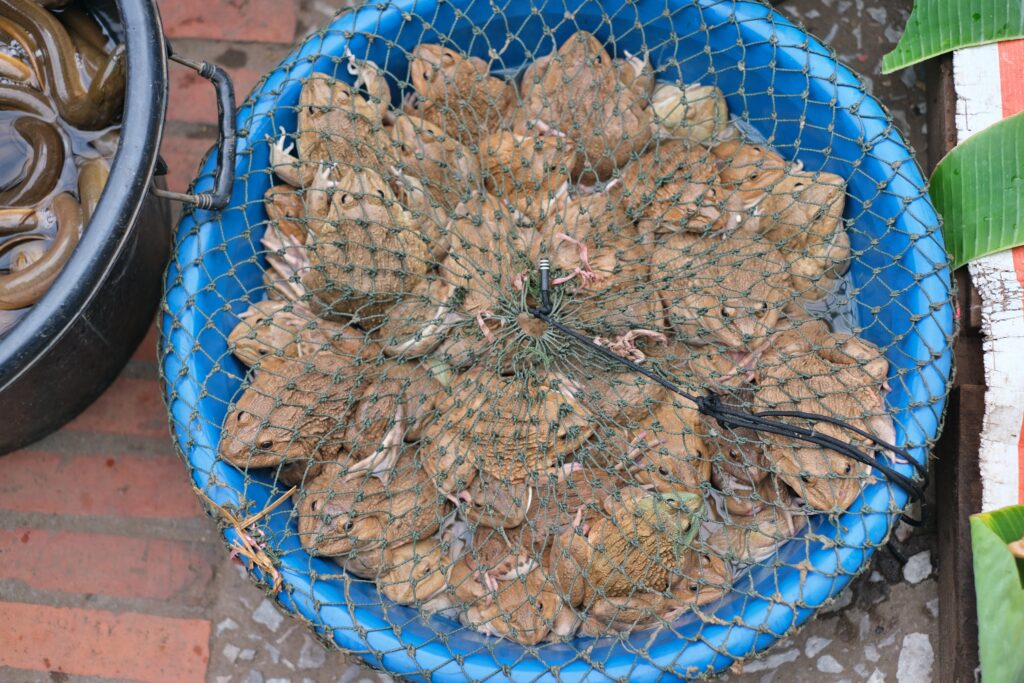
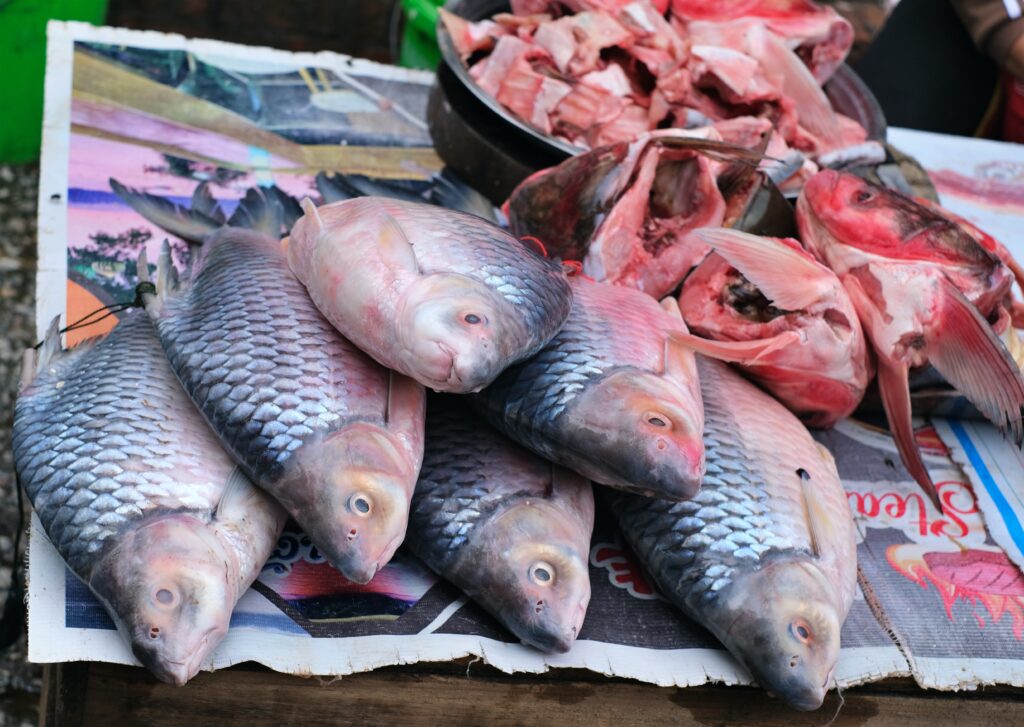
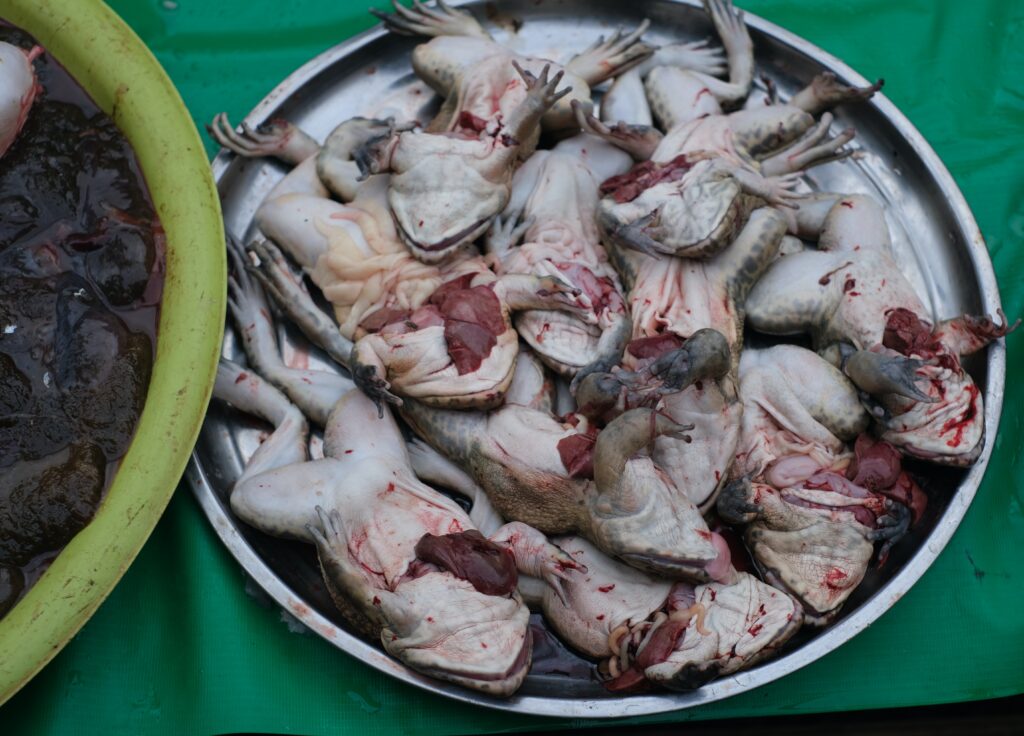
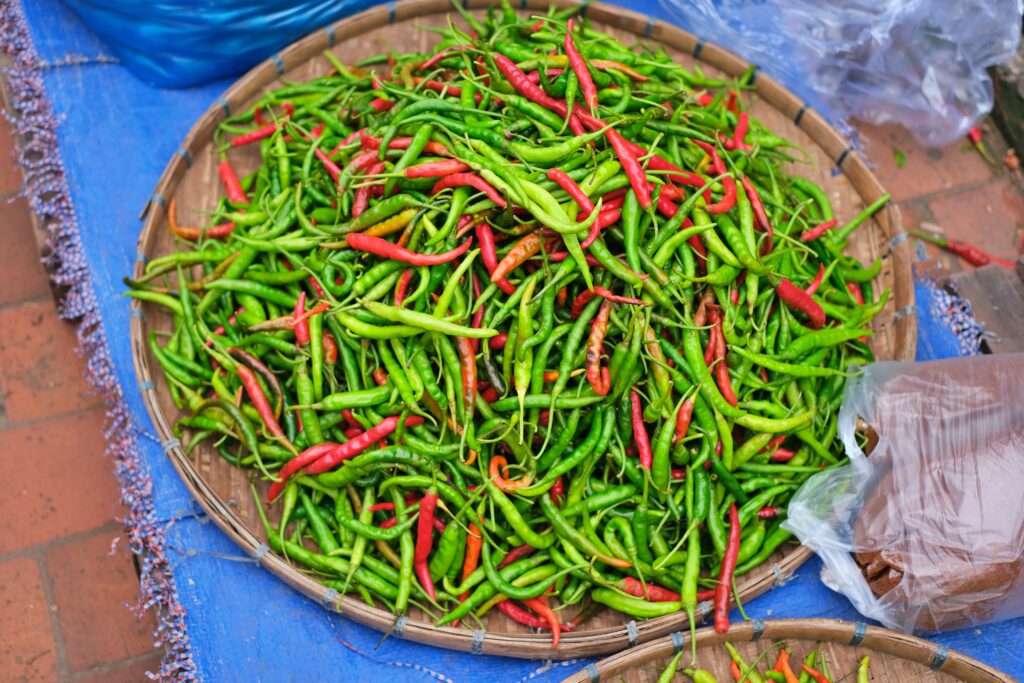
Right after alms, you can go to the morning market, like I did, which is located next to the Royal Palace. It is located along the main street Sisavangvong Road. This market should become an almost mandatory visit for you. I highly recommend it because it is a great experience. The locals sell fresh vegetables, fruits, herbs and handmade textiles. But what you will mainly find here is all kinds of animals that you have never dreamed of.
If you didn’t know, not only do I love traveling, I also love food. And when I can combine the two, it’s my idea of heaven. That’s why I always try to visit local markets when I travel.
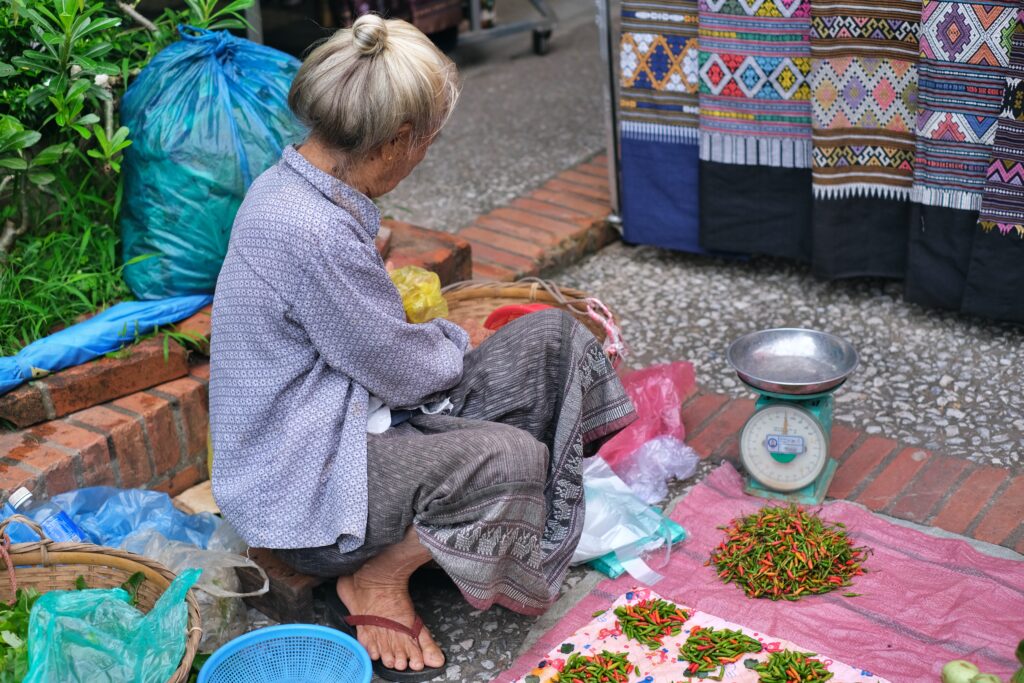
Most cities and towns in Southeast Asia have a morning market, also known as a “wet market.” Unlike a typical night market, which is often filled with vendors selling hot food, clothing, electronics, and tourist trinkets, a morning market is geared mostly toward locals and sells fresh, uncooked food, sometimes so alive that it’s still breathing.
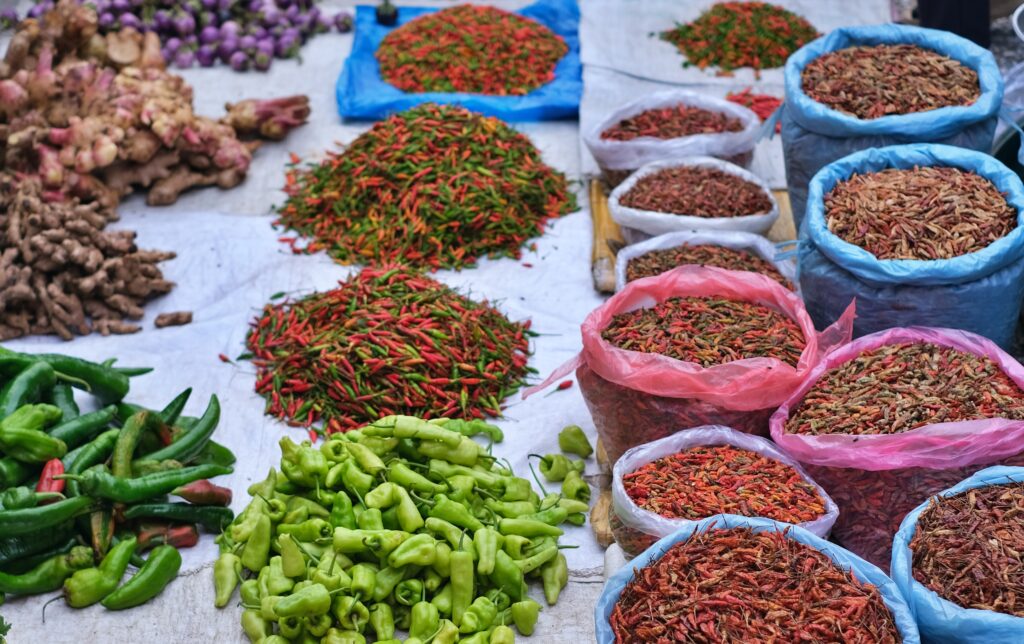
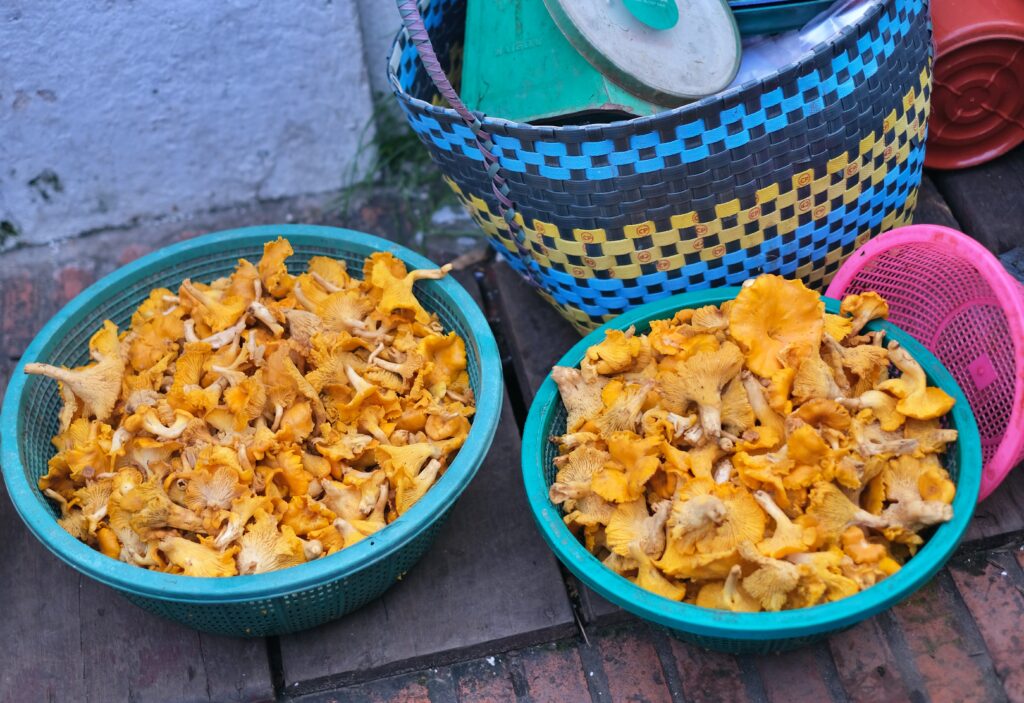
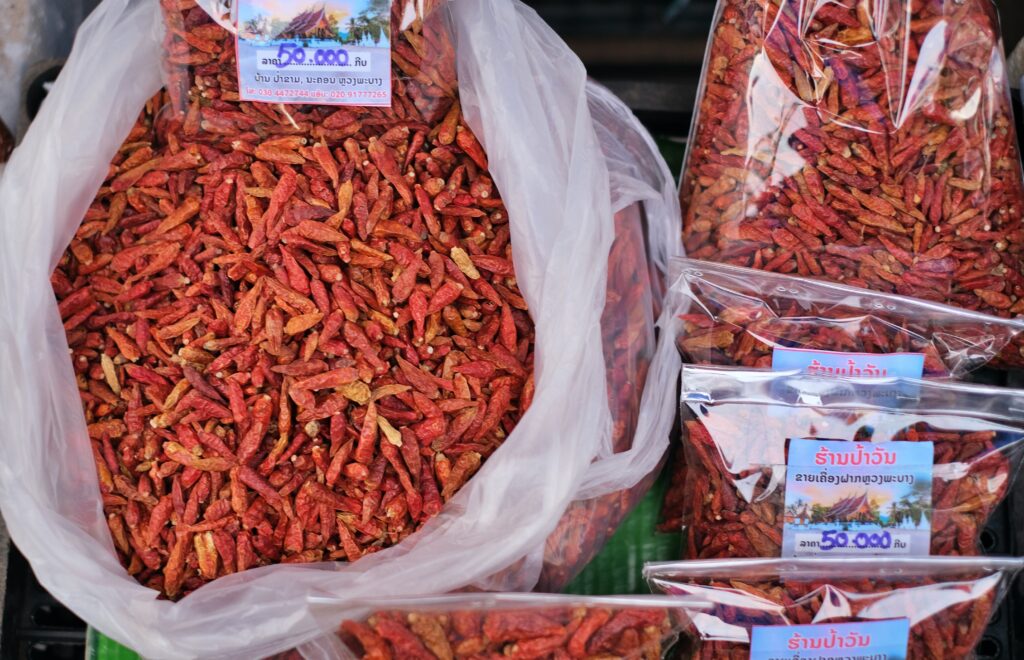
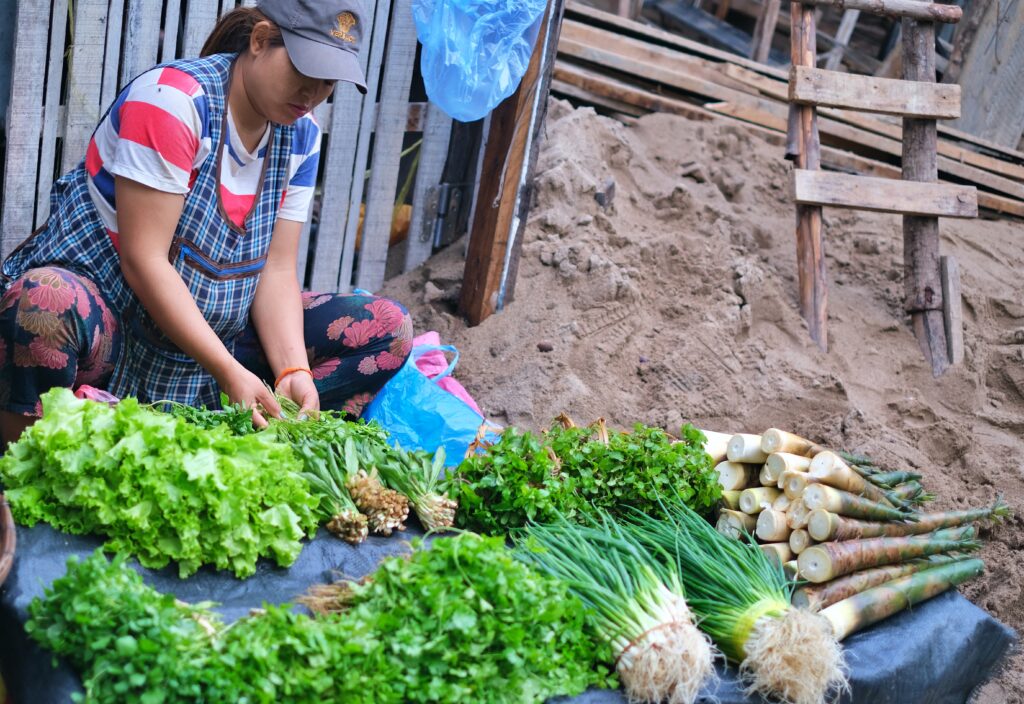
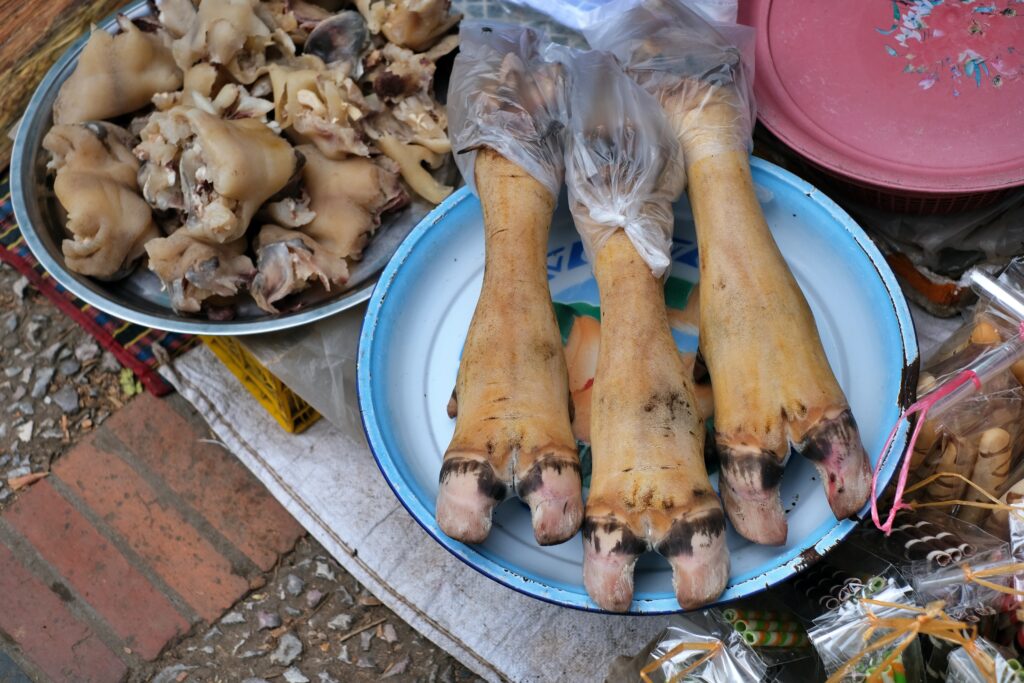
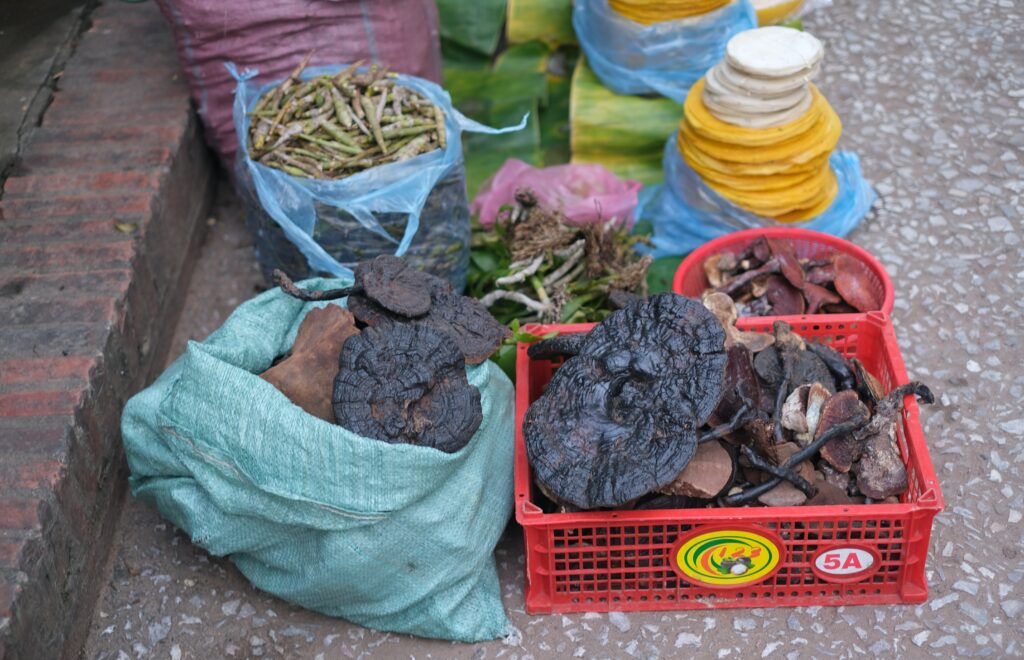
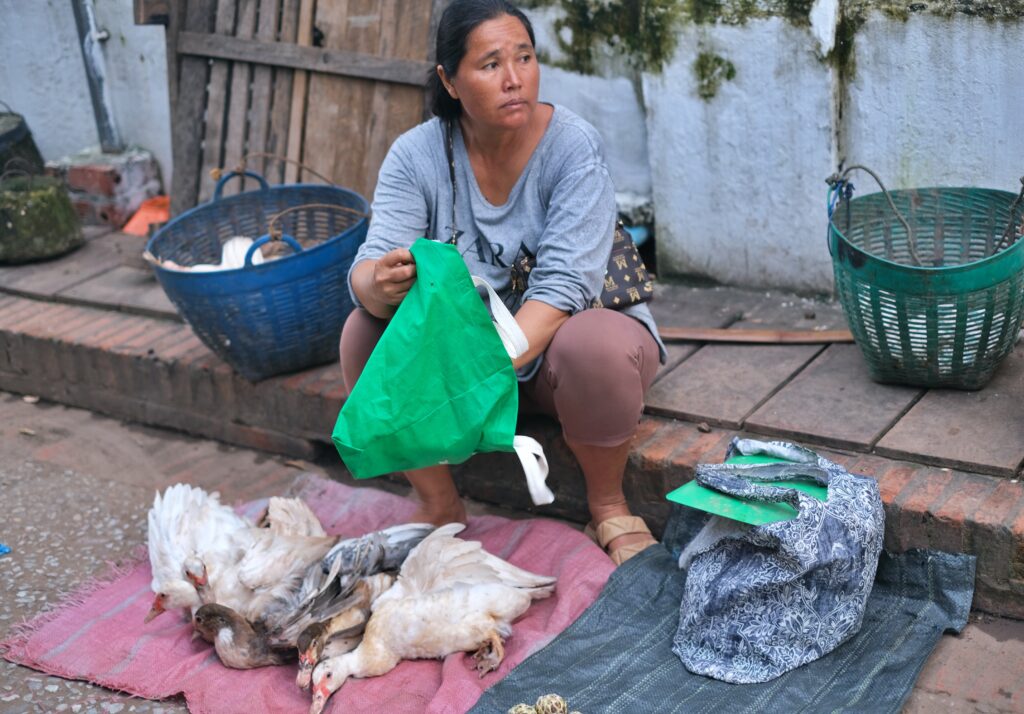
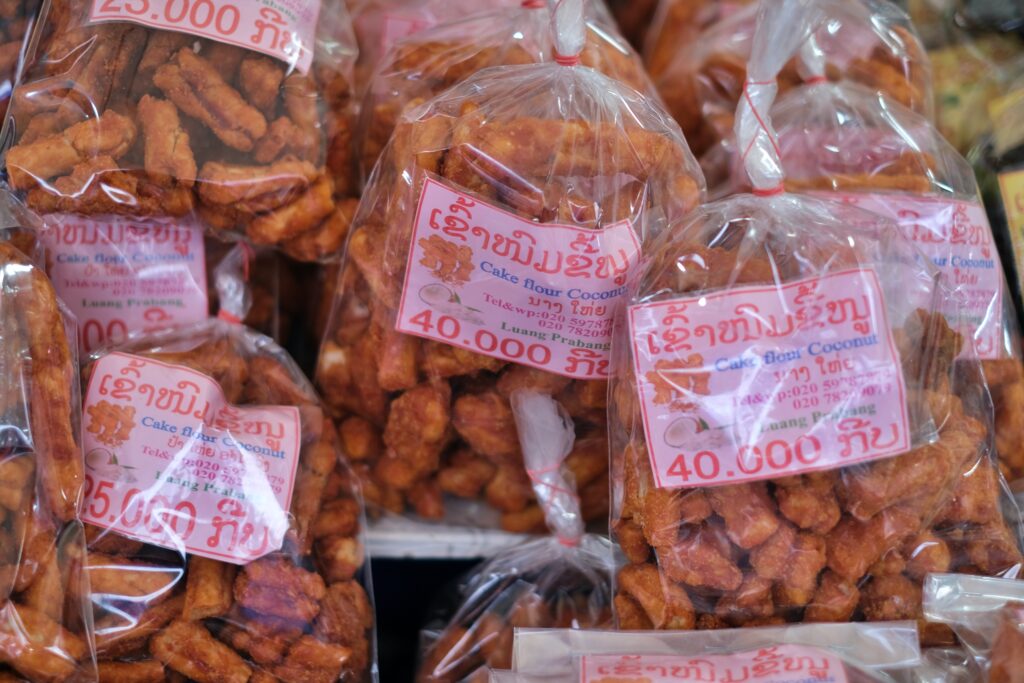
To discover fresh Lao ingredients, head to this market first thing in the morning, where locals flock to buy fish, vegetables, bundles of herbs, pork, eggs, fruit, and a variety of live animals including toads, chickens, and other small critters. The morning market is an outdoor market, with most vendors selling their wares under large umbrellas. It’s a great place to pick up packets of khaiphaen (river seaweed), dried buffalo meat, banana chips, and fried bamboo shoots. Even if you’re not interested in buying anything, it’s worth a visit to take photos of all the weird and wonderful things for sale.

Opening hours: 5:00 AM–11:00 AM.
Location: Right behind the tourist information center.
COFFEE IN LUANG PRABANG
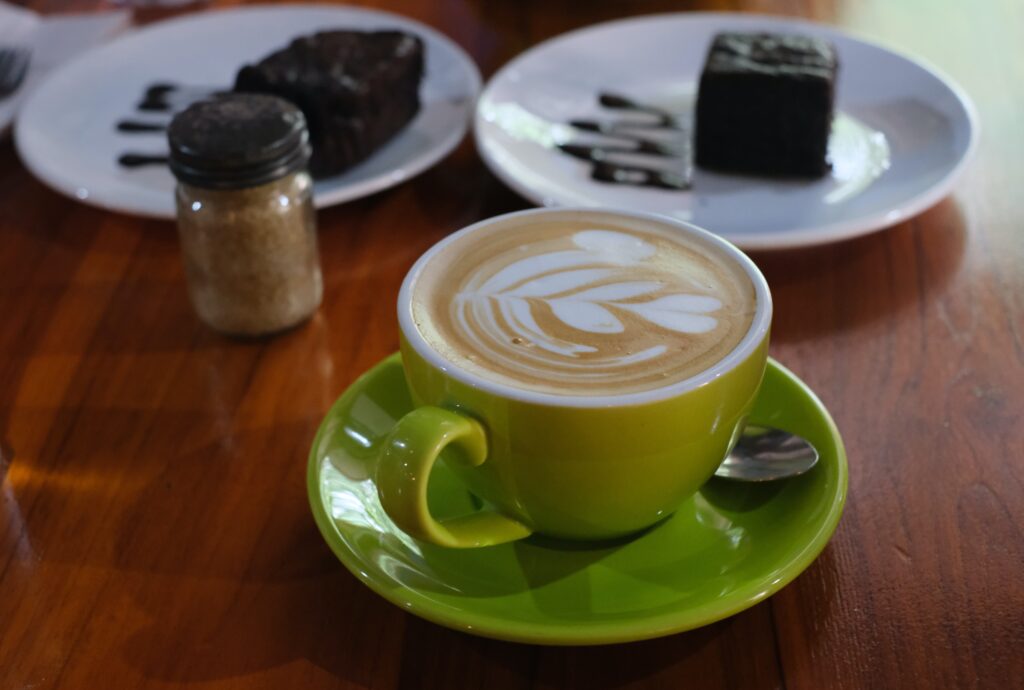
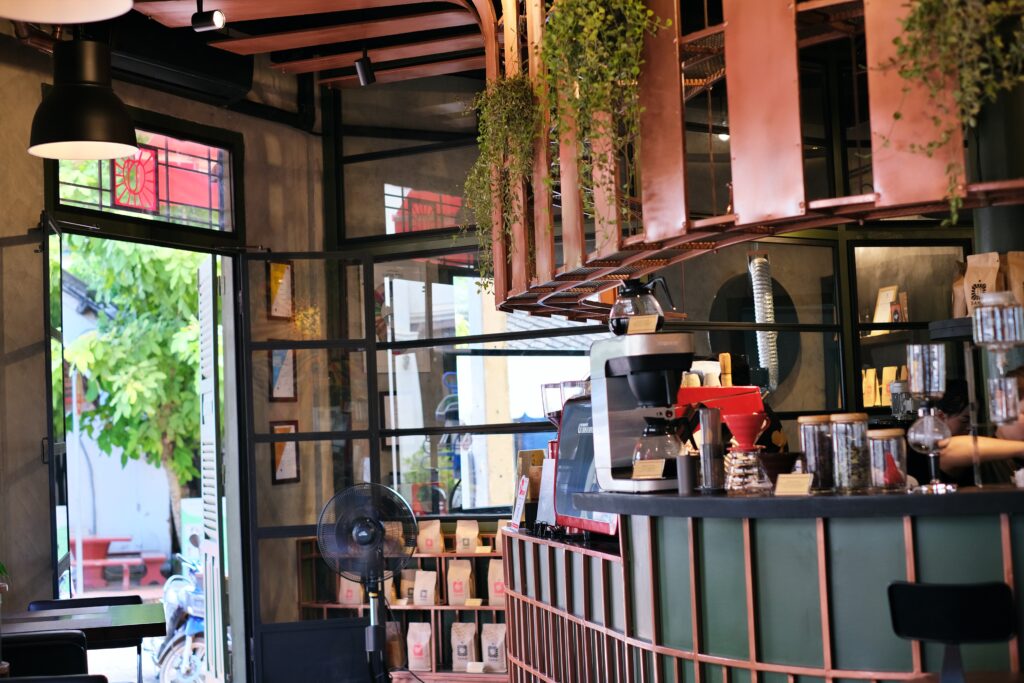
The city is famous not only for its atmosphere, but also for its Lao coffee. In the cafes along the river you can enjoy the strong and aromatic coffee, which is grown on the plateaus in the southern part of the country. If you are a coffee lover, Luang Prabang is a great place to taste it in its most authentic form, whether black, with condensed milk or as a refreshing iced version.
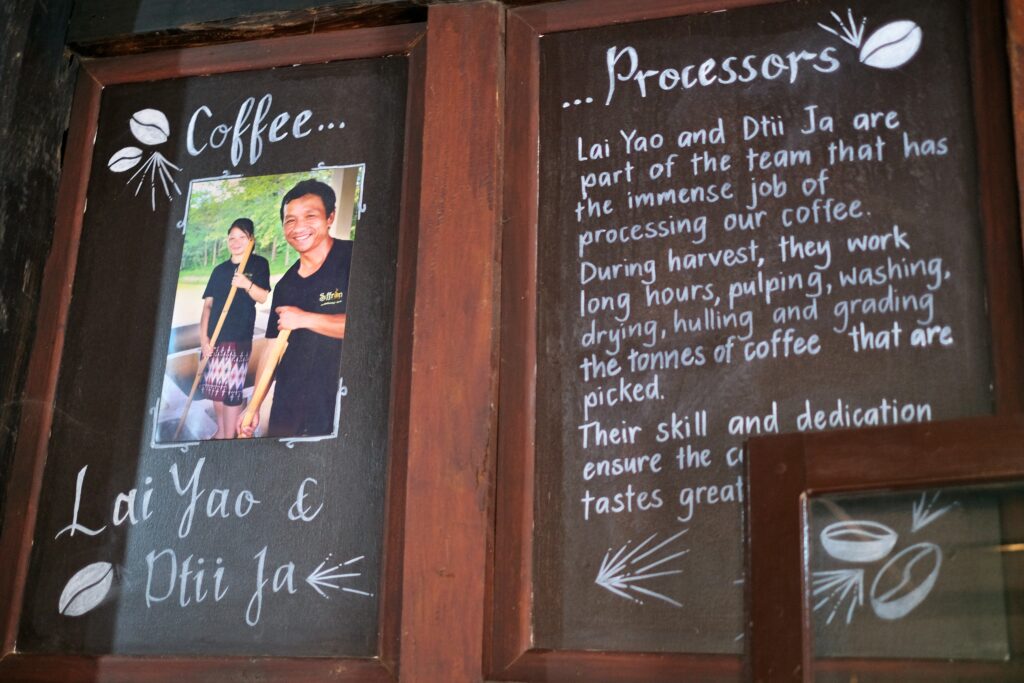
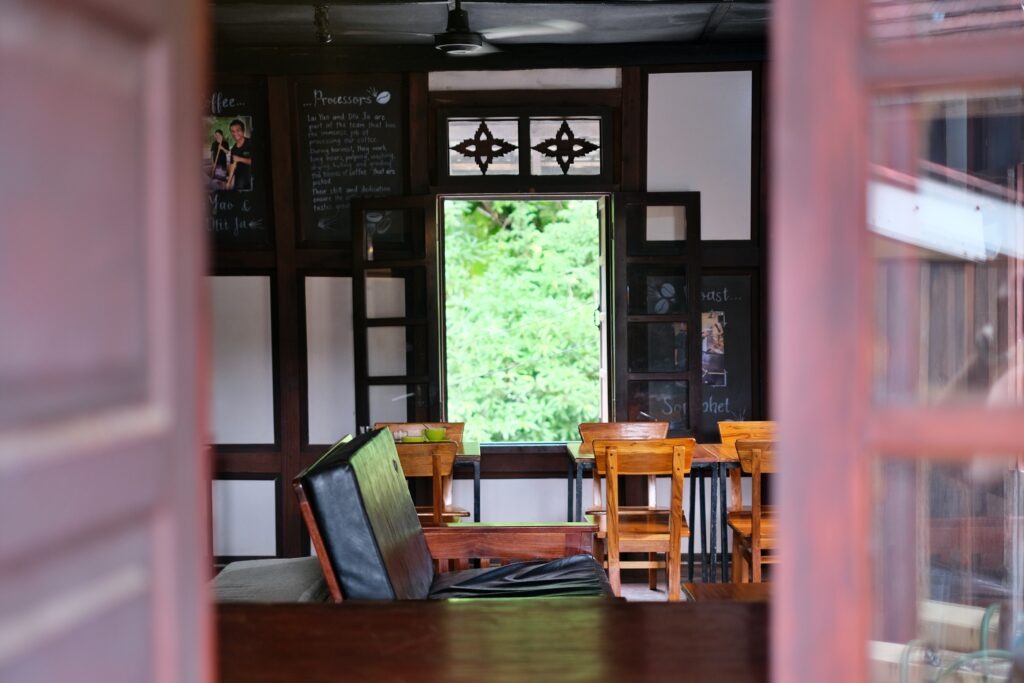
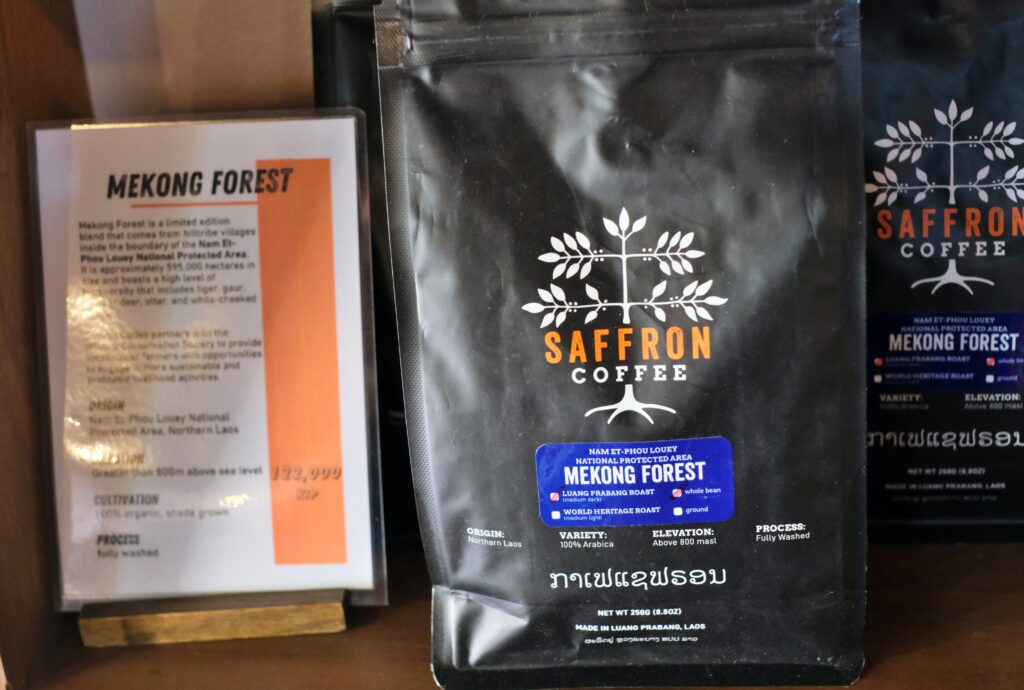
MY TIP:
Visit Saffron Coffee, a social enterprise in northern Laos that produces organic shade-grown Arabica coffee from local hill tribe farmers. It is known for its quality coffee, sustainable practices, and “cherry-to-cup” tours in Luang Prabang where you can learn about the coffee-making process. The business reinvests profits back into local communities, and the coffee is often described as having rich, sweet, chocolatey notes.
Location: The main coffee shop is located on Khem Khong Road along the Mekong River in Luang Prabang.
MONUMENTS AND TEMPLES
There are many temples in Luang Prabang and it is up to you which ones you decide to visit. I visited these and they were truly beautiful.
TEMPLE WAT XIENG THONG
One of the most famous places is Wat Xieng Thong, one of the most important Buddhist temples in the country. Sometimes called the “golden temple of the city.” Its richly decorated facades and golden reliefs will transport you to a completely different world.
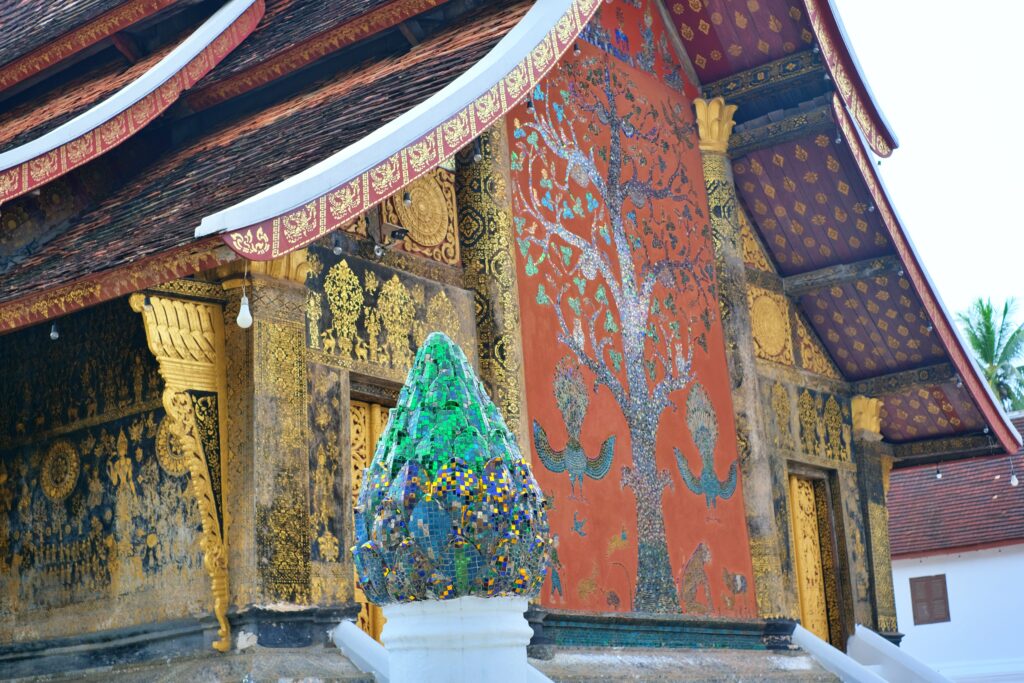
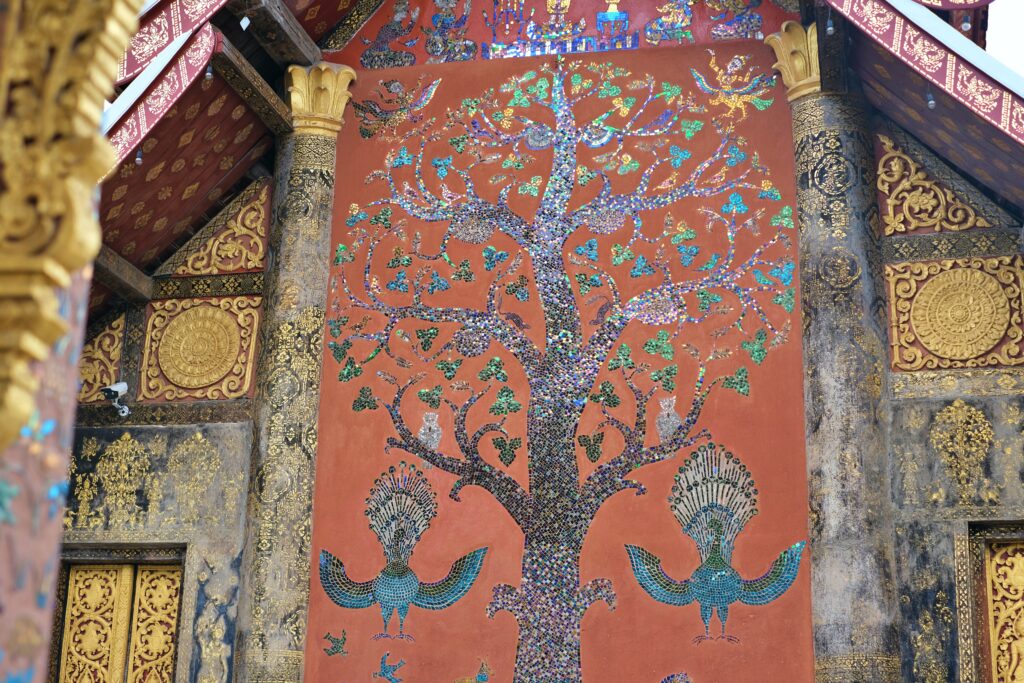
Dating back to the 16th century, it is still one of the most sacred places in the country. The distinctive roof, which slopes almost to the ground, gives the impression that the temple is embracing its visitors. Inside, you will find beautiful mosaics and wooden pillars covered in gold patterns that tell stories from Buddhist mythology.
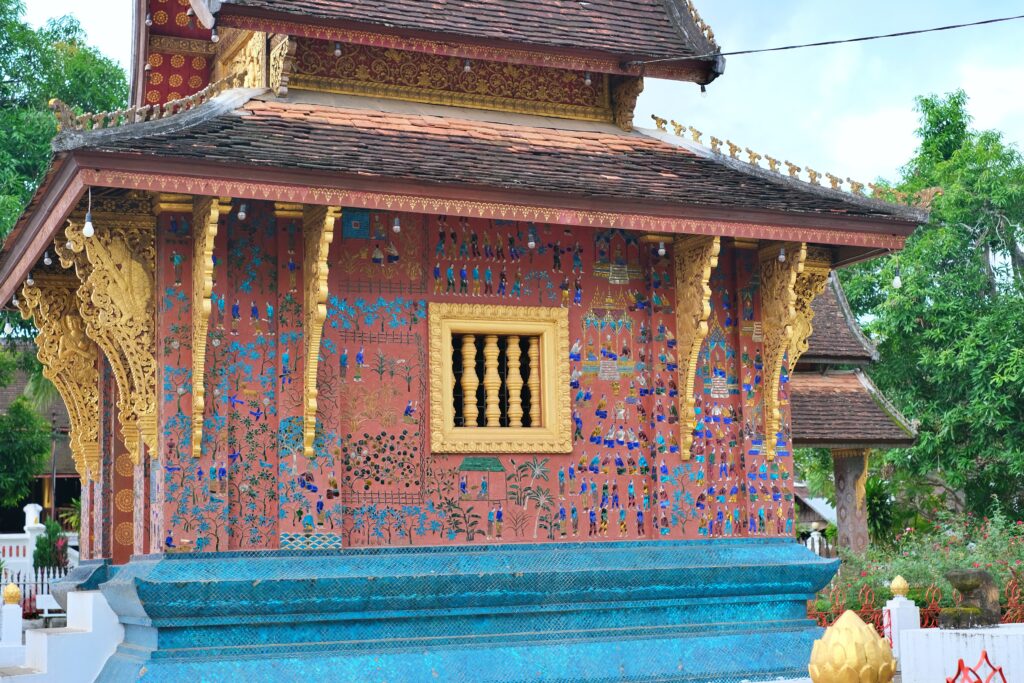
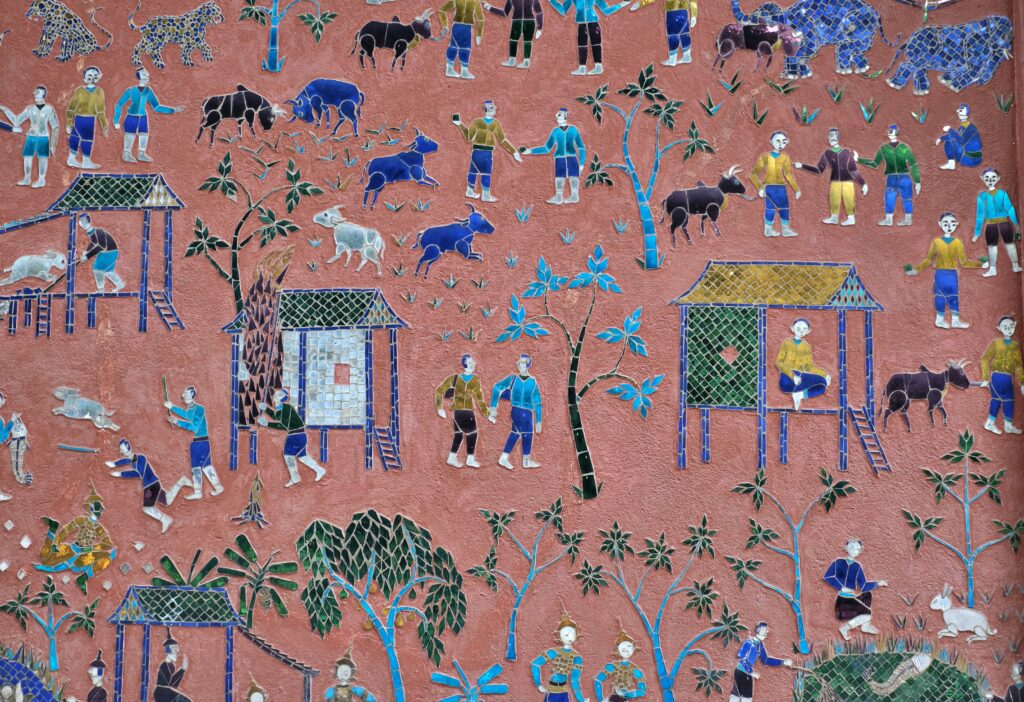
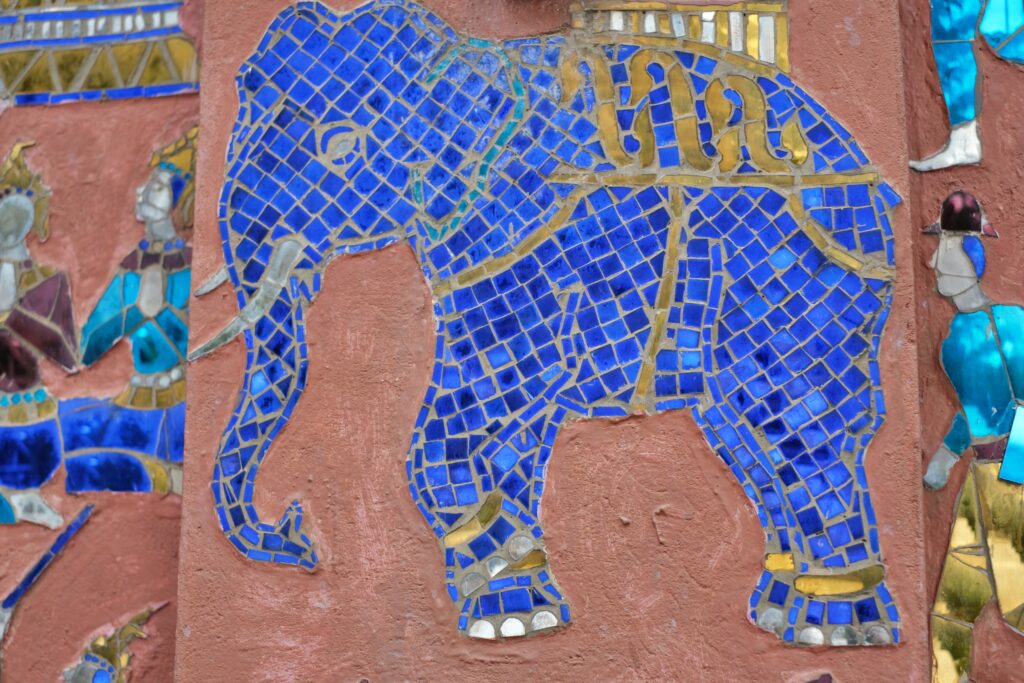
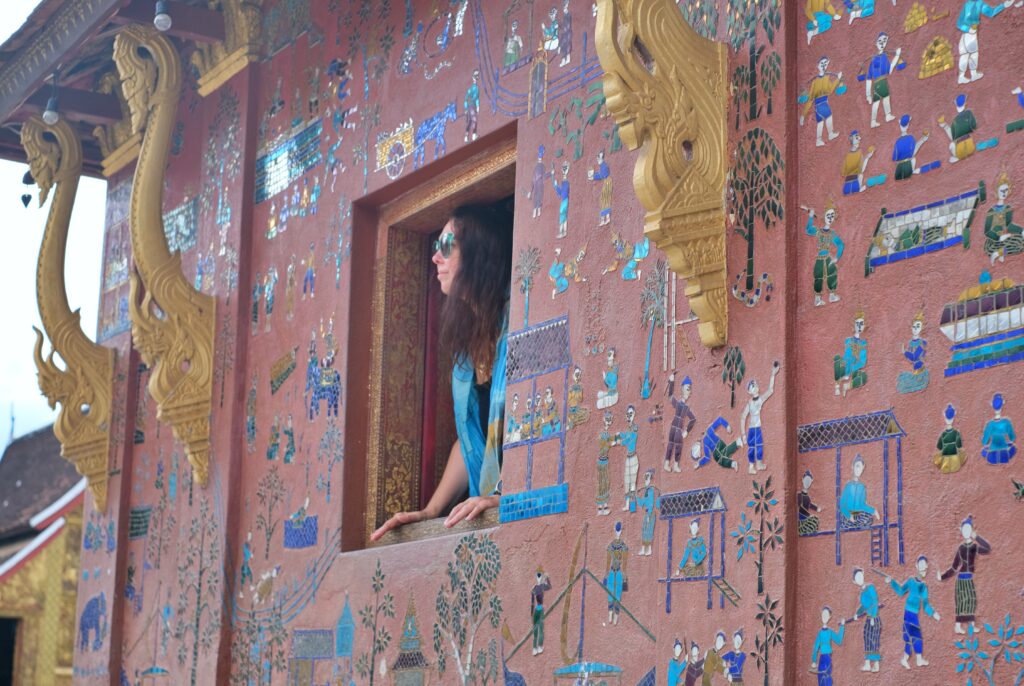
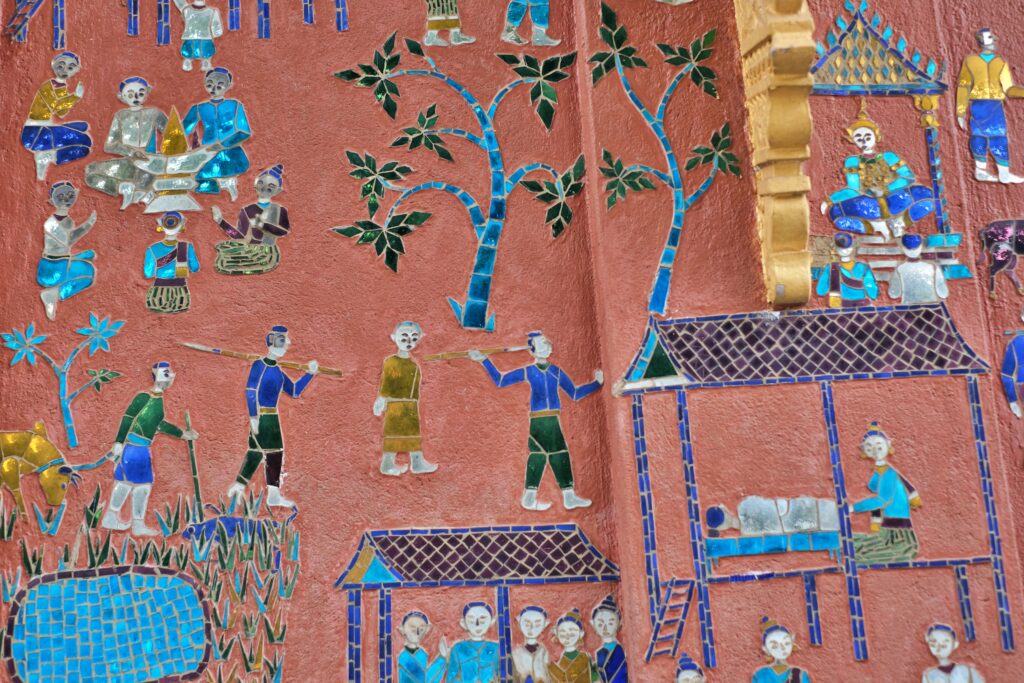
The temple is beautiful at any time of day. However, at sunset the orange colours become even more radiant with gold. Whether it is morning, day or night, there is always a real sense of peace and tranquility here.
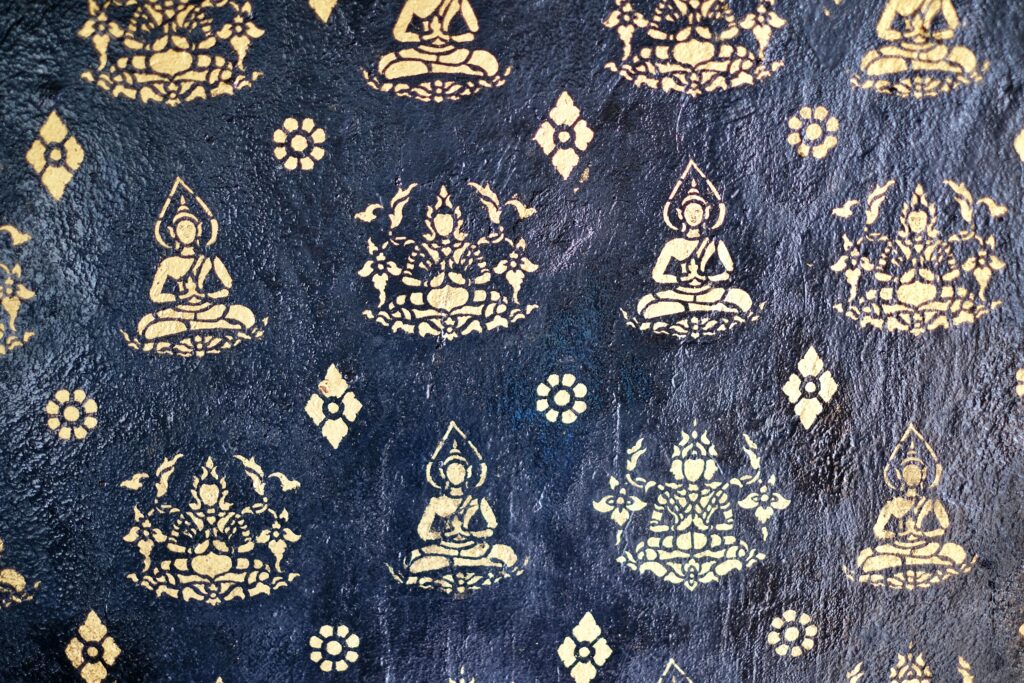
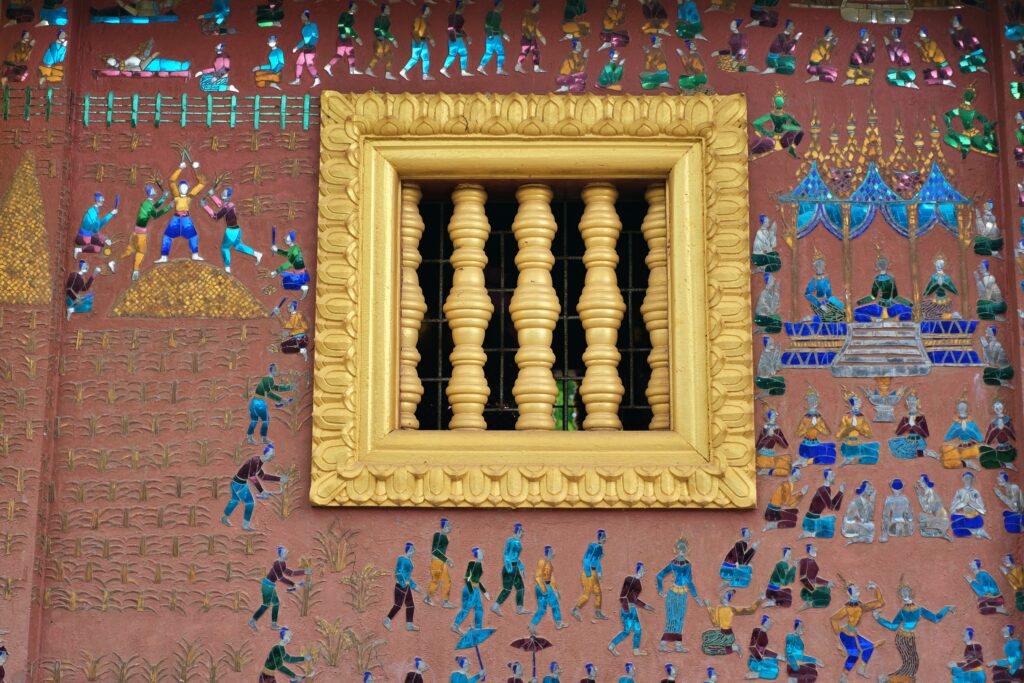
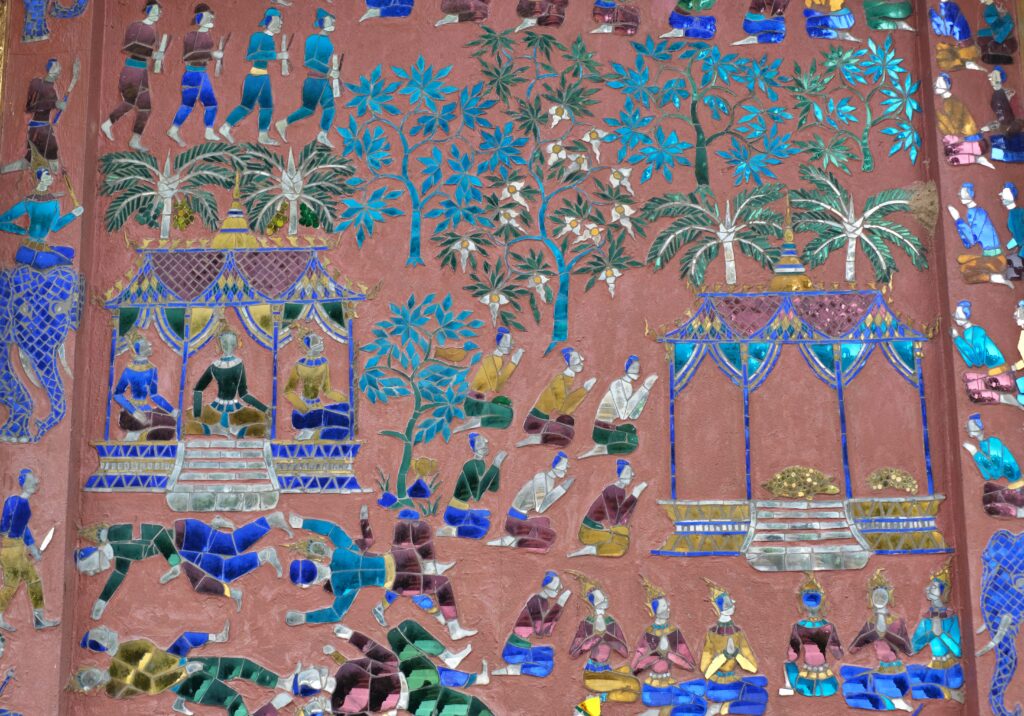
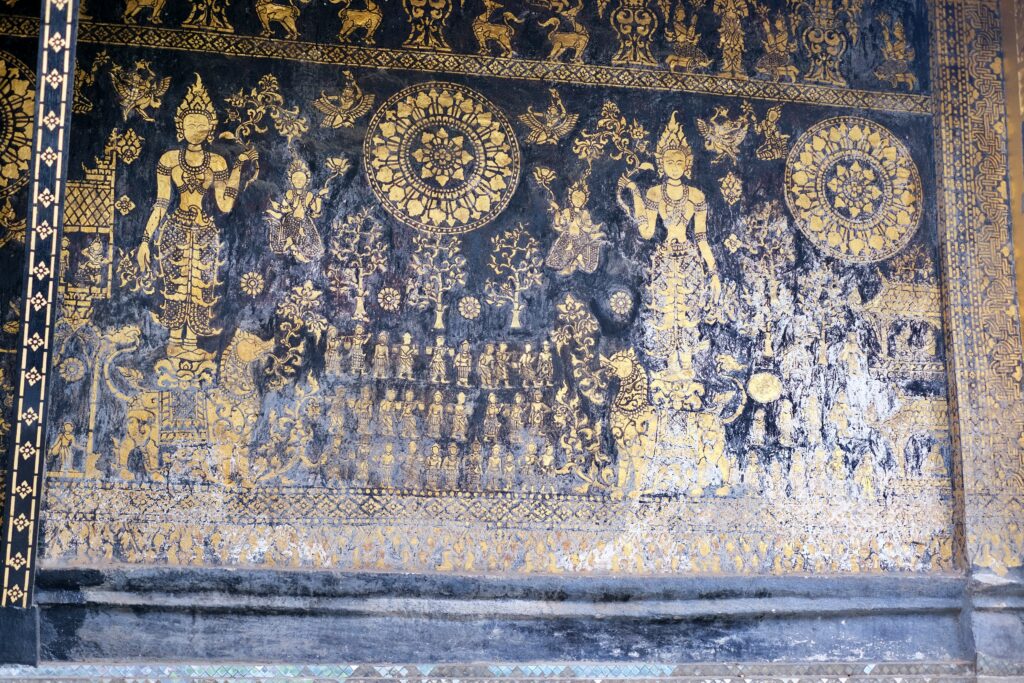
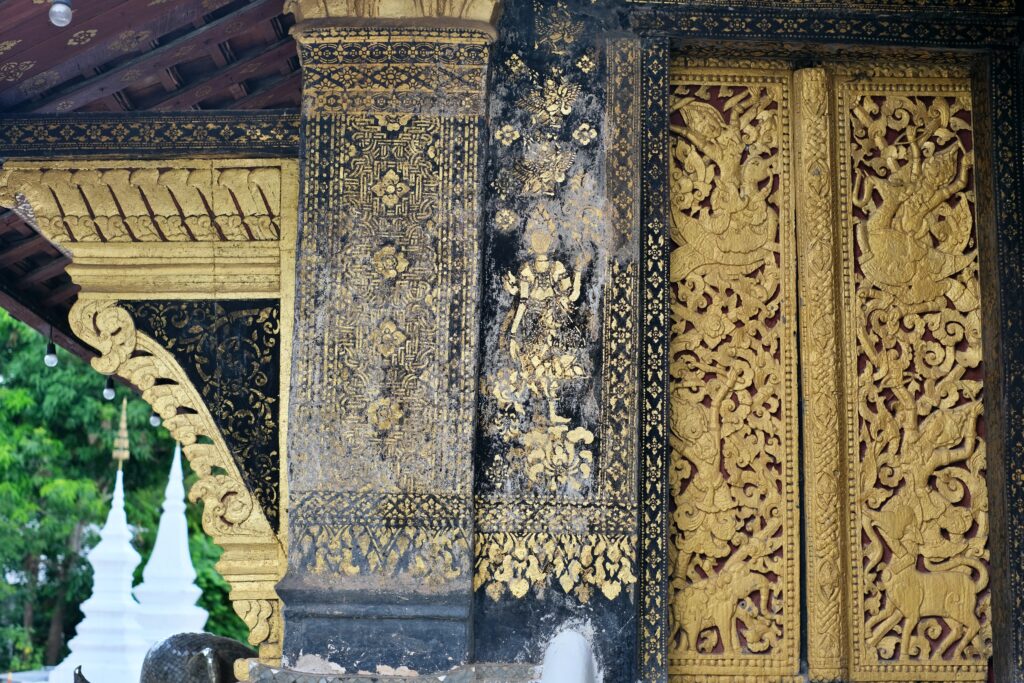
 Entrance fee to Wat Xieng Thong: 20,000 kip ($2.50), but definitely worth it. It’s only a 15-minute walk from the morning market to the temple.
ROYAL PALACE
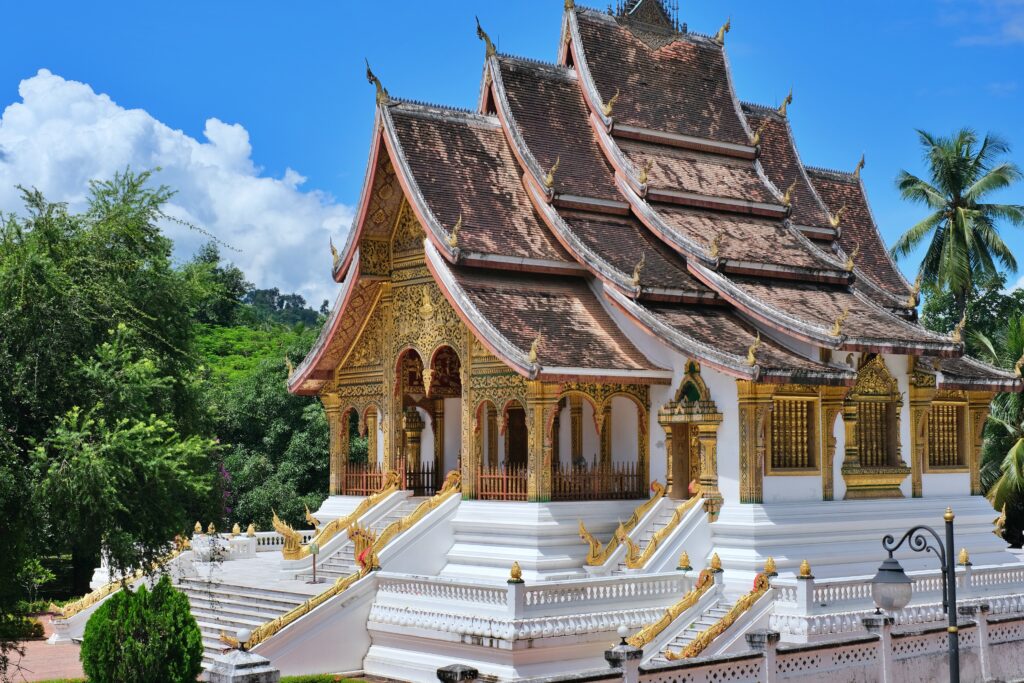
In addition to the temples, the Royal Palace is also worth a visit, which now serves as the National Museum. Here you will find a collection of royal clothing, jewelry, and objects that tell the story of Laos’ history.
WAT PA PHAI
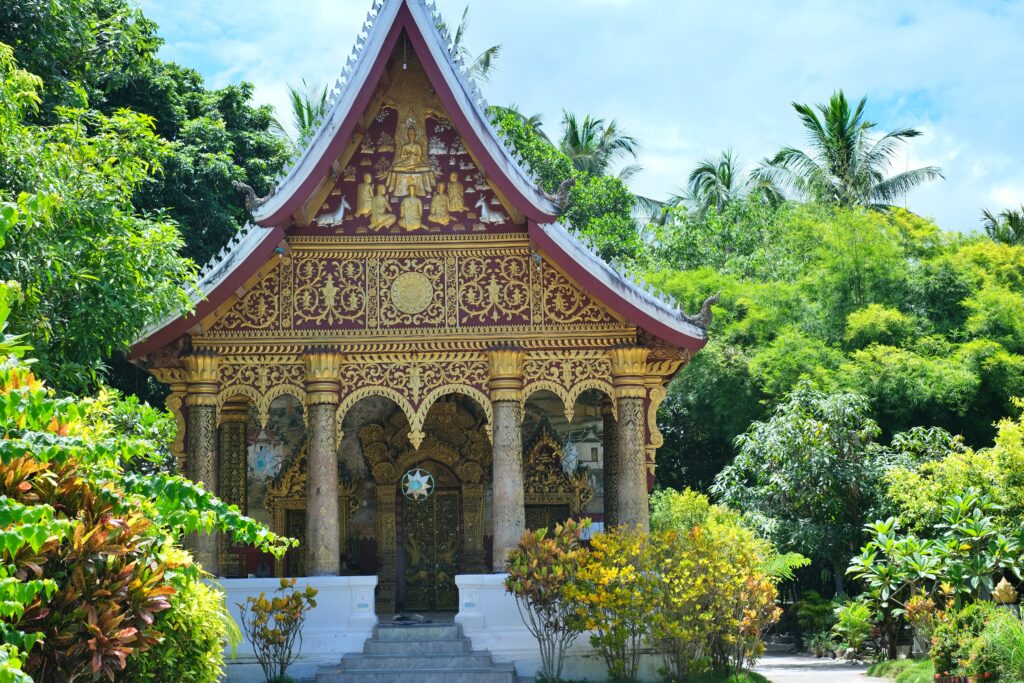
Wat Pa Phai is a smaller and lesser-known temple in the center of Luang Prabang. Its quiet location, tucked away on a side street, makes it a beautiful and peaceful place to spend a few moments.
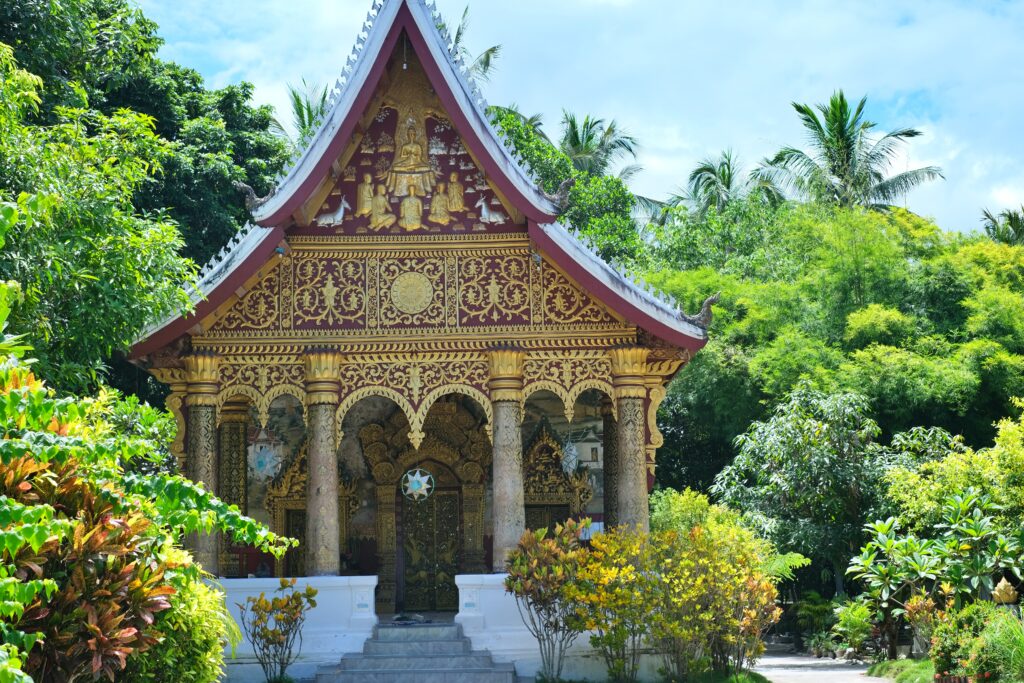
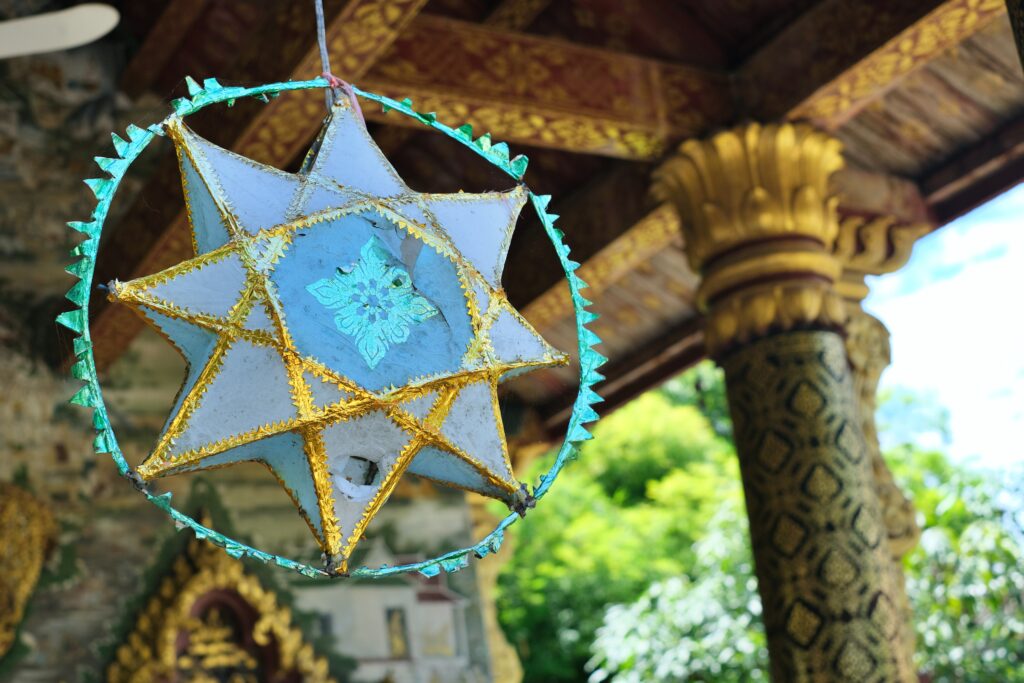
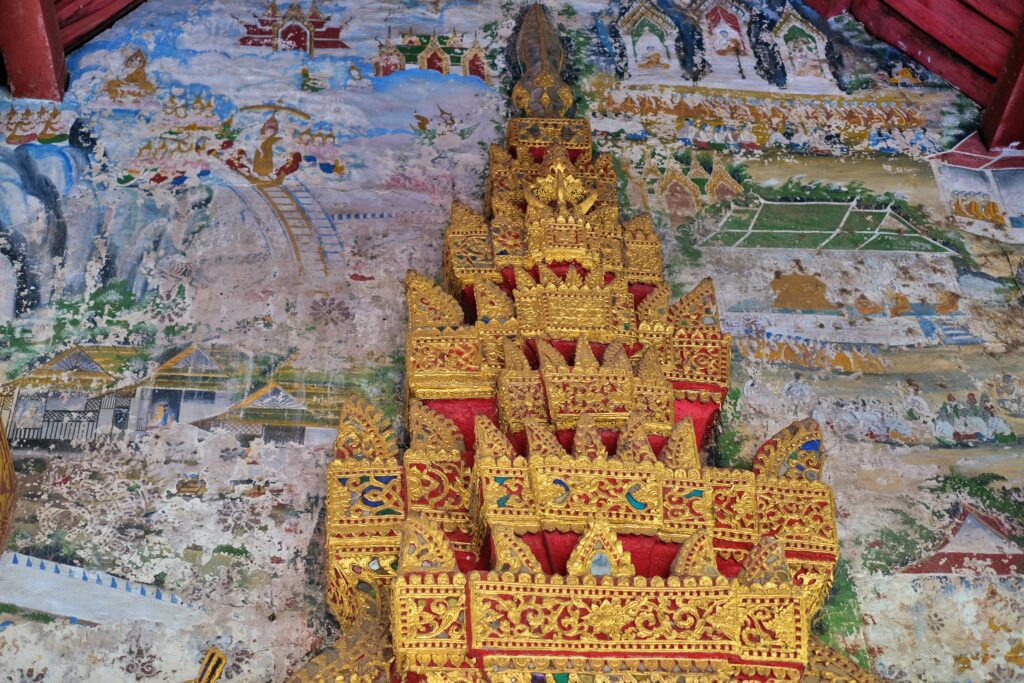
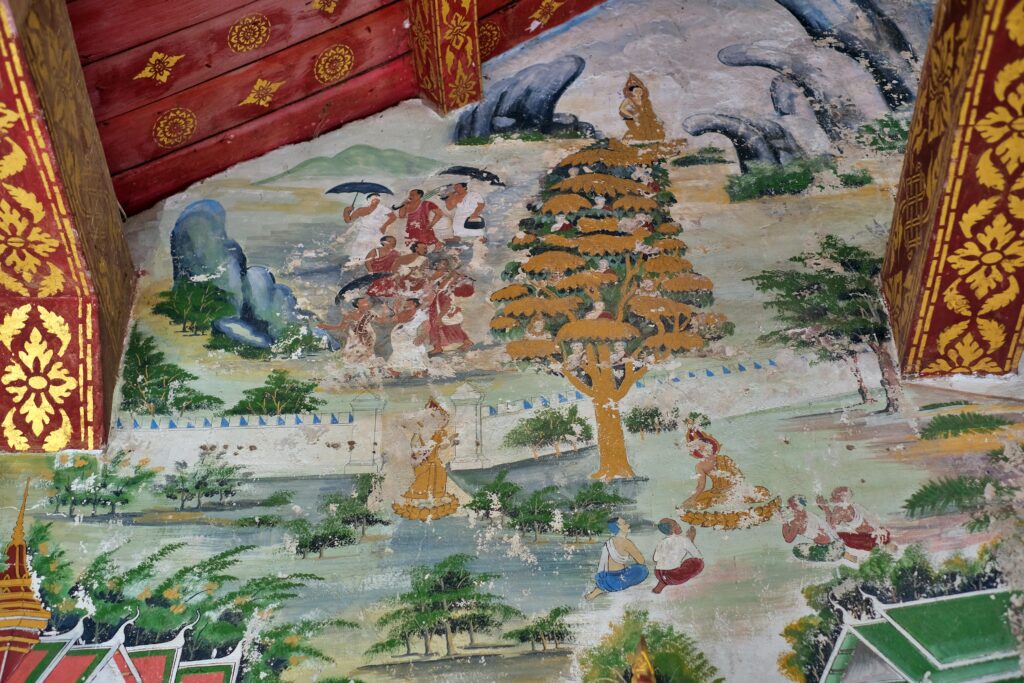
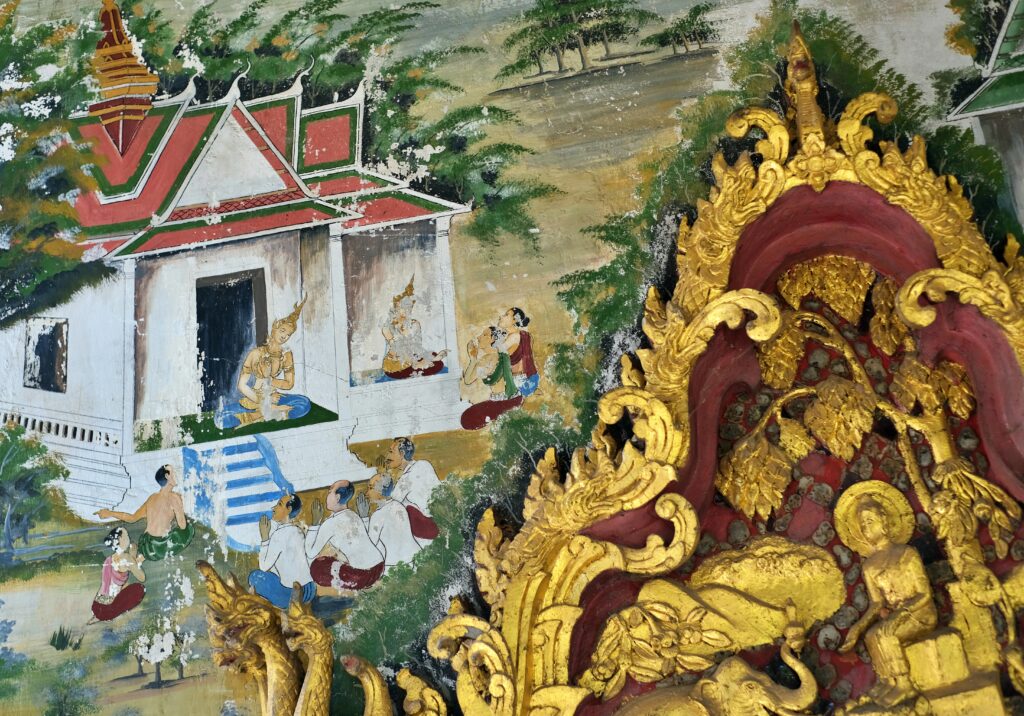
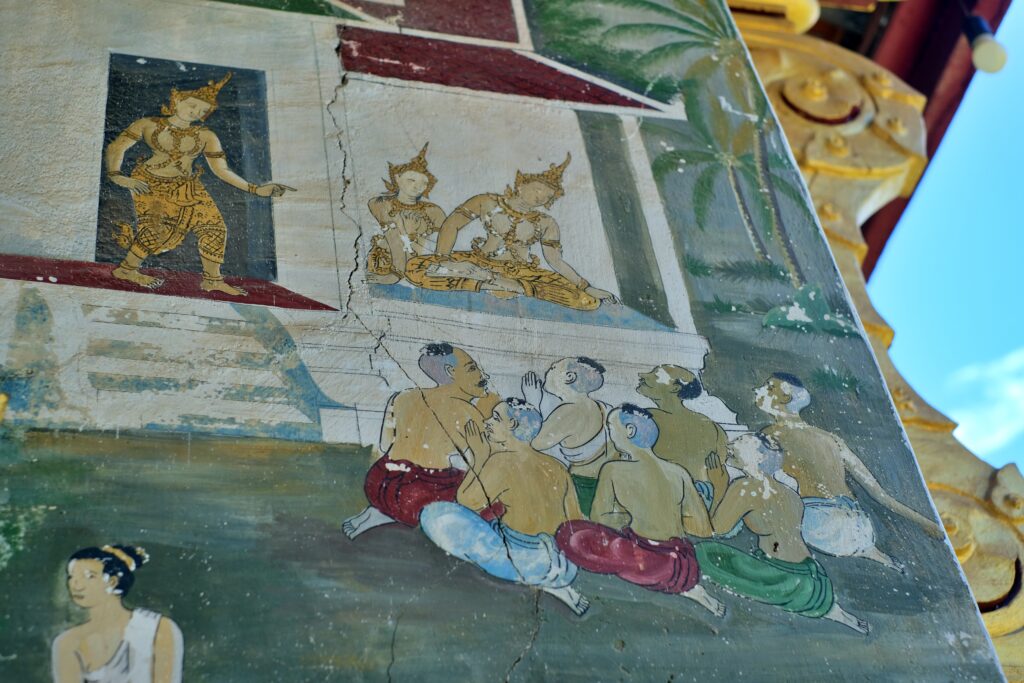
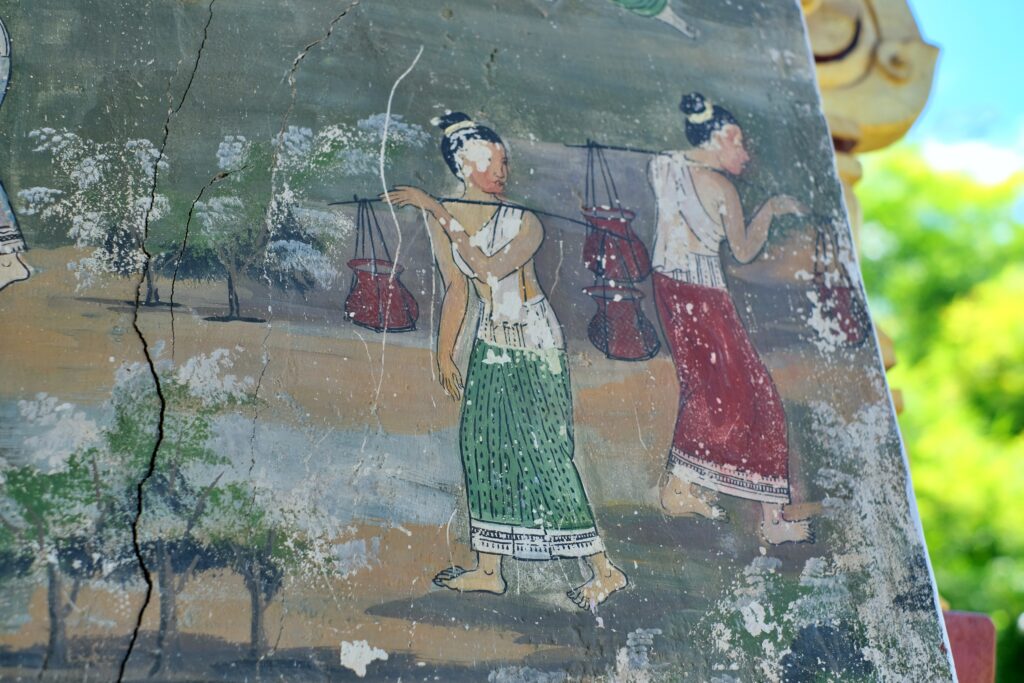
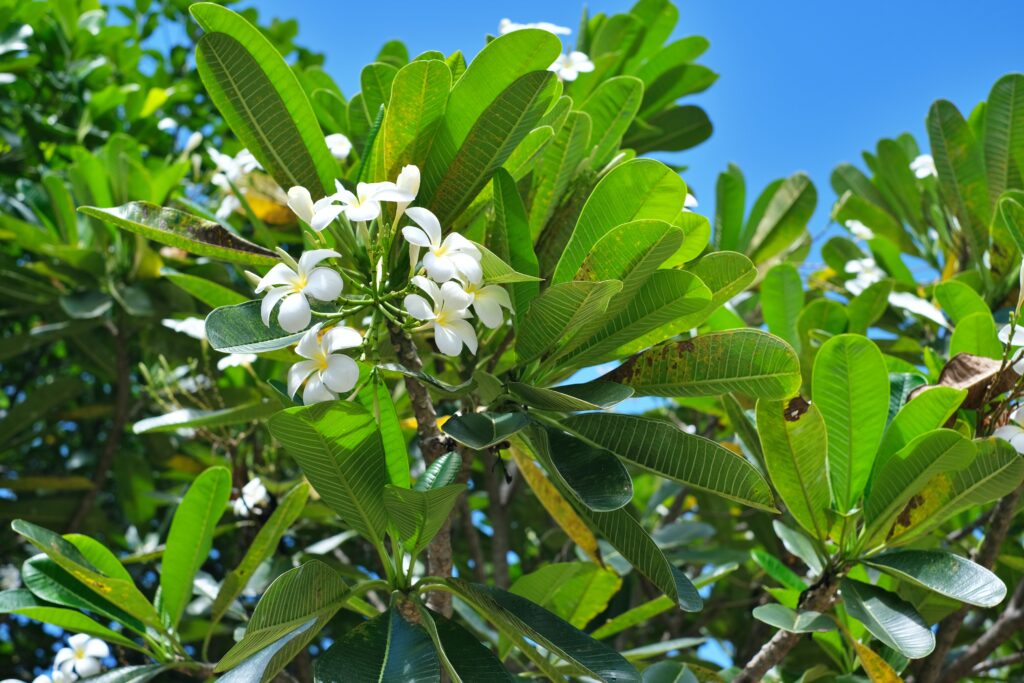
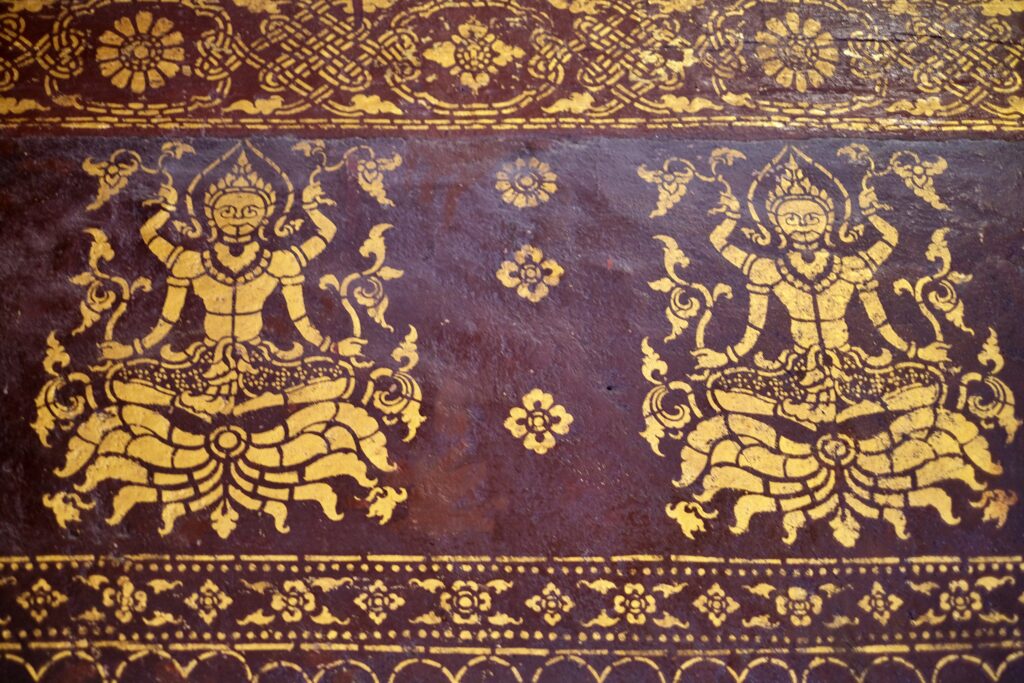
It is not as admired or famous as other temples in the area, which can be found on the pages of many guidebooks. However, this is what makes it almost special, for its mystery and anonymity. Take a walk through the temple and admire the impressively detailed artwork, the symmetrical gold decoration and the pink flowers surrounding it. And what’s even better, admission is free!
TEMPLE WAT MANOROM
One theory is that the temple was founded in the 1370s by King Samsenethai as a place to store his ashes after his death. A competing theory is that Wat Manoram was founded in the 1490s by King La Sen Thai Puvanart. Now tell me, which is true?
One clue is the giant Buddha statue in the temple, which was cast in the 1370s, although this does not necessarily mean that the temple was built at the same time, as many temples in Laos have Buddha statues from periods long before the founding of the temple it is housed in.
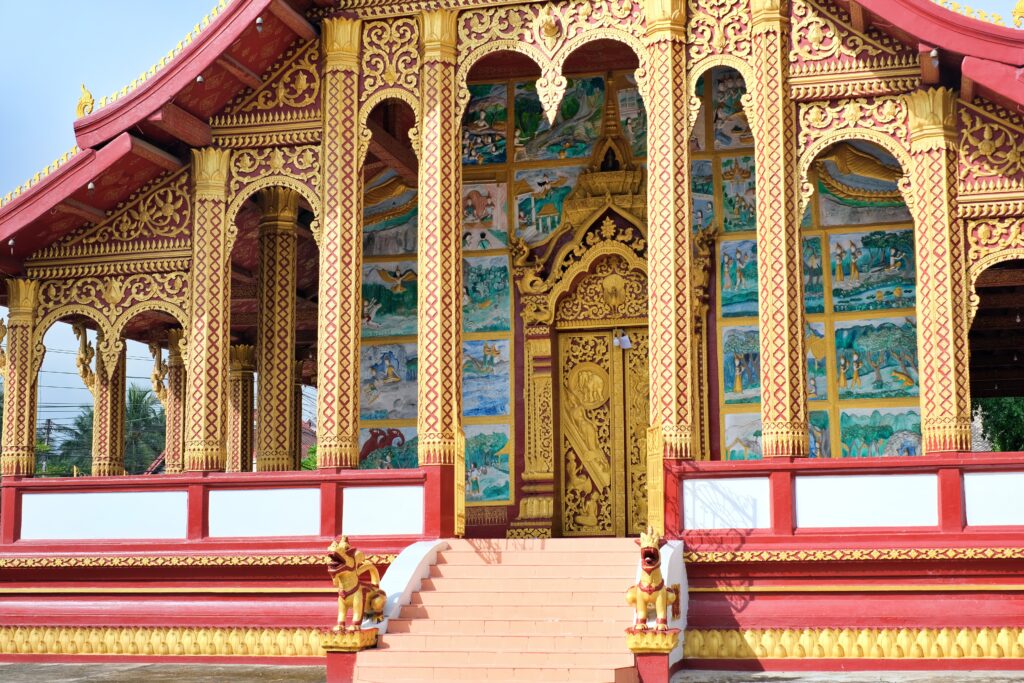
The assembly hall at Wat Manorom is also notable for its elaborate decoration. The main door features a beautiful gold relief and the outer walls of the temple are completely covered with paintings relating to the life of the Buddha. The hall at Wat Manorom is a work of art as well as a religious building.
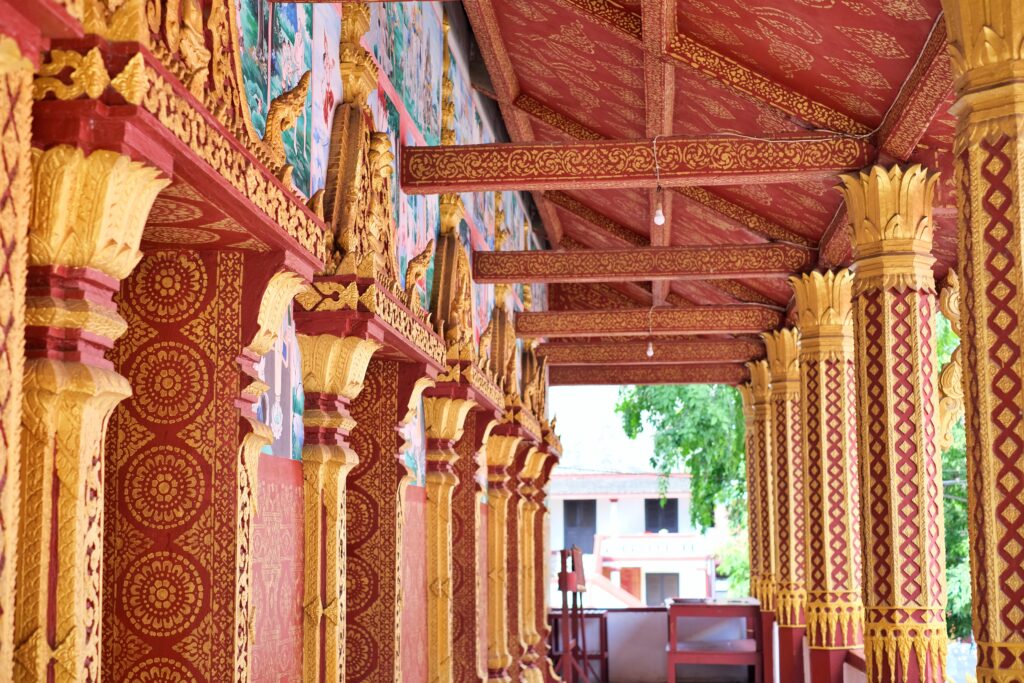
Inside Wat Manorom is a 6-meter-tall bronze Buddha statue cast in the 14th century in the Sukhothai style, not the then-dominant Khmer style. This Buddha statue, the oldest in Luang Prabang, was badly damaged during the Franco-Thai War in the late 19th century. French forces attempted to steal the statue’s arms, which were then lost when the ship carrying them capsized. The statue’s arms were replaced with cement covered in gold leaf.
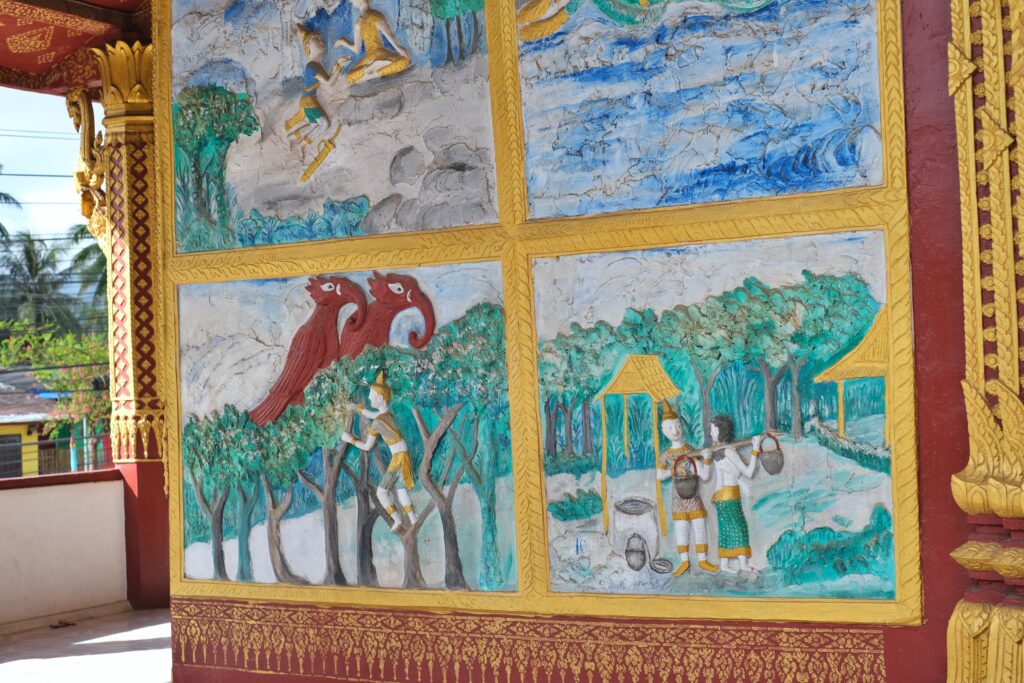
Wat Manorom houses many buildings, most of which serve a functional purpose as living quarters for the monks. It also houses a primary school on its grounds, making the temple one of the centers of religious education in Luang Prabang. Local people from poorer backgrounds in the area often send their children to the monastic community at a very early age to be fed and educated. The temple is an important part of this religious welfare system.
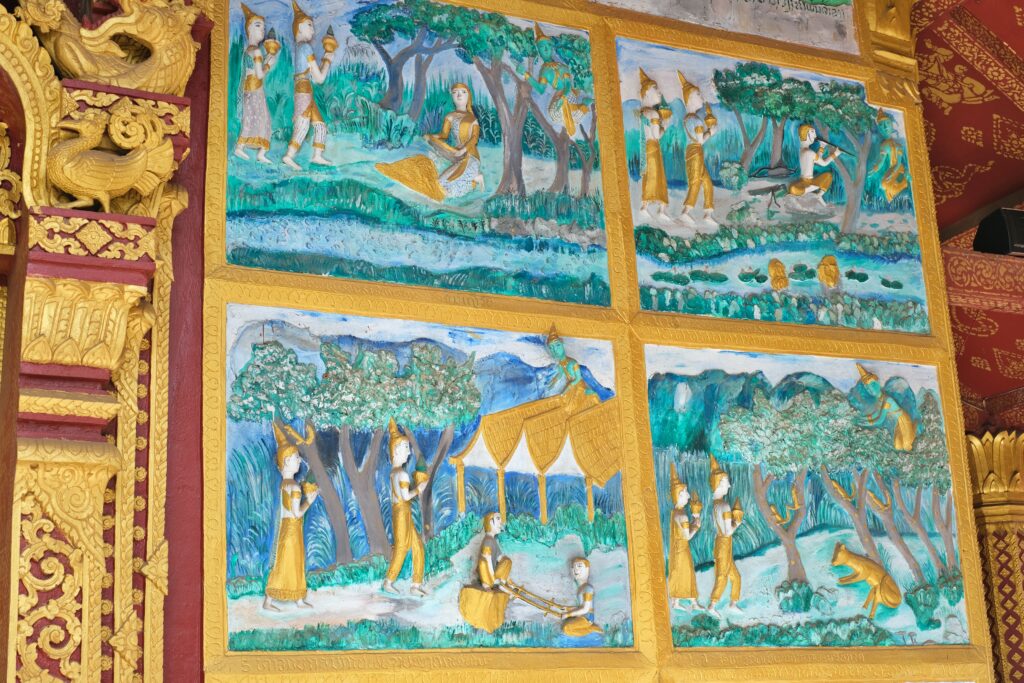
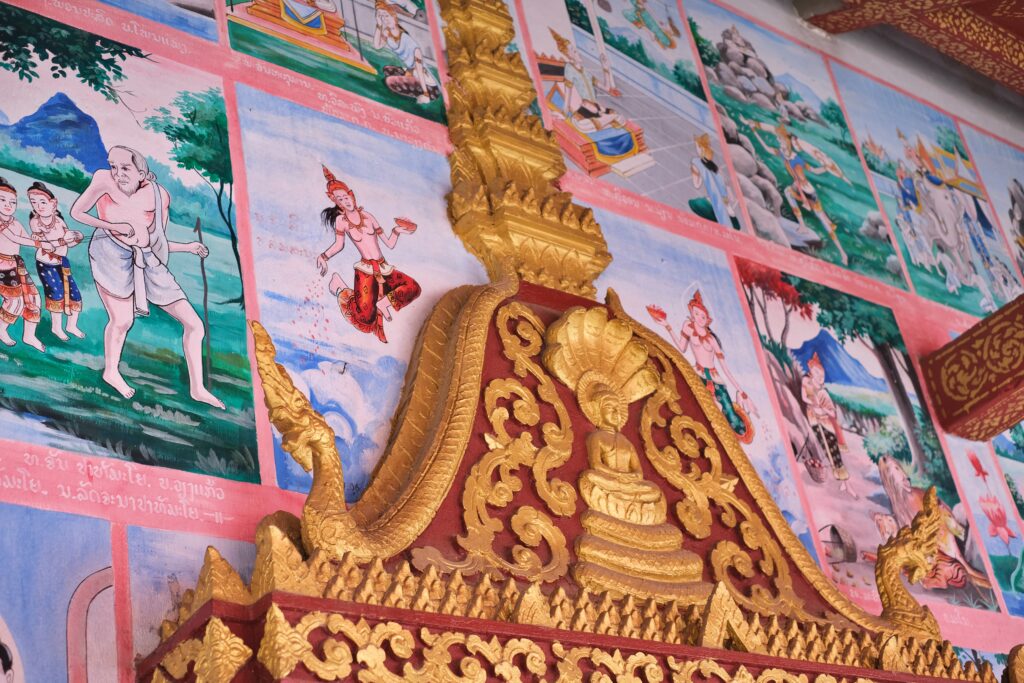
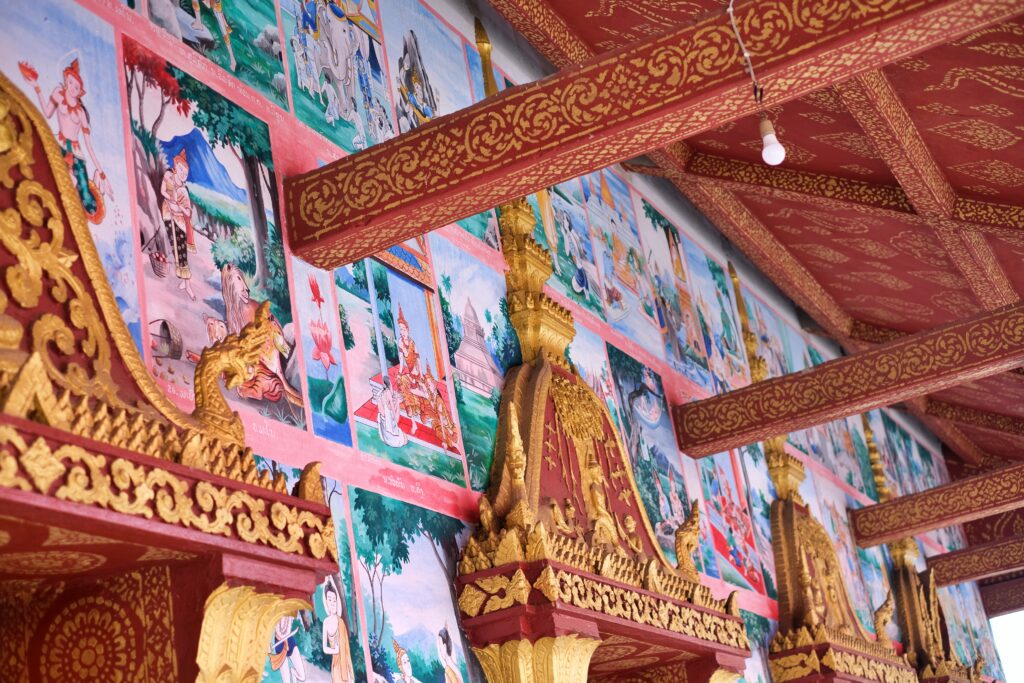
TEMPLE WAT SENE V KLÁŠTEŘE WAT XIENGTHONG
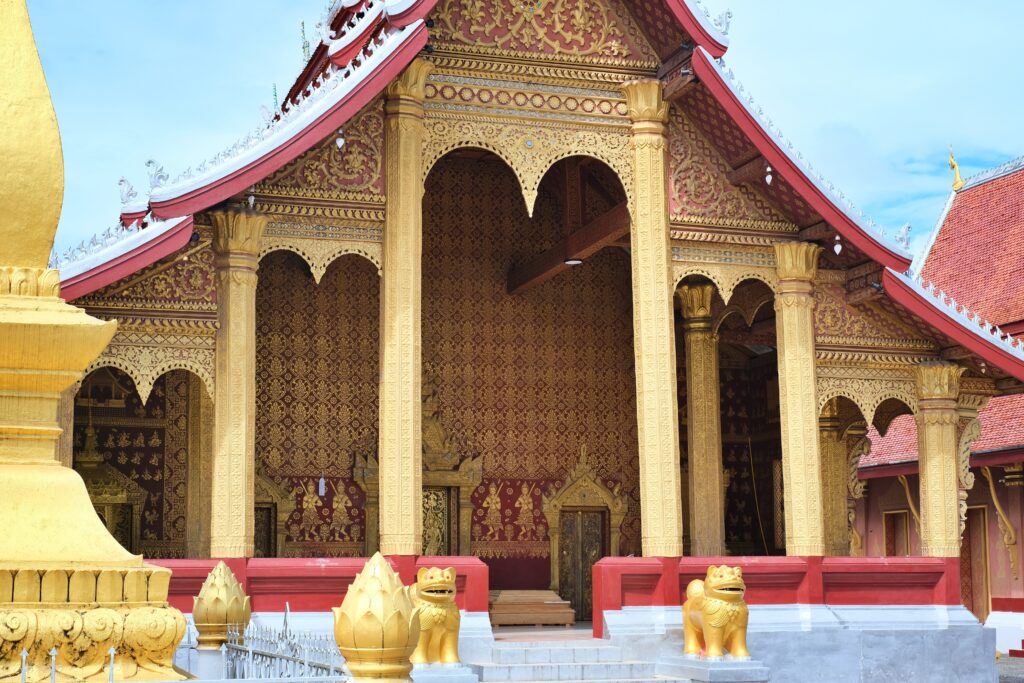
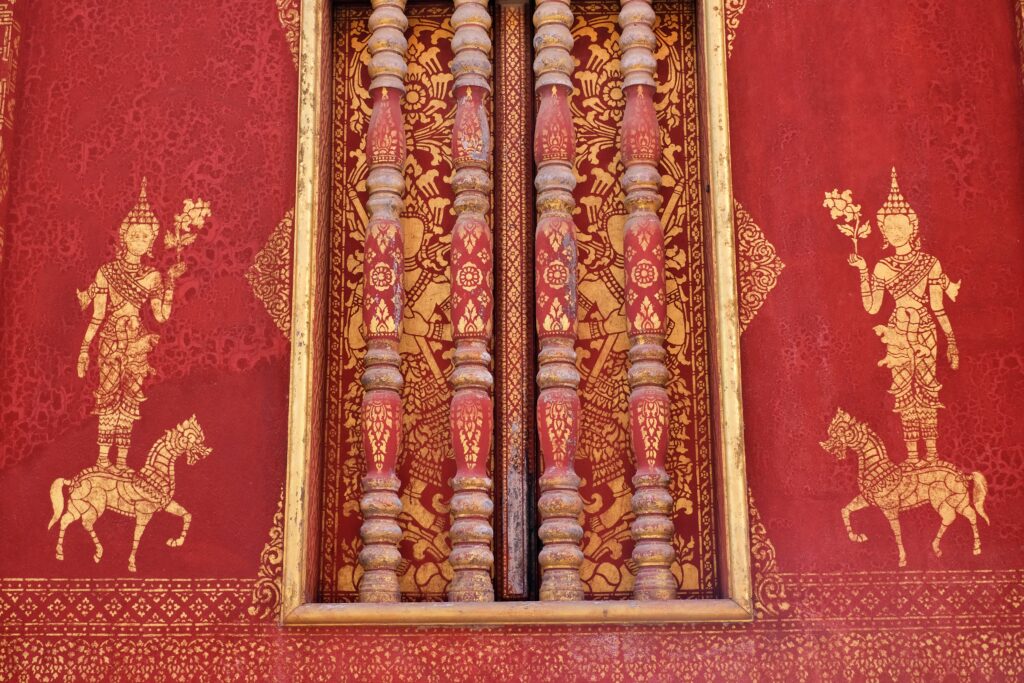
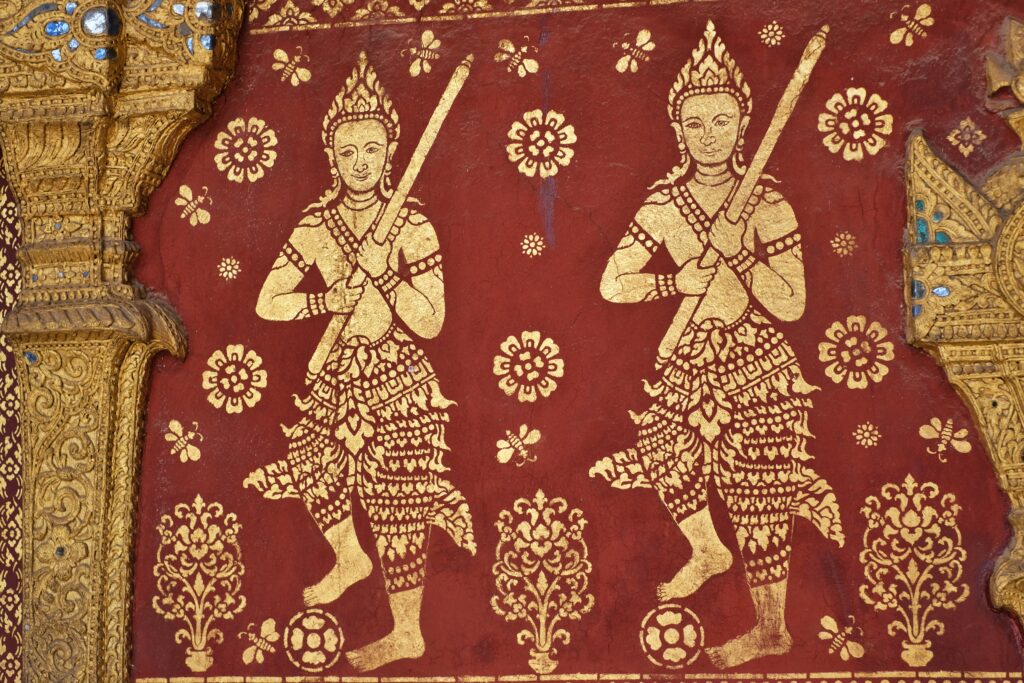
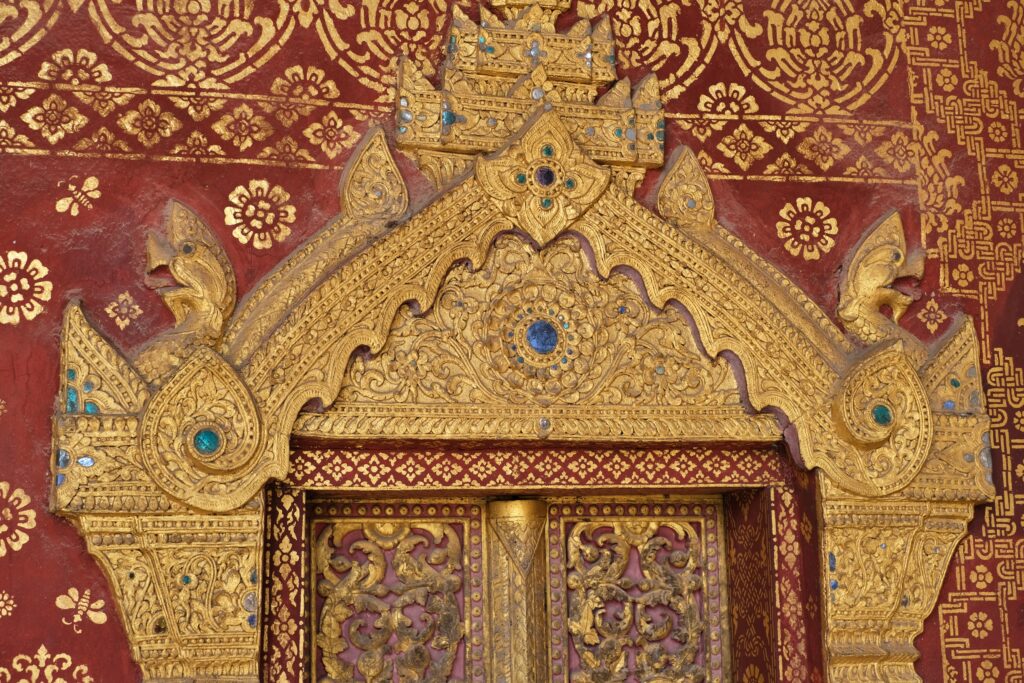
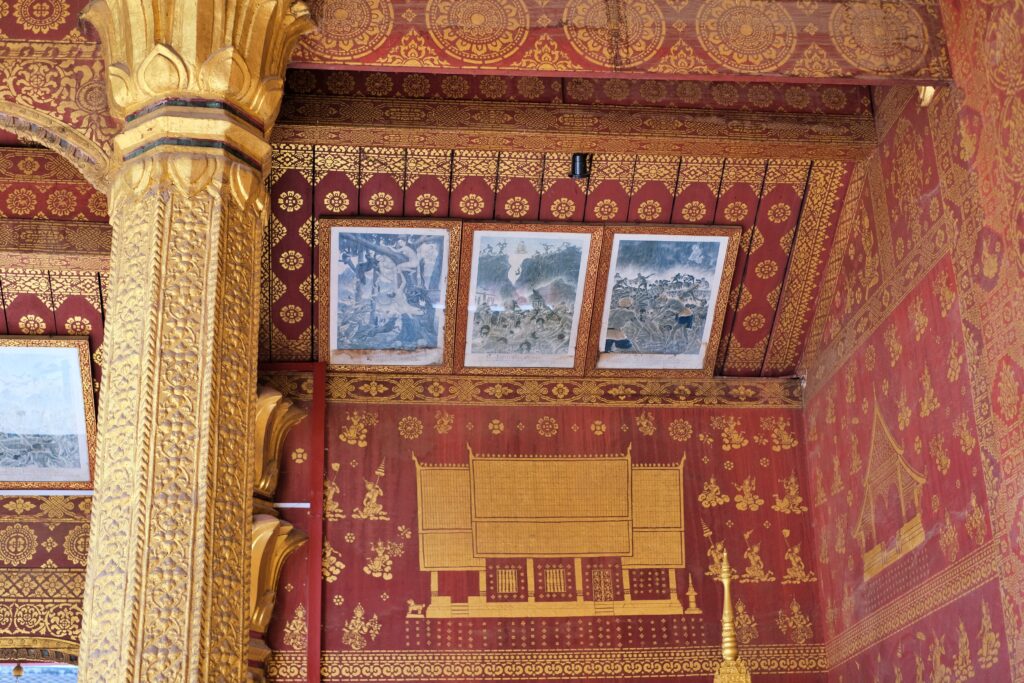
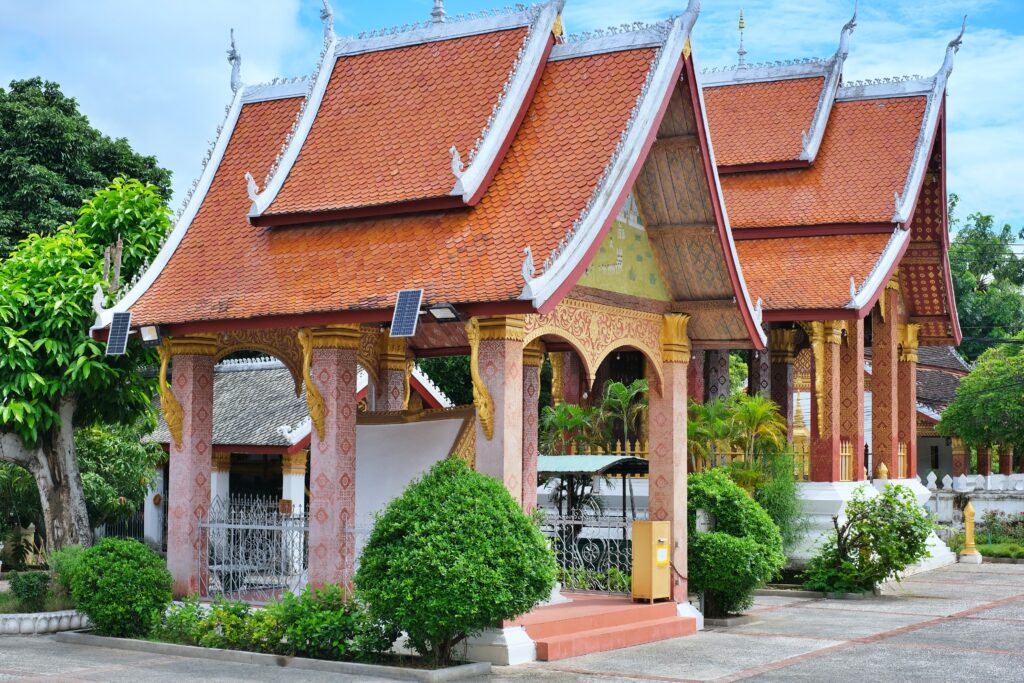
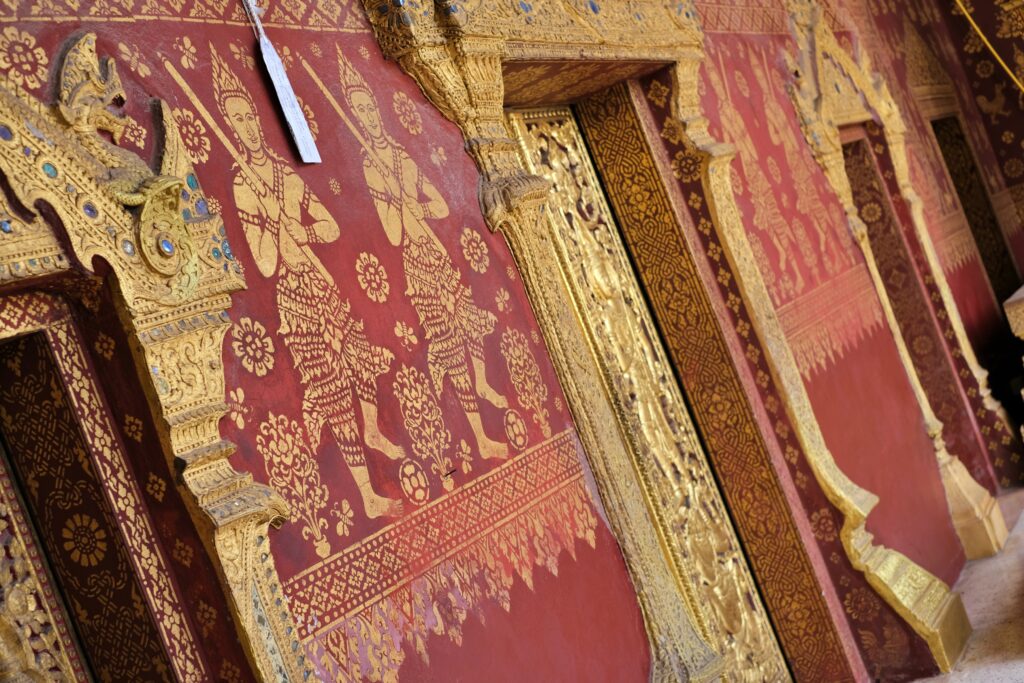
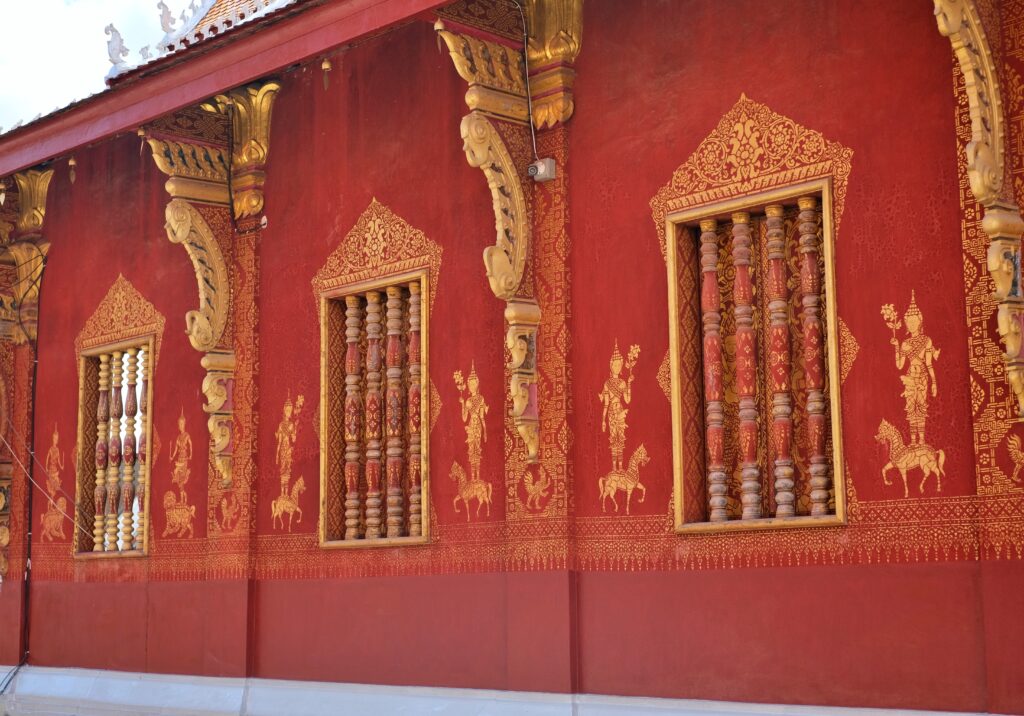
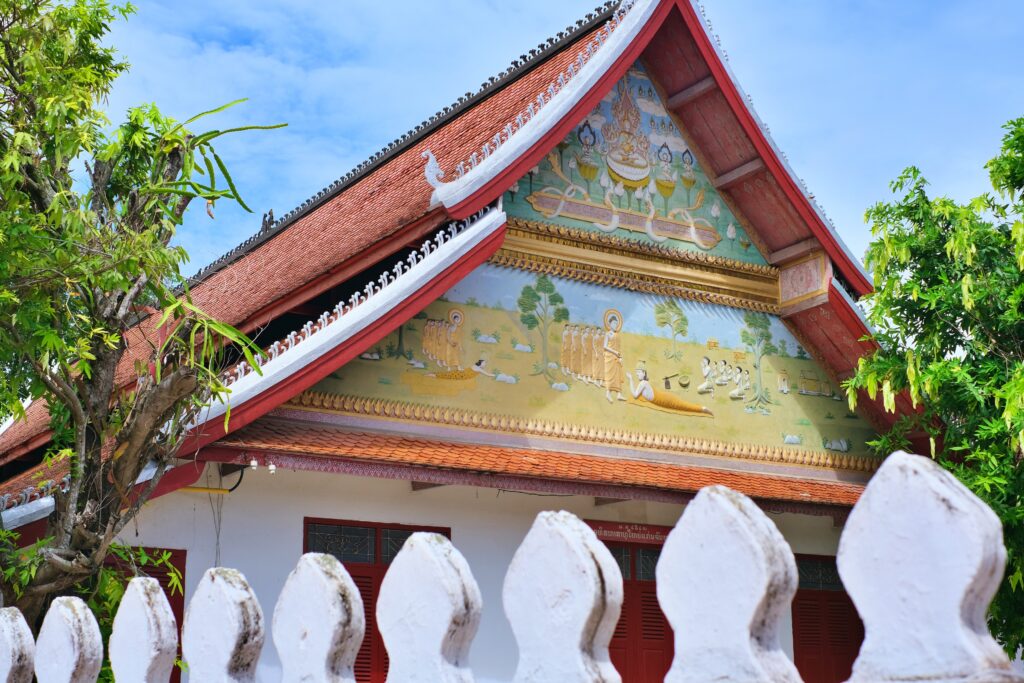
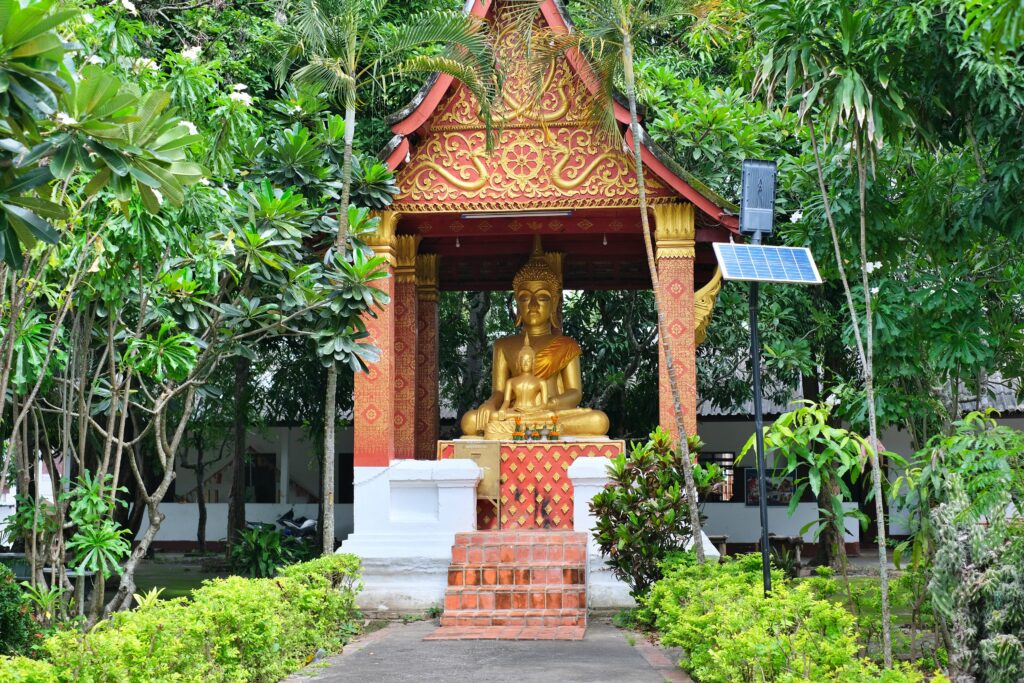
Wat Sen, also known as Wat Sene Souk Haram, has a rich history that is intertwined with the cultural tapestry of Luang Prabang, Laos. The temple’s origins date back to the early 18th century, when it was commissioned by King Kitsarath of the Lan Xang Kingdom. Built between 1718 and 1724, Wat Sen was built as a tribute to King Kitsarath’s reign and as a place of worship for the local community.
Wat Sen has undergone several renovations and expansions throughout its history. The temple’s name, “Wat Sen,” translates to “100,000 Treasures,” reflecting the number of rare relics and artifacts housed in its sacred halls.
Wat Sen played a key role in the religious and social life of Luang Prabang, serving as a center for Buddhist teachings, ceremonies, and community gatherings. The temple’s peaceful setting provided a haven for meditation and contemplation, attracting monks, devotees, and visitors seeking spiritual enlightenment.
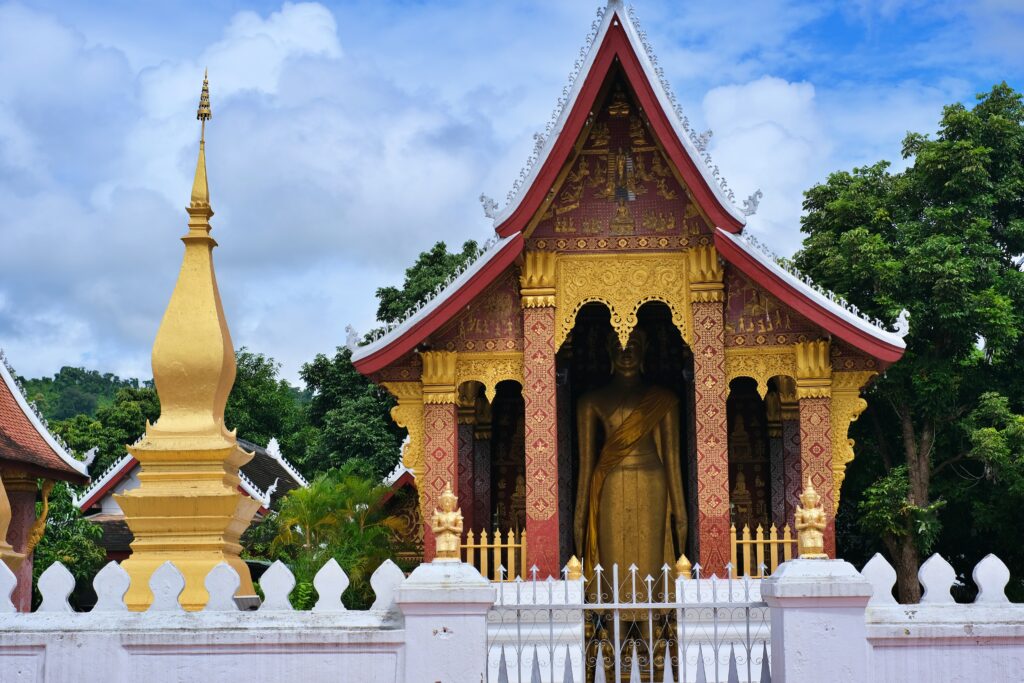
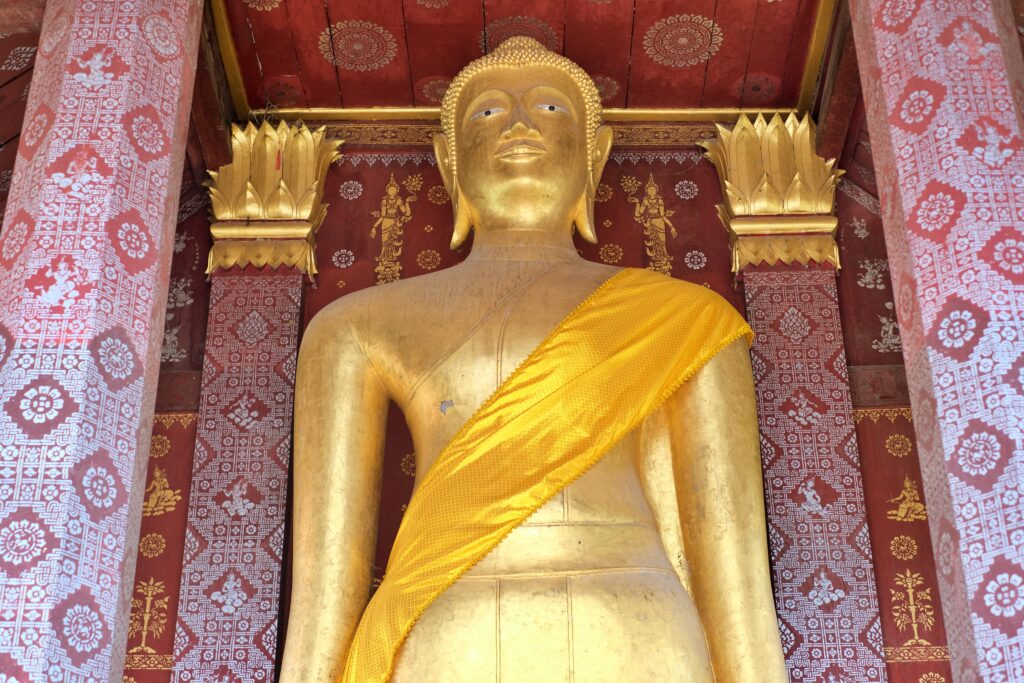
The temple complex is characterized by its elegant design, elaborate details, and harmony. The main prayer hall, or “sim”, is the focal point of Wat Sen’s architecture. It has a multi-tiered roof with elegantly raised eaves, decorated with elaborate decorations and gilded ornamentation. The exterior walls of the sim are decorated with intricate carvings depicting scenes from Buddhist mythology, floral motifs, and celestial beings, creating a visually stunning facade.
NIGHT MARKETS AND LOCAL CUISINE
In the evening, the city comes alive with a whole new energy. The main street turns into a night market where you can buy handmade souvenirs, jewelry or textiles. But the greatest charm of the markets lies in the food. From freshly grilled fish from the Mekong, to the traditional Lao salad laap, to sweet coconut pancakes. I am sure that every gourmet will find something to their liking here.
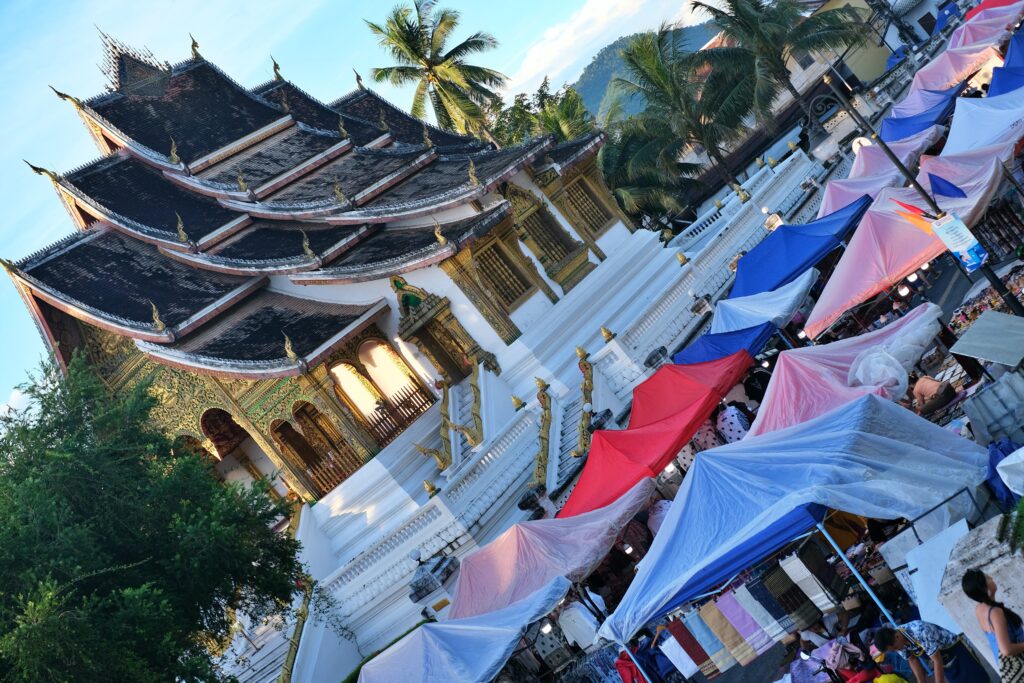
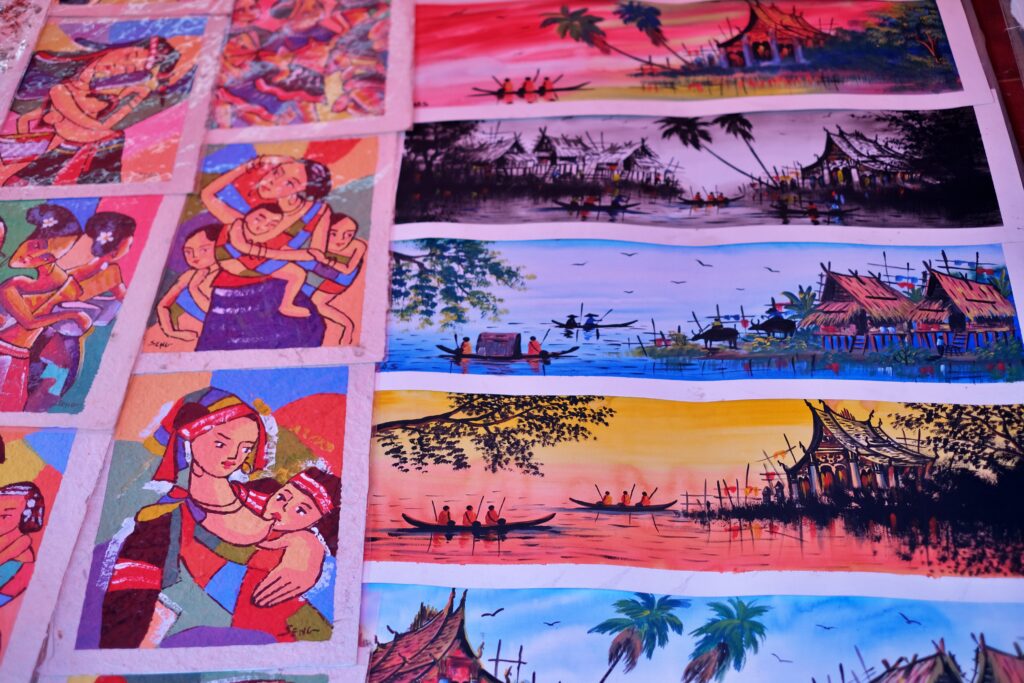
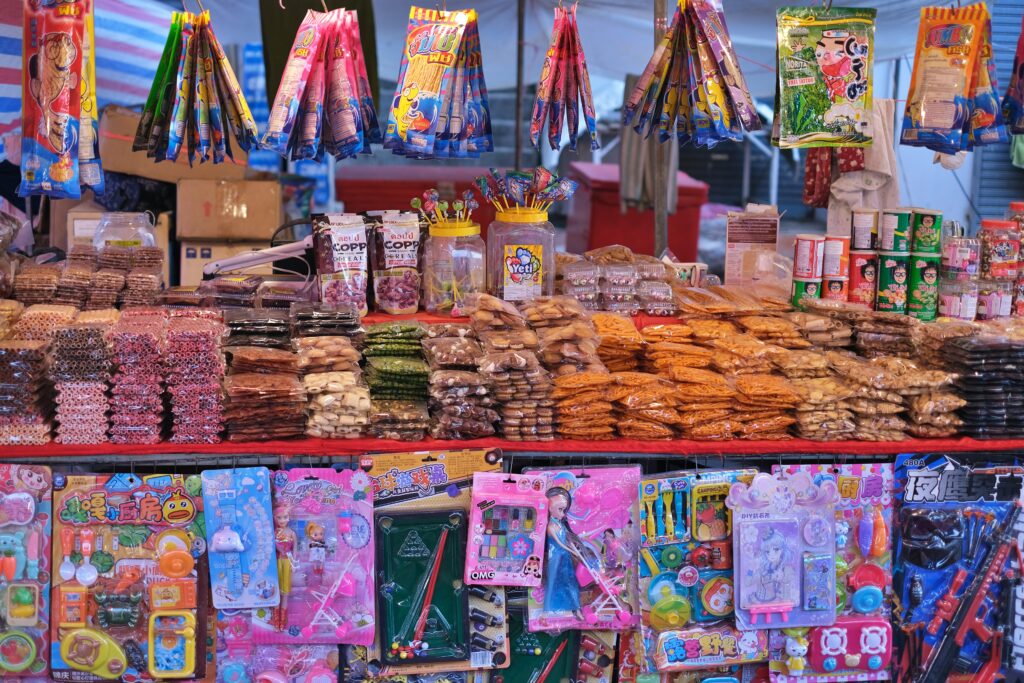
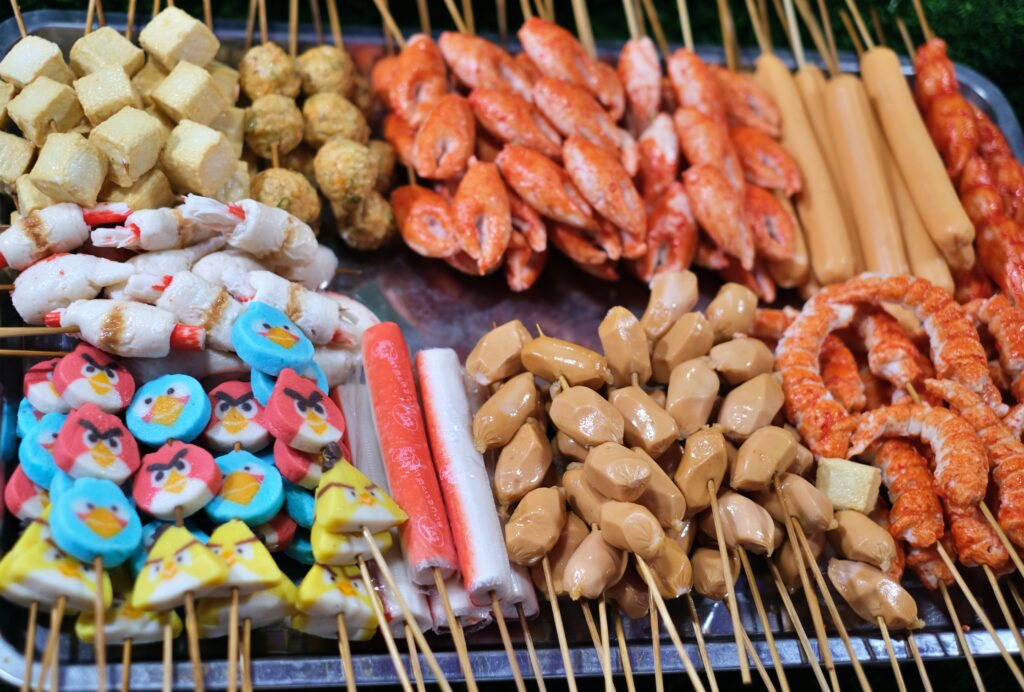
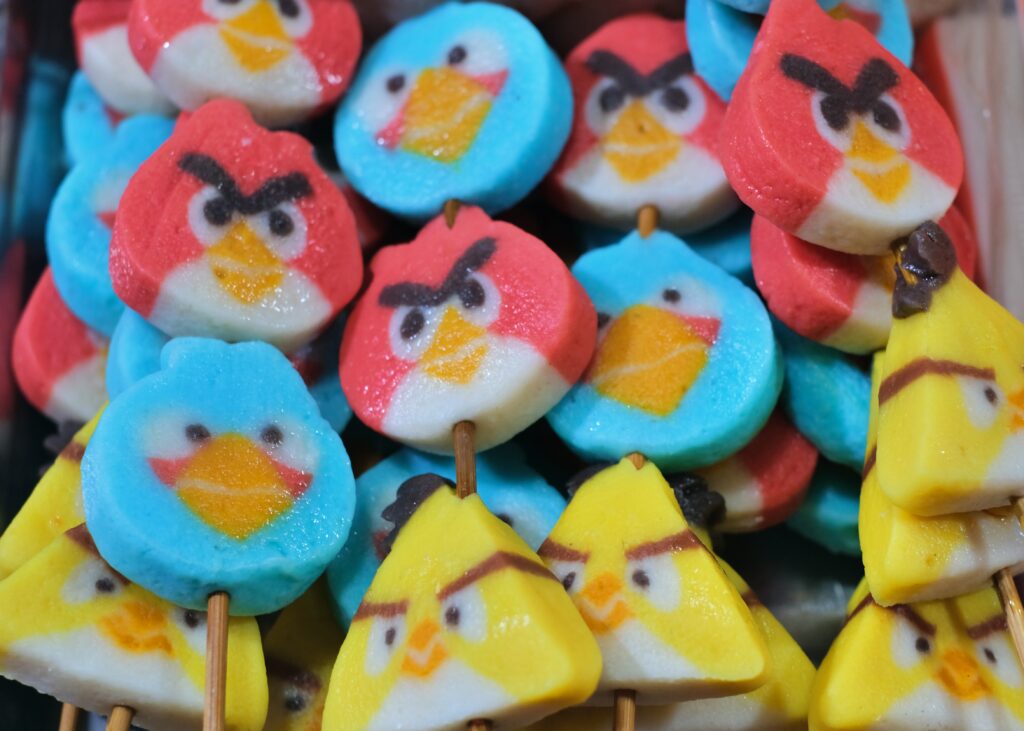
If you’re looking for an authentic culinary experience, try the smaller alleys behind the main market. There you’ll find stalls where locals cook for locals. That’s where you’ll discover the true taste of Laos.
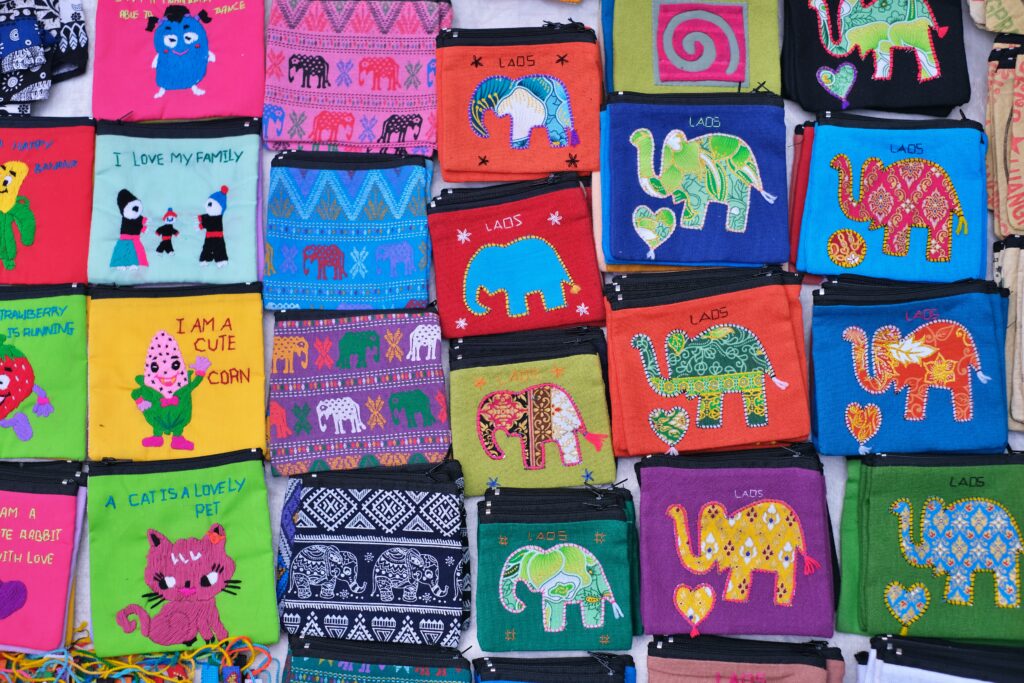
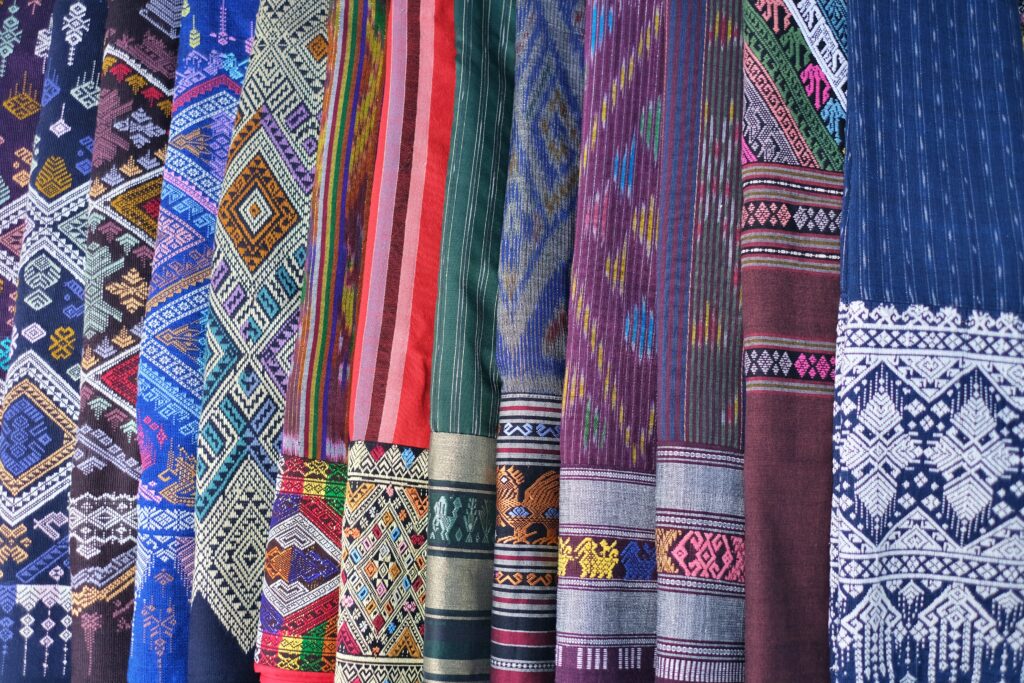
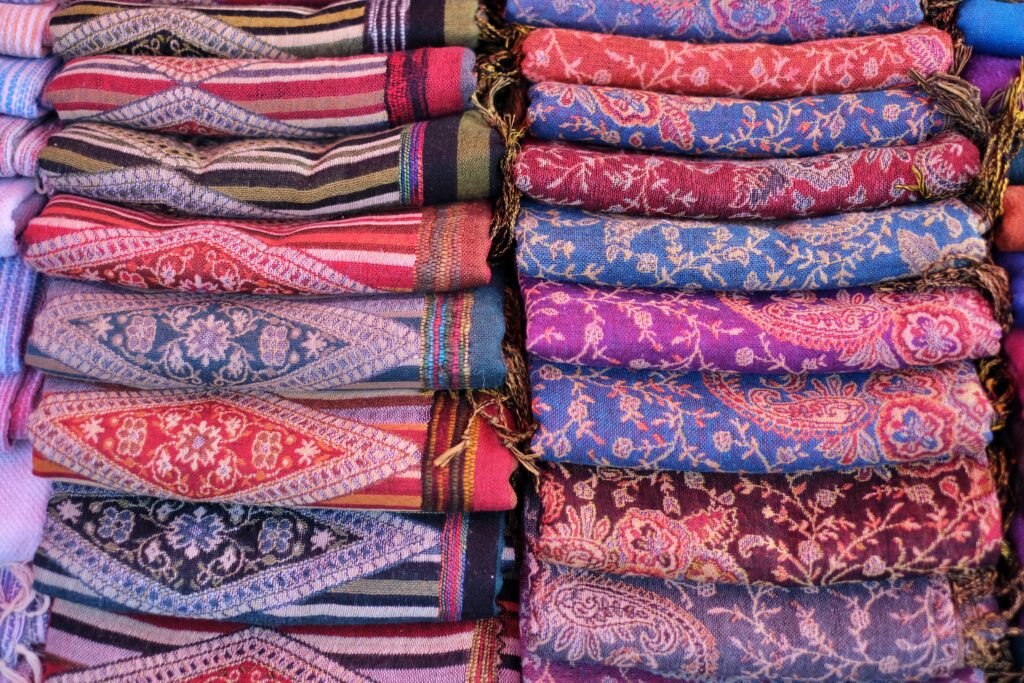
Opening hours: The market is held daily in the city center from 5:00 PM to 11:00 PM.
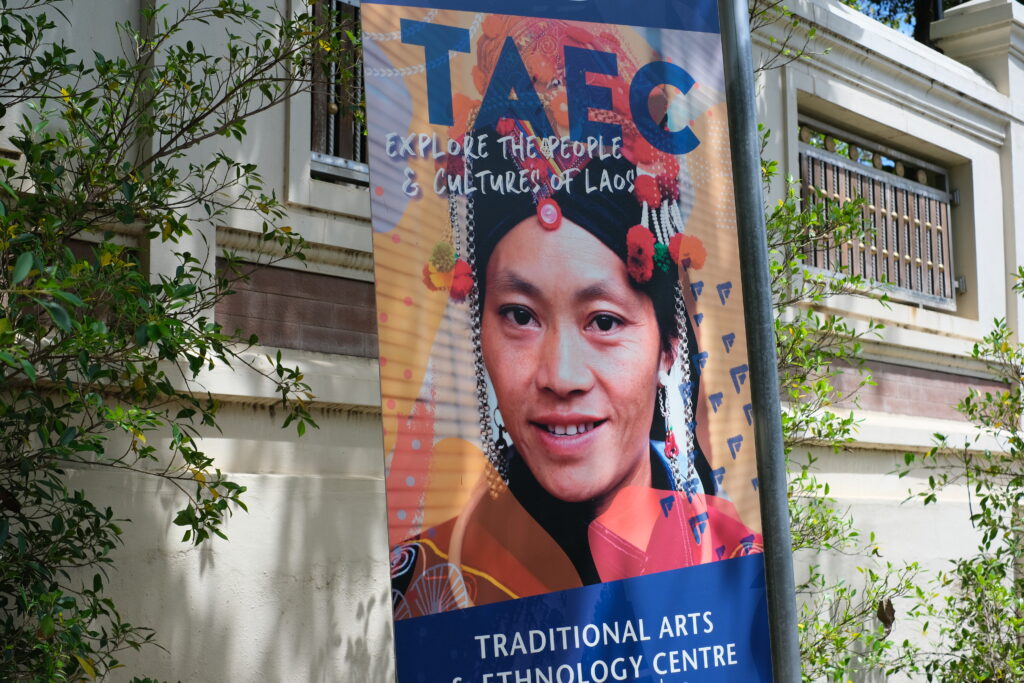
TAEC
(TRADITIONAL ARTS AND ETHNOLOGY CENTRE)
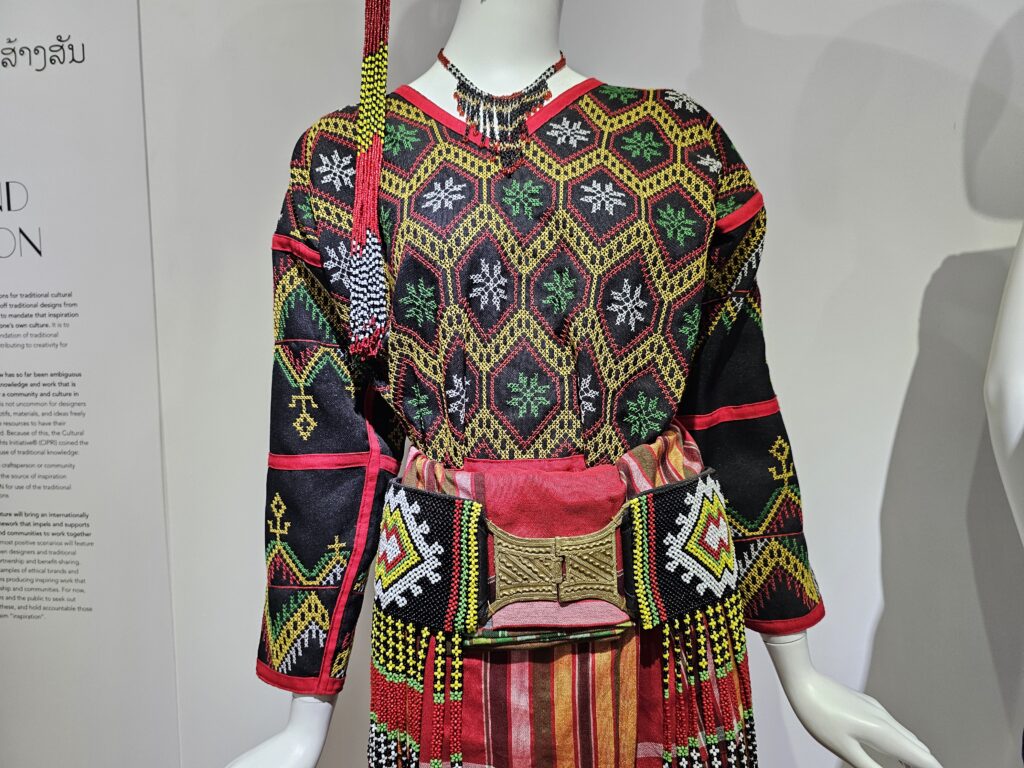
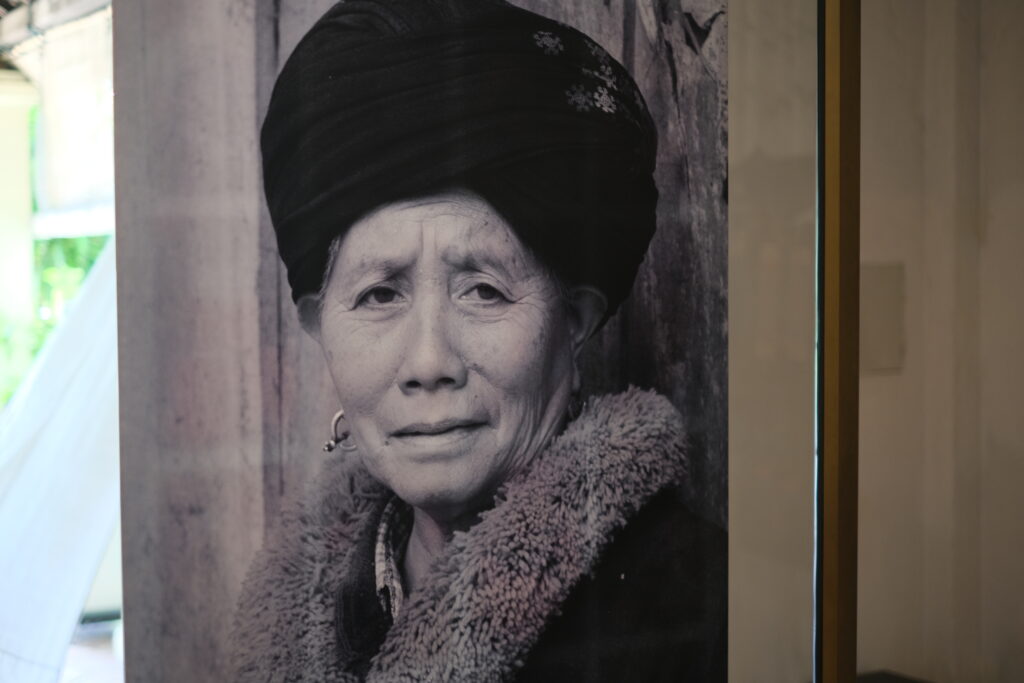
The Traditional Arts and Ethnology Center (TAEC) is an engaging and culturally rich educational center located in the heart of Luang Prabang. I highly recommend it because it is not at all large, but when it comes to interesting facts about the local community, it is so rewarding. TAEC was founded in 2006 and you will find professionally curated permanent and special exhibitions, events and craft workshops. The center’s main activities are twofold: a museum and fair trade craft shops directly linked to the craft communities.
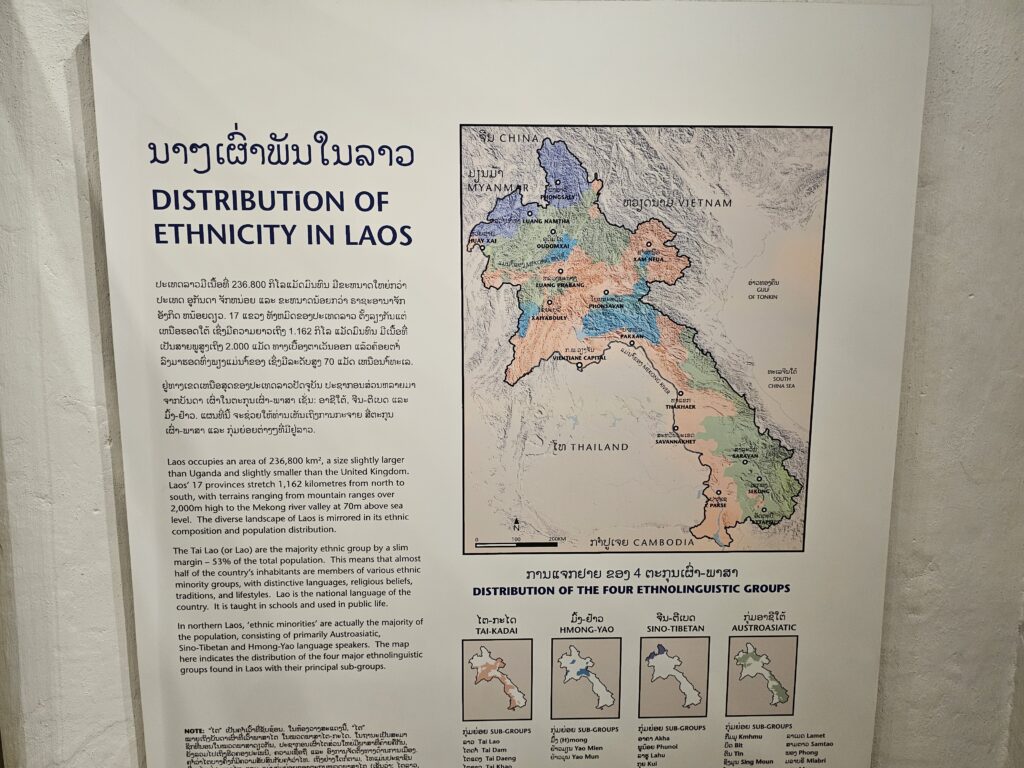
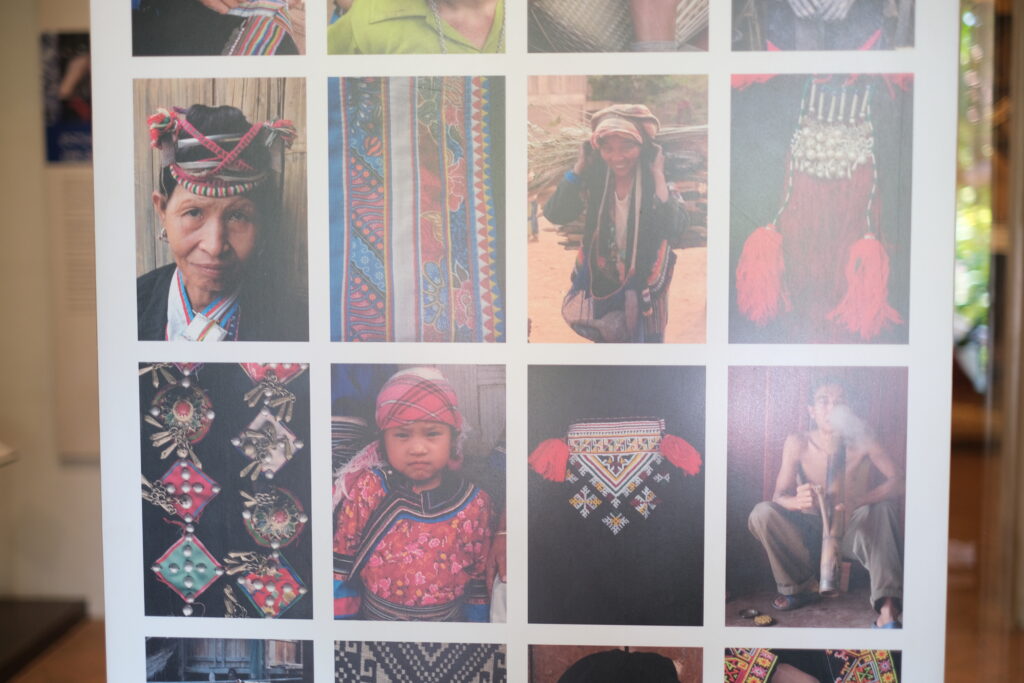
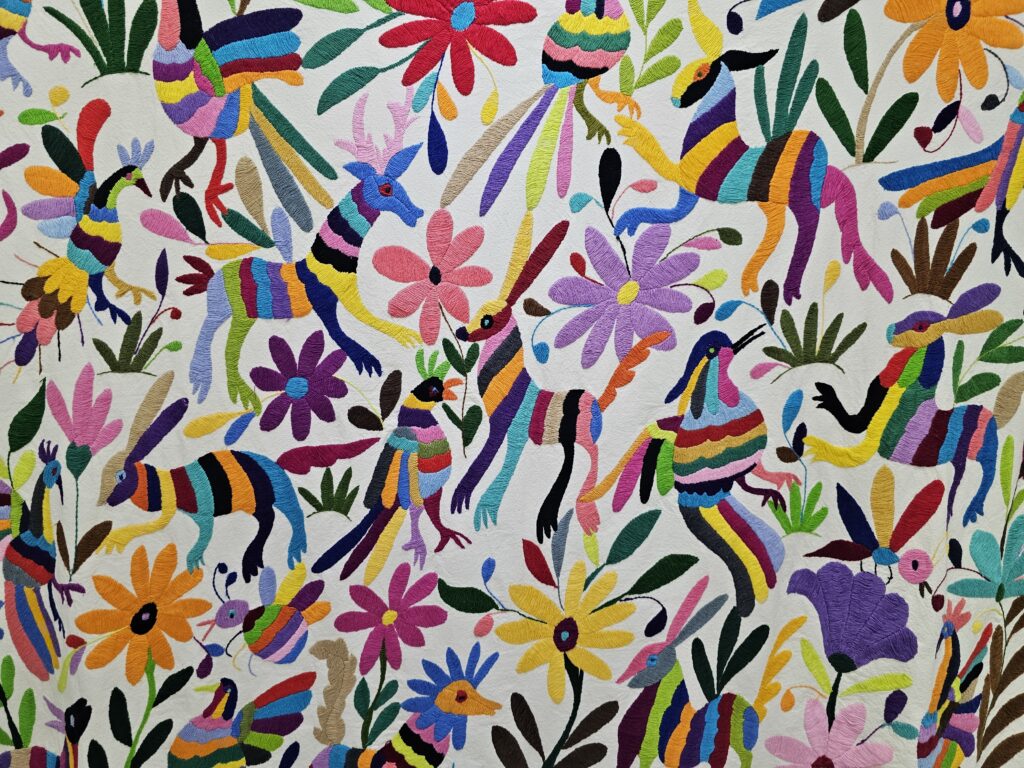
The exhibits feature items from the museum’s collection, such as traditional handmade clothing and textiles, jewelry, musical instruments, craft and household tools, reconstructions of domestic scenes, as well as ritual and religious artifacts. A characteristic feature of TAEC’s exhibits is their connection to local ethnic communities. The exhibits include quotes, photographs, and videos from living collaborators.
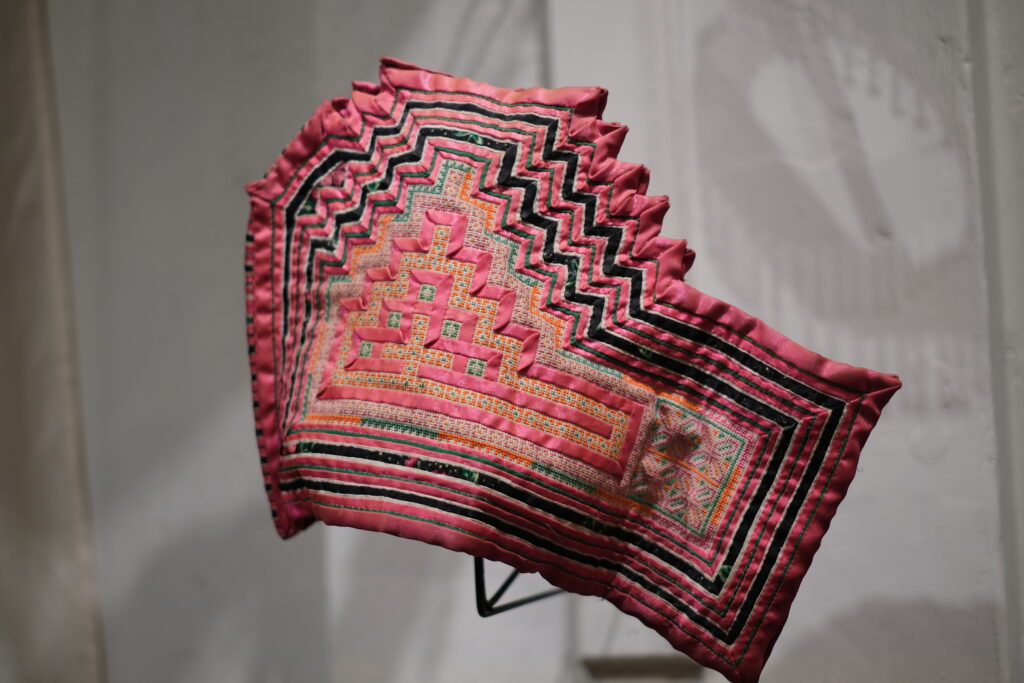
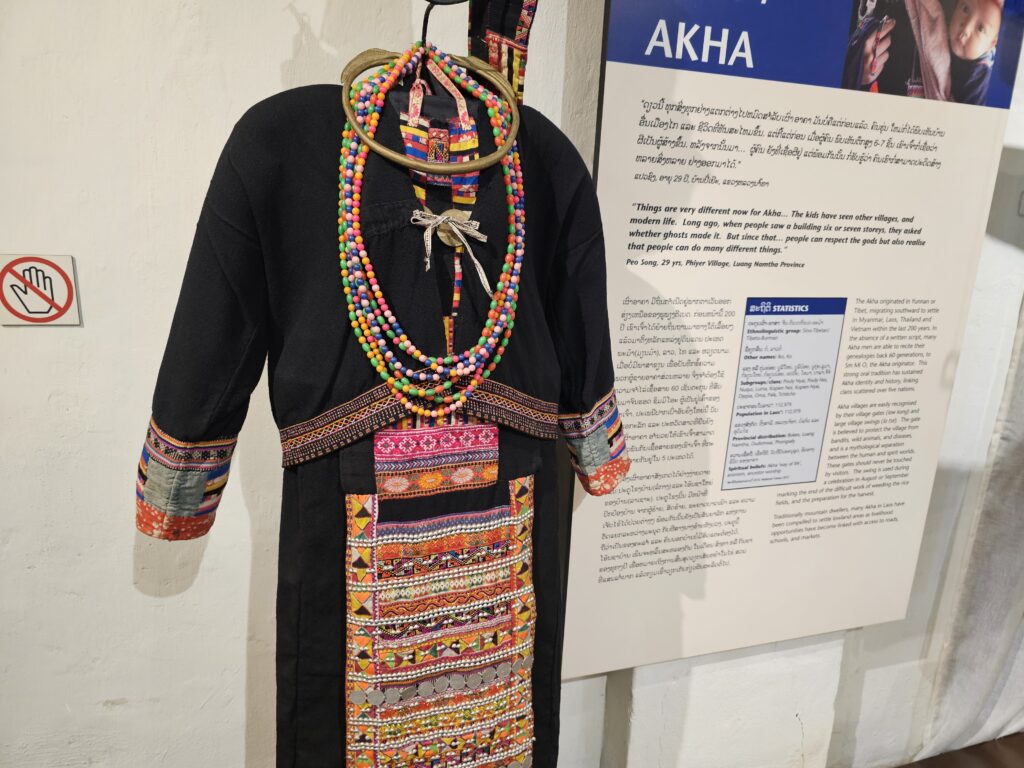
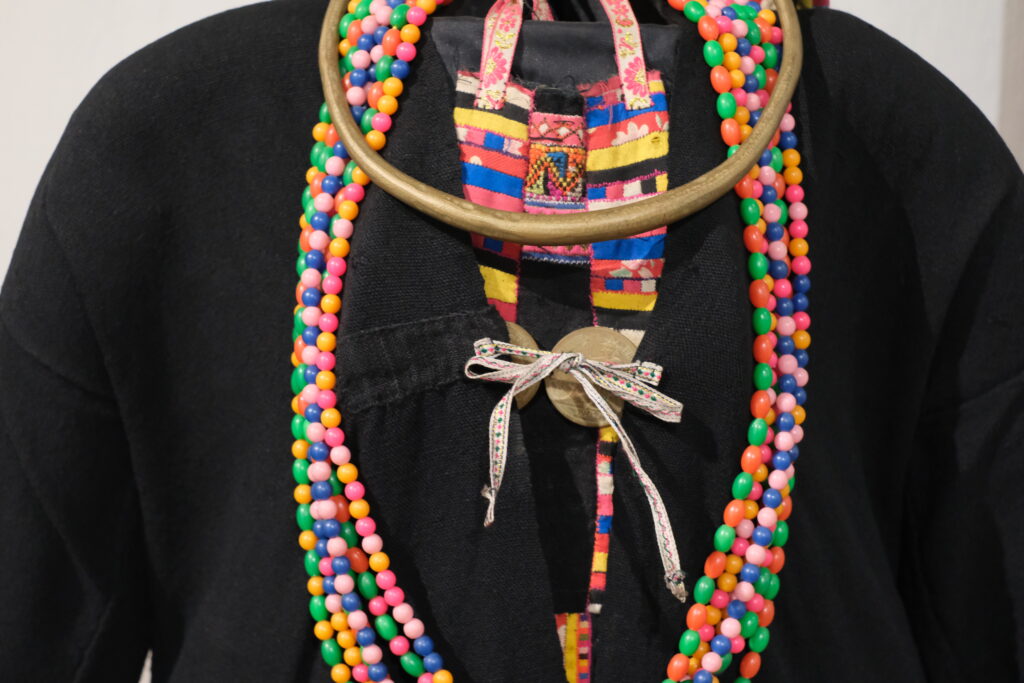
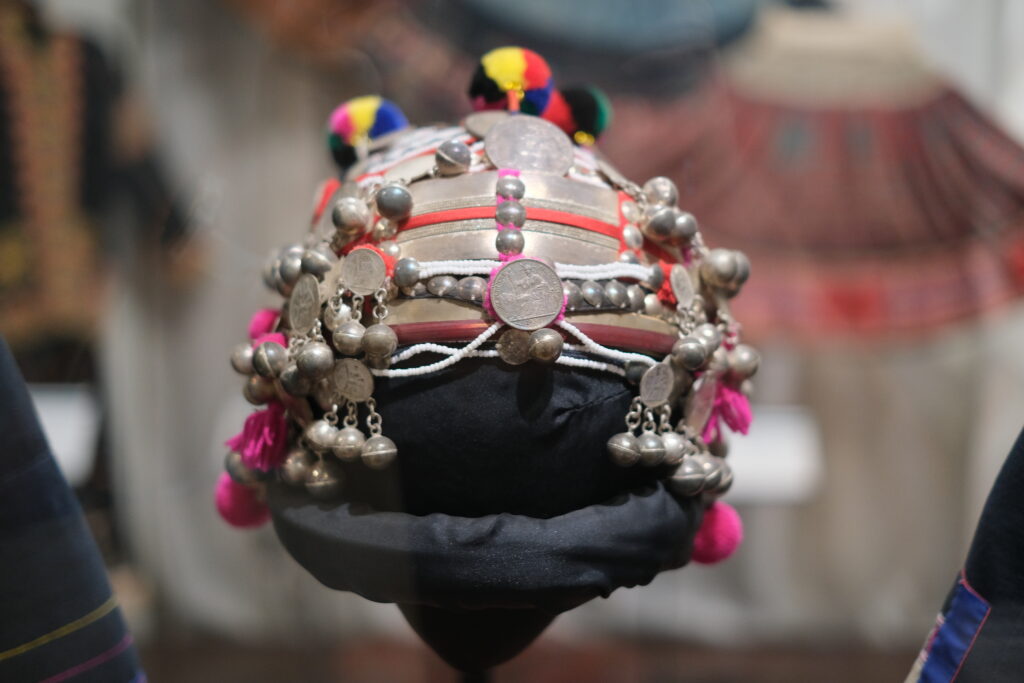
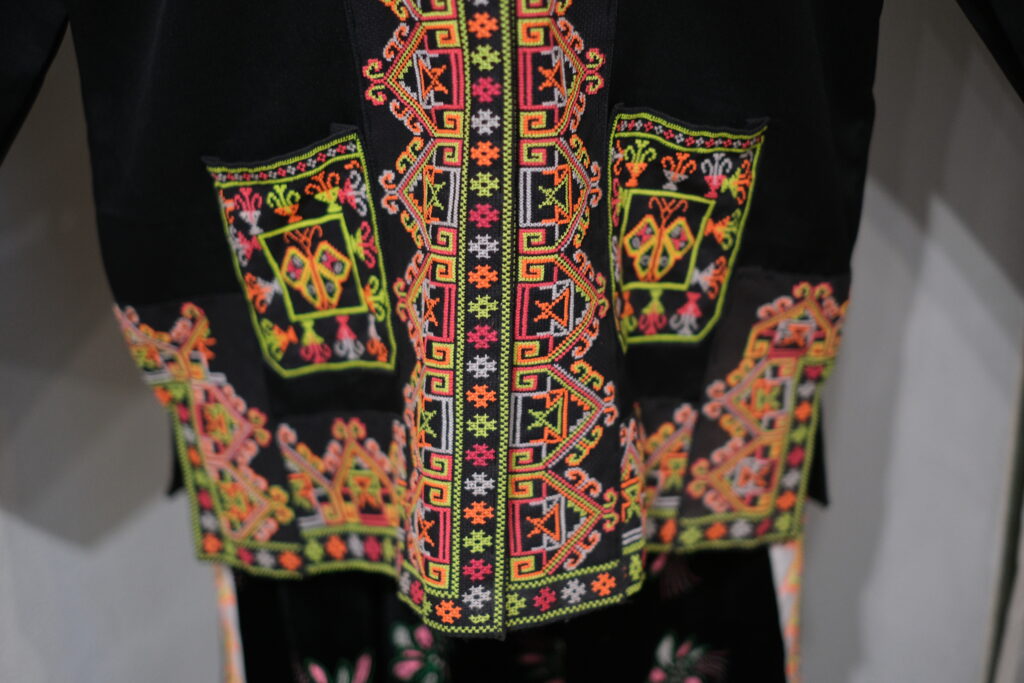
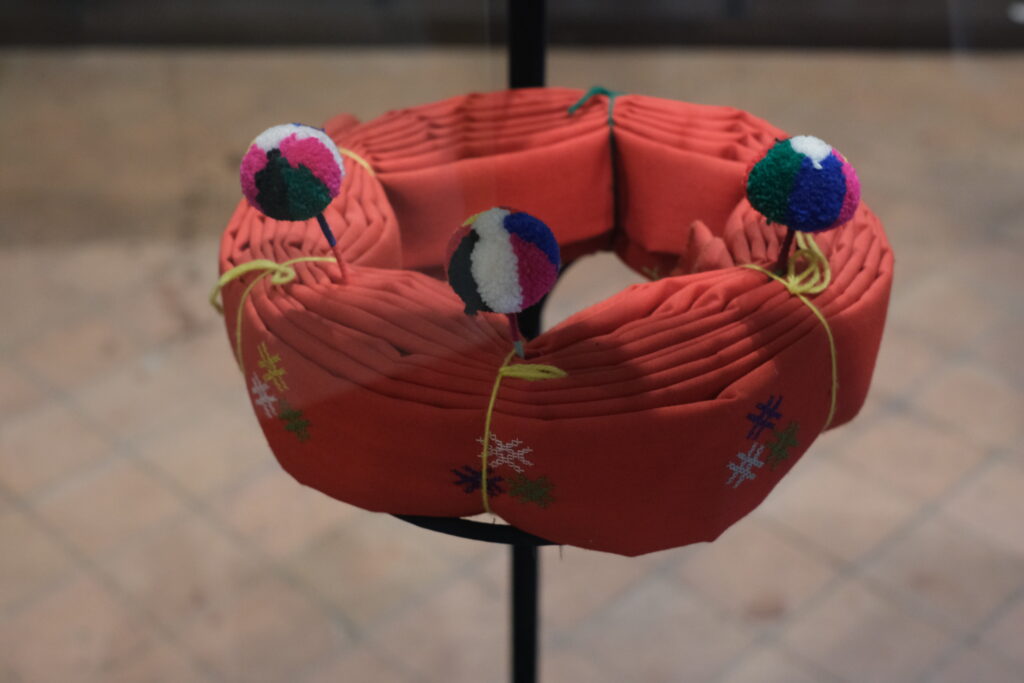
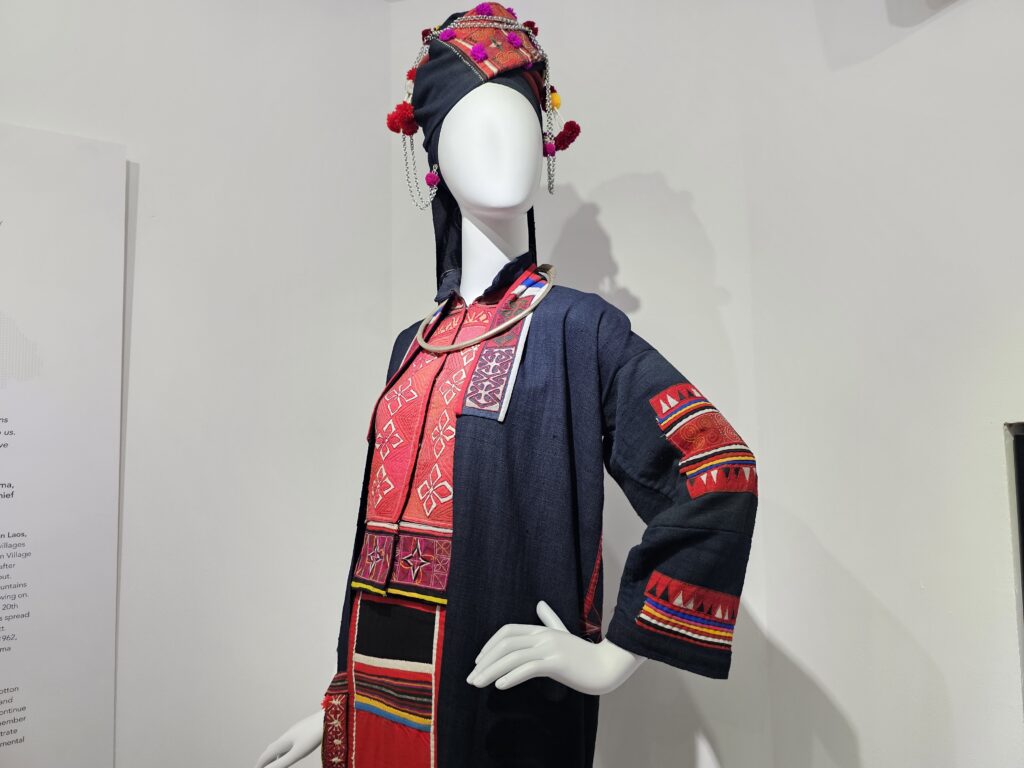
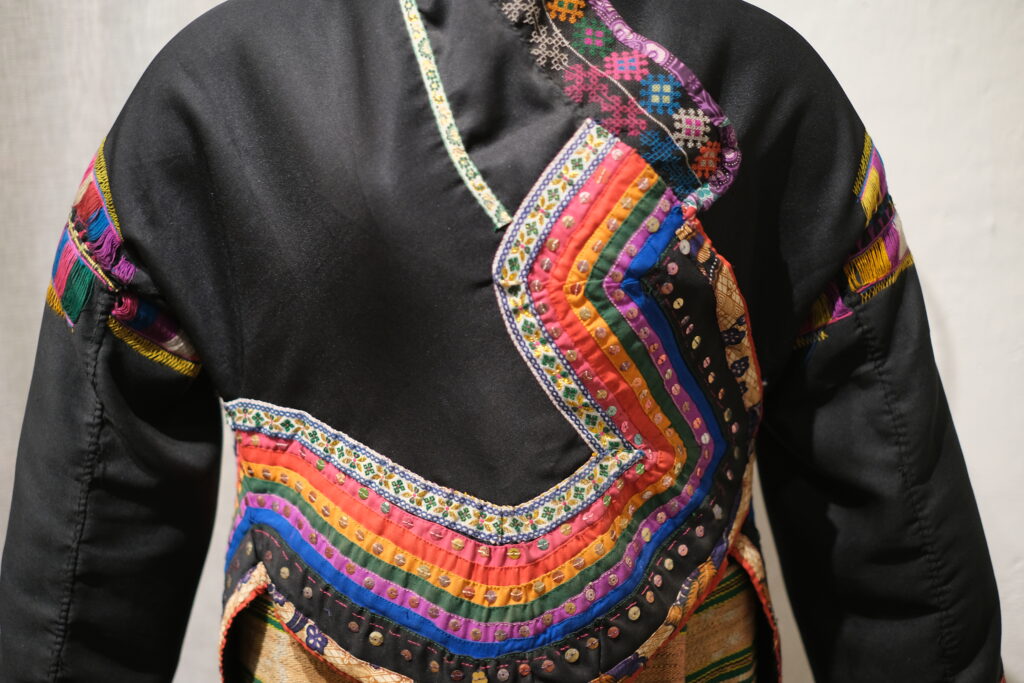
Beautiful embroideries have inspired many artists around the world.
CRUISE ON THE MEKONG RIVER
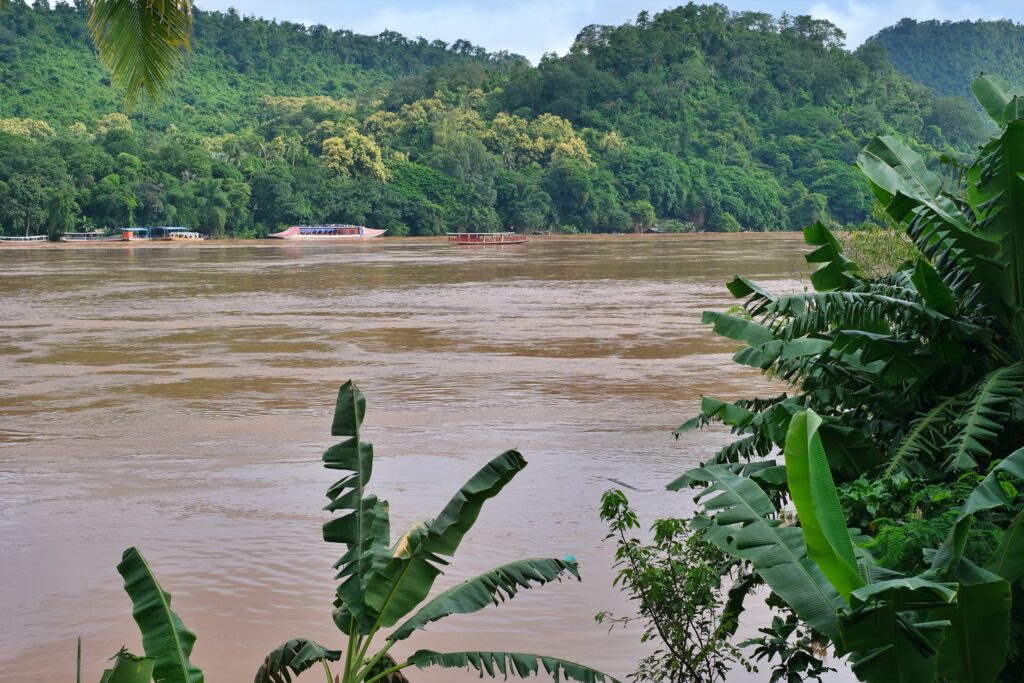
The Mekong River is the centerpiece of the city, and boating is a popular activity for visitors to the city. River cruises allow you to observe the landscape, lush greenery, and traditional villages on the banks of the river. Sunset cruises are particularly magical, offering a peaceful and unforgettable experience as the sun sinks below the horizon.
BAKERIES
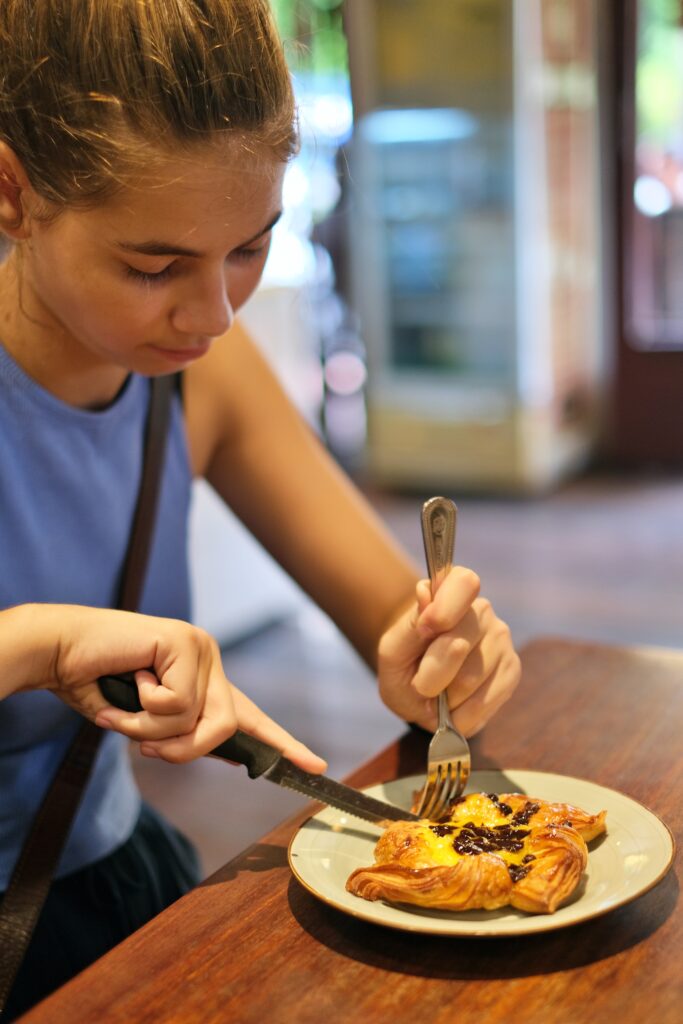
Luang Prabang is a former French colony. Not only has France influenced the architecture, but the coffee and bakery culture is also very much alive here. Enjoy this surprising element of Lao life and have a delicious croissant and coffee at Novelty or Saffron Espresso.
RESTAURANT
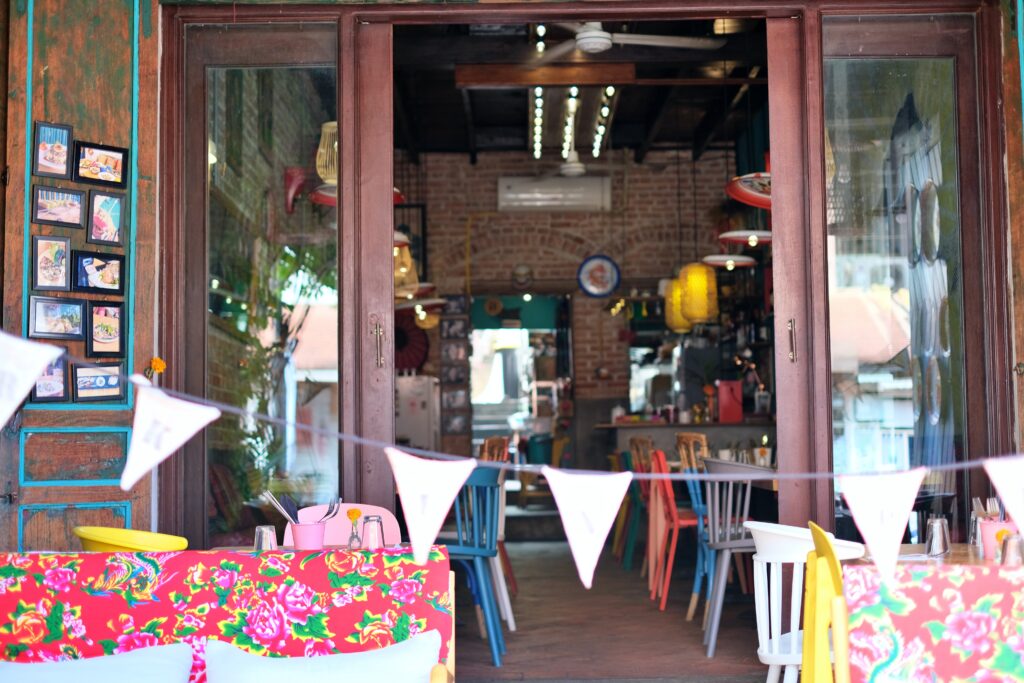
Typical Asian classics mixed with French colonial influences create a wonderful mix of cuisine in Luang Prabang. Beautiful restaurants line the streets and delicious street food stalls are just a stone’s throw away. This gives travelers plenty of options to choose from. Here are some of my favorites:
BOUANG Asian Eatery (Fusion)
Two Little Birds Cafe (International breakfast)
Popolo Restaurant (Italian cuisine)
Saffron Coffee (Excellent coffee and cake)
Lao cuisine is characterized by its bold and vibrant flavors, utilizing a variety of fresh herbs, spices, and vegetables. Sticky rice, known as khao niao, is a staple of Lao dishes and is often eaten with your hands. The cuisine includes dishes such as laap (minced meat salad), tam mak hoong (spicy papaya salad), and mok pa (steamed fish in banana leaf), each of which presents a harmonious combination of salty, spicy, and sour flavors.
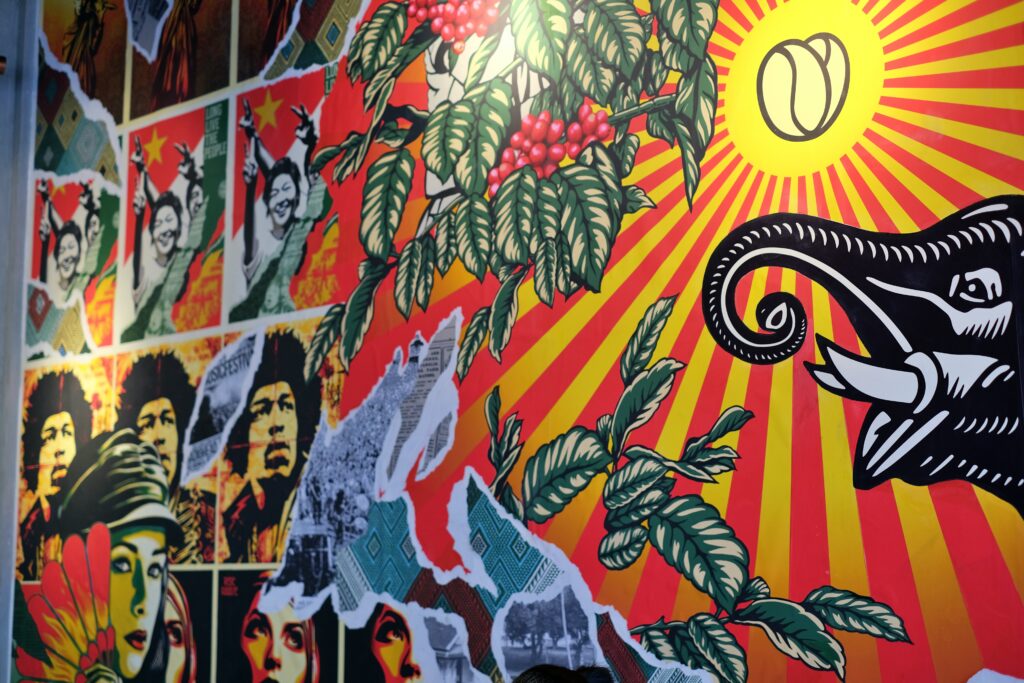
Luang Prabang offers a unique culinary experience. Don’t forget to try Khao Soi, the local noodle soup, and fish dishes from the Mekong River.
HOW ABOUT INTERNET CONNECTION?

The internet connection in Laos is not bad at all, but it is not the fastest. Nowadays, almost every accommodation and many restaurants offer WiFi, so when you want to look up some information or simply share photos on Instagram, you don’t have to worry.
WHY VISIT LUANG PRABANG?
- Unique atmosphere of a UNESCO-listed city
- Rich history and beautiful Buddhist temples
- Proximity to natural beauties – Kuang Si Waterfalls and Pak Ou Caves
- Traditional night markets with a unique atmosphere
- Excellent Lao coffee and cuisine
I think it’s the perfect place for travelers who want to combine relaxation with exploration. You’ll find a mix of spirituality, history, nature and gastronomy, all at the pleasantly slow pace that is so typical of Laos.
If you’re looking for a destination that’s different from the rest, where the hustle and bustle is replaced by calm, where you can enjoy both culture and natural beauty, Luang Prabang, Laos, is the place to be. Whether you choose to spend time in cafes overlooking the Mekong, explore temples, or swim under waterfalls, Luang Prabang will stay in your heart long after you return home. I’m sure it will be etched in your heart, as it was in mine.

If you liked the article, I would be happy if you share it or leave a nice comment below the article.

I would also like to invite you to join me on Instagram and Facebook.

MORE ARTICLES FROM ASIA


