

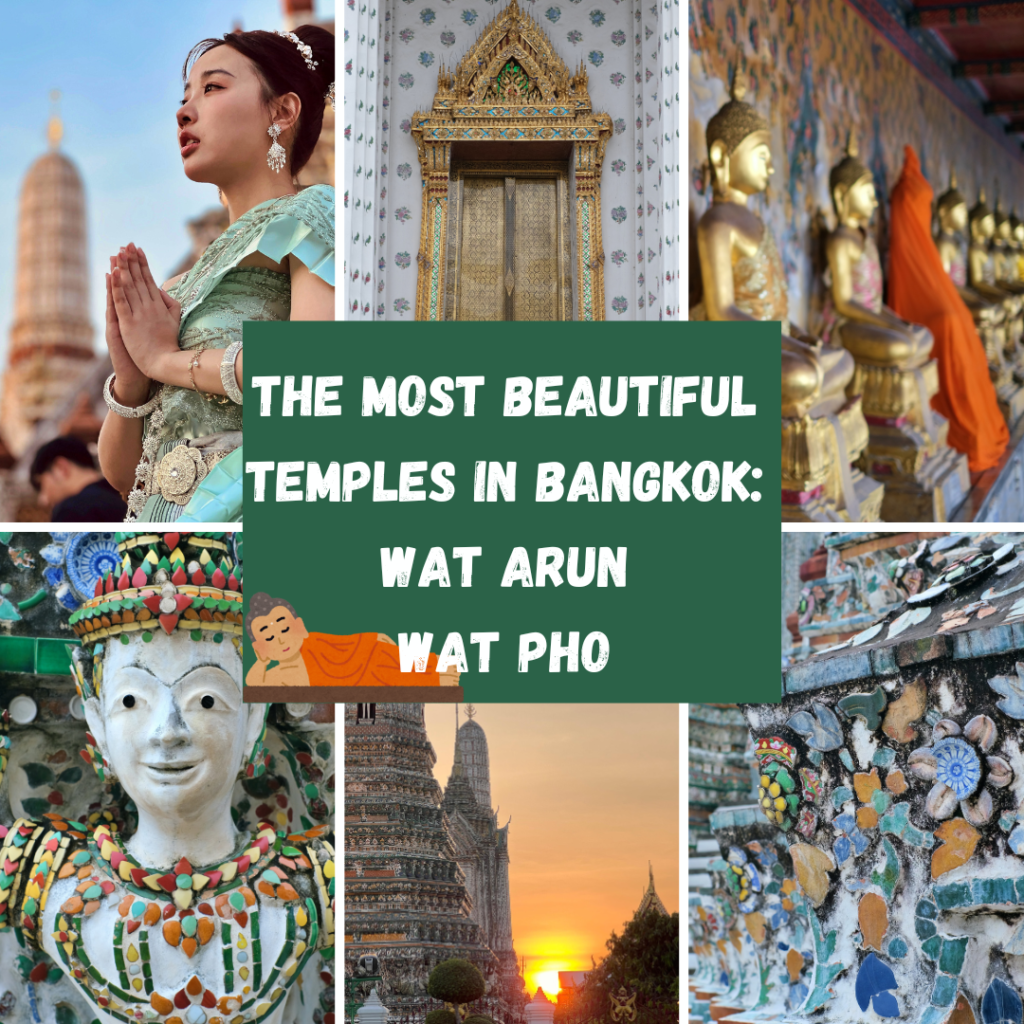
Bangkok. The city that never sleeps and is always alive. But even so, this city has its quiet corners where you can stop for a moment and be quiet. Two of these peaceful islands have fairy-tale names, Wat Pho and Wat Arun. These two Thai gems are located not far from each other, right on the Chao Phraya River, and each offers a completely different experience. While Wat Pho is home to the famous Reclining Buddha and the birthplace of Thai massage, Wat Arun will enchant you with its porcelain decoration and breathtaking views.
In this article, I will guide you through them and try to convince you why these sights should be on your “must see” list in Bangkok.
WAT PHO TEMPLE
Wat Pho, also known as Wat Phra Chetuphon, is one of the largest and oldest temple complexes in Bangkok. It is located in the historical Rattanakosin district, just a few minutes walk from the Grand Palace. It is best to combine a visit to these two temples in one day. Its main attraction is undoubtedly the Reclining Buddha. However, the temple offers much more than just one famous statue.
The origins of the temple date back to the times when the capital was located in Ayutthaya, that is, to the 16th century. In the 18th century, King Rama I chose Wat Pho as his residence and had the temple repaired.
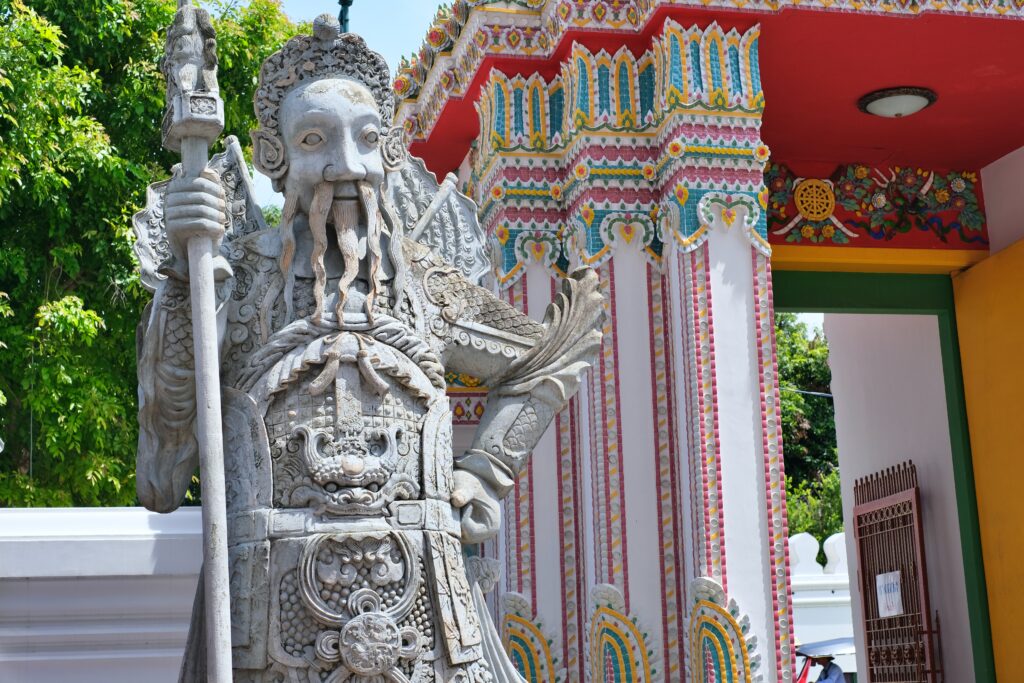
Rama III continued to expand and improve Wat Pho, turning it into the first public university. He had paintings and marble plaques with texts and illustrations placed on the walls of the temples, which served as public textbooks for passersby. The plaques contain information on a variety of subjects, from poetry to geographical maps to medical prescriptions. In 2008, these texts were even added to the UNESCO list.
RECLINING BUDDHA (Phra Buddhasaiyas)
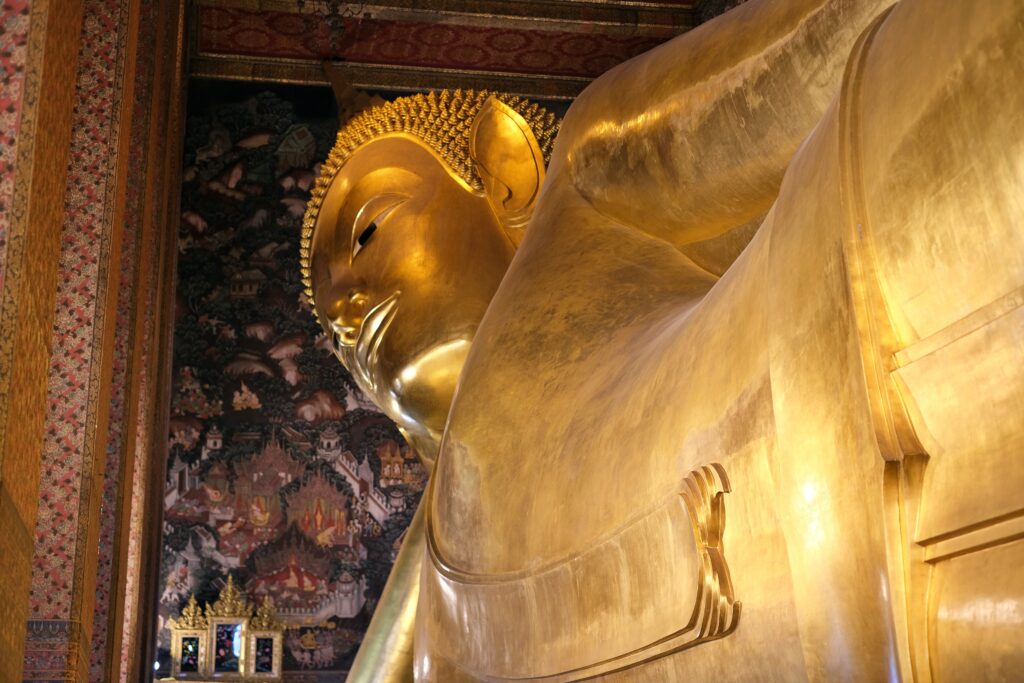
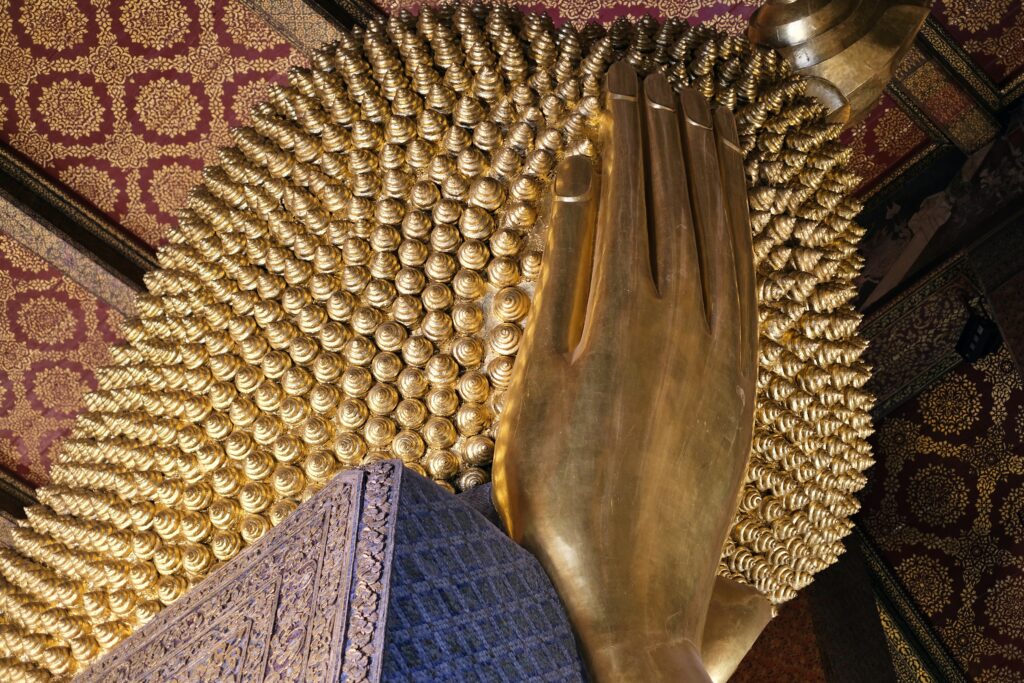
The main star here is of course the giant Reclining Buddha. And by giant I mean GIANT. It measures 46 meters long and 15 meters high. It is golden, smiling and looks like it has just finished eating and is going to take a break. It is a statue that literally makes you stop. Buddhists worship the statue greatly and believe that it will bring them peace and happiness.
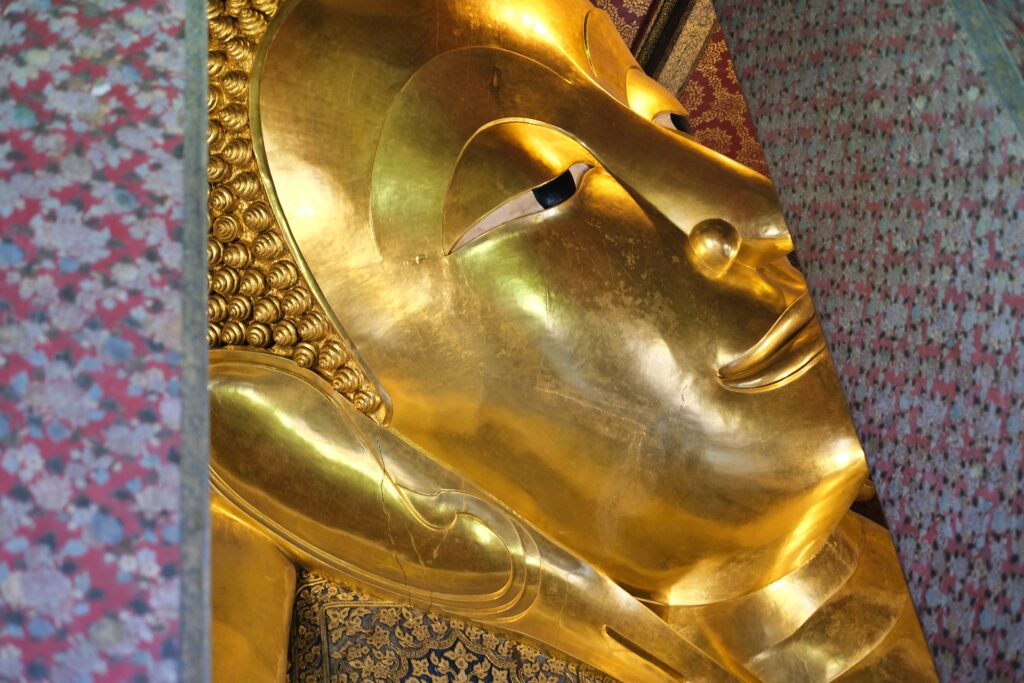
The Buddha lies on his right side with his head resting on his palm. The entire statue is covered with gold plates.
There are 108 bronze bowls around the temple, representing 108 Buddha images. By throwing a coin in, everyone can ensure good luck.
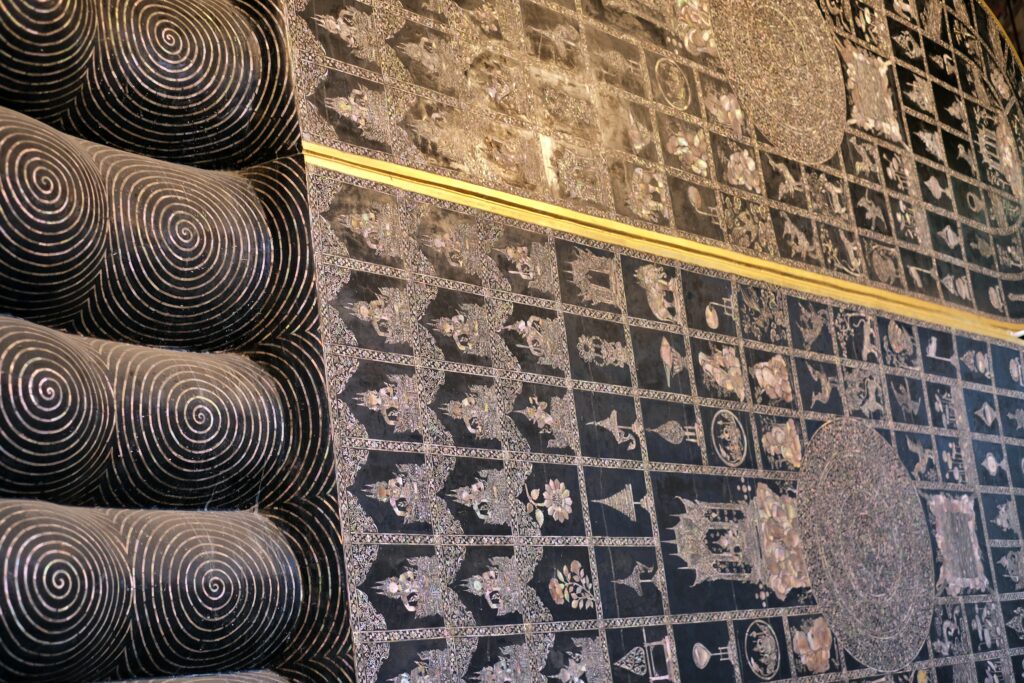
There are 108 mother-of-pearl signs on the Buddha’s feet, symbolizing various aspects of the Buddha’s life.
CHEDI KINDOM
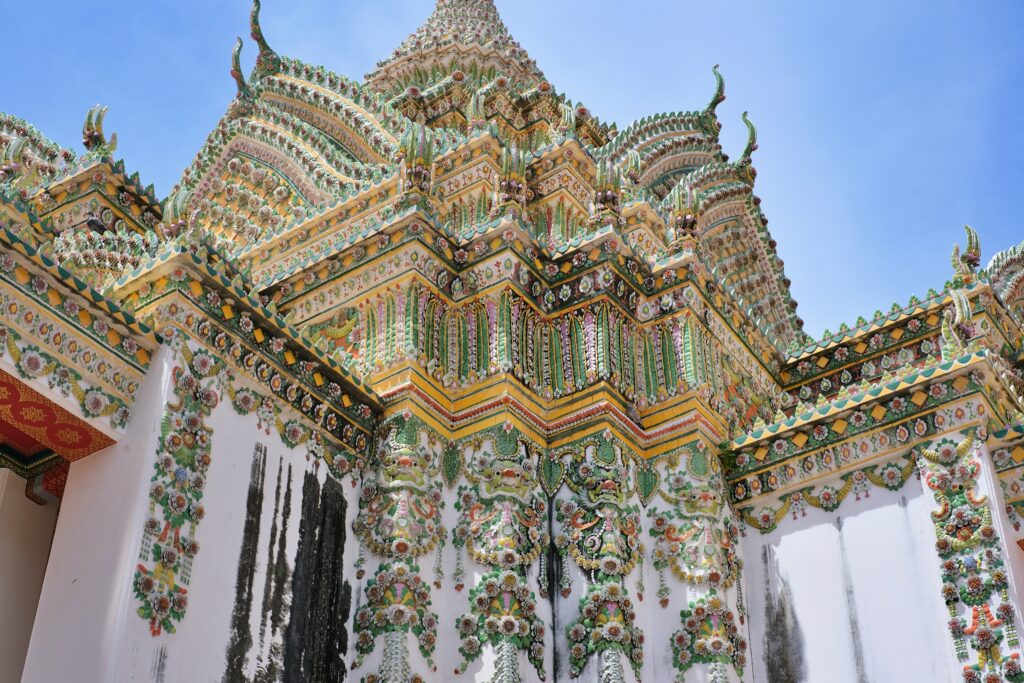
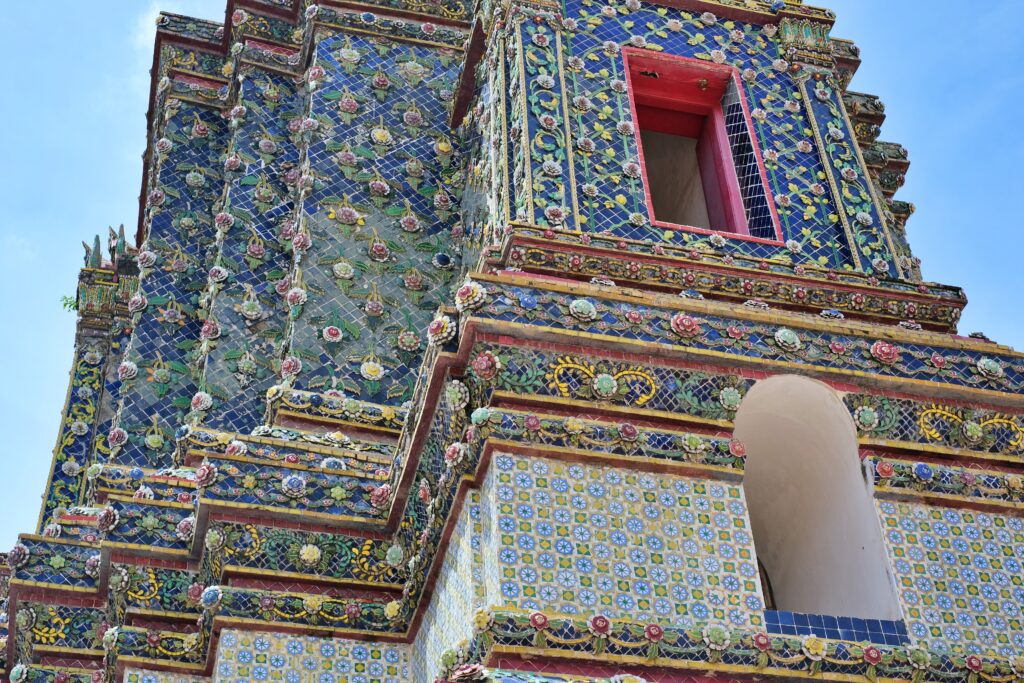
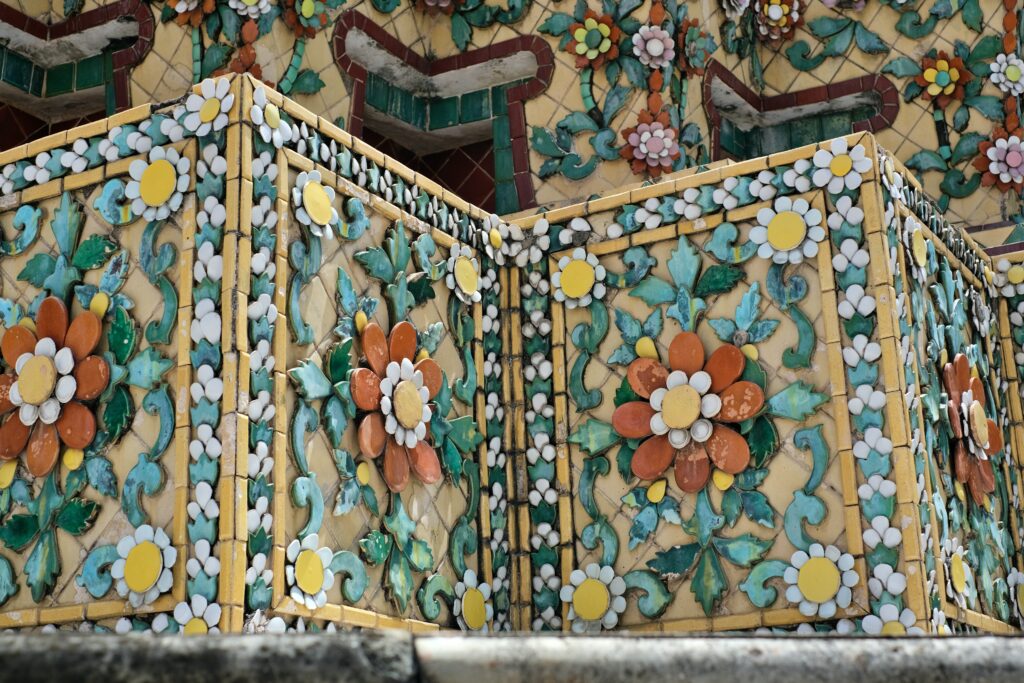
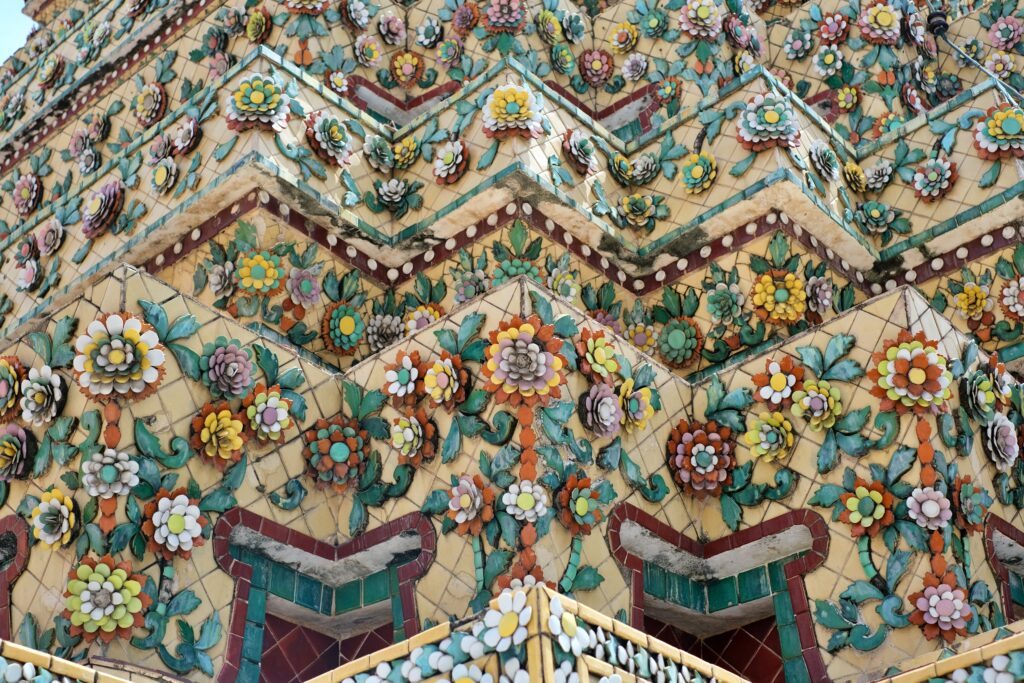
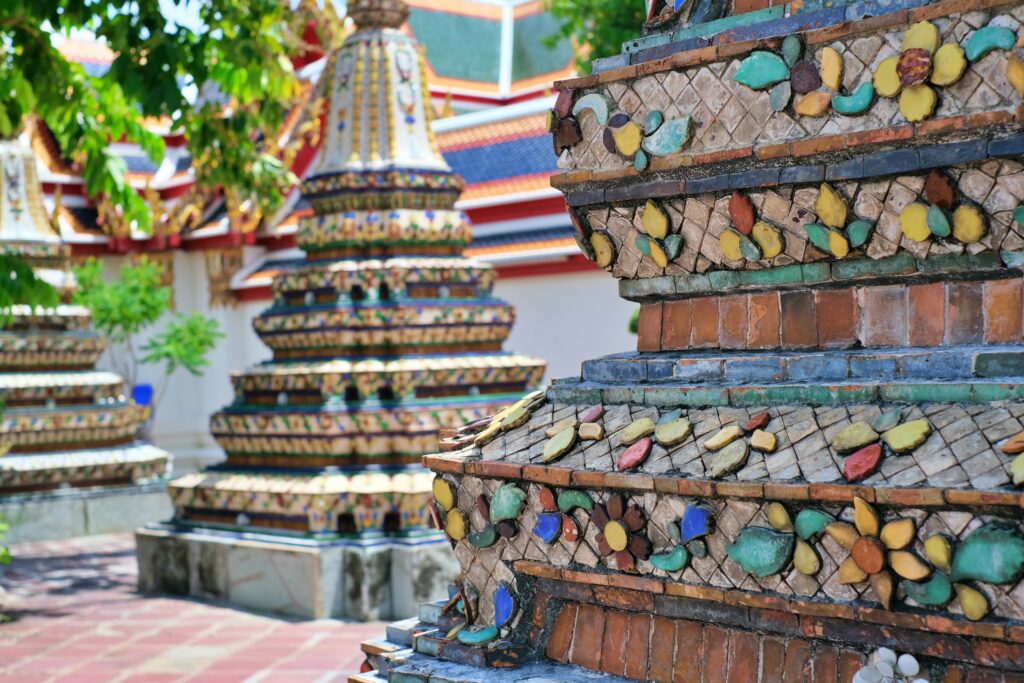
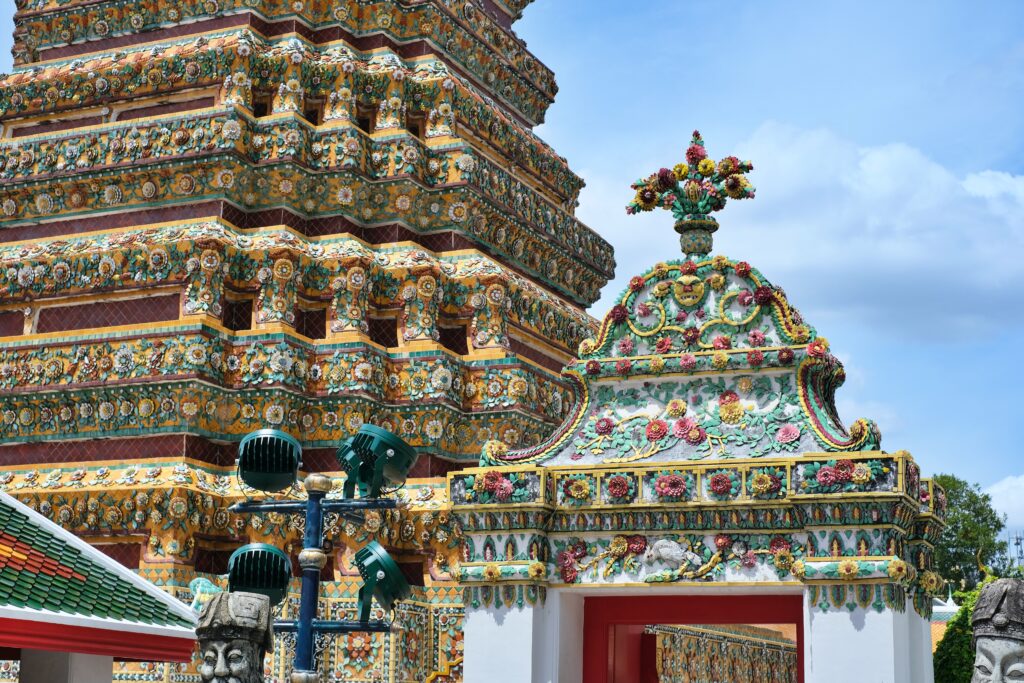
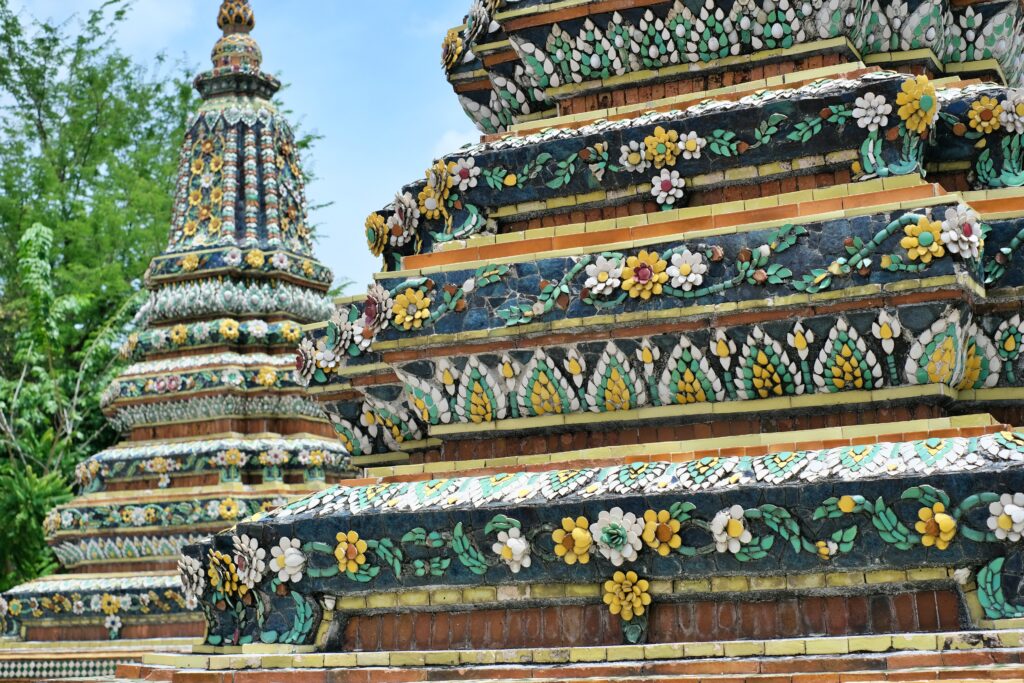
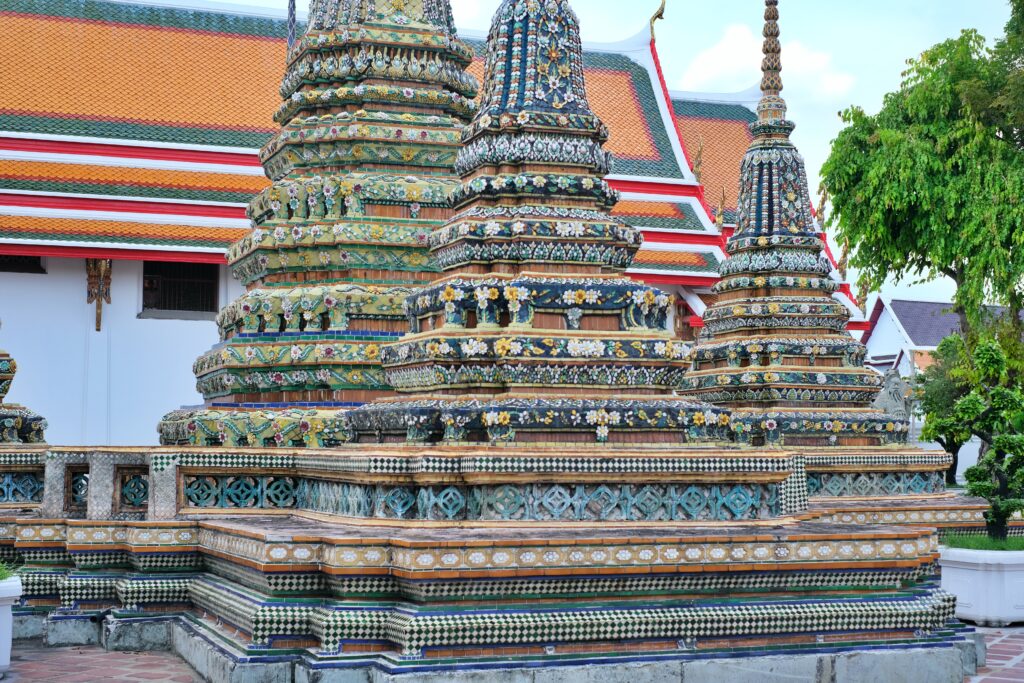
There are four main stupas (chedis) in Wat Pho. Each one is dedicated to one of the first Thai kings of the Chakri Dynasty. But what I like the most is the colorful covering of colorful ceramic tiles. These are definitely among the most photogenic parts of the temple.
COURTYARD
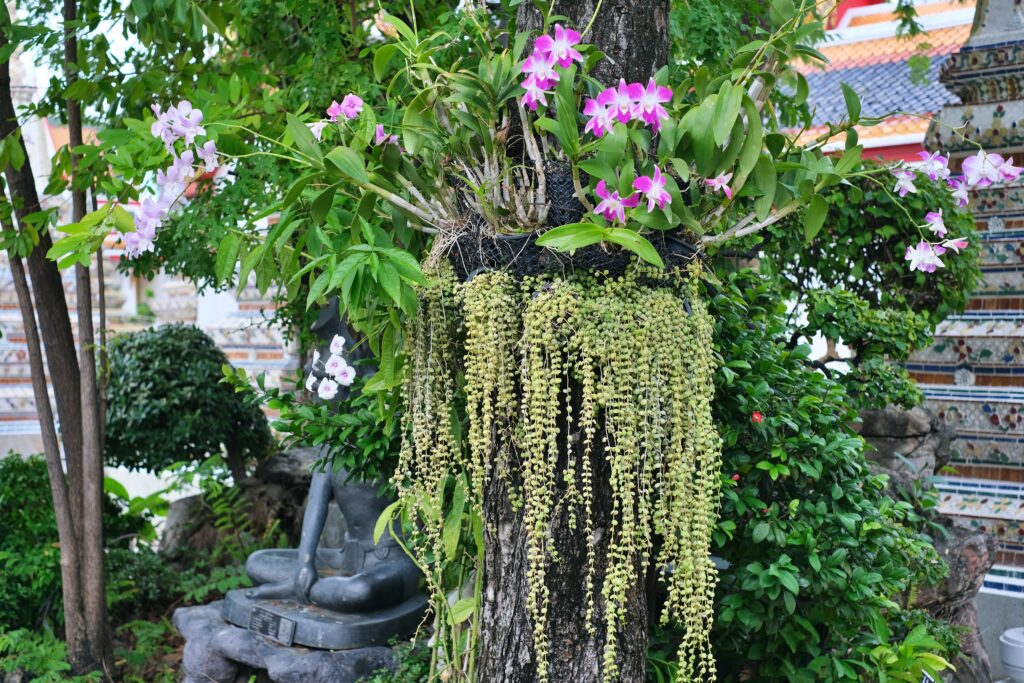
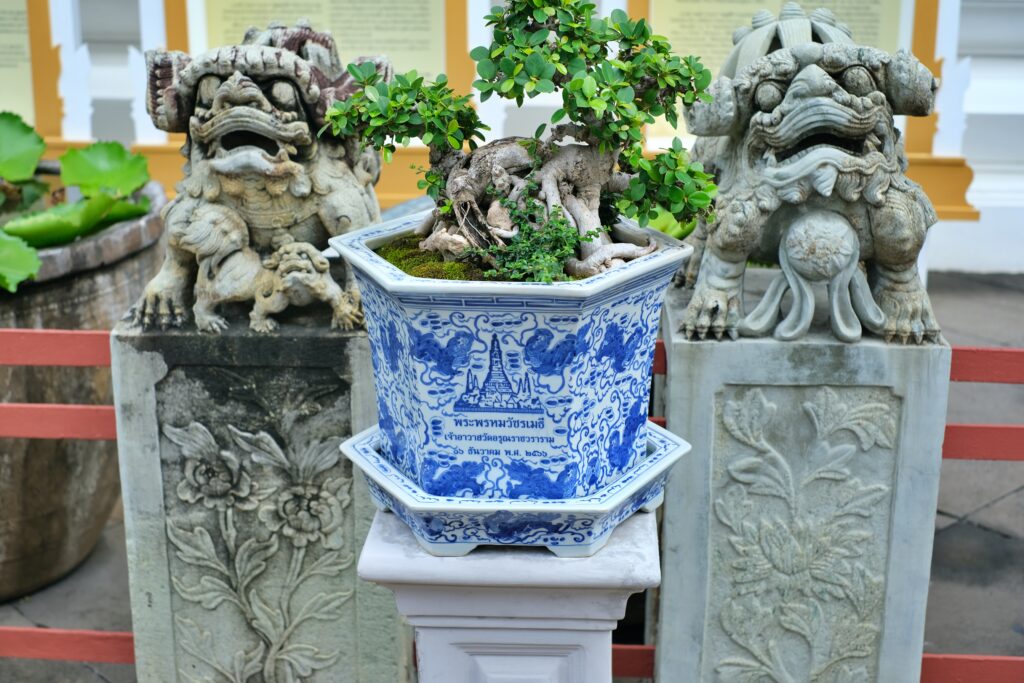
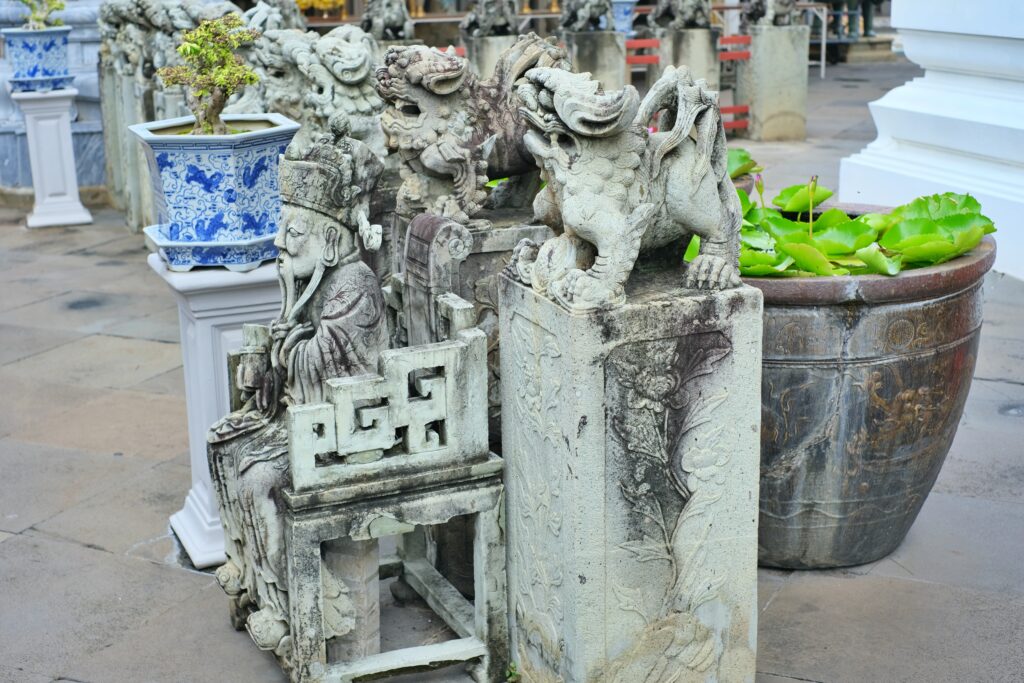
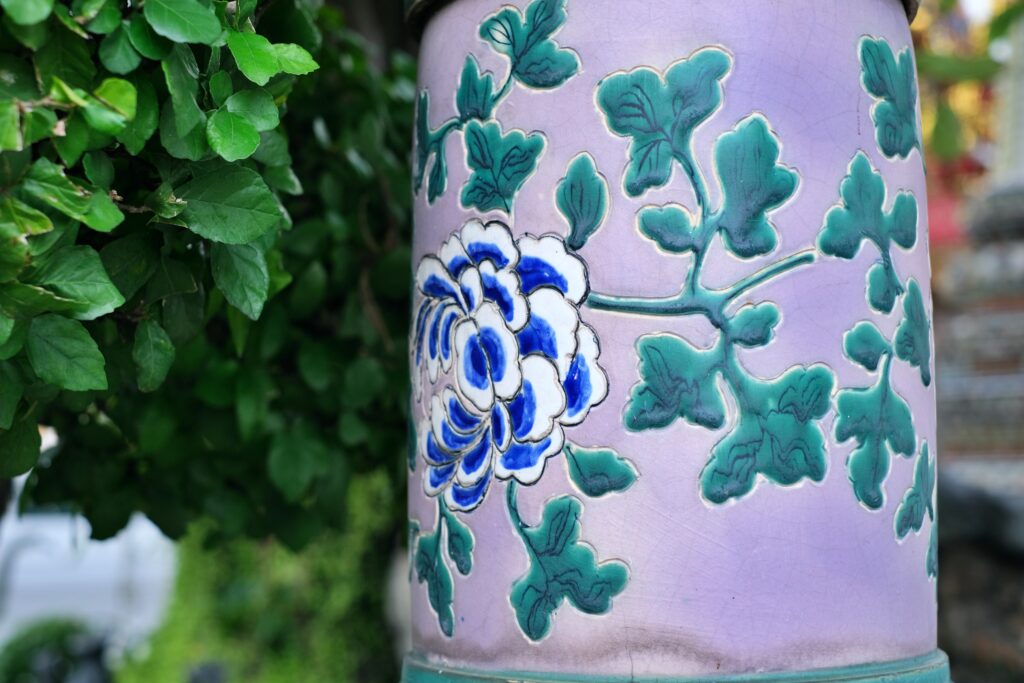
I recommend taking a leisurely stroll through the entire complex, as each courtyard offers a new visual experience.
SCULPTURES AND FRESCOES
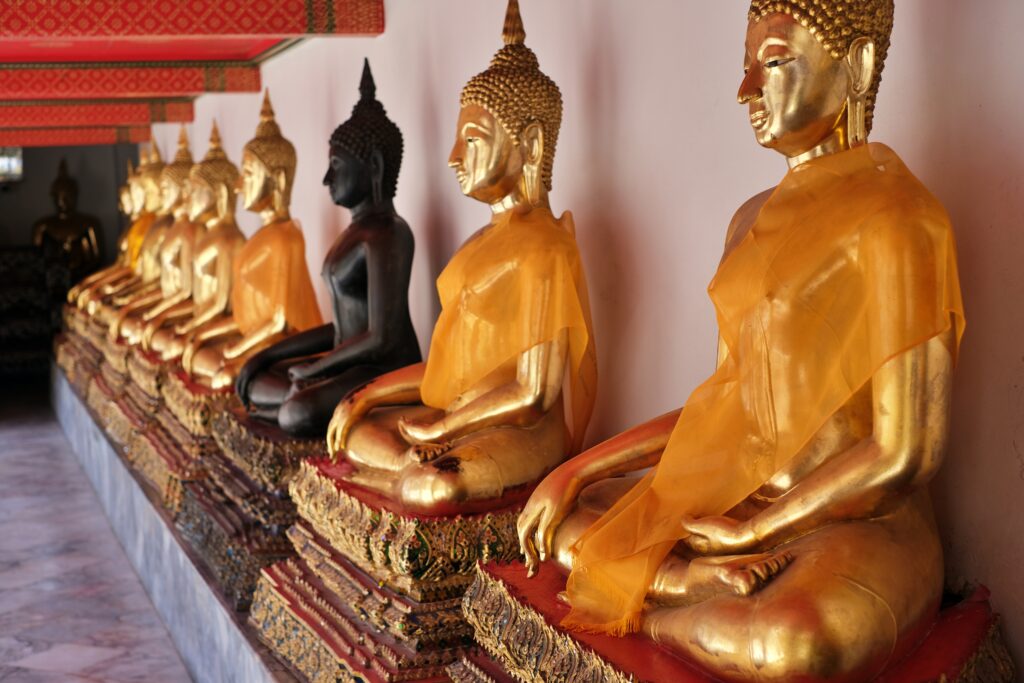
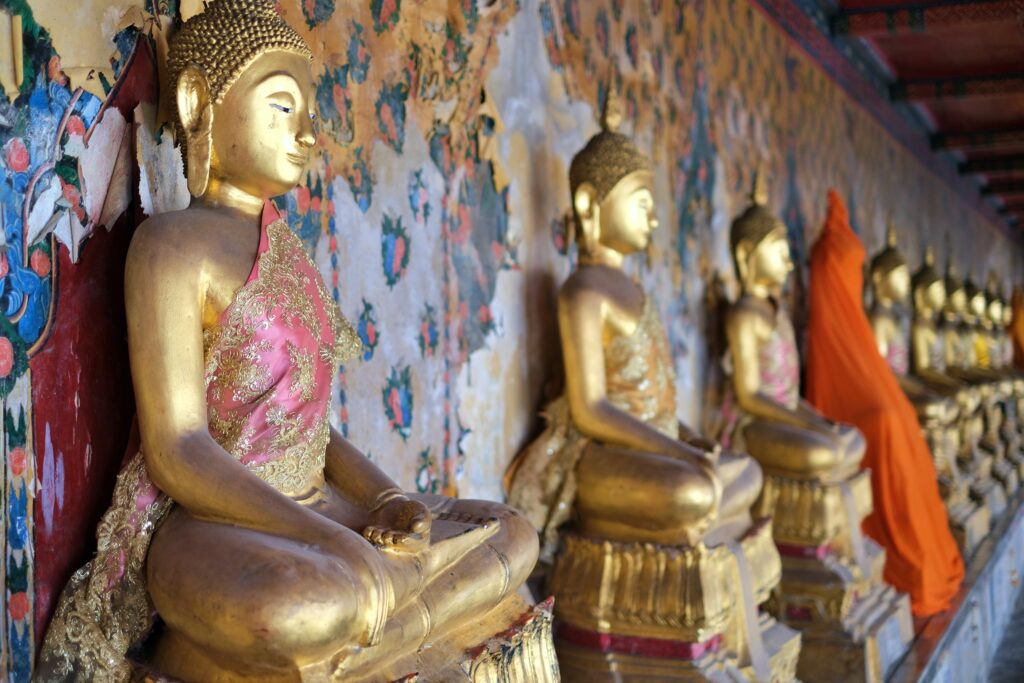
The temple complex is filled with Buddha statues, ancient maps, astrological symbols, and intricately carved pavilions.
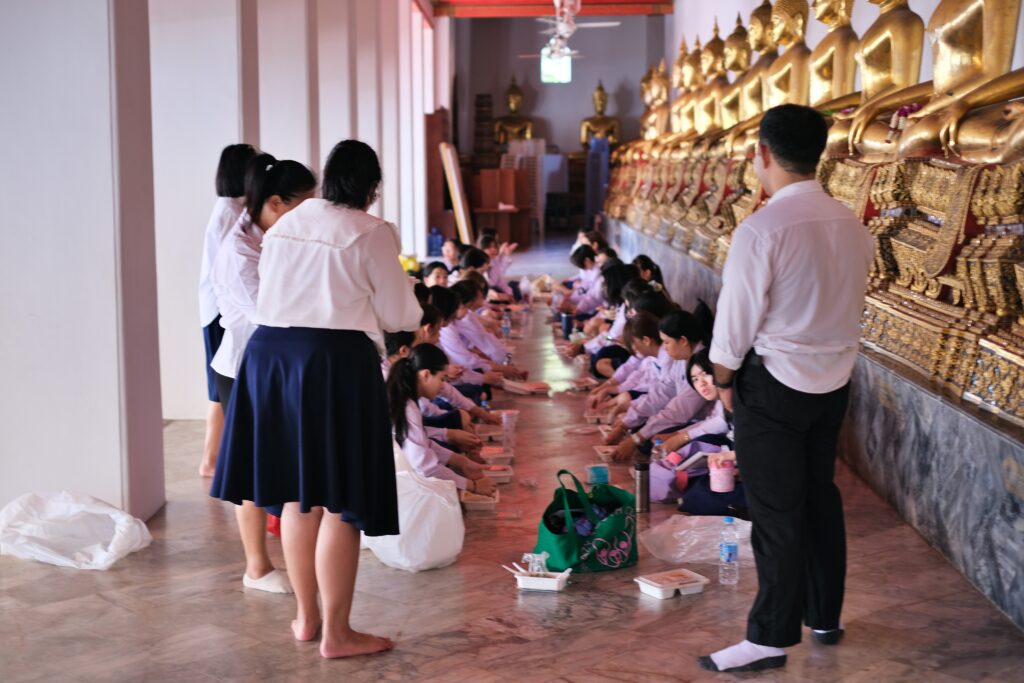
TRADITIONAL THAI MEDICINE AND MASSAGE SCHOOL
Wat Pho is known as the birthplace of traditional Thai massage. There is a Thai medicine school right on the temple grounds, where you can not only get a massage, but also learn how to massage someone. Both are worth it. Trained therapists will offer you an authentic Thai massage, which usually lasts 30 or 60 minutes and the prices are very friendly.
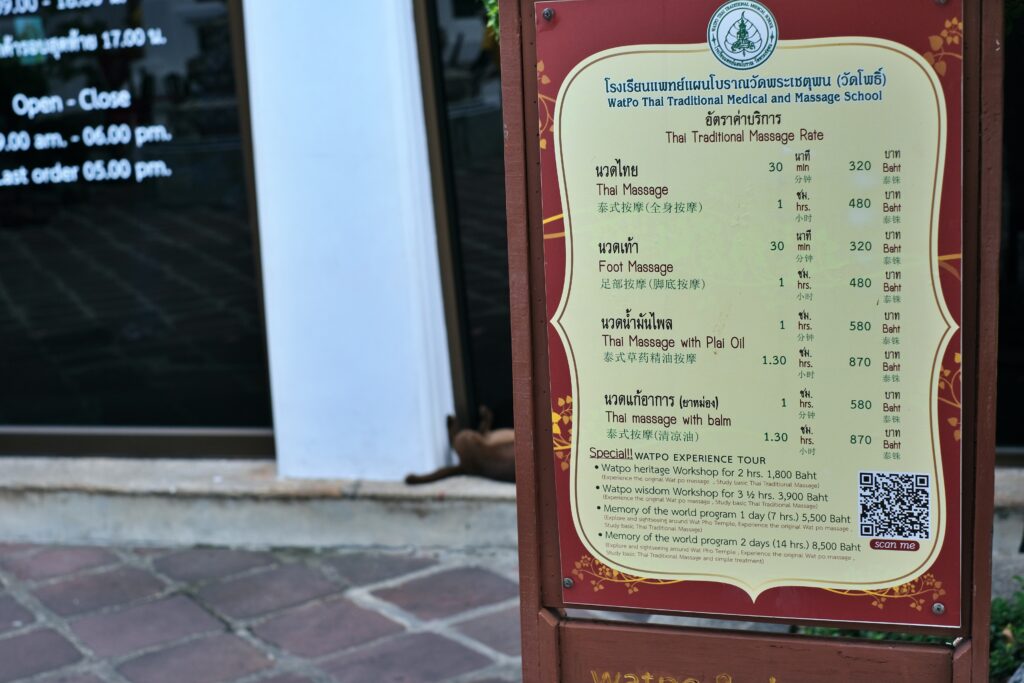
HOW TO GET HERE
Wat Pho is located a short distance from the Chao Phraya River, not far from the Grand Palace. You can get there on foot or by boat. I would probably recommend a Thai river boat, which is a cross between a bus and a unique experience.
WAT ARUN
TEMPLE OF THE MORNING DAWN
The full name of the temple is Wat Arun Ratchawararam Ratchawaramahawihan. “Wat” means temple in Thai and “Arun” means morning or dawn, which refers to the Hindu god Arun, the god of dawn. Yes, this temple is very beautiful in the morning, but I must add that it is also beautiful in the evening. I am sure that this temple will bring you one of the most beautiful experiences in Bangkok. Wat Arun is different. If Wat Pho is the temple where Buddha sleeps, then Wat Arun is the place where he wakes up. It is a temple of light, silence and elegance.
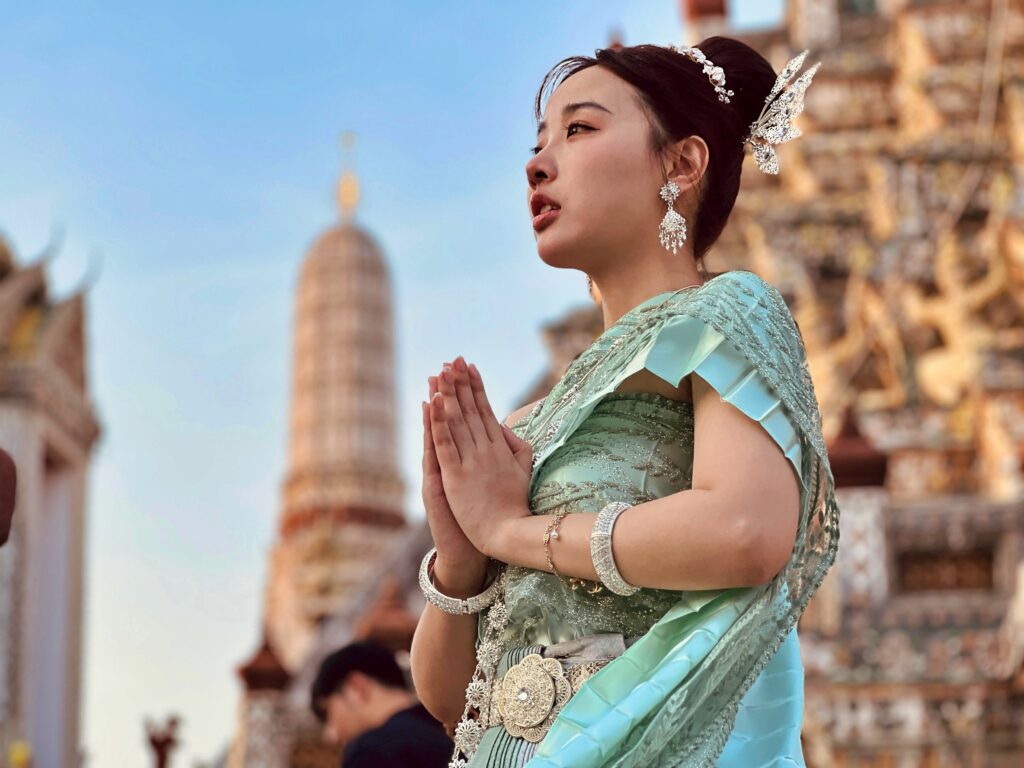
MAIN PRANG (TOWER)
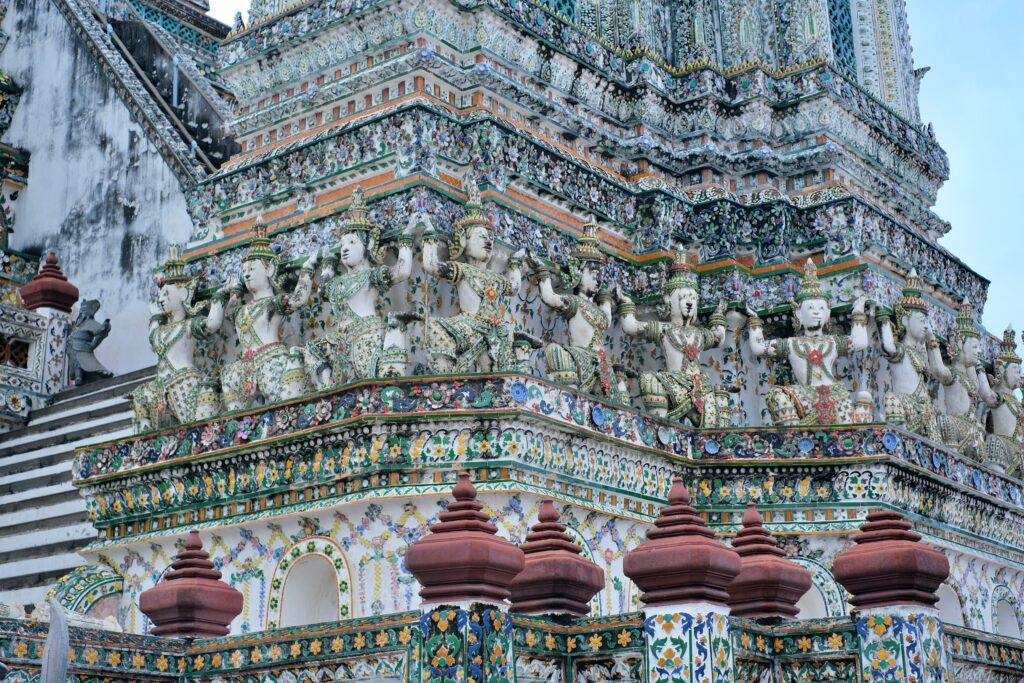
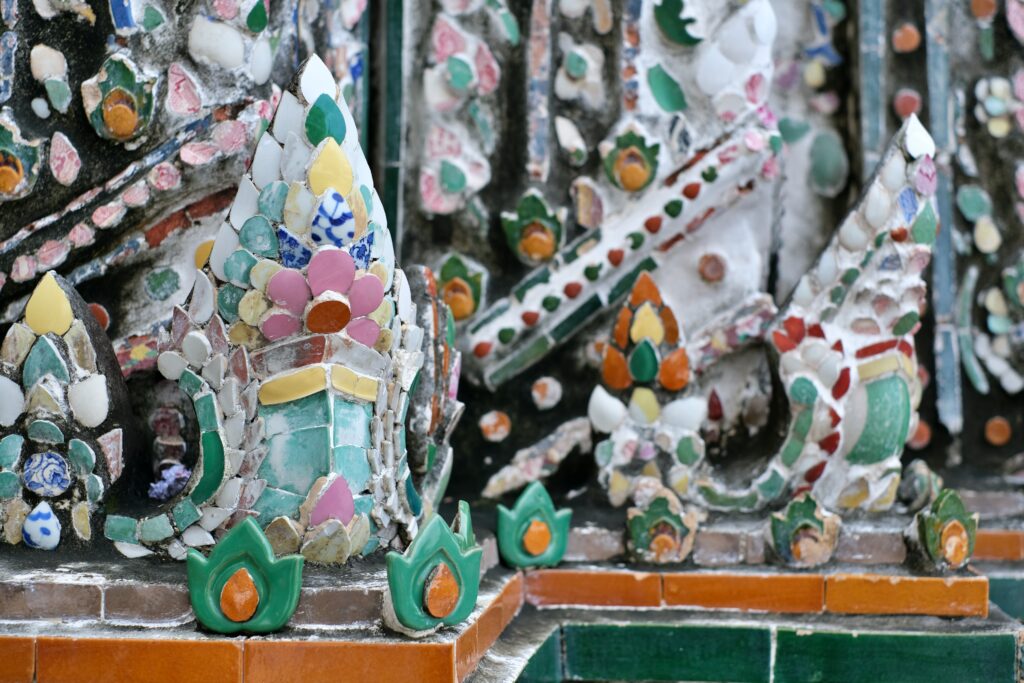
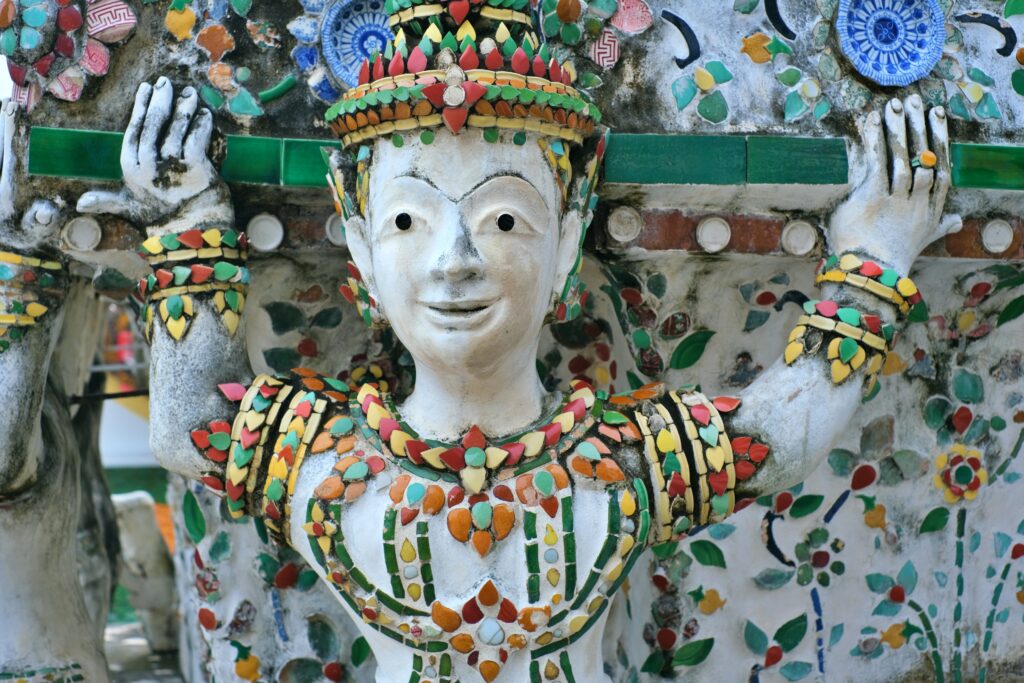
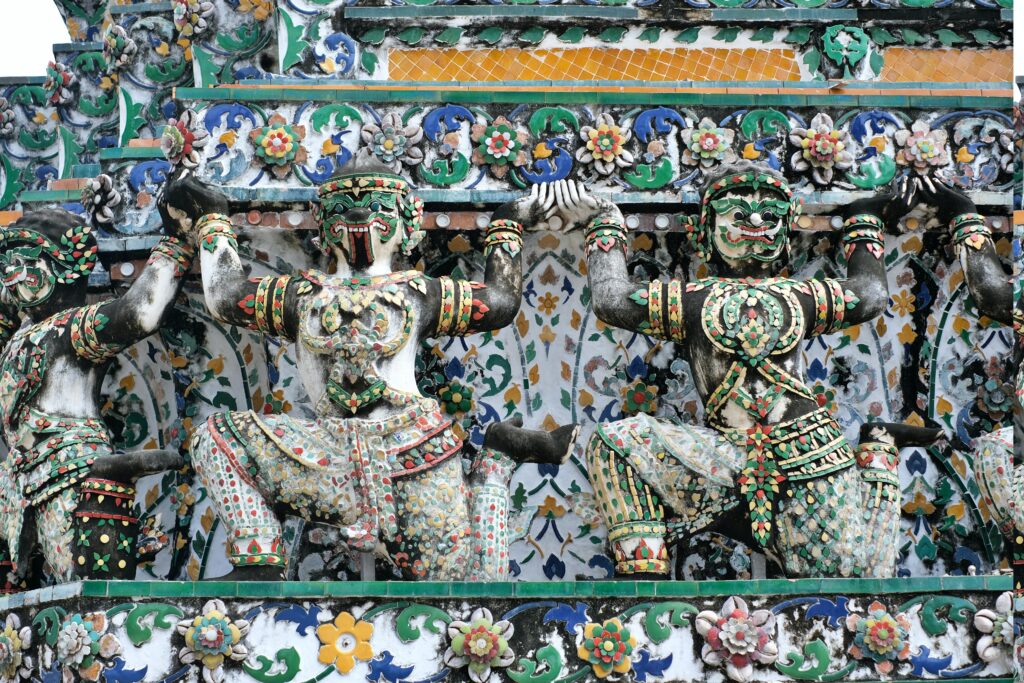
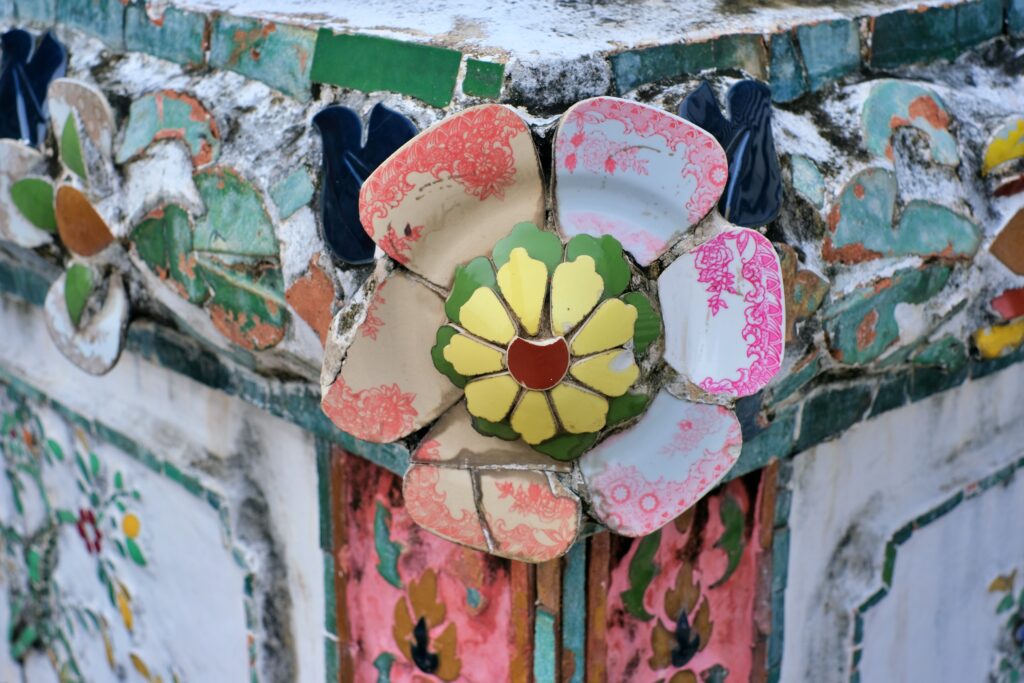
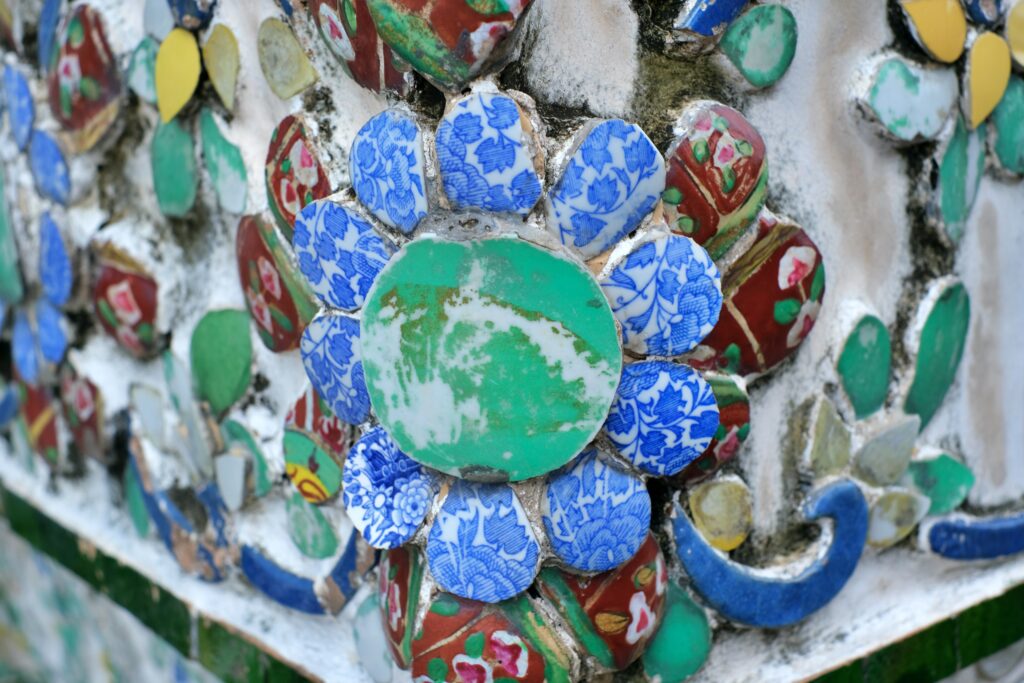
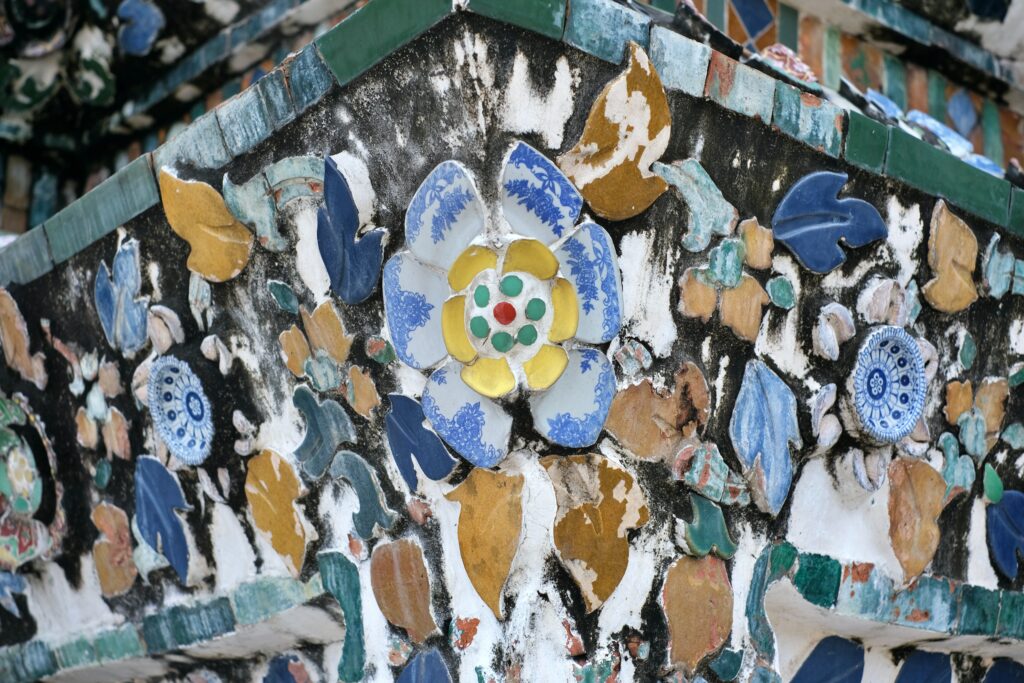
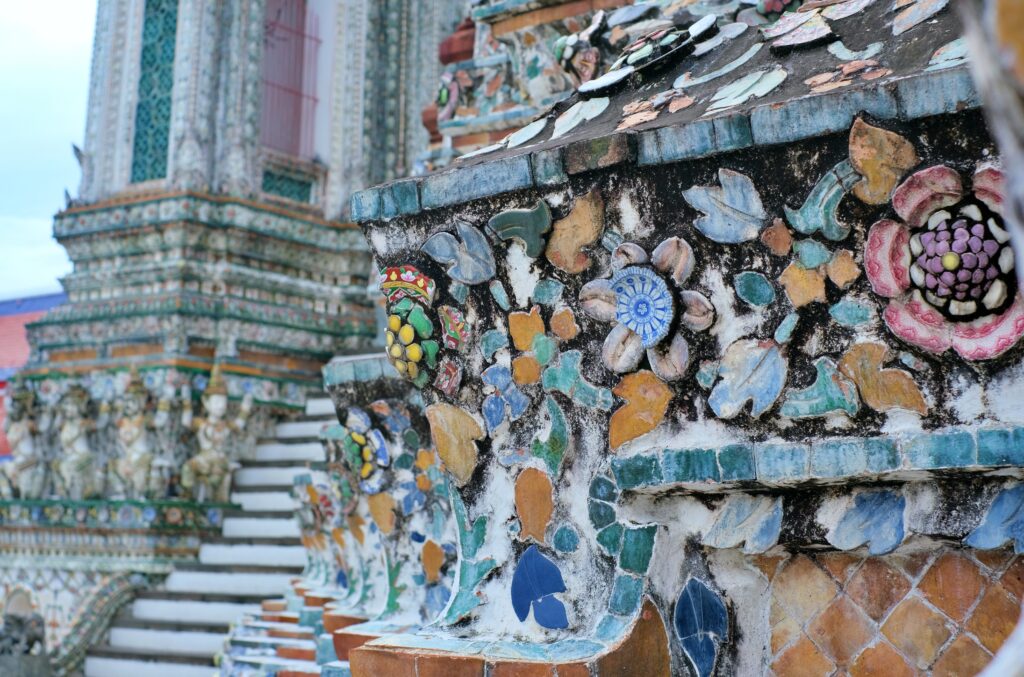
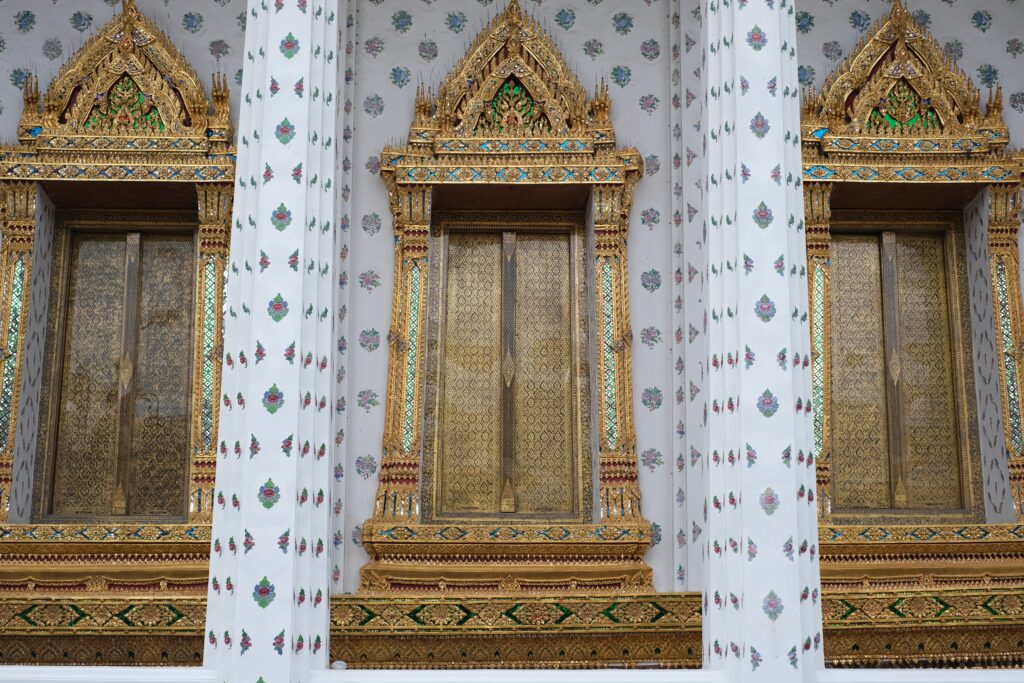
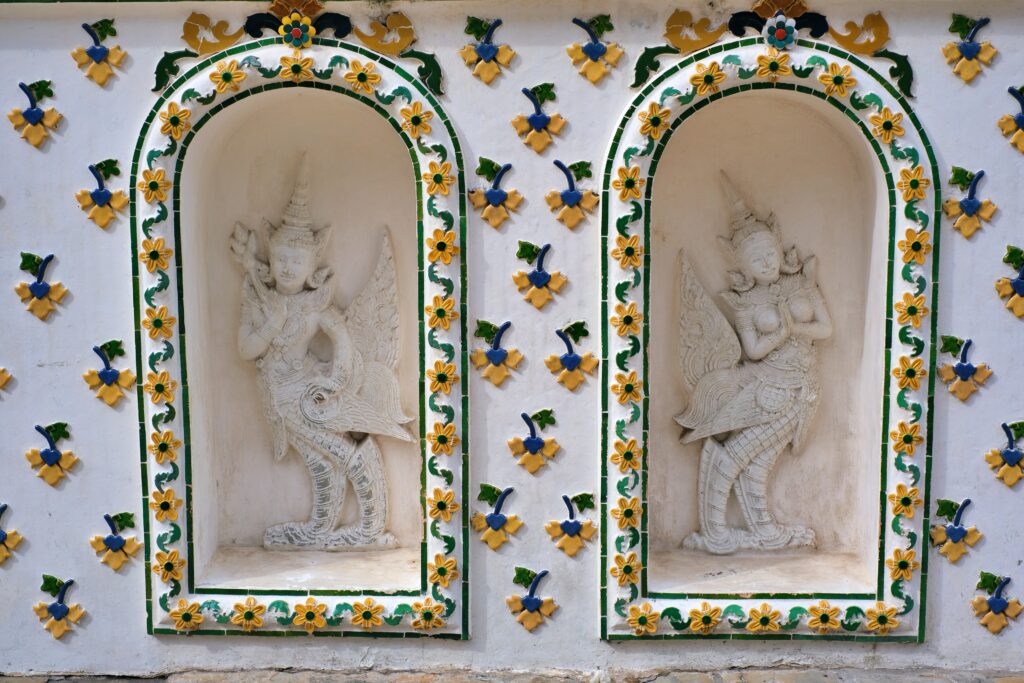
The central tower is over 70 meters tall and is decorated with thousands of pieces of Chinese porcelain, shells and colorful tiles. It symbolizes Mount Meru, the center of the universe in Buddhist cosmology. The main tower rises to the sky like an arrow, dotted with porcelain flowers, shells and colorful shards. It is not kitsch. It is Thai impressionism in ceramics
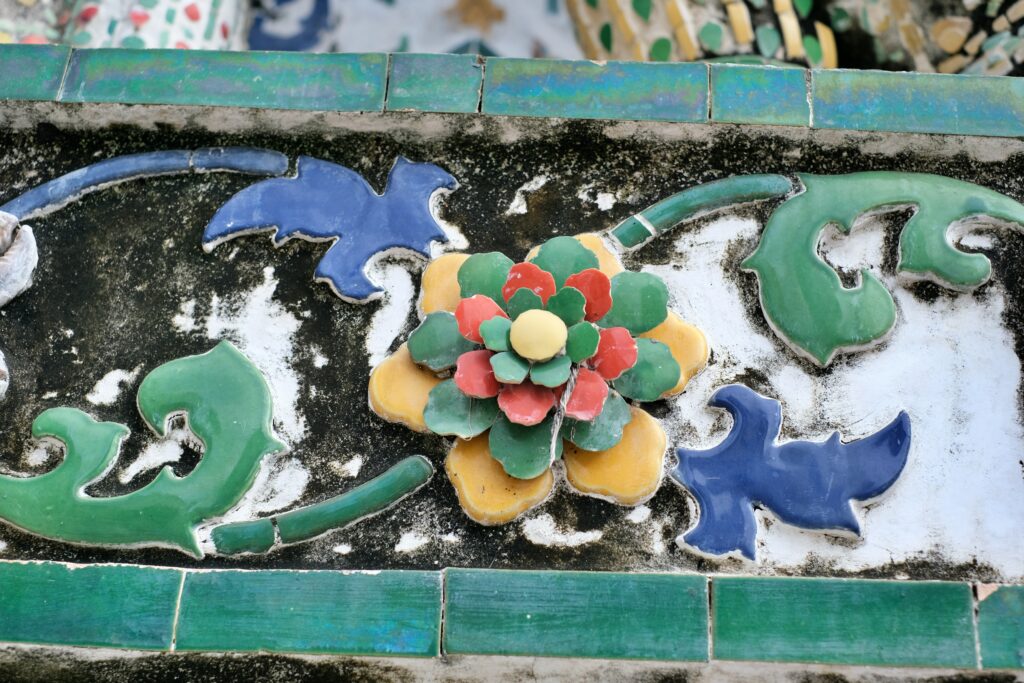
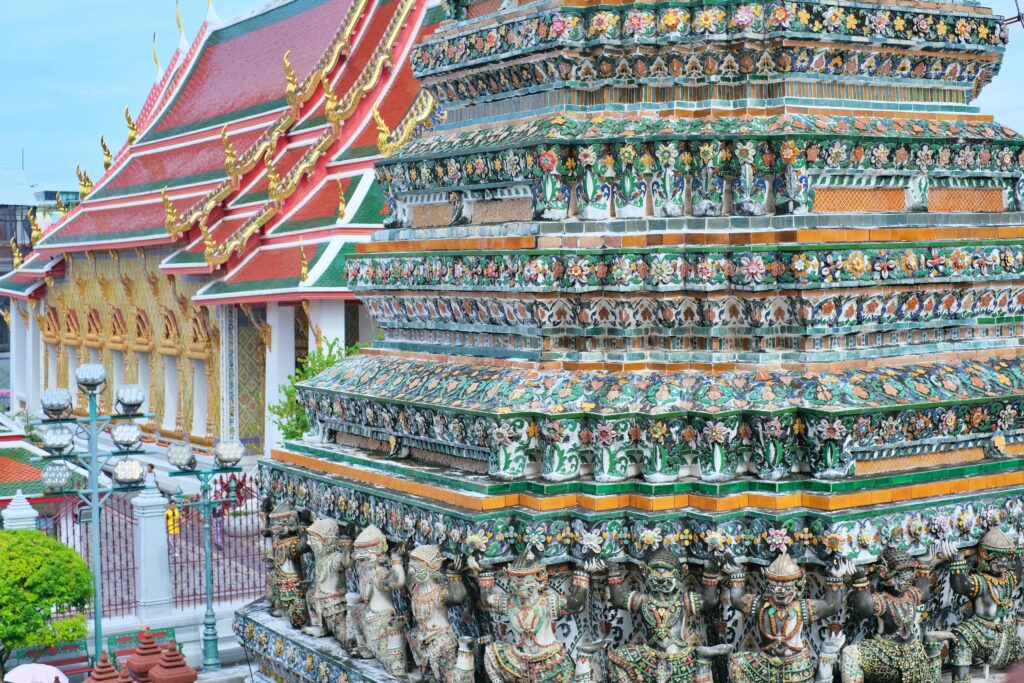
As you climb the steep stairs, you’ll be greeted by a view that will take your breath away. Maybe even your balance. But it’s worth it.
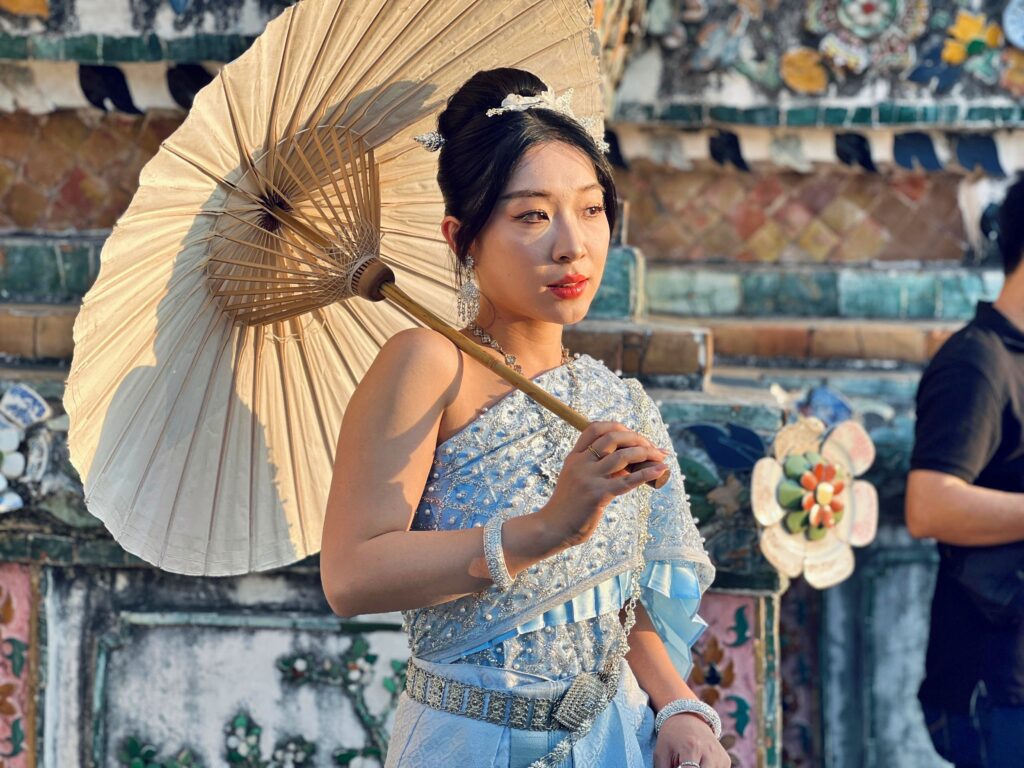
STEEP STAIRCASE AND VIEWS
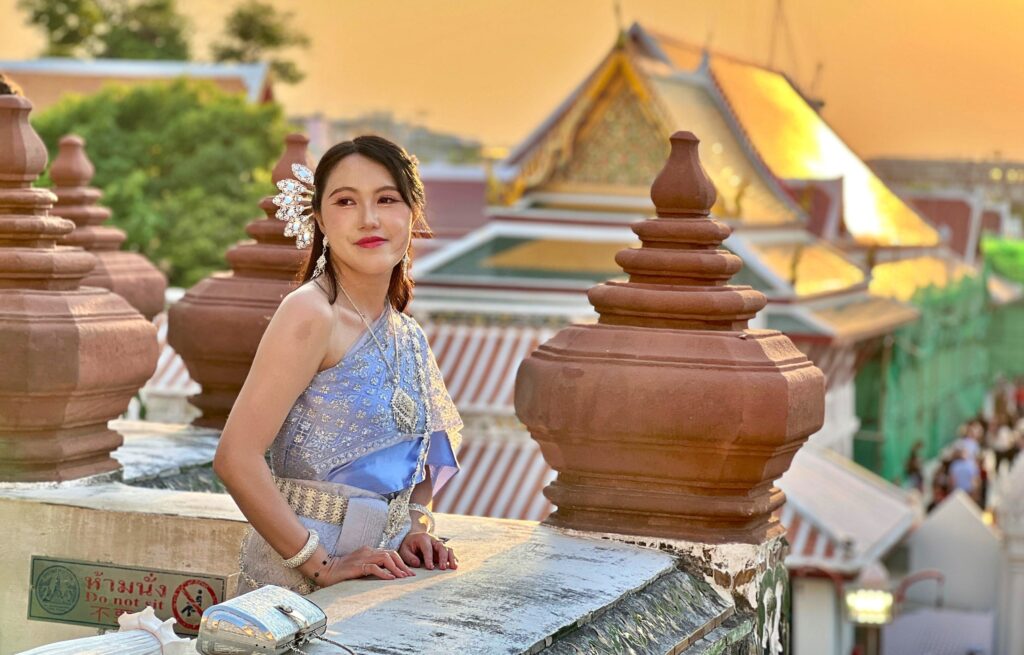
If you dare to climb the steep steps to the viewpoint, you will be rewarded with a magnificent view of the river, the city and Wat Pho on the other bank. The climb is challenging, but definitely worth it. Wat Arun is beautiful at any time, but it is most stunning at sunrise or sunset. Then the porcelain glows, the temple shines like crystal and the river reflects the golden glow of the sky. And you just stand there, silent and not understanding how it is possible that something so poetic stands in the middle of the city, where otherwise tuk-tuks are honking and durian smells everywhere.
FOUR SMALLER CHARGES
The main tower is surrounded by four smaller prangs, representing guardian deities. These structures are also decorated with ceramic details, creating a harmonious whole.
MAIN TEMPLE HALL (UBOSOT)
The quiet and elegant shrine houses a statue of Buddha and beautiful paintings depicting moments from his life, making it the perfect place for a moment of silence and contemplation.
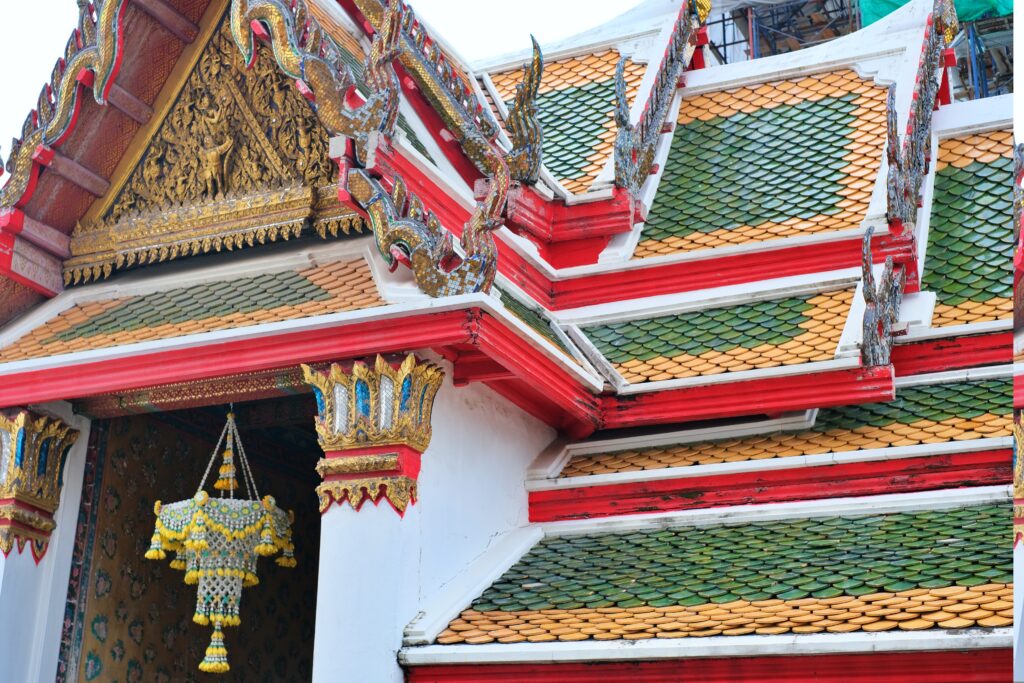
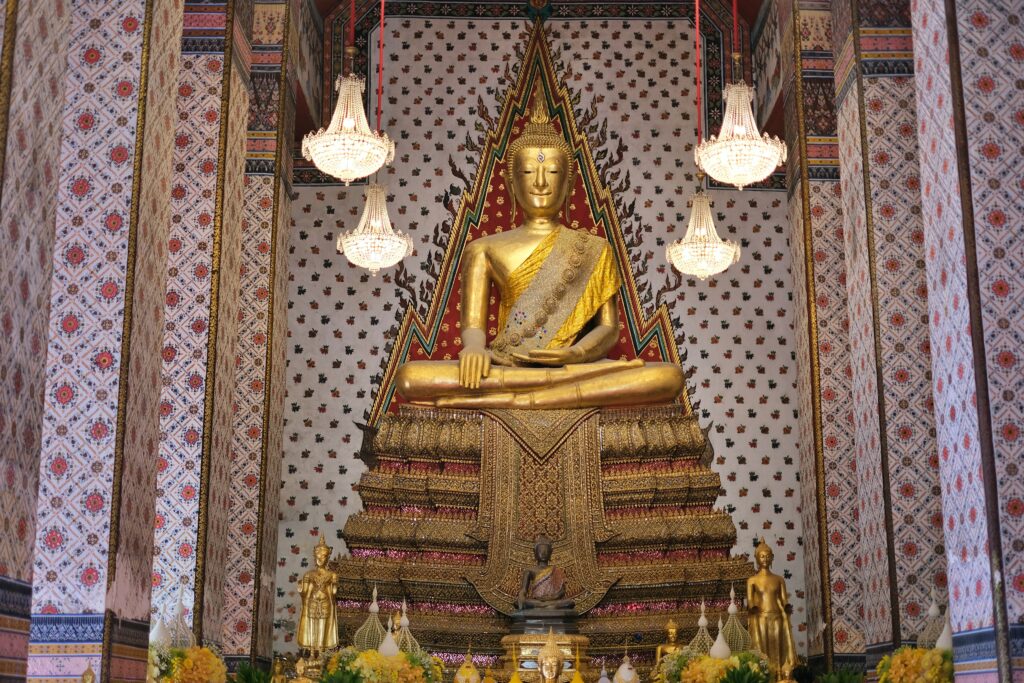
Unlike Wat Pho, the Buddha here is neither giant nor reclining. It’s simply a temple.
HOW TO GET HERE
The best way to visit both temples is by boat on the Chao Phraya River. You can arrive by express boat (Chao Phraya Express Boat) and get off at Tha Tien Station.
You can take a ferry across the river from Wat Pho to Wat Arun for just 3 baht. Boats run every few minutes and the journey takes less than a minute.
If you are coming from central Bangkok (e.g. Siam area), take the BTS Skytrain and transfer to the boat at Saphan Taksin Station (Sathorn Pier).

TEMPLE ETIQUETTE AND MY WISE ADVICE
Wat Arun is a bit stricter than its reclining brother. Clothing again has to be decent, sometimes they lend sarongs. The entrance fee is 100 baht, and you get water here too. I’m slowly starting to suspect that water is almost as sacred in Thai temples as Buddha.
Don’t underestimate the stairs. They’re steep, and going down is harder than going up. It’s not for the weak-kneed or the giddy.
Take photos, but respectfully. And feel free to sit in the shade for a while and just observe. Thai temples aren’t just for snapping on Instagram. They’re places where even the biggest skeptic starts to wonder if there’s something more between heaven and gold.
DRESS CODE
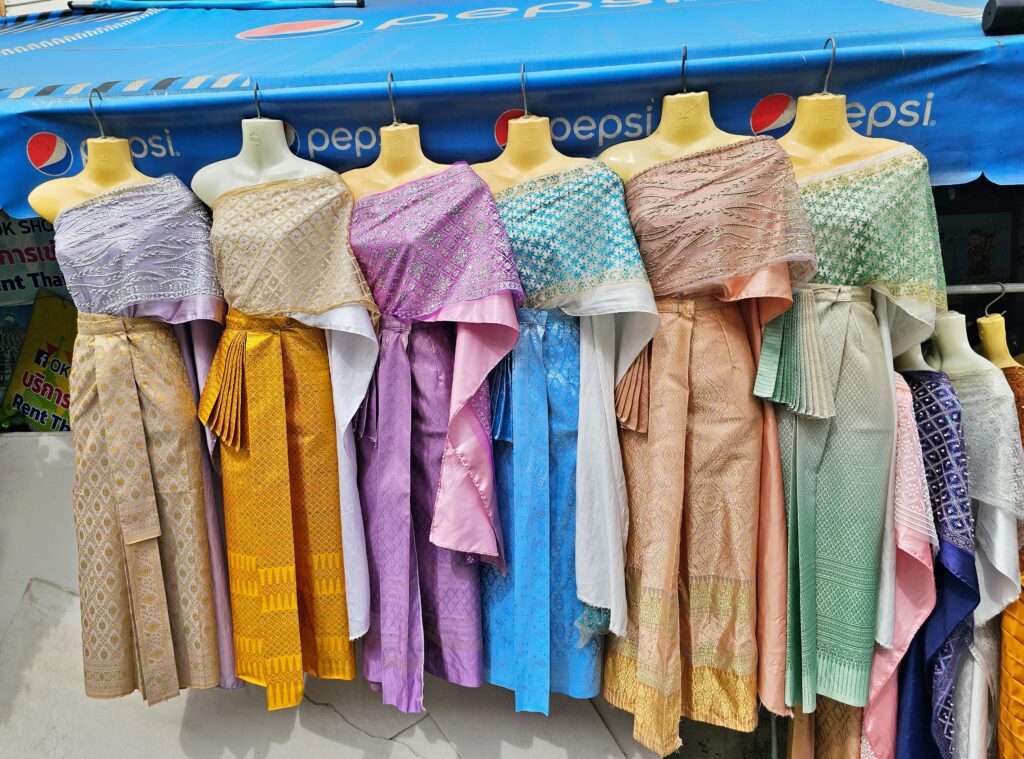
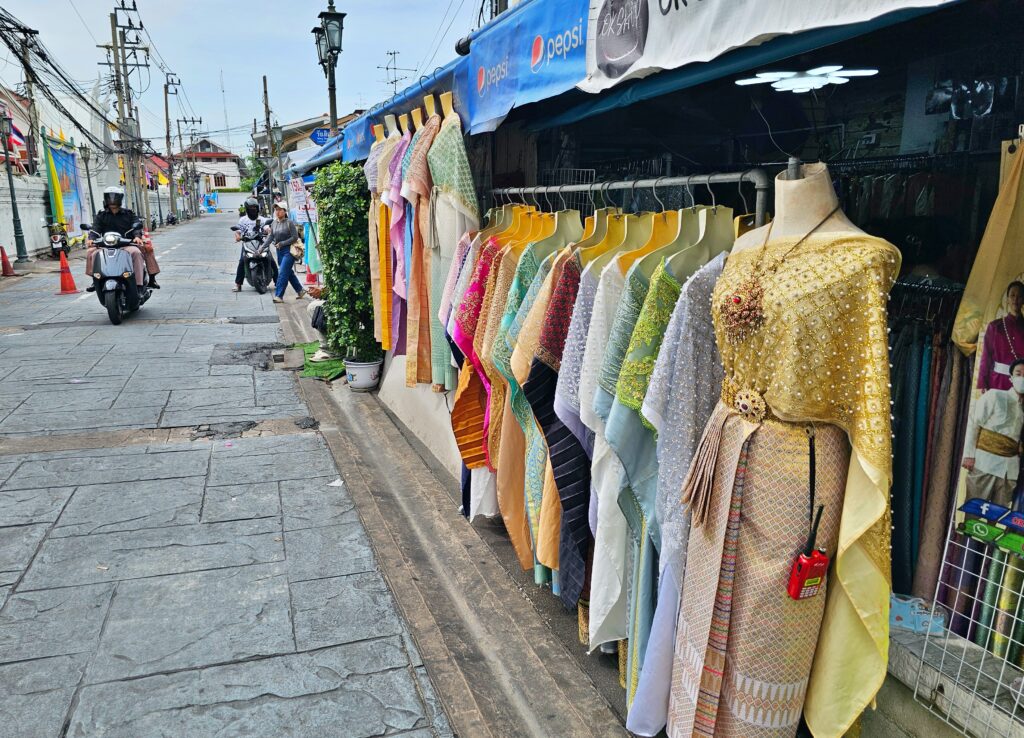
Again, the rule of adequate clothing in the temple applies here. Covered shoulders and knees, otherwise you will not be allowed inside. The entrance fee is about 200 baht and the price includes a bottle of water. Thais know that this giant Buddha will squeeze you out before you even get to him. It is simply cruelly hot there.
WAT PHO VS. WAT ARUN
WHO WINS?
It’s like asking whether you prefer the sun or the moon. Wat Pho is vibrant, majestic, and friendly. Wat Arun is calm, elegant, and mysterious. Each has its own charm. If you only have one day, you can do both. Well, they think you should.
But what do I find most important? In both, you can quiet down, slow down, and for a moment transform yourself from tourist to pilgrim. And maybe, like me, you’ll take away something more from these temples than just photos. Maybe peace, maybe a smile, maybe a desire to get a massage. And maybe a desire to stay in Bangkok for a day longer – because once the city teaches you to slow down, you’ll never look at it the same way again.
AND IF YOU HAVE LITTLE TIME?
Head to Wat Pho for a leisurely stroll and see the Reclining Buddha. Or take a short boat ride in the morning or evening to see the view from Wat Arun without spending the whole day just in temples.


I would also like to invite you to join me on Instagram and Facebook.

If you like Thailand or are going there, don’t miss my other articles from Thailand.
ARTICLES FROM THAILAND


ASIAN COUNTRY


