
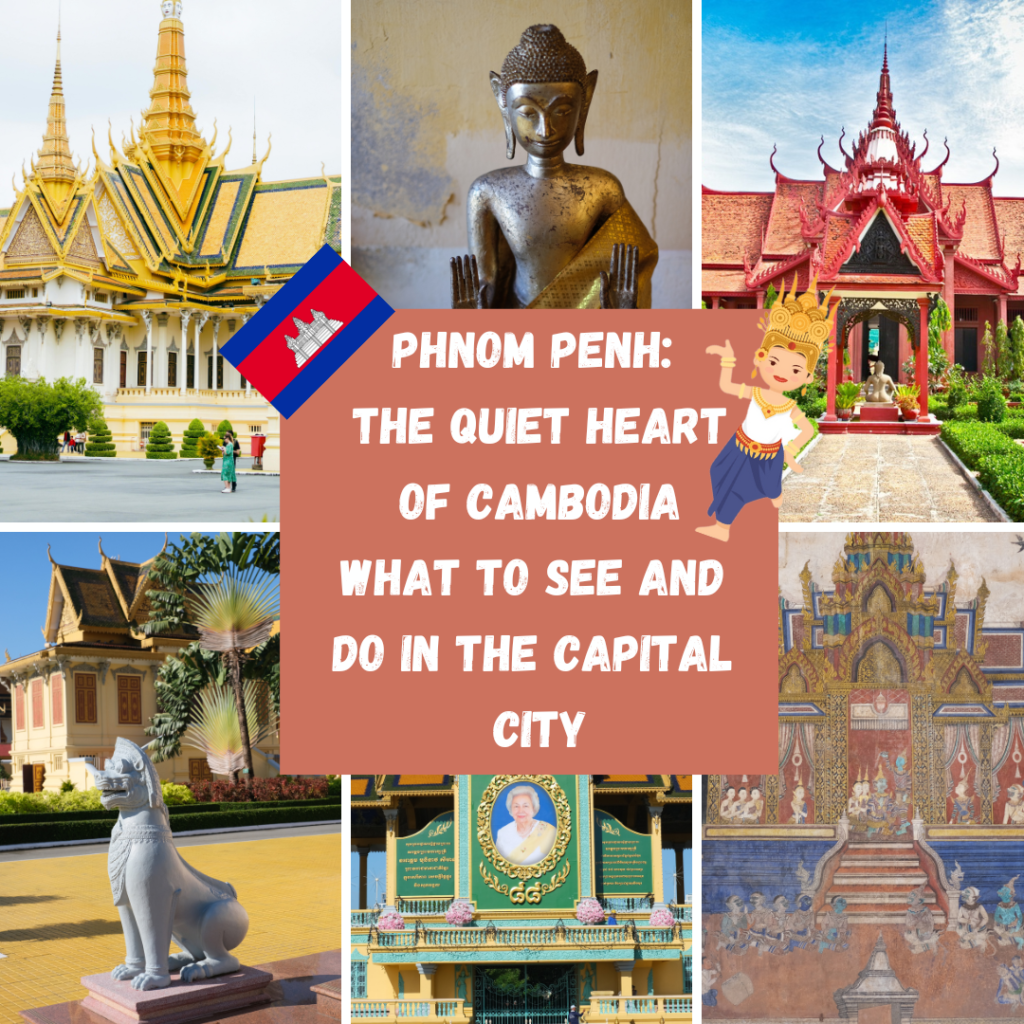
When we hear the word “capital city,” most of us imagine hustle and bustle, chaos, traffic jams, and the feeling that we are just another drop in the river of humanity. But Phnom Penh works a little differently. Yes, the traffic here is wild. Motorcycles weave between cars like fish in the Mekong River, and honking is the local national sport. Yet the city has a strange calmness about it. Not the European kind, which is organized and refined. Rather, it is a calm that comes from accepting that things are the way they are. And life goes on. Phnom Penh is not just on the map of Cambodia. It lies at the confluence of three rivers: the Mekong, Tonlé Sap, and Bassac. And perhaps it is the water that gives the city its rhythm.
FIRST IMPRESSION: CHAOS THAT MAKES SENSE
Upon arrival, the city will probably take you by surprise. Just like it did me. Crossing the street is an experience for the brave. The rule is simple: “Walk slowly and straight! Don’t stop, don’t flinch, and don’t show fear.” You really don’t need to be afraid, as drivers will elegantly drive around you. On your first day, Phnom Penh will teach you an important travel lesson: TRUST.
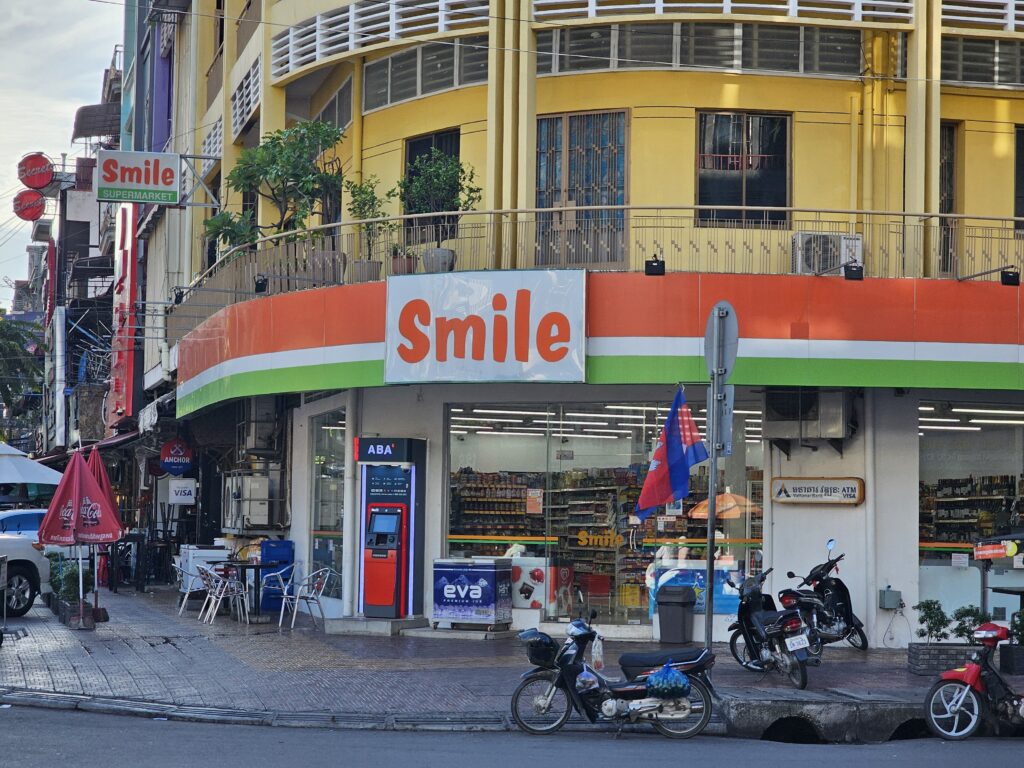
The streets here are full of life. On every corner, someone is selling food, fruit, coconut water, or iced coffee with condensed milk. The smell of grilled meat mixes with the scent of tropical fruit and sometimes with less romantic city smells. It’s authentic, and that’s what makes it beautiful.
THE CAMBODIAN ROYAL FAMILY: TRADITION AND THE PRESENT DAY
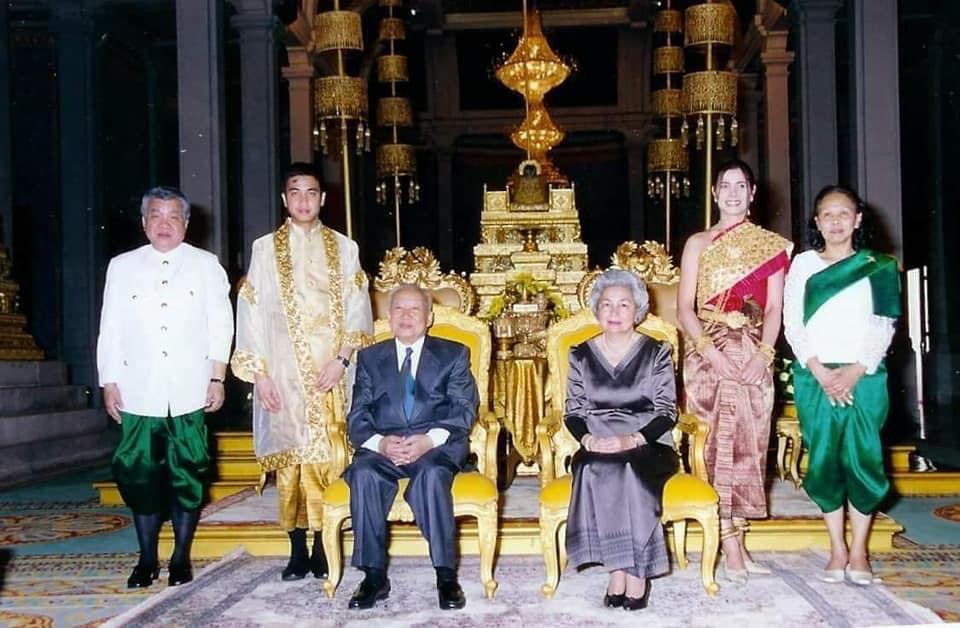
I believe that you will enjoy your visit to the palace much more if you first learn a few interesting facts about the local royal family. The story of its members is very interesting. The Cambodian monarchy is one of the oldest in Asia, but its modern history has been very turbulent. Cambodia is a constitutional monarchy. Although the king enjoys the position of head of state for life, his role is purely representative under the constitution and he has no real political power. He has primarily a symbolic and ceremonial role as the unifier of the nation. Unlike most monarchies, the Cambodian throne is not automatically hereditary. The new king is chosen by a nine-member council from among the male descendants of royal blood.
NORODOM SIHANOUK: KING, FILMMAKER, AND “FATHER OF THE NATION”
When wandering the streets of Phnom Penh or among the temples of Angkor, you will encounter his face almost everywhere. Portraits of this smiling man with kind eyes adorn banknotes, government buildings, and the modest dwellings of locals. Norodom Sihanouk was not just an ordinary king. He was the heart and soul of modern Cambodia, and his life resembles the script of a Hollywood blockbuster.
LIFE LIKE IN A NOVEL
Sihanouk ascended to the throne in 1941 as an 18-year-old youth. The French colonizers thought he would be easy to control, but he proved them wrong. In 1953, he led the country to independence. During his incredible career, he was king, prime minister, prince, and leader in exile.
He survived the reign of terror of the Khmer Rouge, several coups, and years in exile in Beijing and Pyongyang. But what is most interesting to travelers is that he was a passionate lover of the arts. He composed music, wrote poetry, and even directed dozens of films, often playing the lead role himself. If you want to understand the respect Cambodians have for their “King-Father,” visit places such as the Norodom Sihanouk Memorial. This monumental bronze statue under a golden stupa stands a short distance from the Independence Monument. It is a place where locals light incense sticks and pay homage to the king.
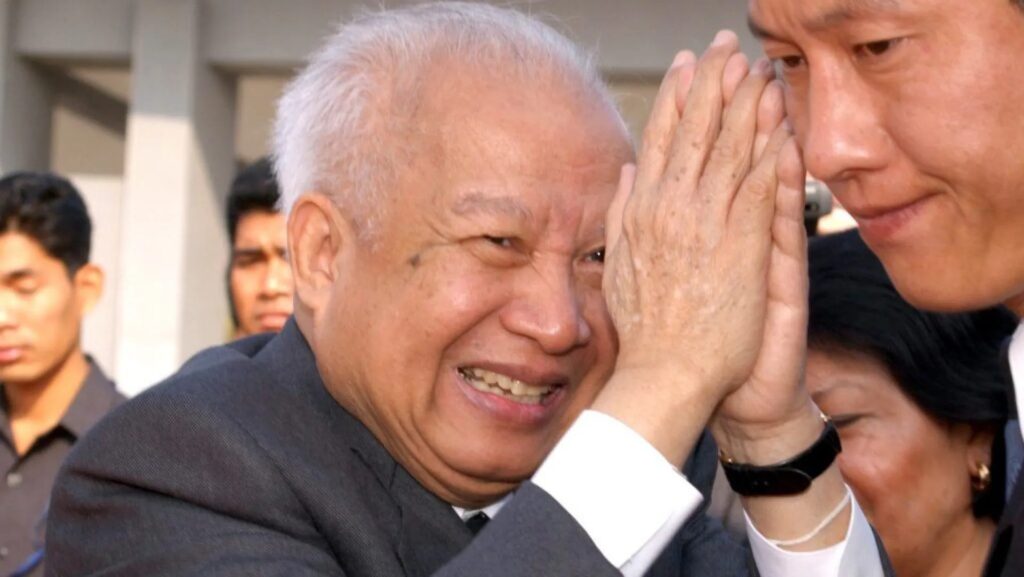
And why did Cambodians love him? Despite political controversies, he was a symbol of stability in turbulent times for Cambodians. They called him “Samdech Euv” (daddy) and believed that as long as Sihanouk was alive, the country had hope for peace. When he died in Beijing in 2012, the whole country was plunged into mourning.
THE STORY OF THE CAMBODIAN ROYAL FAMILY UNDER THE RULE OF THE KHMER ROUGE
The story of the Cambodian royal family during the reign of the Khmer Rouge is one of the most incredible and tragic chapters in modern history. It is a story of naivety, cruel betrayal, and the struggle for survival in a “golden cage.”
AN UNEXPECTED ALLIANCE WITH THE ENEMY
It all began in 1970, when King Norodom Sihanouk (father of the current king) was overthrown by a right-wing coup while he was abroad. Sihanouk, eager to regain power, made a fateful mistake. He allied himself with his former enemies, the communist Khmer Rouge.
From exile in China, he called on Cambodians to go and fight the new government in the jungle. For many ordinary people, the king was a demigod, and so they joined the Khmer Rouge precisely because of him. They had no idea that Pol Pot and his leadership were cynically using the king as the “face” of their propaganda.
RETURN TO “YEAR ZERO”
When the Khmer Rouge captured Phnom Penh in April 1975, Sihanouk believed he would return as a triumphant ruler. The reality was grim. Upon his return to the country, he found that the capital had been emptied of its people. Some had been executed, while others had been sent to the fields. The city was completely deserted. He suddenly realized that he himself had no power. In 1976, he was forced to resign. The Khmer Rouge did not kill him because he was too valuable to them internationally as a hostage, but they imprisoned him and his family in the Royal Palace.
GOLDEN PRISON AND FEAR FOR ONE’S LIFE
While millions of people were dying of starvation and executions outside, another tragedy was unfolding inside the palace. King Sihanouk, his wife Monique, and their two sons were isolated from the world. The king and princes had to grow their own vegetables and fruit to eat, as rations from the Khmer Rouge were minimal. Guards surrounded the palace with orders to shoot. The family did not know what was happening to the rest of their relatives. Every night they fell asleep knowing it could be their last. The current King Sihamoni was caught up in this hell immediately after returning from his studies in Prague. The Khmer Rouge lured him back to his homeland under false pretenses so they could keep him in check.
THE MURDER OF ROYAL BLOOD
Other members of the royal family who did not have such illustrious names as Sihanouk were not so “lucky.” The Khmer Rouge systematically eliminated anyone associated with the old regime or the aristocracy. Five of Sihanouk’s children and fourteen of his grandchildren disappeared in labor camps or on execution grounds. Many other princes and princesses were beaten to death with hoes or died of exhaustion while performing forced labor in rice fields.
WHAT HAPPENED TO THE OTHER CHILDREN?
This is where the darkest part begins. Sihanouk had a total of 14 children with different women. And that was before Monique became his only partner. The Khmer Rouge had no mercy on royal blood. After 1975, many of Sihanouk’s children were sent to the countryside to “work cooperatives.” They had to deny their origins, otherwise they would be immediately executed. Most of them did not survive. For example, Prince Norodom Naradipo, who was considered Sihanouk’s successor at the time, disappeared in 1975 and his body was never found.
The king learned about the deaths of his children gradually after the fall of the regime in 1979.
LAST-MINUTE ESCAPE
This imprisonment ended in January 1979, when the Vietnamese army invaded Cambodia. In a panic, the Khmer Rouge evacuated King Sihanouk and his immediate family on the last plane to China just hours before Phnom Penh fell.
This experience had a profound effect on the character of the current king, Sihamoni. He is an extremely modest, quiet, and sensitive man who still avoids political conflicts to this day. This is probably due to the trauma he experienced in the palace as a young man.
When you walk through the Royal Palace in Phnom Penh today, remember that those beautiful gardens are not just decoration. They are places where the current king once dug flower beds under the watchful eye of armed Khmer guards so that his family could survive the famine.
RETURN TO THE THRONE
After years in exile, Sihanouk returned to Cambodia in 1993 and was crowned king once again. The country was devastated, riddled with minefields and trauma. However, he was the only figure capable of bringing the divided political groups together around one table. In 2004, when he was already old and ill, he took an unexpected step. He abdicated, paving the way for his son. Sihanouk died in Beijing in 2012 at the age of 89, and his funeral in Phnom Penh was one of the biggest events in Asian history. Millions of people took to the streets and wept.
There is a small exhibition dedicated to Sihanouk on the premises. You can see his old Mercedes cars, photos from film shoots, and gifts from world leaders. It is a stark contrast to the grim and terrifying history of the Khmer Rouge.
THE KING WHO SPEAKS CZECH 🇨🇿
The current Cambodian king, Norodom Sihamoni, is the only monarch in the world who speaks fluent Czech. He spent 13 years of his youth in Prague. He attended elementary school and high school here and studied ballet at the Academy of Performing Arts (AMU). To this day, he remembers Prague as his second home and speaks of it with great affection.
He arrived in what was then Czechoslovakia in 1962 as a nine-year-old boy at the request of his father, Sihanouk, who wanted his son to receive a quality arts education in Europe. He began his studies in 1963 at the then Majakovský Elementary School in Prague-Dejvice (today Bílá Elementary School), where a short documentary film, Jiný malý princ (Another Little Prince, 1967), was also shot. Later, he attended elementary school on Ostrovní Street. He graduated from the conservatory. Locals knew him as a modest and talented student, whom his classmates simply called “Boni.”
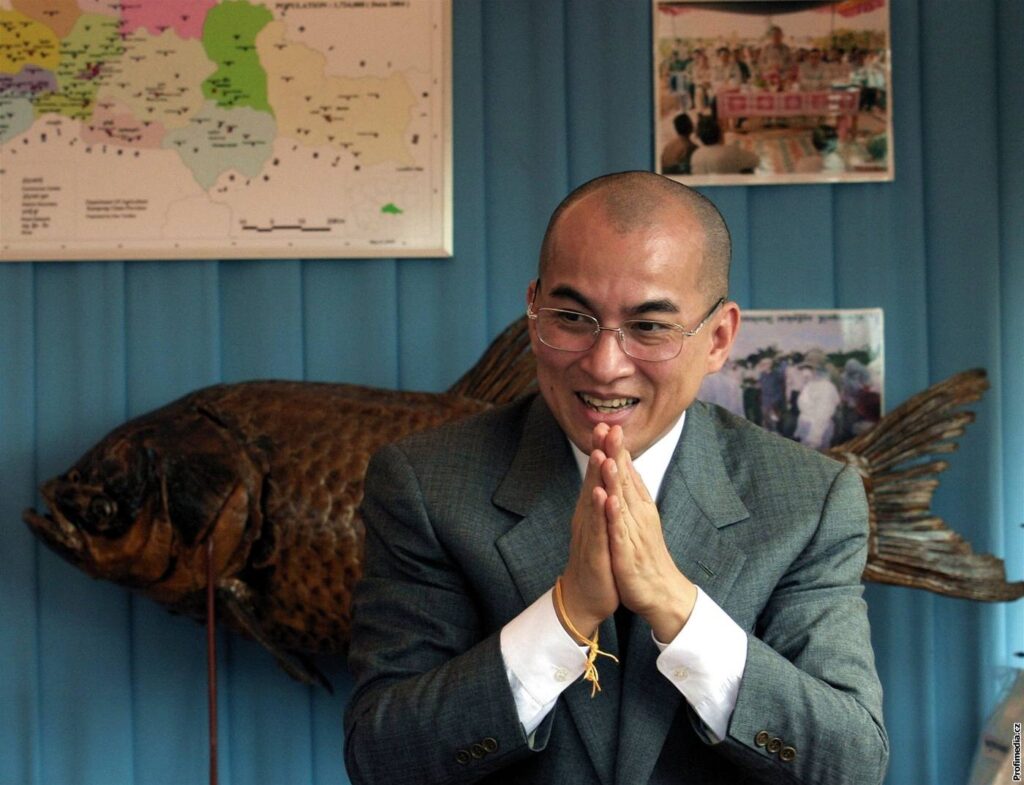
His greatest passion was dance. As a child, he performed in The Nutcracker at the National Theater. In 1975, he successfully graduated from ballet at the Academy of Performing Arts in Prague. Even years later, he remembers his studies as the happiest period of his life.
During the Khmer Rouge regime, the monarchy was abolished and Prince Sihamoni even ended up under house arrest. The monarchy was not restored until 1993. He was elected king on October 14, 2004, after the abdication of his father, Norodom Sihanouk. Even after his accession to the throne in 2004, he returned to Prague several times. In 2006, he received honorary citizenship of the capital city of Prague, and during his visits he enjoys meeting his former teachers and classmates.
On February 6, 2026, the Royal Palace announced that the king had fallen ill and was unable to perform his official duties. In accordance with the constitution, Senate President Hun Sen assumed the role of acting head of state. Before ascending to the throne, he served as ambassador to UNESCO in Paris. He has devoted his entire life to promoting culture, classical dance, and humanitarian projects.
QUEEN MOTHER MONINEATH
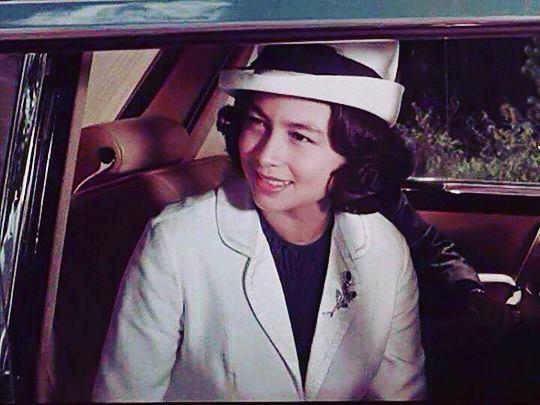
I think that if you are planning a trip to Cambodia, the figure of Queen Mother Norodom Monineath Sihanouk is key to understanding the modern history of this country. She is often nicknamed Queen Monique or “Queen Mother.”
FROM MISS QUEEN: A FATEFUL ENCOUNTER
Her story begins like something out of a movie. In 1951, she won a beauty contest in Phnom Penh, where she was presented with her prize by the then king, Norodom Sihanouk. He immediately fell in love with her and declared her to be the love of his life.
EUROPEAN ROOTS IN THE HEART OF ASIA
Although she is a symbol of Cambodian pride, she has very diverse origins. She was born in Saigon as Paule-Monique Izzi. Her father was a French banker of Italian-Corsican descent and her mother was Cambodian. This combination gave her a unique charm, thanks to which she was considered one of the most beautiful women in Asia in the 1960s.
THE MUSE OF THE KING OF FILMMAKERS
King Sihanouk was not only a monarch, but also a passionate film director and musician. He composed a number of love songs for his wife (e.g. “Monica” and “Rose of Phnom Penh”) and cast her in several of his own films.
SHE SURVIVED THE KILLER FIELD
During the Khmer Rouge regime in the 1970s, she was held under house arrest with the king in the royal palace in Phnom Penh. While many members of the royal family were executed, she and the king survived only thanks to the intervention of China and North Korea. It was she who kept the family mentally afloat. It is said that while the king fell into depression over what was happening to the country, Monique was the practical one. She organized modest food rations and maintained a semblance of normality in the palace.
A LIVING LEGEND AND SYMBOL OF RESILIENCE
Today, the Queen Mother is seen as the “mother of the nation.” She is a symbol of continuity in Cambodia, which has endured colonialism, war, and genocide. Cambodians deeply revere her, as you can see from her portraits hanging in shops, schools, and government offices throughout the country.

MY TIP:
If you see a blue flag flying, it means that the king or queen mother is currently present at the residence. Her birthday (June 18) is a national holiday in Cambodia, accompanied by spectacular fireworks displays on the Tonle Sap River.
ROYAL PALACE: THE GOLDEN HEART OF THE CITY
One of the most beautiful places in the city is the Royal Palace. When you walk through the gate, the hustle and bustle of the city stays outside. Suddenly, you are in another world, full of golden roofs, manicured gardens, and silence. It is the official residence of the Cambodian king and a breathtaking architectural masterpiece that reflects Cambodia’s rich history and culture. This extensive complex of buildings, pavilions, and manicured gardens has served the monarchy continuously since its inception, with the exception of the Khmer Rouge regime.
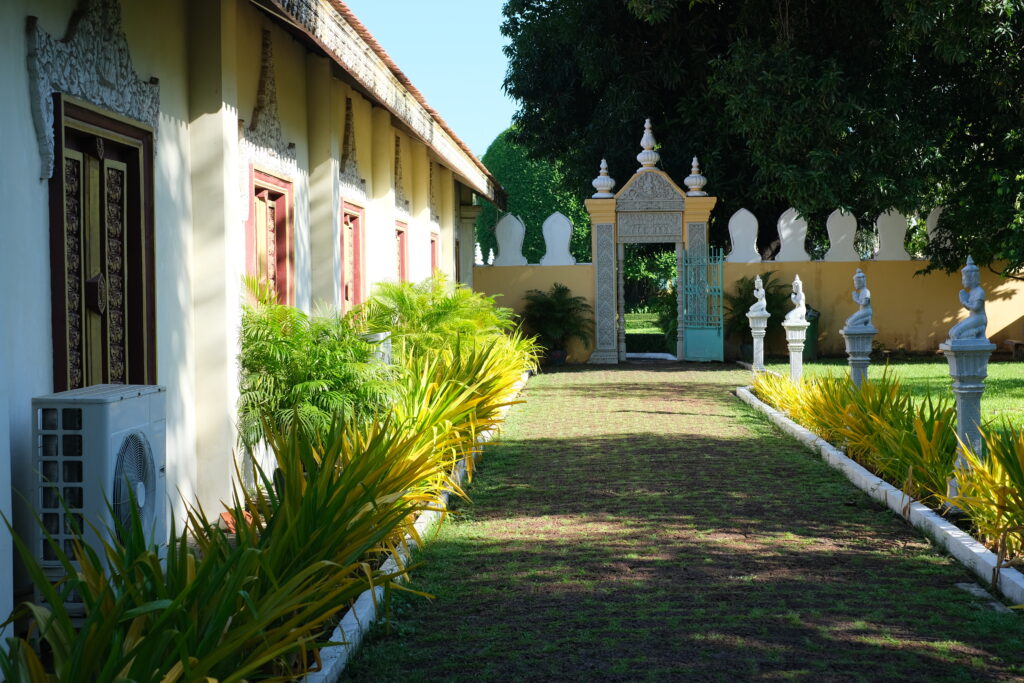
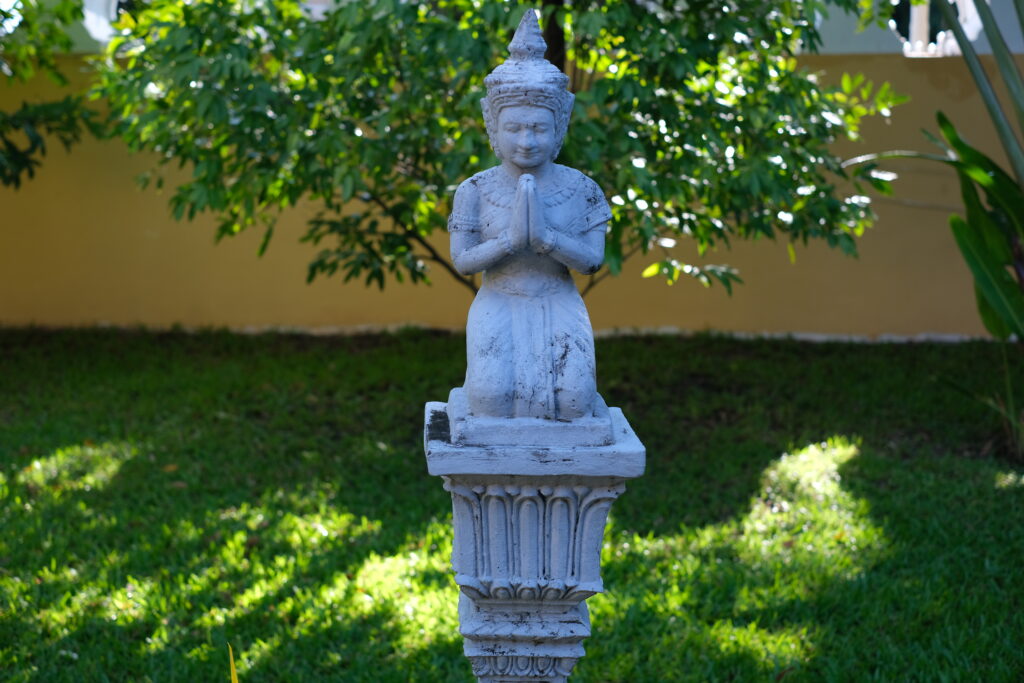
Construction of the palace began in 1866 during the reign of King Norodom I, who moved the capital here from Oudong. The location was strategically chosen at the confluence of the Tonle Sap and Mekong rivers. Although the palace was built with the support of the French protectorate and shows certain French colonial influences (e.g., Napoleon’s pavilion, a gift from Napoleon III), the design remained faithful to traditional Khmer architecture. It drew its inspiration from the temples of Angkor.
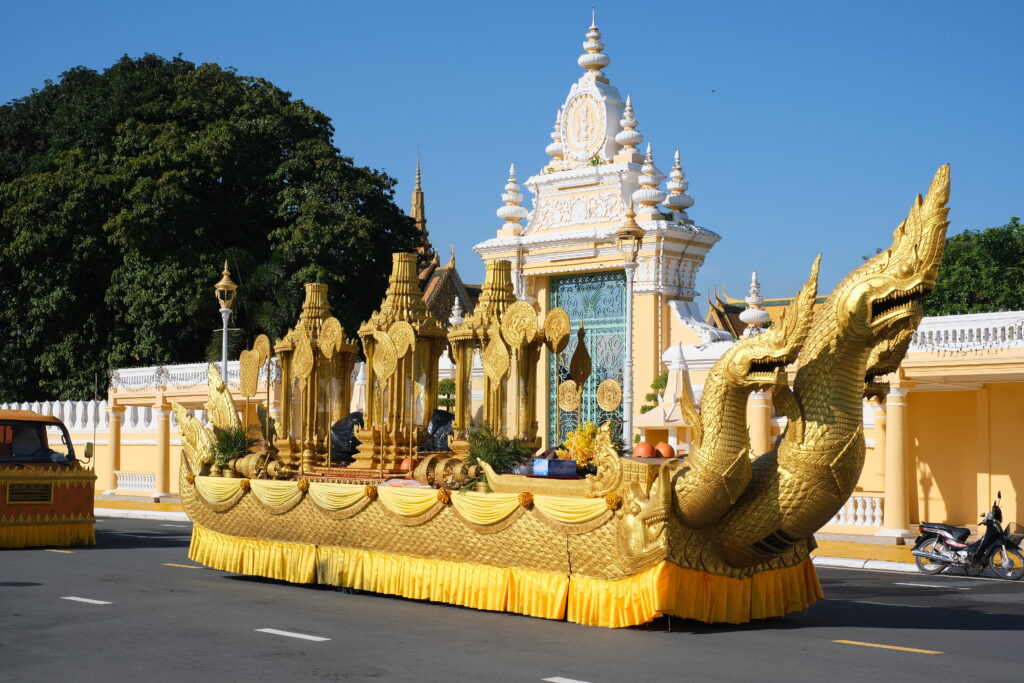
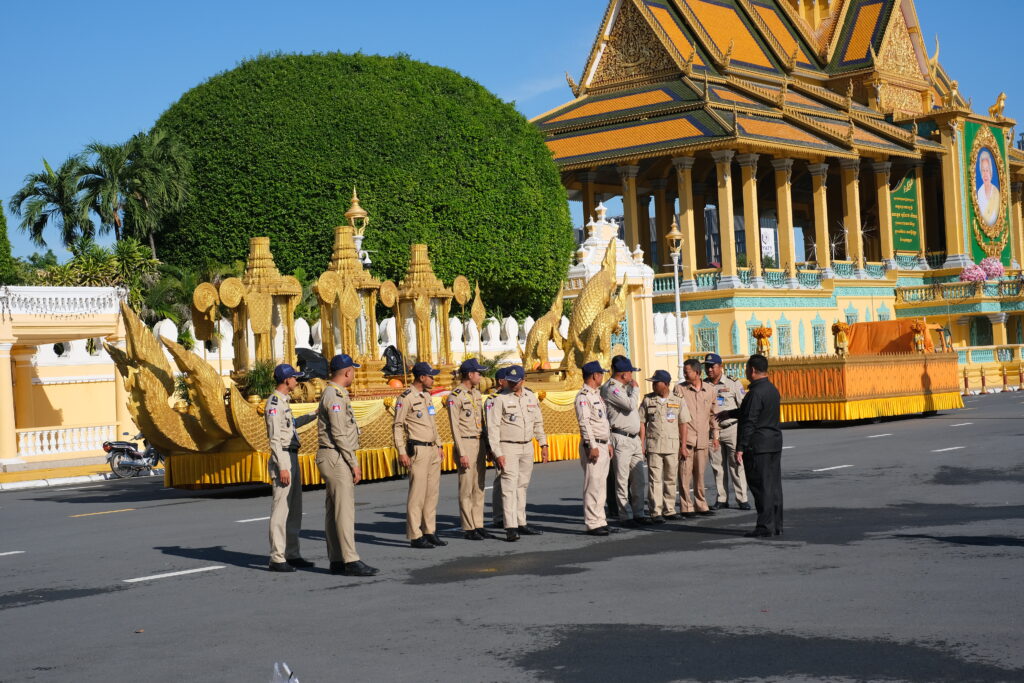
The complex, covering an area of over 17 hectares, is divided into four main parts, not all of which are open to the public, as part of it serves as the private residence of the current king, Norodom Sihamoni.
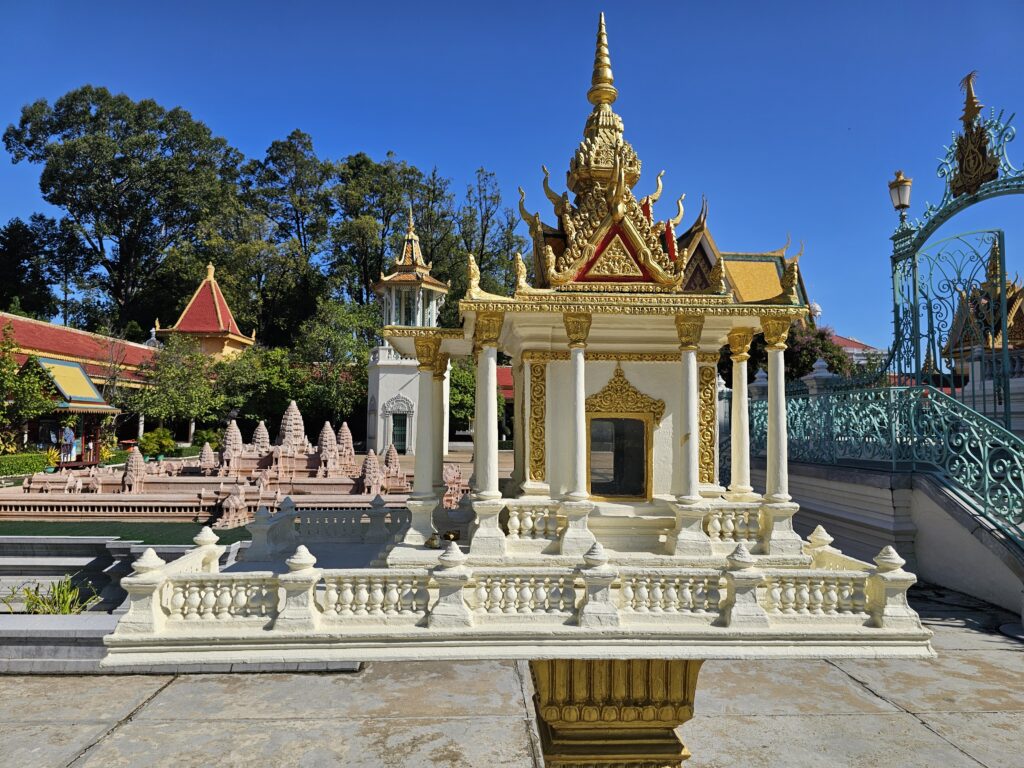
The most important buildings open to visitors include:
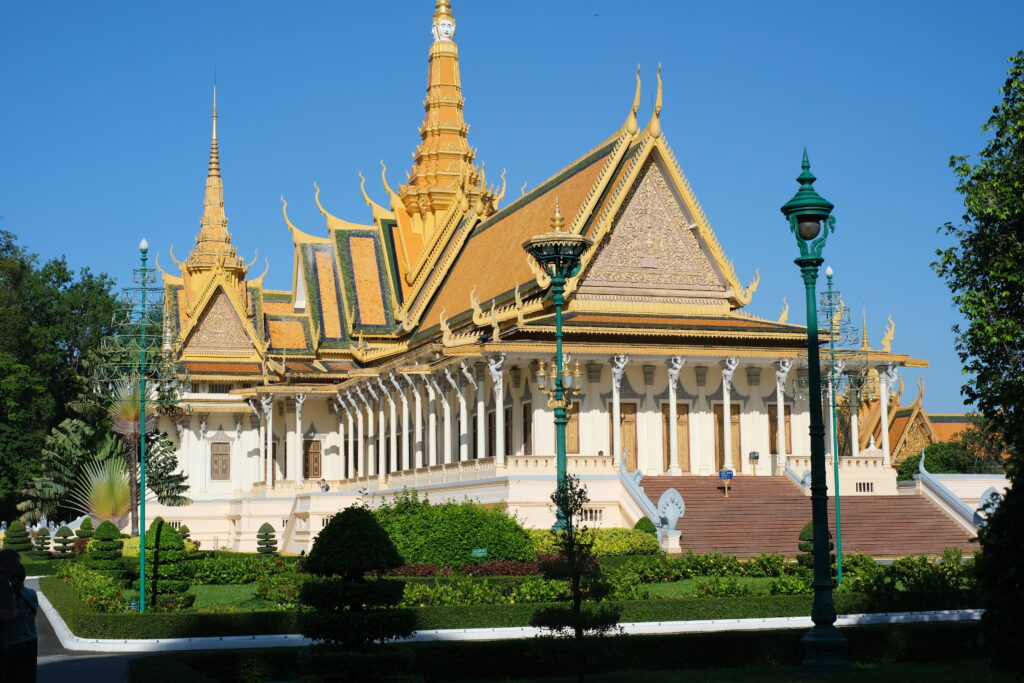
THRONE HALL (PREAH TINEANG TEVEA VINICHHAY)
An iconic building with a golden stepped roof, where coronations, royal ceremonies, and receptions for foreign ambassadors are held. Inside, you can see three royal thrones and golden busts of Cambodian monarchs.
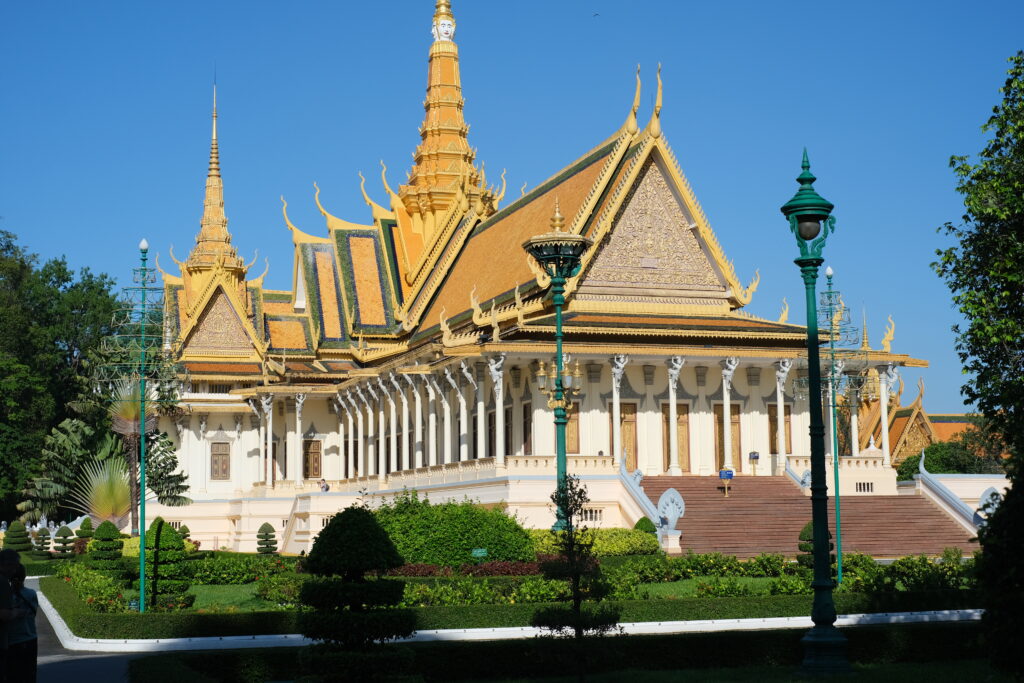
The Throne Hall (Preah Thineang Dheva Vinnichay), which was built in its current form in 1917. This magnificent building is used for the coronation of kings, receiving foreign ambassadors, and other important state ceremonies.
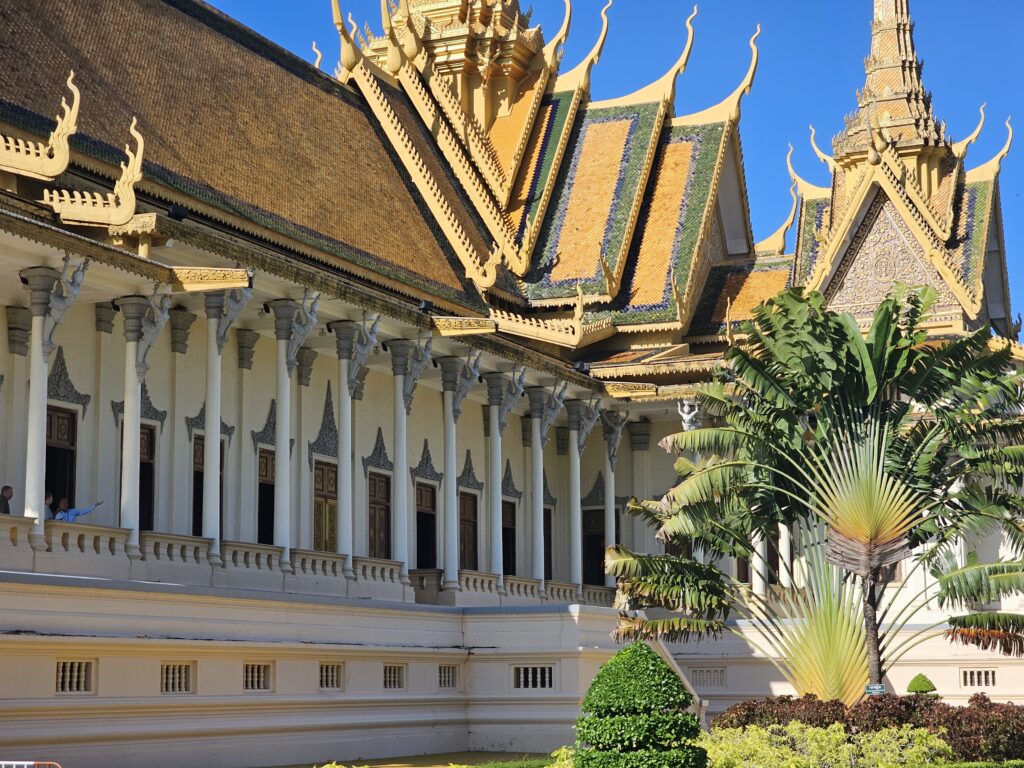
This building, with its 59-meter-high tower, is the symbol of the palace. To this day, it is used for coronations, royal weddings, and official audiences with foreign dignitaries. The yellow tiles on the roof represent Buddhism, while the green tiles symbolize royal power and prosperity.
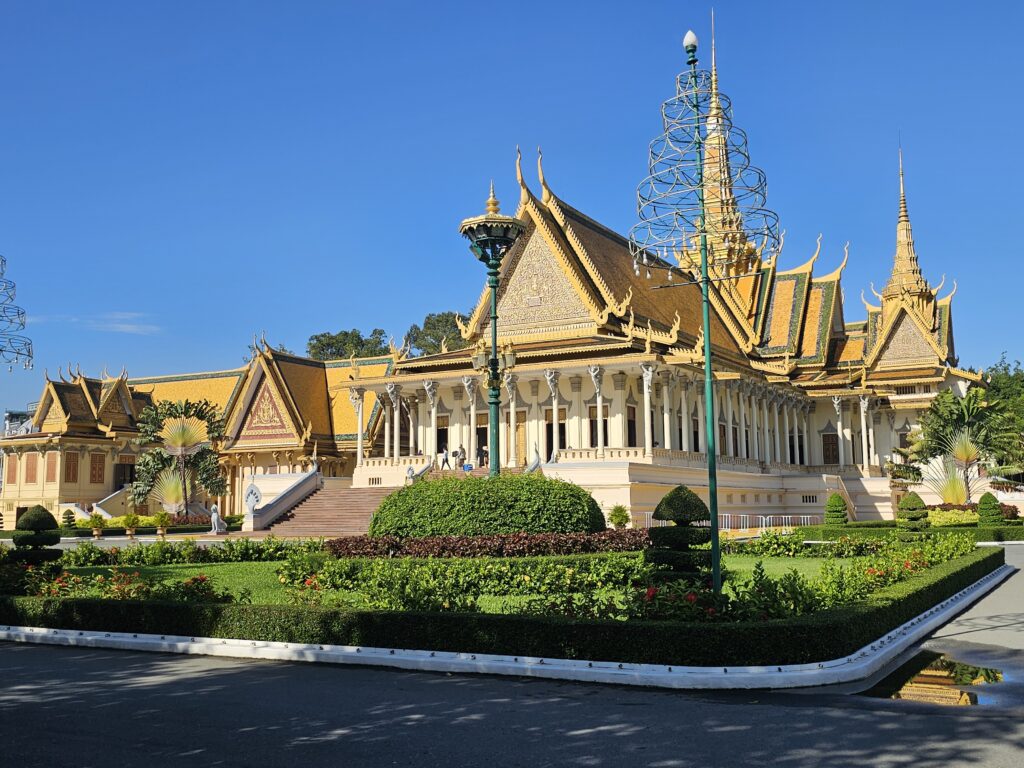
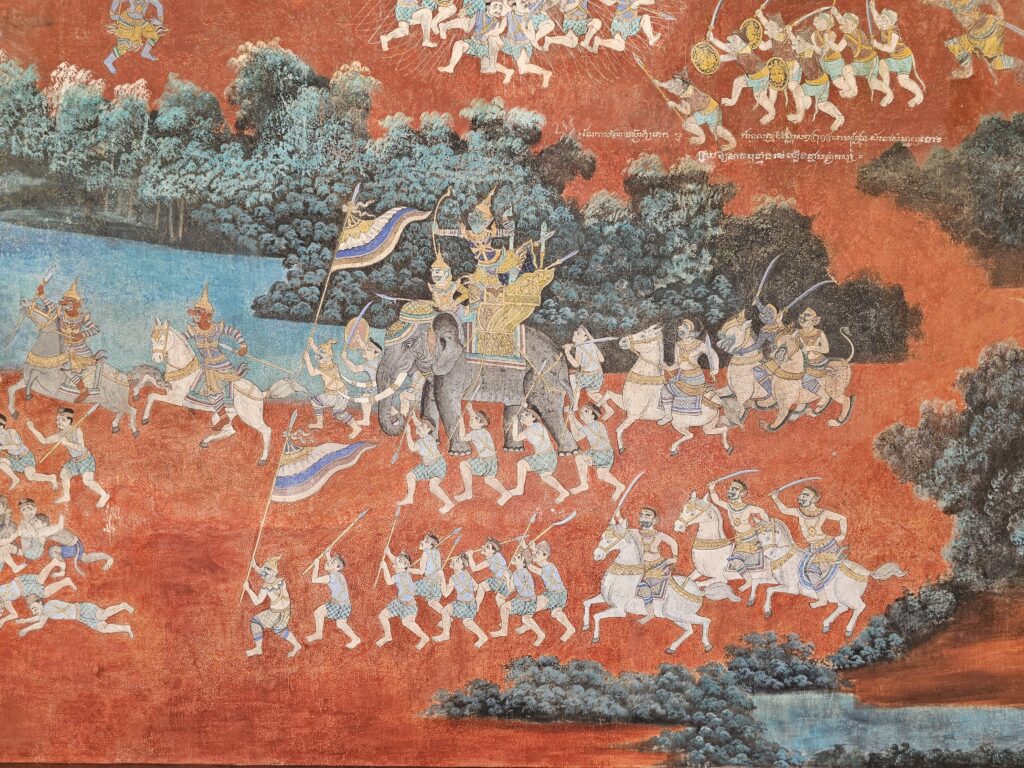
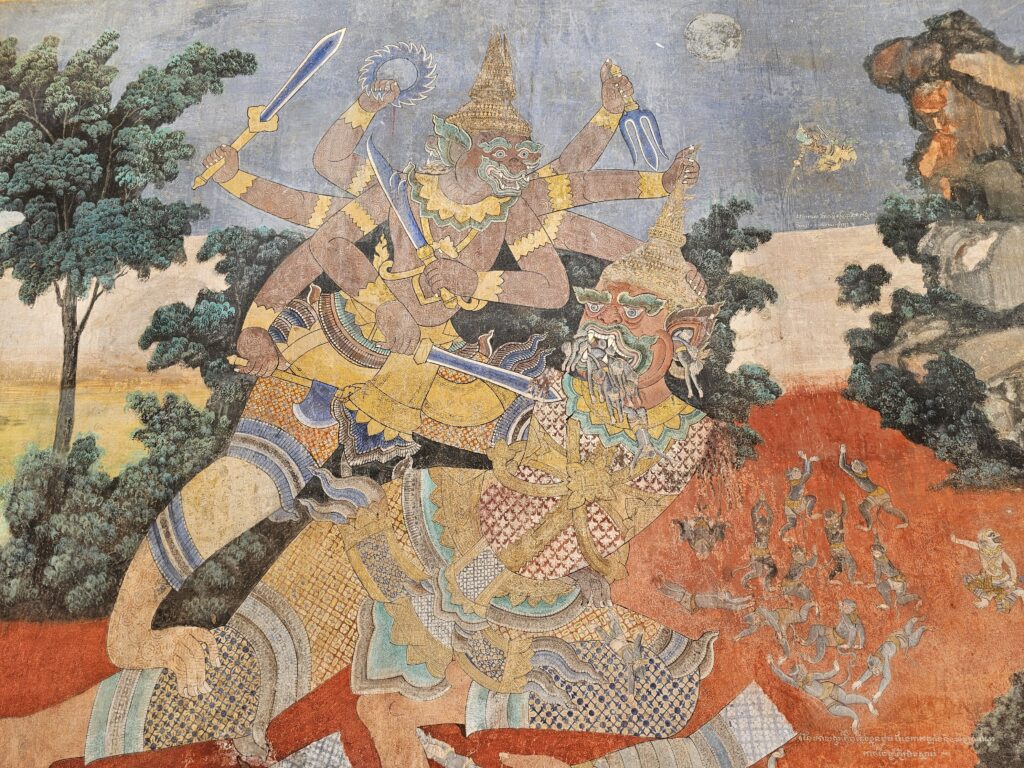
Inside, there are three main thrones. The largest, nine-step, gilded throne is used exclusively for coronations. The others are used for less formal audiences. The ceiling of the hall is decorated with a magnificent fresco depicting scenes from Reamker, the Cambodian version of the Indian epic Ramayana. The painting is unique in that it was created by a group of Cambodian artists in 1919.
SILVER PAGODA (WAT PREAH KEO MORAKOT)
The Temple of the Emerald Buddha, famous for its floor paved with more than 5,000 silver tiles weighing over a ton. It houses the most sacred Buddhist relics, including a 17th-century Buddha statue made of bakkarat crystal and a 90-kilogram gold Buddha statue decorated with diamonds. Photography inside the pagoda is prohibited.
One of the most amazing buildings adjacent to the main palace. It got its name from its floor covered with 5,000 silver tiles. It houses national treasures such as the Emerald Buddha made of crystal and a life-size golden Buddha decorated with thousands of diamonds. Each weighs over 1 kg.
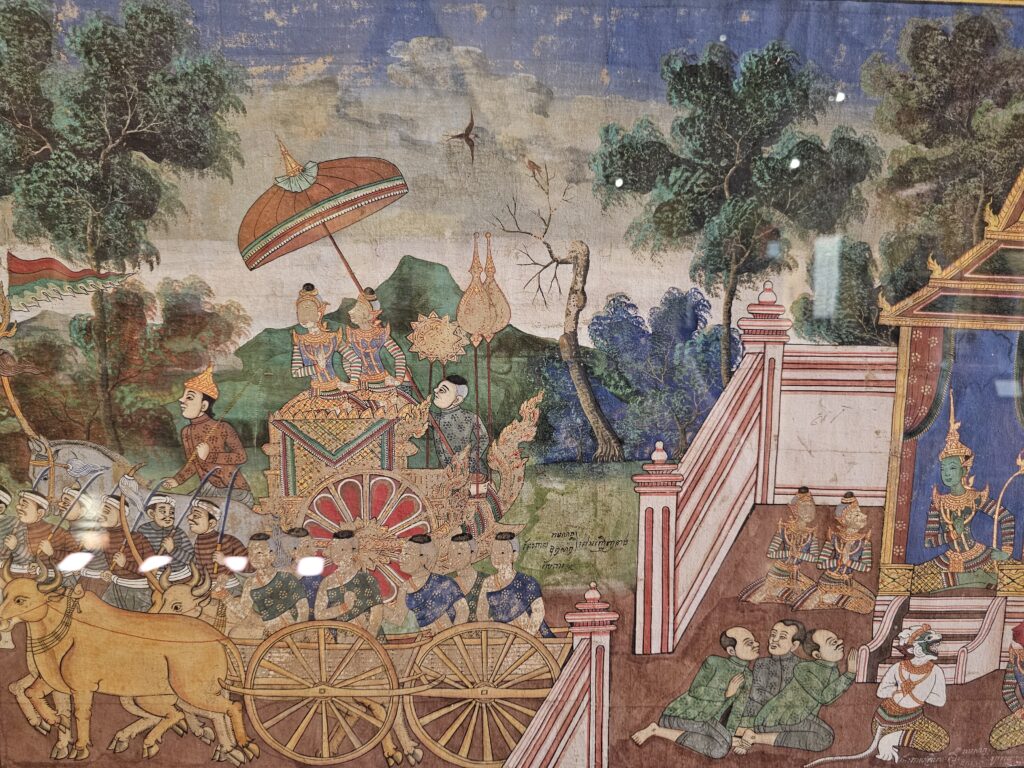
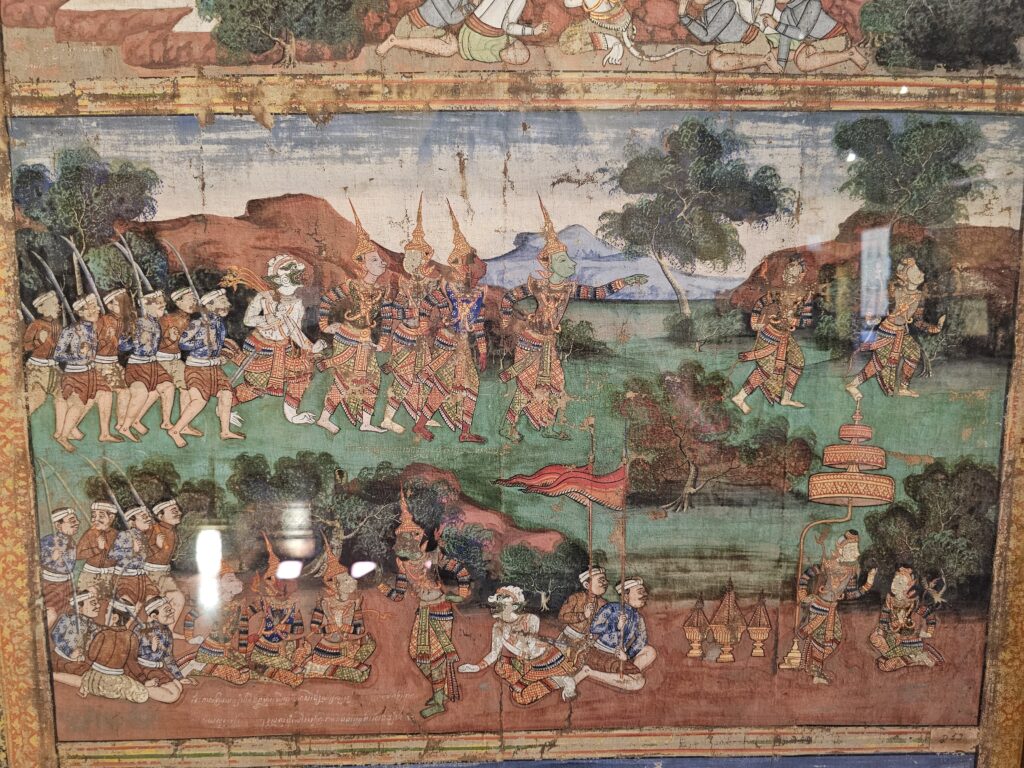
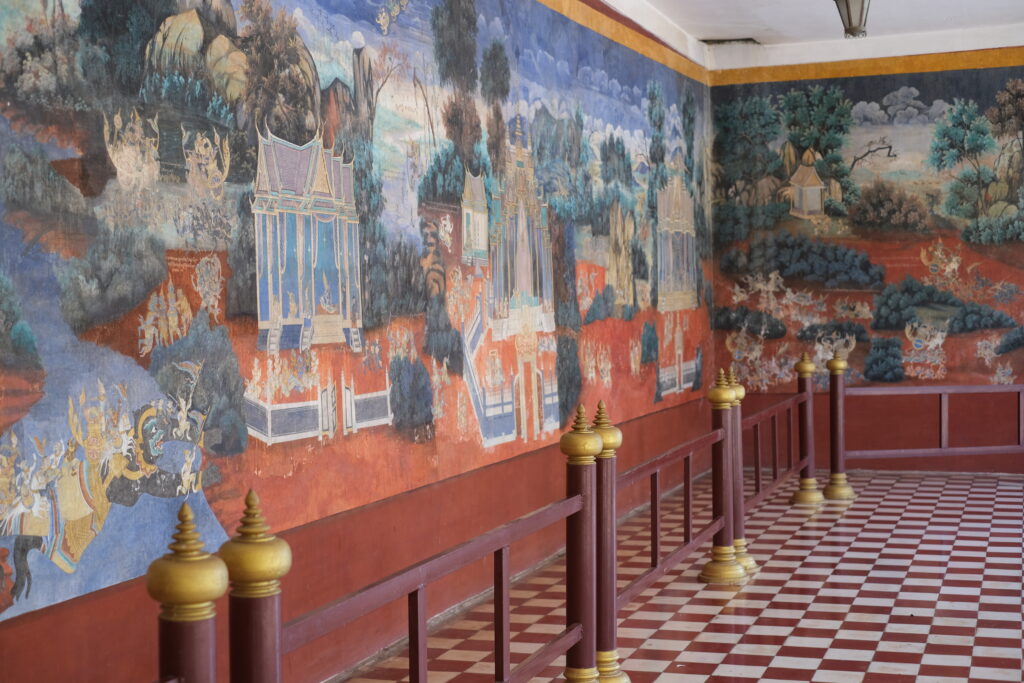
The main attraction is a life-size statue of Buddha, cast from 90 kg of pure gold. It is set with 9,584 diamonds, the largest of which, on his crown, weighs 25 carats. A small statue of Buddha made of rare Baccarat crystal (often called “emerald” for its greenish color) sits enthroned on a raised altar. A 600-meter-long gallery with frescoes from 1900 stretches around the temple, telling the story (the Khmer version of the Ramayana).
GALLERY AND GARDENS
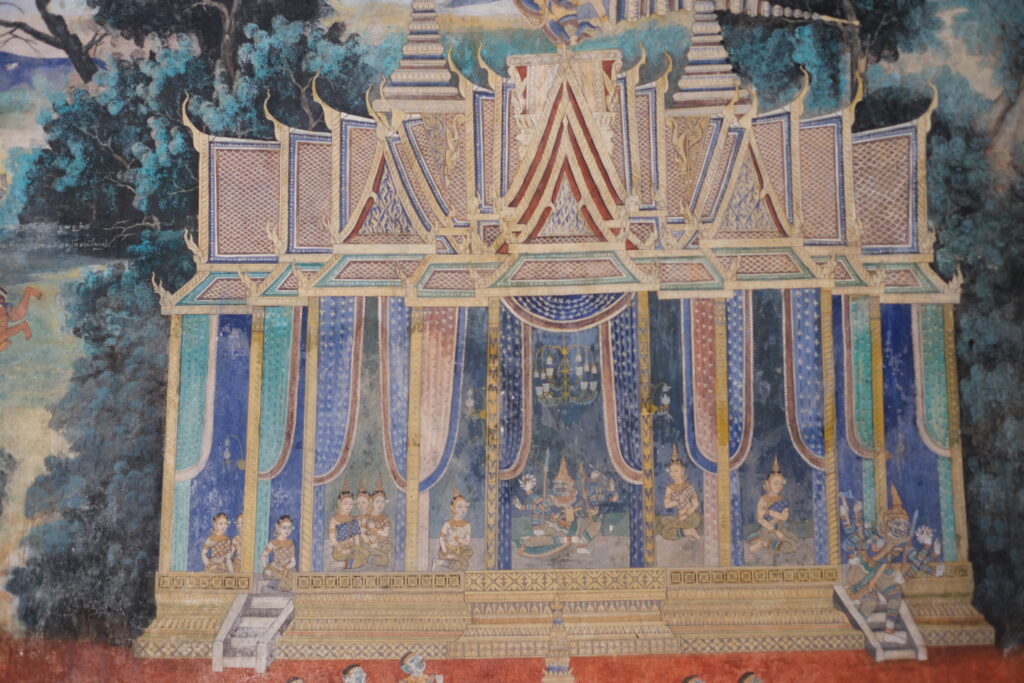
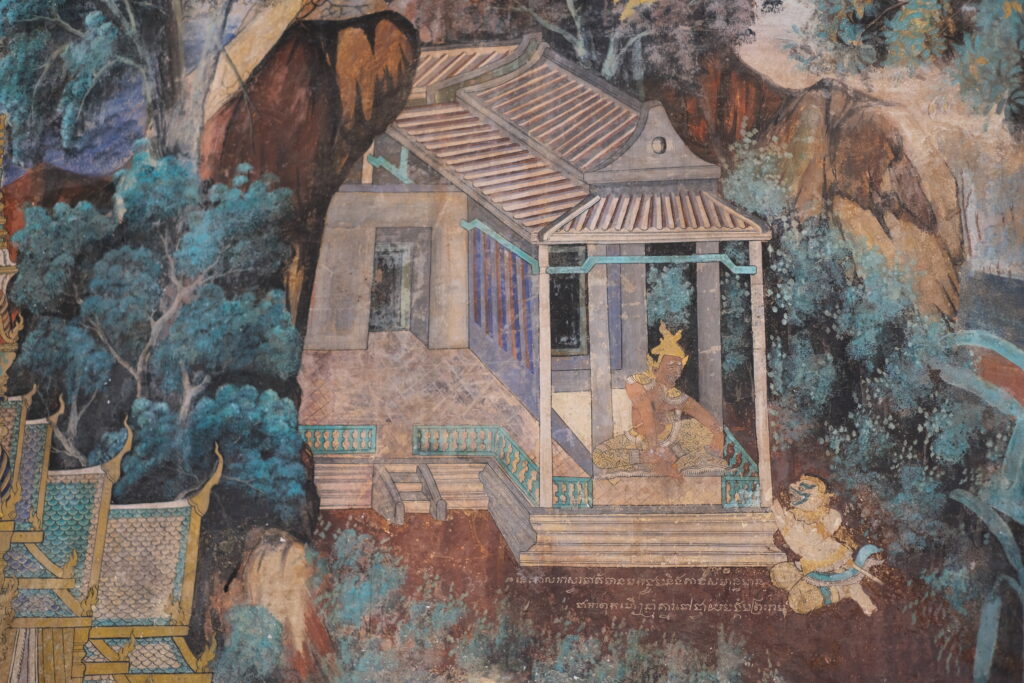
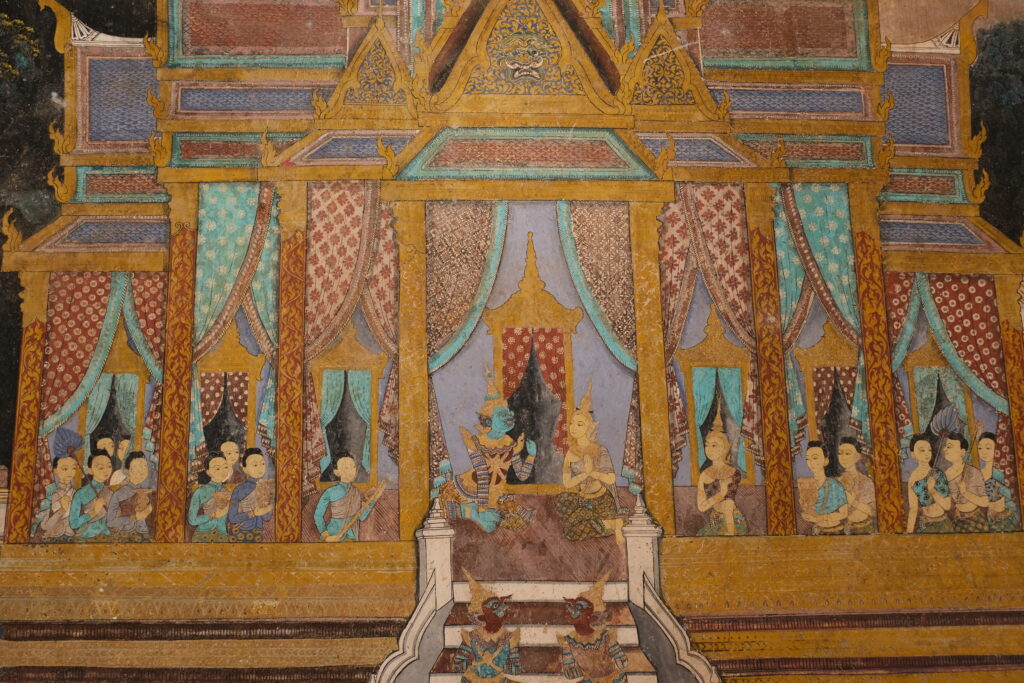
The entire complex is connected by landscaped gardens. The outer walls of the Silver Pagoda are lined with a covered gallery with frescoes depicting scenes from the Khmer version of the Ramayana epic (Reamker).
The paintings as a whole tell the story of Prince Rama, his wife Sita, and the monkey general Hanuman. The frescoes are prized for their colorfulness (red, blue, and gold predominate) and detailed depictions of nature, buildings, and figures in traditional clothing.
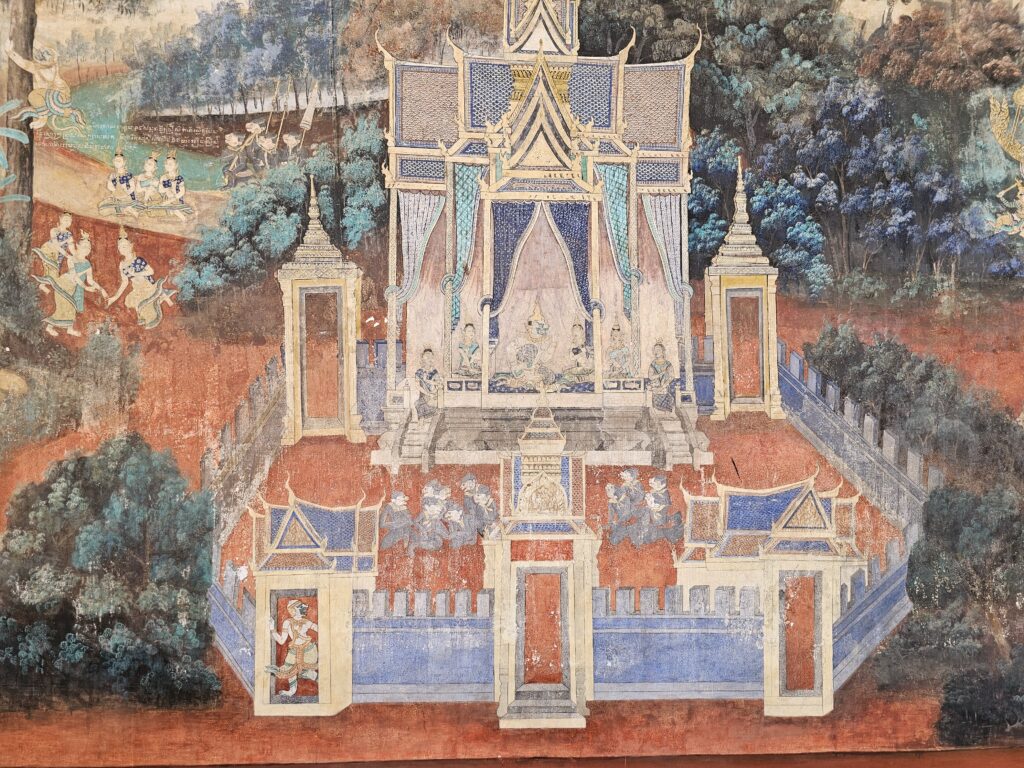
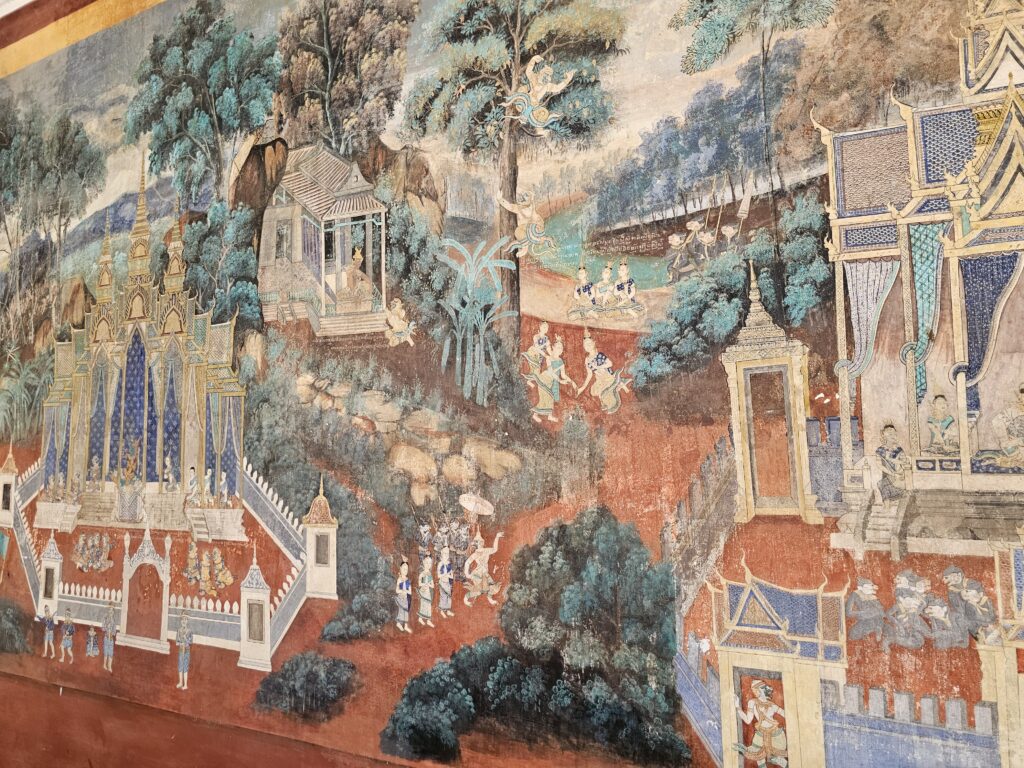
This unique gallery measures a total of 642 meters, and the murals cover an area approximately 3 meters high.
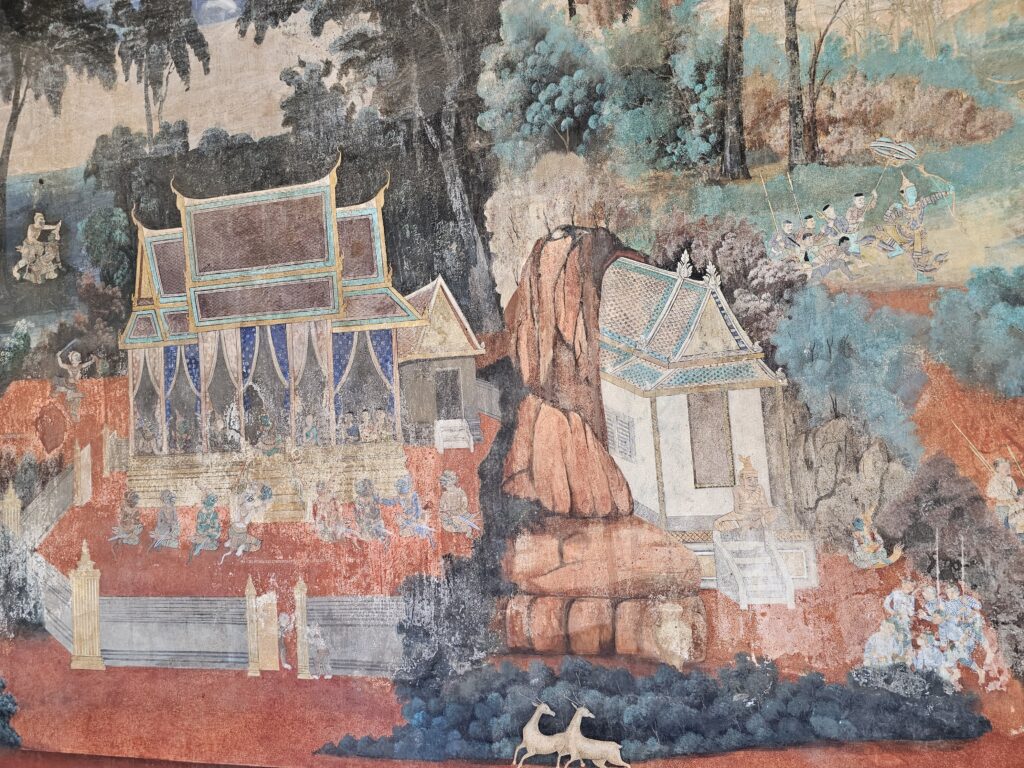
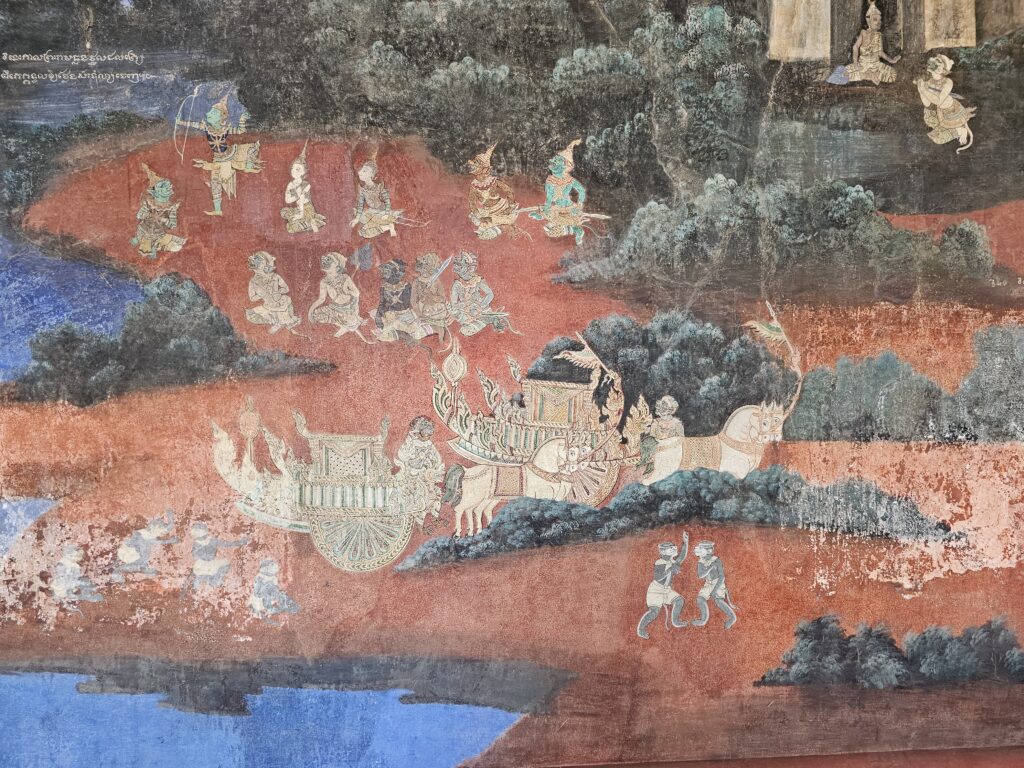
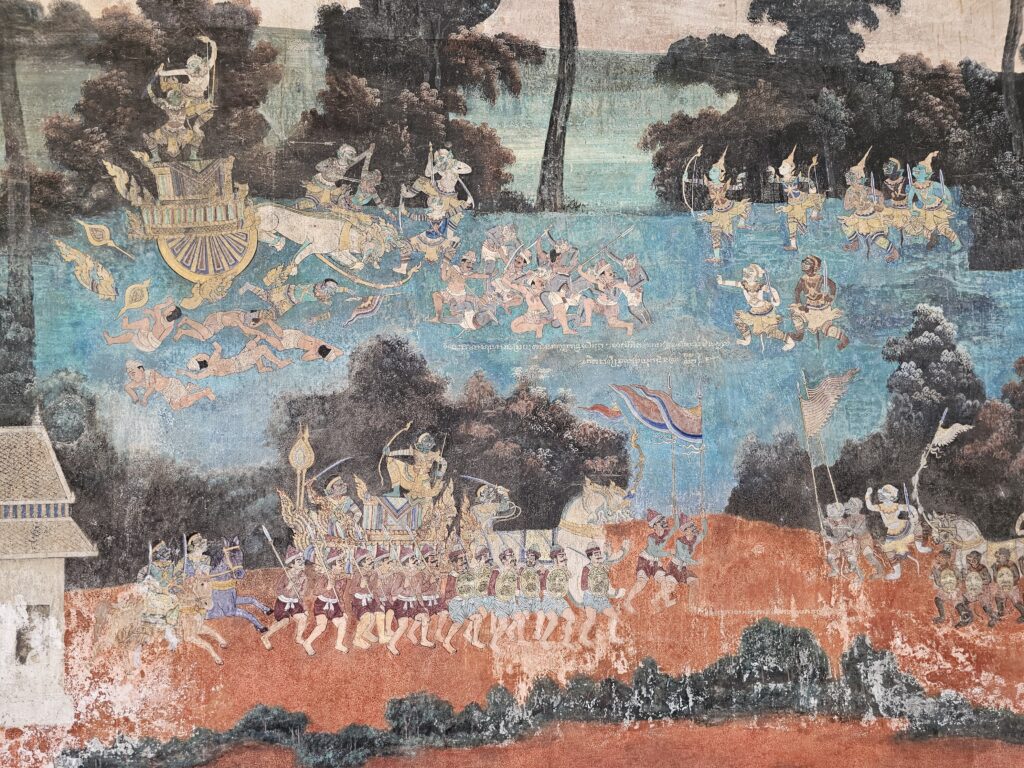
The frescoes were painted in 1903–1904 by a team of 40 Cambodian artists led by architect Oknha Tep Nimita.
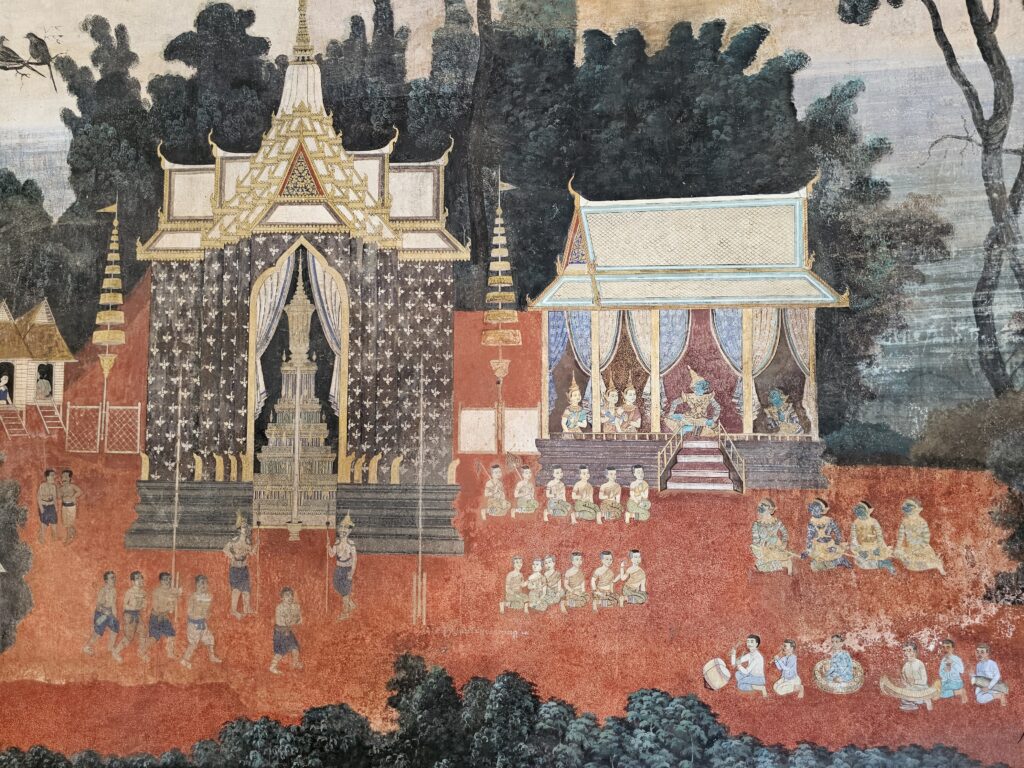
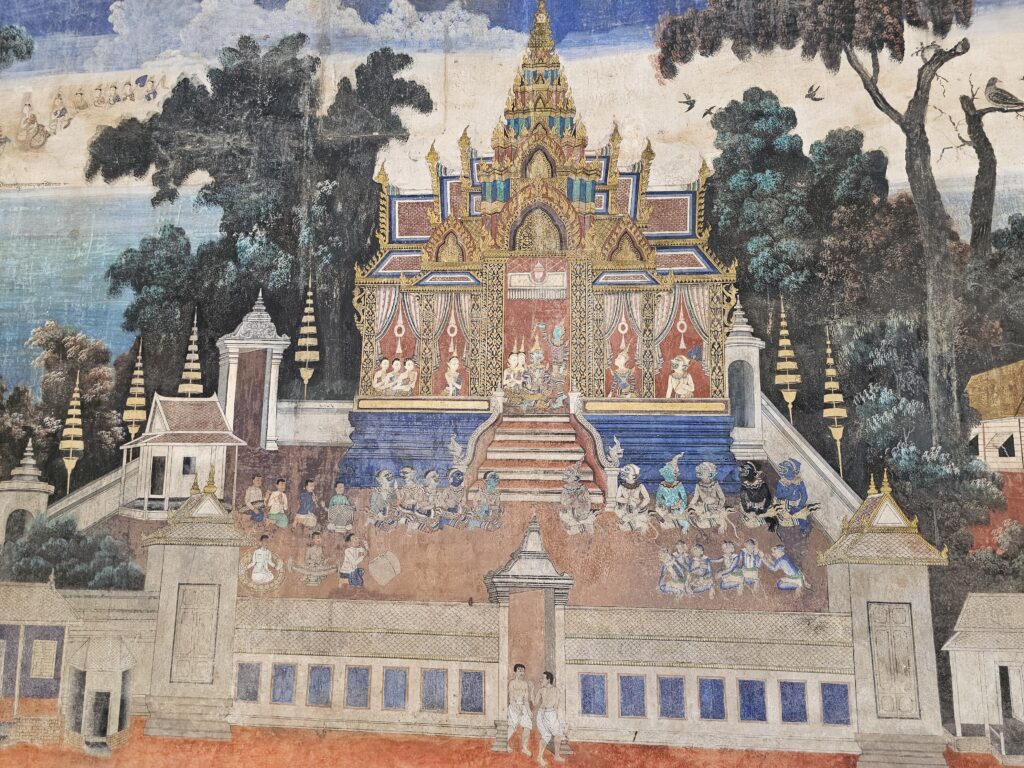
Currently, some parts of the paintings are damaged due to weather and age, and efforts are underway to gradually renovate them.
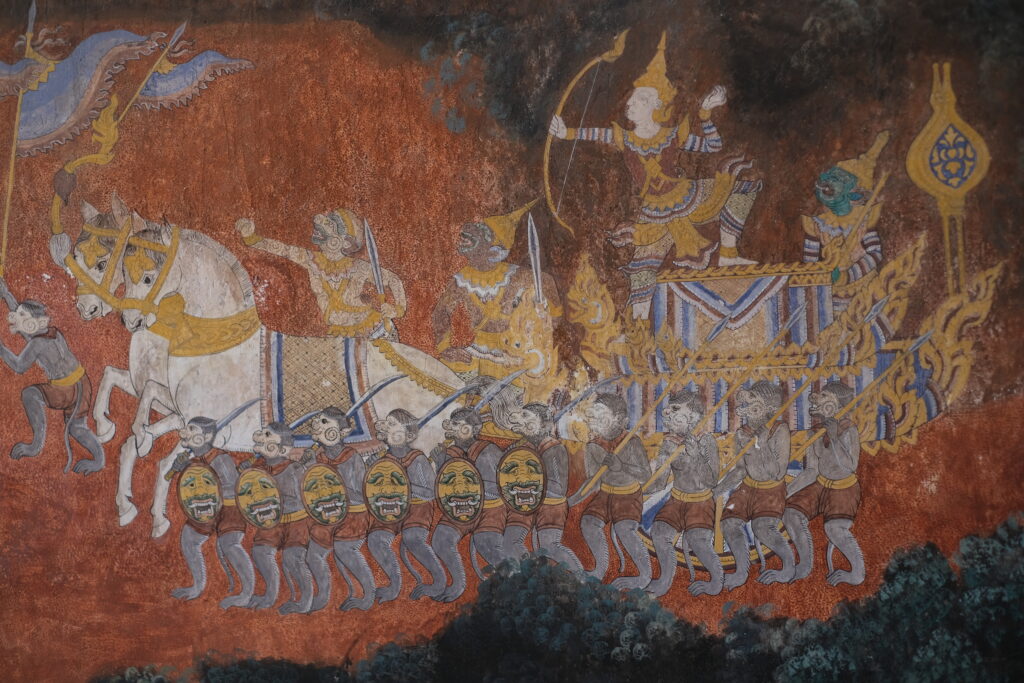
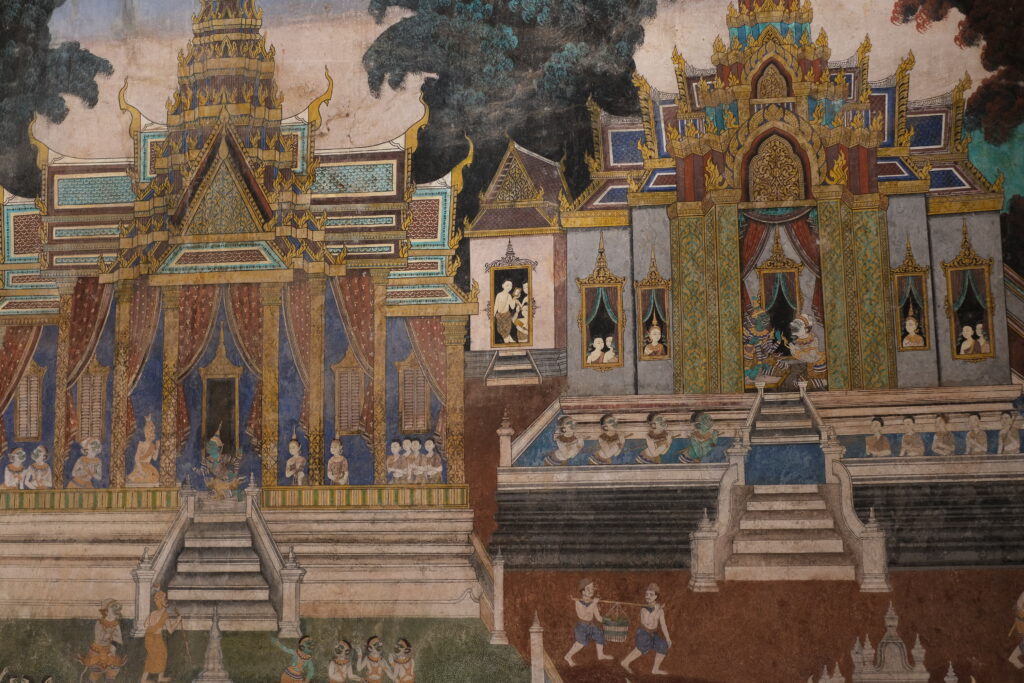
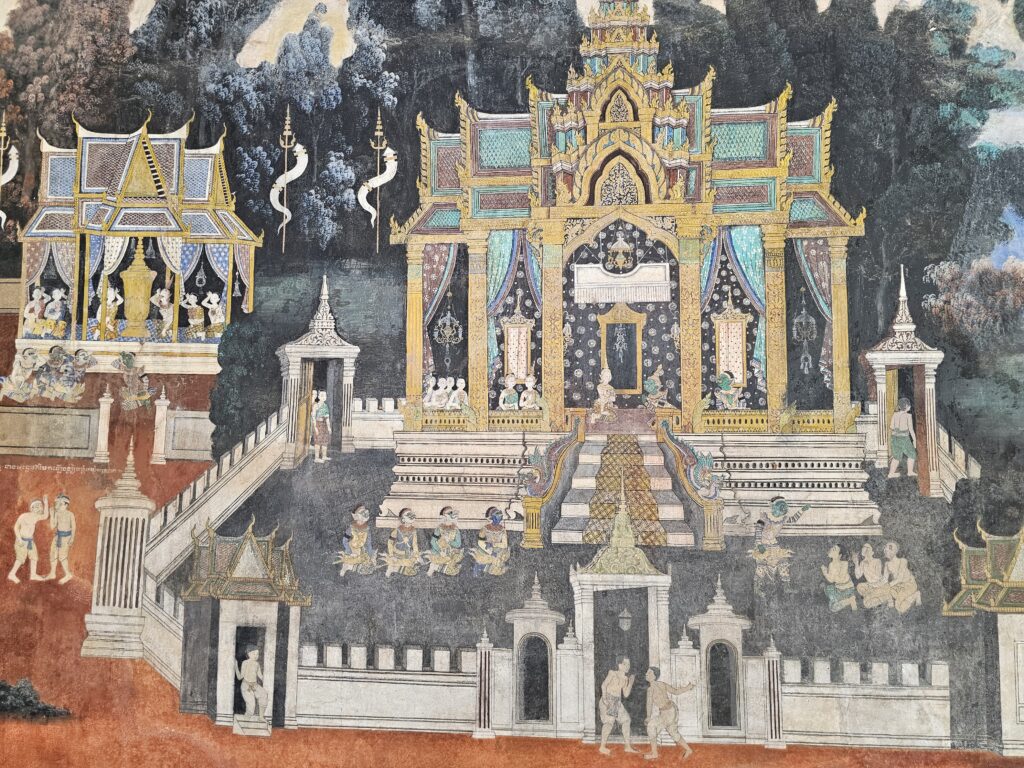
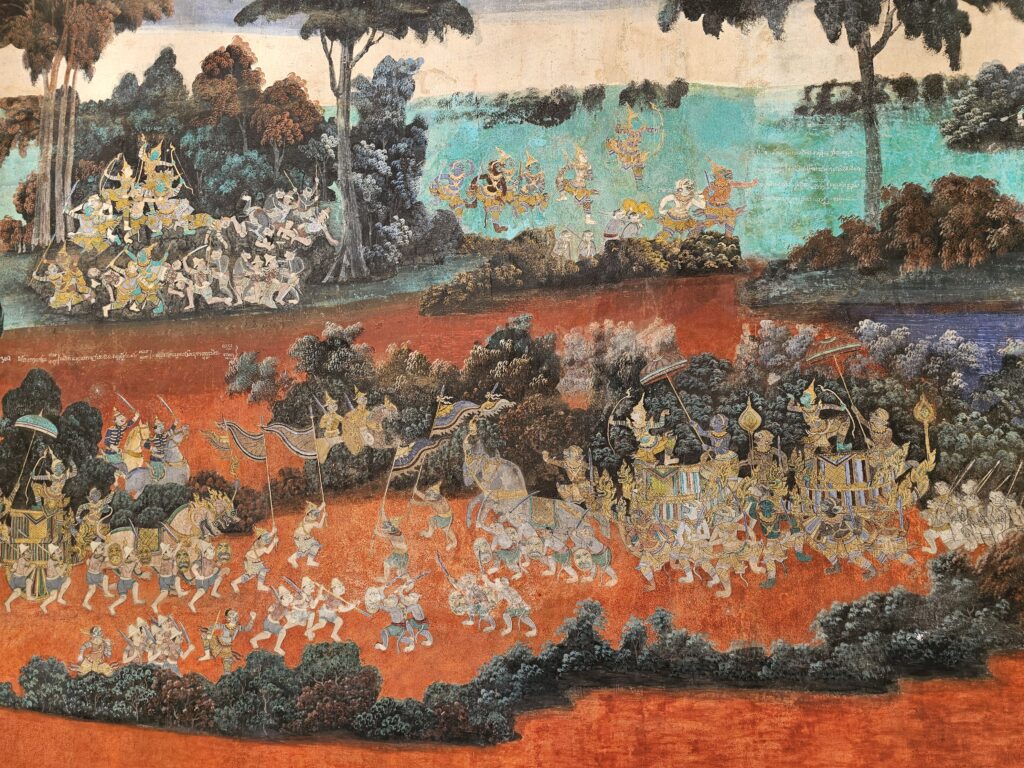
The paintings are in a very fragile condition. They are most damaged by the high humidity of the tropical climate, dust, and, in the past, unprofessional interventions. Many parts are faded or peeling.
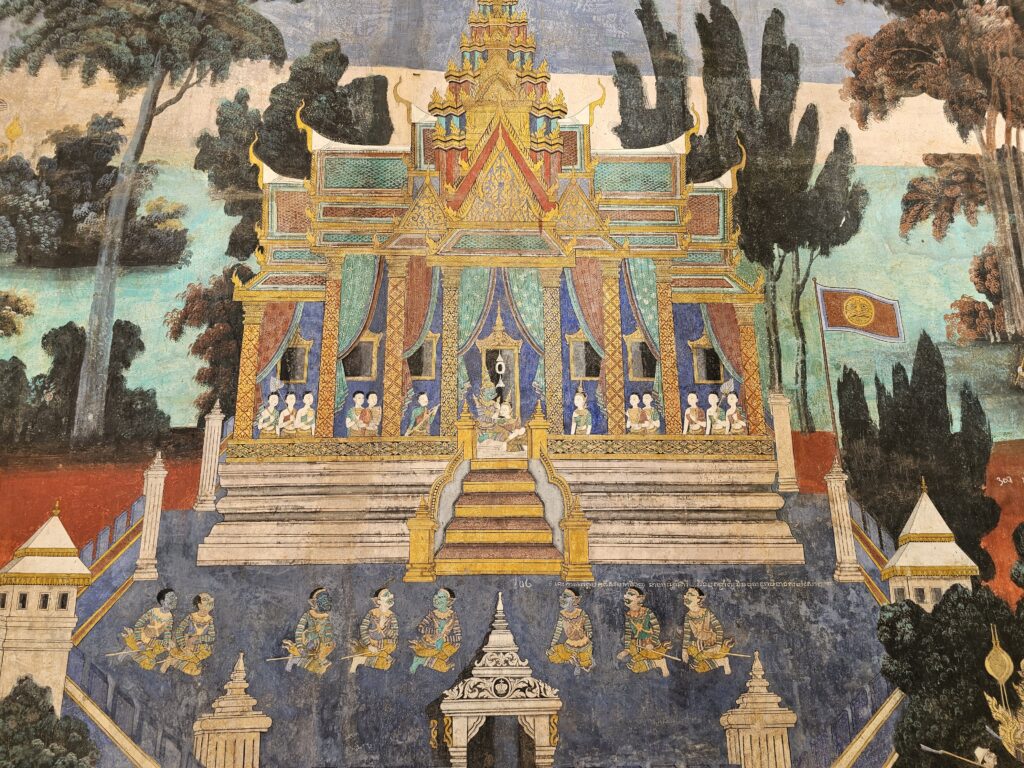
International teams are involved in saving the paintings. The Indian organization ASI (Archaeological Survey of India) plays a significant role, having committed to extensive conservation work on these unique frescoes.
Restorers use state-of-the-art methods such as infrared reflectography, which allows them to look beneath the surface layer and study the original sketches and changes made by artists during the creative process.
MY TIP:
Come early in the morning. It’s not so hot and the light is ideal for photos. And most importantly, you’ll have time to really enjoy the place, not just “tick it off” your list.
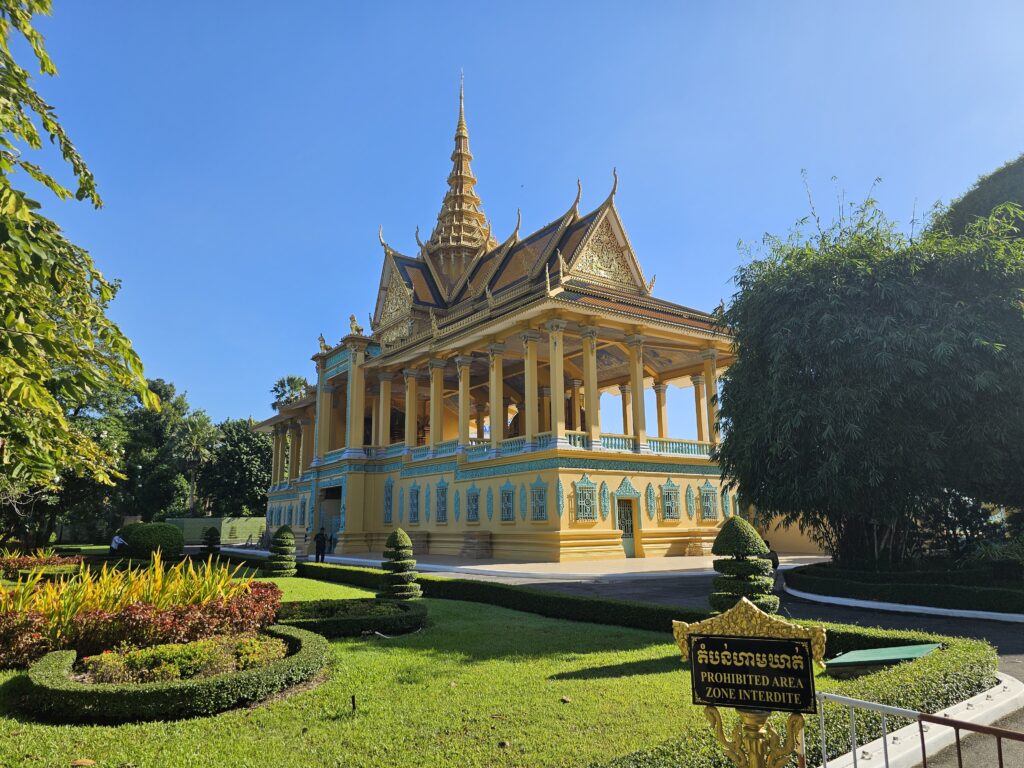
MOON PAVILION (CHAN CHHAYA)
An open pavilion used for state banquets and traditional dance performances.
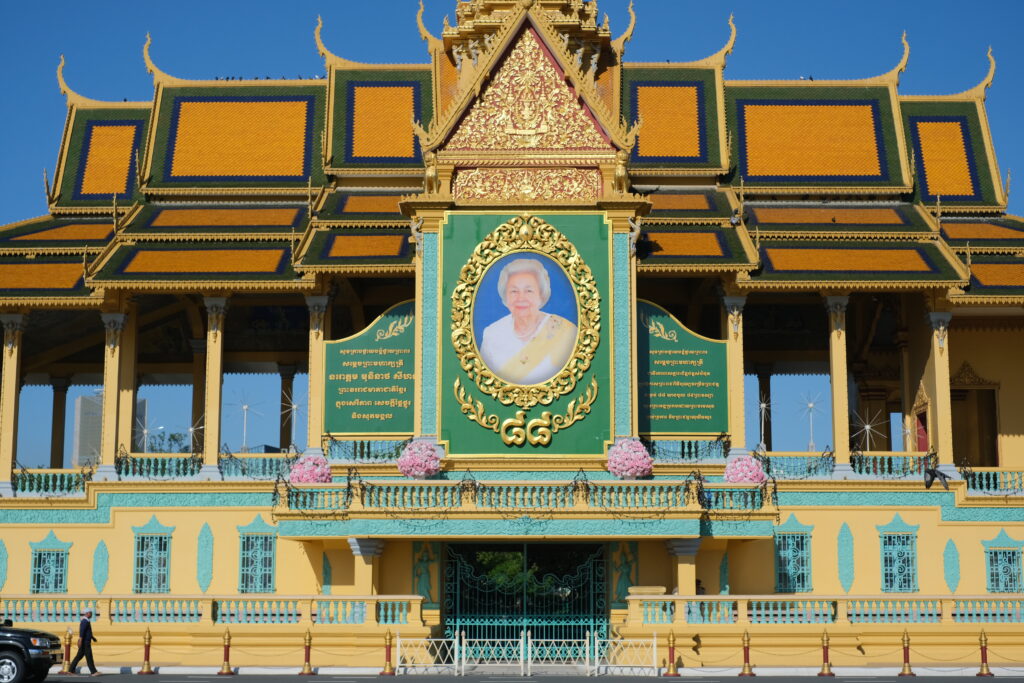
A large portrait of Queen Mother Norodom Monineath Sihanouk is displayed in the center of the pavilion. These portraits of members of the royal family are often displayed on public buildings in Cambodia on the occasion of important national holidays or royal birthdays.
The pavilion is decorated with floral decorations (pink flowers under the portrait) and Cambodian inscriptions, which probably contain congratulations or tributes to the royal family.
NAPOLEON’S PAVILION
An elegant iron structure donated to Cambodia by French Emperor Napoleon III. It was originally built in Egypt for the opening of the Suez Canal and later dismantled and transported to Phnom Penh.
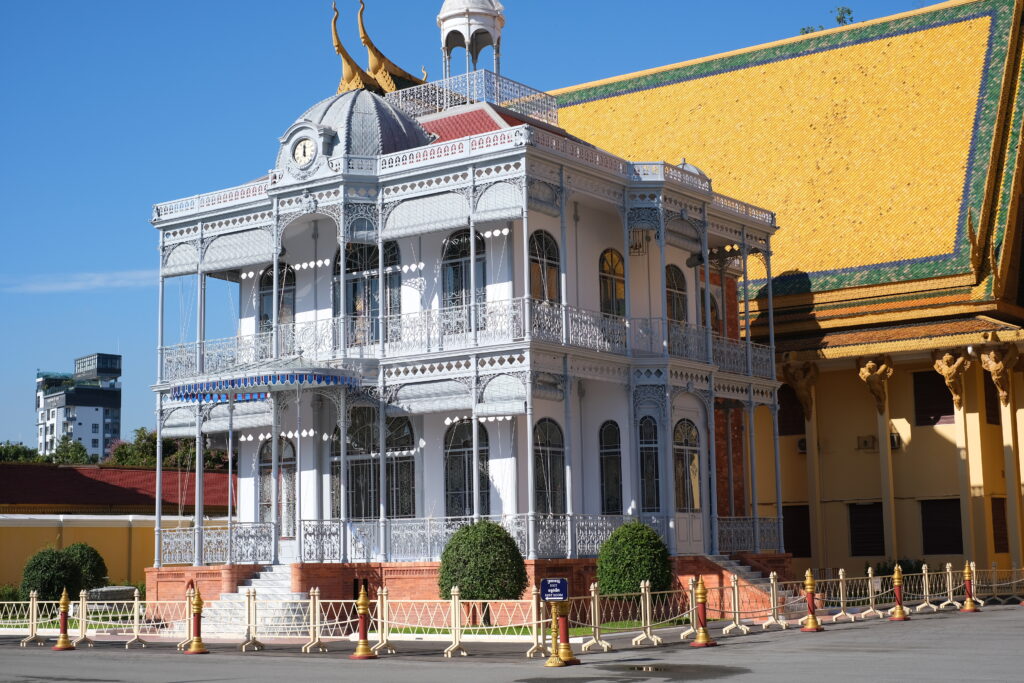
The pavilion was originally built in Egypt in 1869 for Empress Eugénie, wife of Napoleon III, on the occasion of the opening of the Suez Canal. After the celebrations ended, French Emperor Napoleon III donated the entire building to the then Cambodian King Norodom. The building was dismantled, transported to Phnom Penh, and reassembled at its current location in 1876.
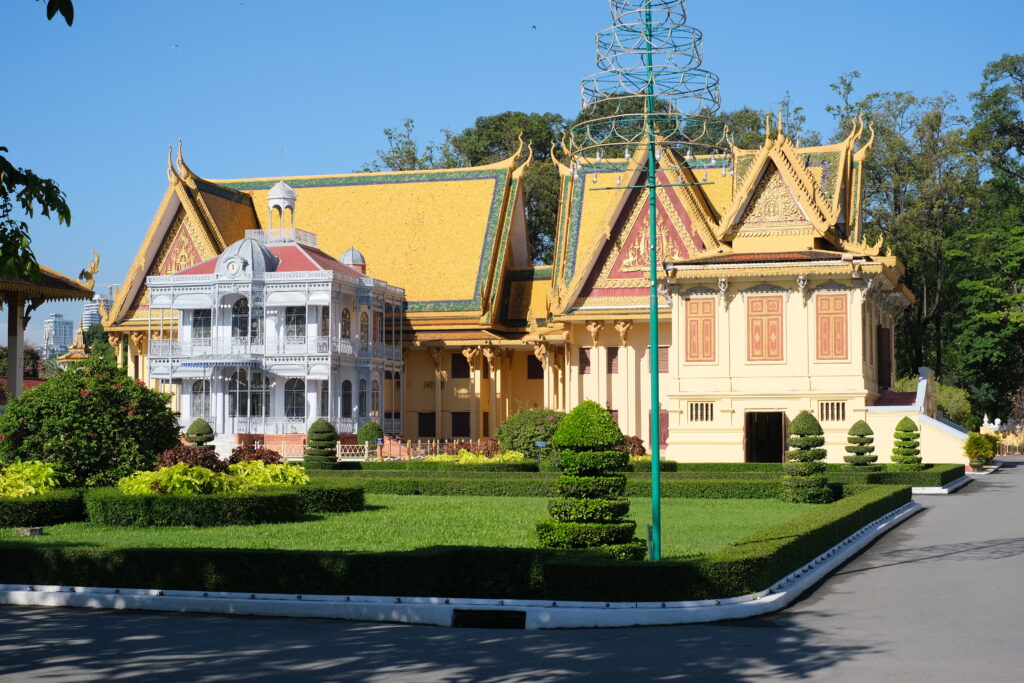
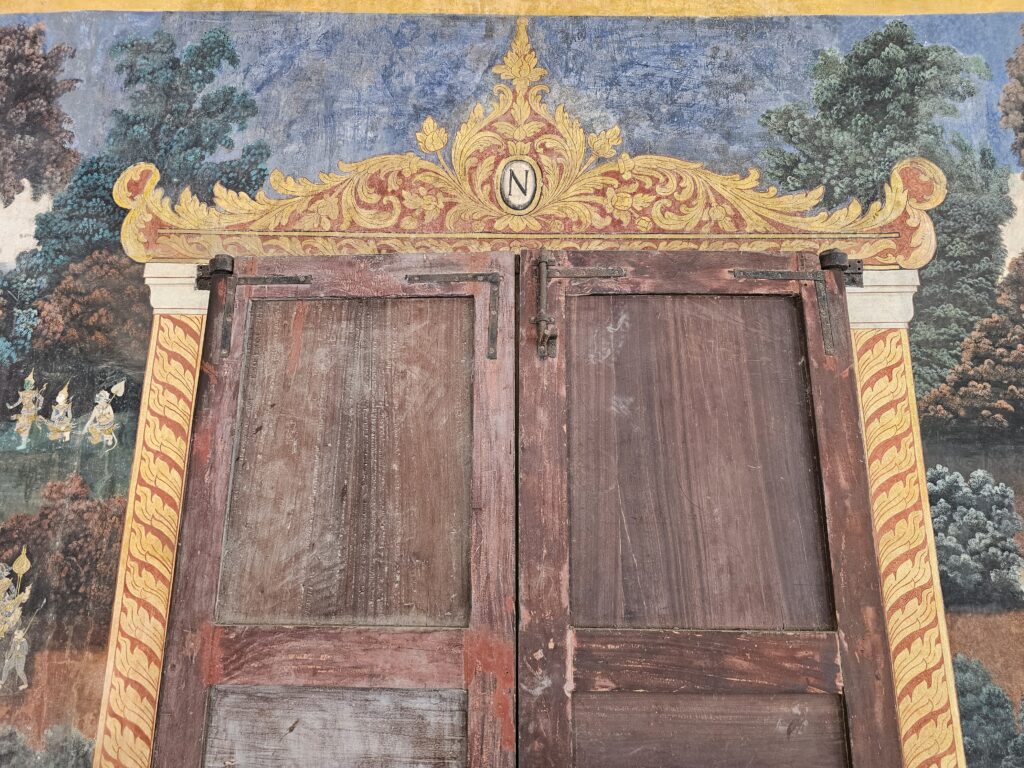
It is a light structure made of wrought iron in the European neoclassical style. The monogram “N” is engraved on the door and facade. It originally referred to Napoleon III, but for King Norodom (whose name also begins with N), it was an ideal symbol of his own power.
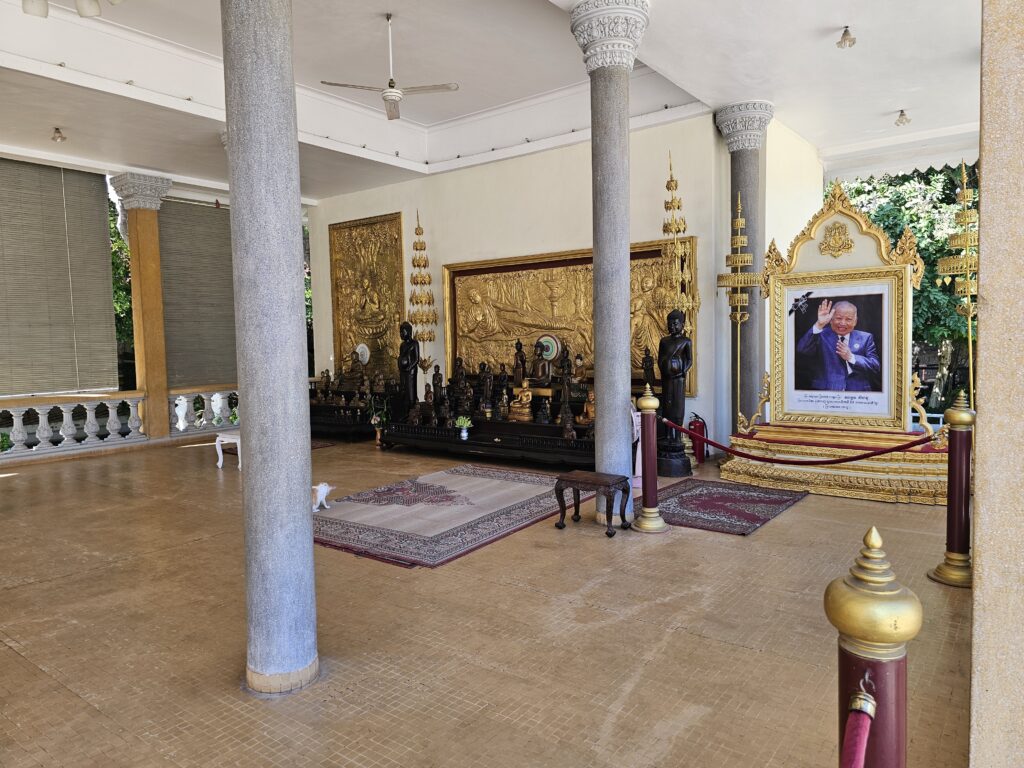
Inside Napoleon III’s pavilion, there is now a museum exhibiting rare items associated with the Cambodian royal family and its history. The collections include busts, glassware, and gifts that the kings received from important foreign dignitaries. Royal clothing, silver and porcelain tableware, and a collection of medals are also on display.
TRADITIONAL CAMBODIAN CLOTHING FOR EVERY DAY OF THE WEEK
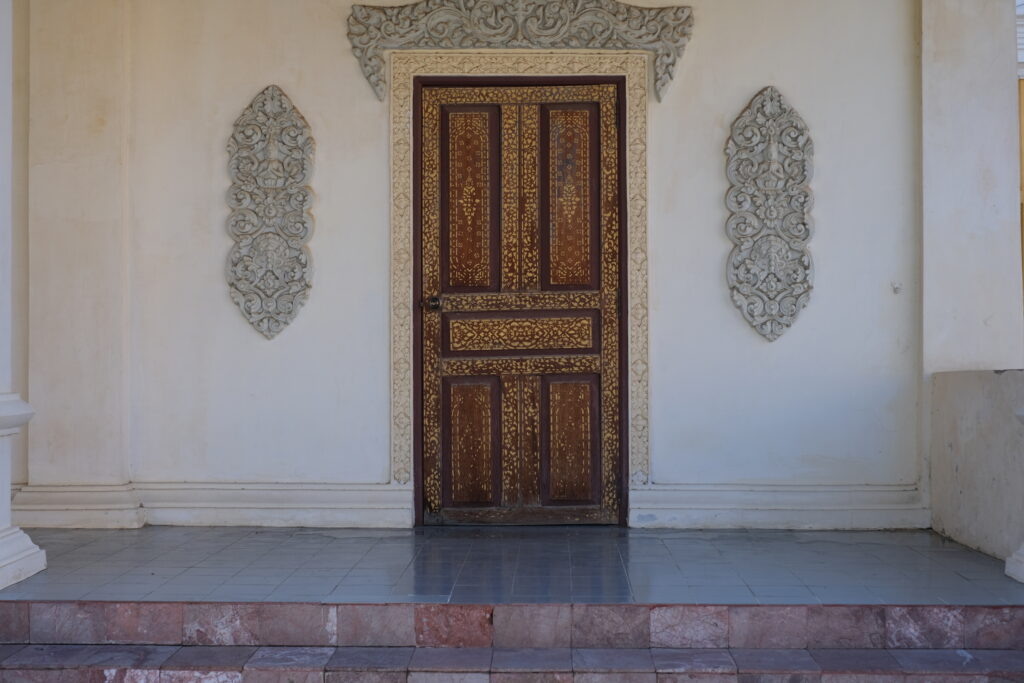
In Cambodian culture (Khmer tradition), each day has its own specific “lucky” color, which is associated with astrology and protective deities. This tradition of wearing colors according to the days of the week is still observed today, especially on festive occasions such as weddings or religious ceremonies.
The meaning of colors according to the days of the week:
Red (Sunday): Symbolizes courage and energy.
Yellow/Orange (Monday): Represents equality and calmness of the moon.
Purple (Tuesday): Expresses honesty and loyalty.
Light green/Olive (Wednesday): Embodies justice.
Dark green (Thursday): Is a symbol of hope.
Blue (Friday): Signifies forgiveness and purity.
Dark purple/Brown (Saturday): Traditionally associated with prudence (sometimes sadness).
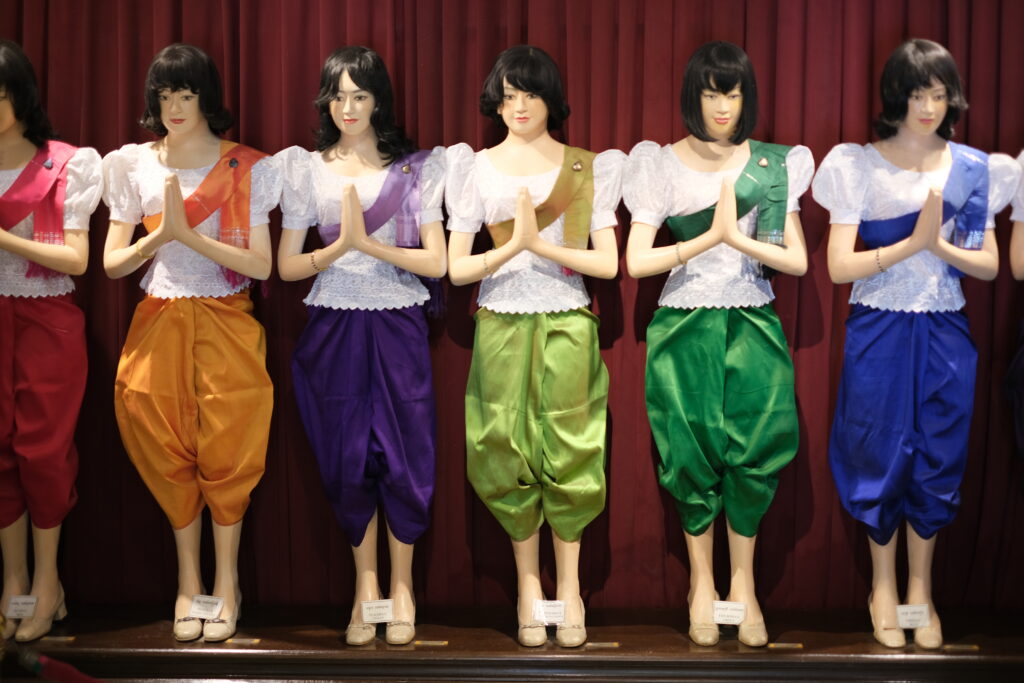
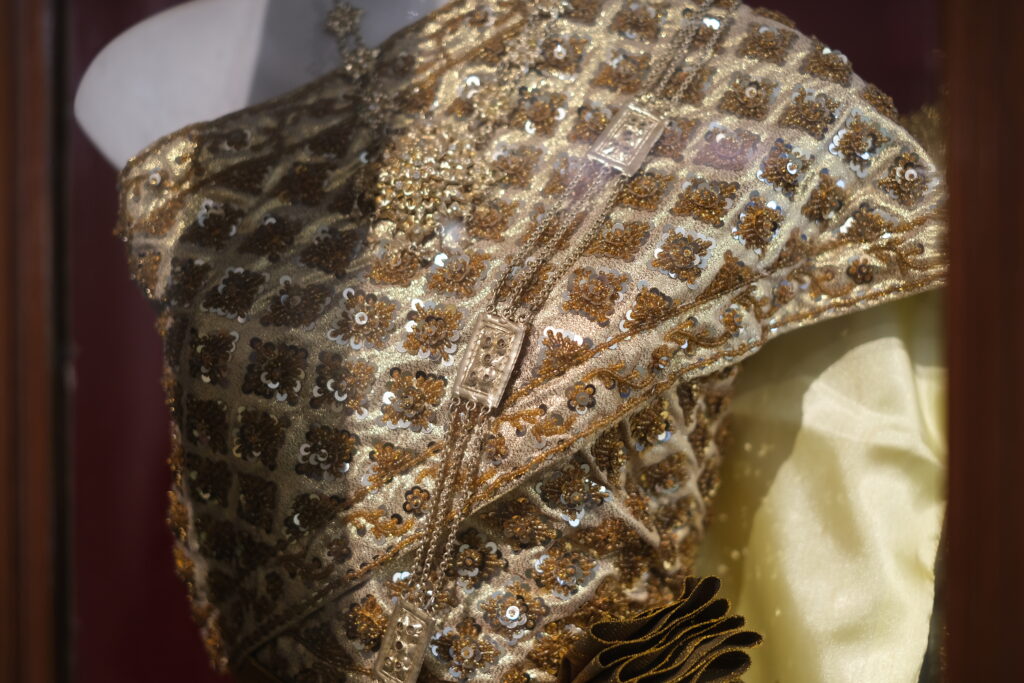
The mannequins in the photo are wearing traditional pants called “sampot chong kben,” which are pieces of fabric wrapped around the body and threaded between the legs to create a fluffy look.
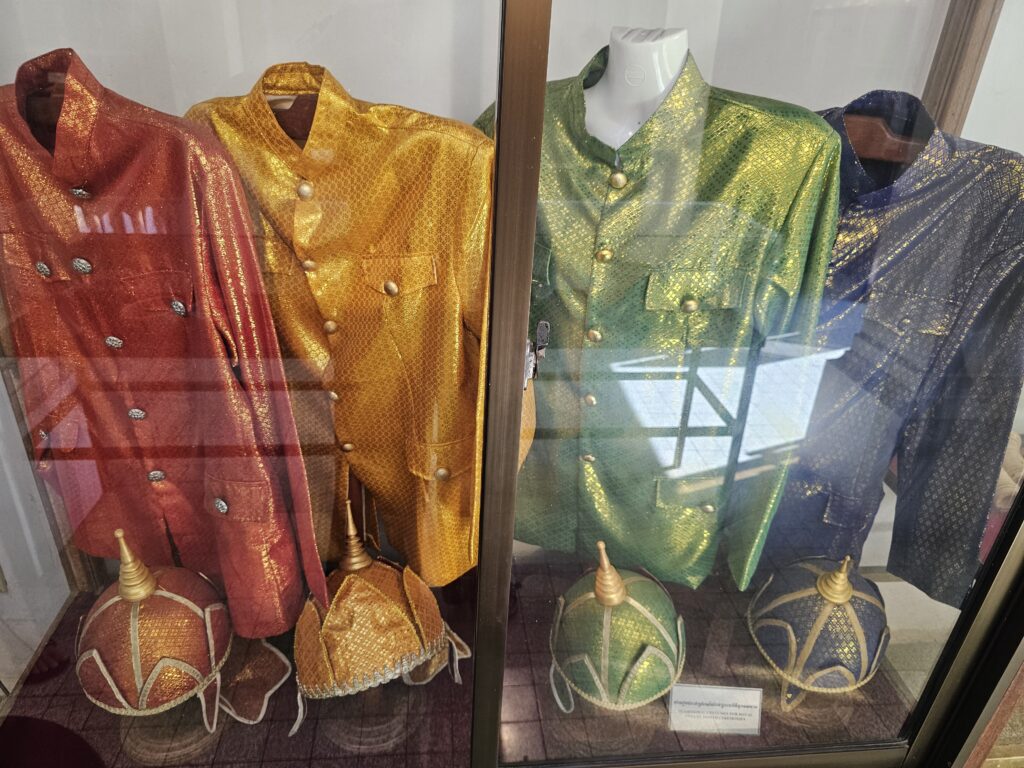
Above the staircase, you can see a collection of richly gold-embroidered silk costumes for royal dancers, made by Queen Kossomak.
CAMBODIAN WEDDINGS
Cambodian weddings are famous for their colorfulness and rich traditions, which are based on the ancient legend of Prince Preah Thong and the dragon princess Neang Neak.
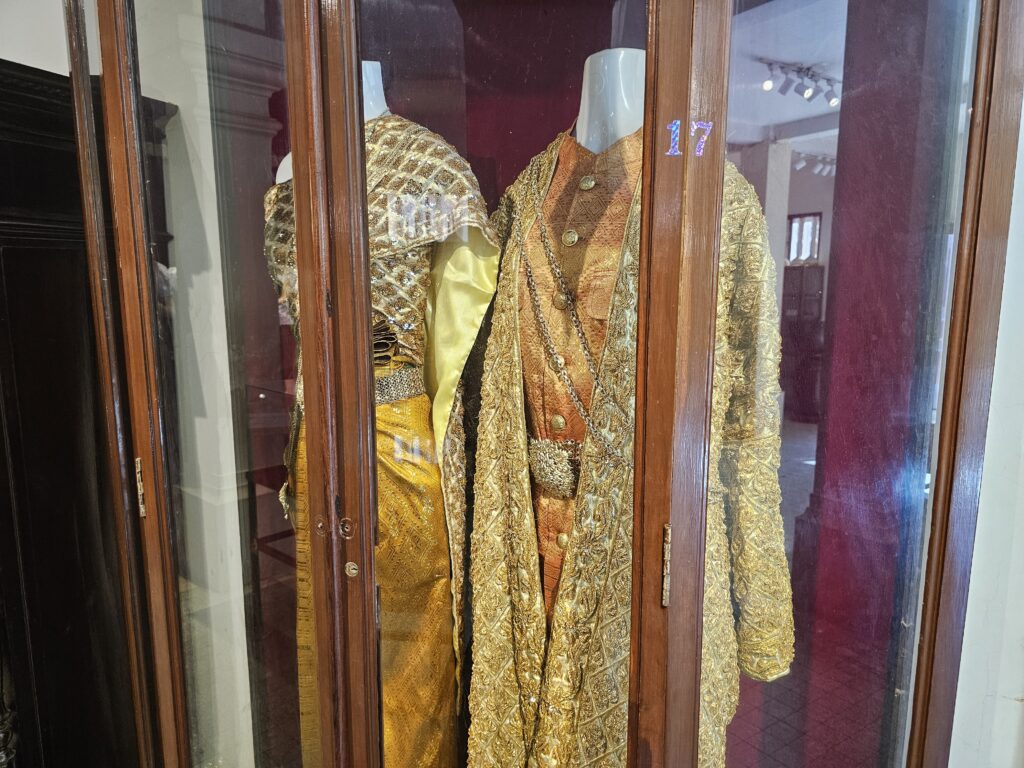
In Cambodia, clothing colors are not chosen at random, but follow a strict astrological code of seven colors for each day of the week. Although modern weddings are shorter, they used to last three days and three nights, during which the bride and groom changed into more than ten different outfits, with the colors of the main ceremonies having to match the day on which they took place.
The main meanings of wedding colors:
Gold and yellow: The most common colors for morning ceremonies, symbolizing the sun, new beginnings, royal dignity, and respect for family.
Red: The color of happiness and joy. An important element is the red thread that family members tie around the wrists of the newlyweds as a symbol of eternal love and the union of two souls.
Pink and purple: Often used during the reception because they are pleasant and represent fidelity.
Green and blue: Green symbolizes fertility and new beginnings, while blue represents stability and peace.
ROYAL RESIDENCE (KHEMARIN PALACE)
The private residence of King Norodom Sihamoni. This part is closed to the public. If the blue royal flag is flying above the palace, it means that the king is present.
BUILDING DAMNAK CHAN
This traditional Khmer-style building serves as an administrative center and the seat of the royal offices. Its characteristic features include a richly decorated gable and a roof covered with yellow and green tiles. Under the roof, you can see a series of decorative sculptures (called garudas) that seem to support the entire structure.
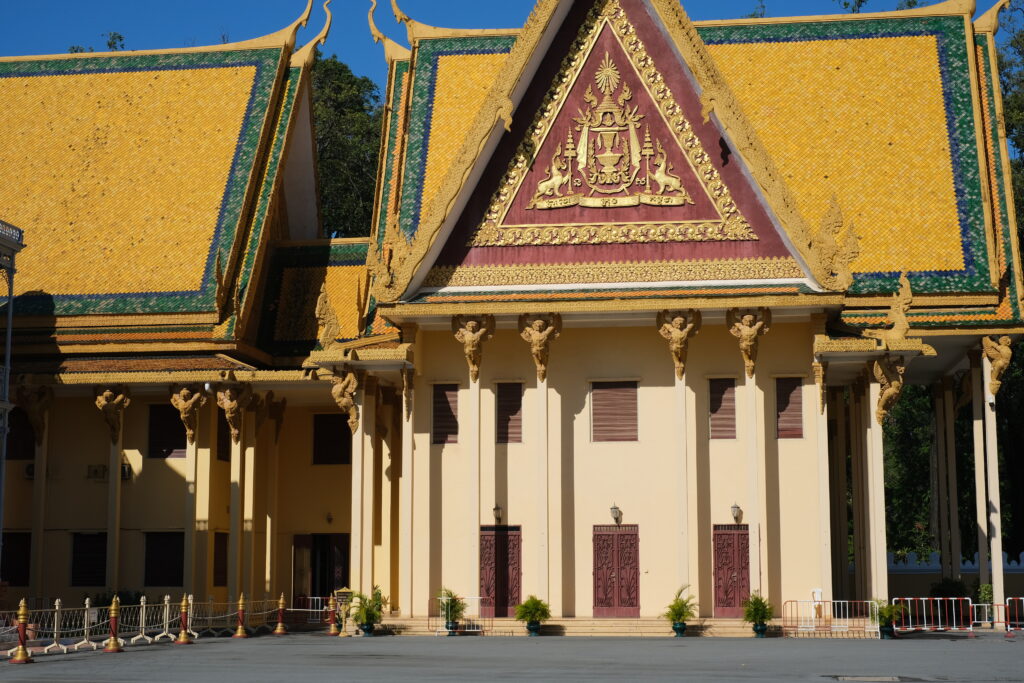
It is located near the famous Throne Hall.
BUDDHIST SHRINE OF KING NORODOM SURAMARIT
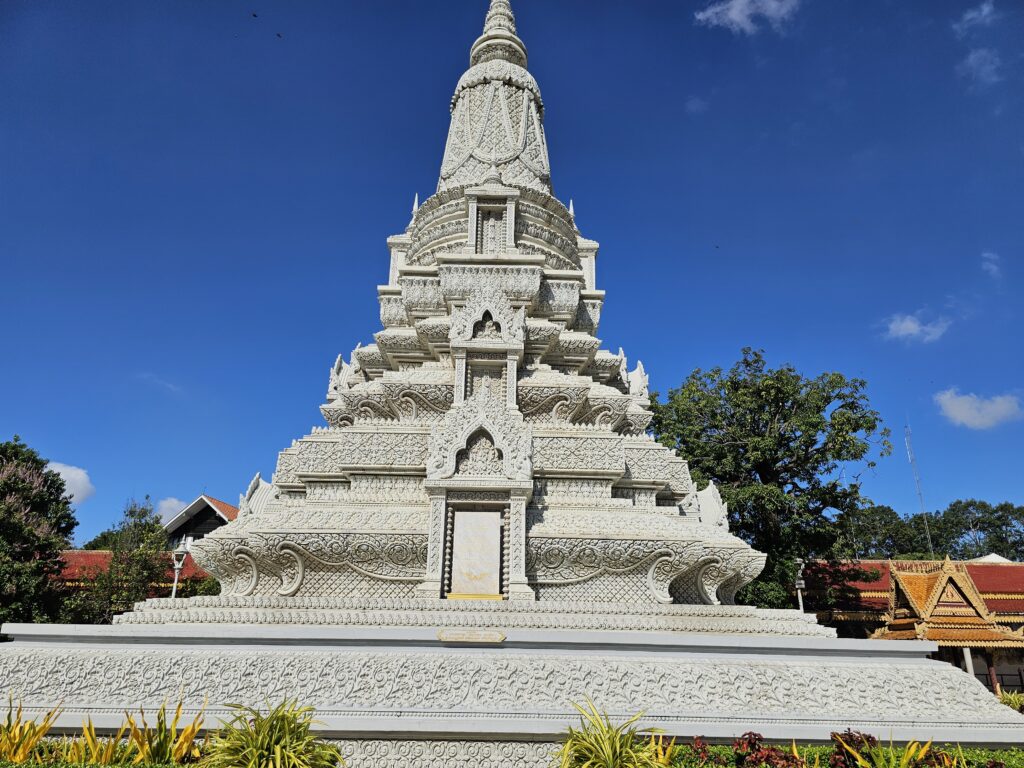
This richly decorated white stupa was built to preserve the ashes (remains) of King Norodom Suramarit, father of former King Norodom Sihanouk. It stands in the southern part of the Royal Palace complex, near the Silver Pagoda itself.
PHOCHANI PAVILON
Phochani Pavilion is an open pavilion on the grounds of the Royal Palace. This historic building from 1912 is used primarily for royal receptions and meetings. The pavilion was originally built as a theater for classical Khmer dances. Today, it is used for royal receptions, banquets, and official meetings with distinguished guests.
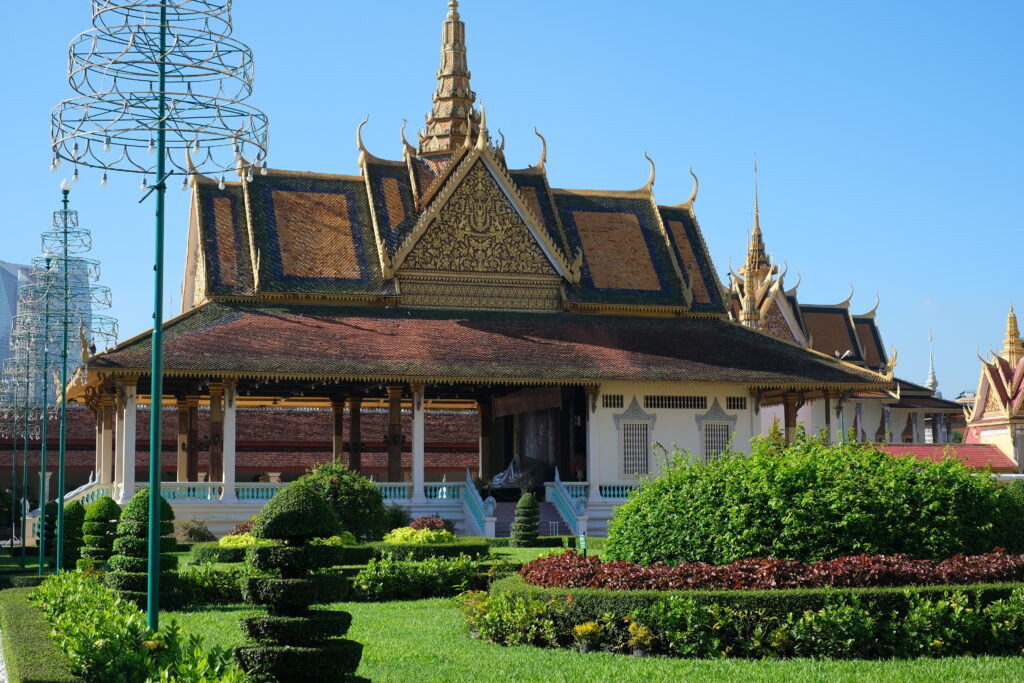
The pavilion was built by King Sisowath and officially opened in 1912.
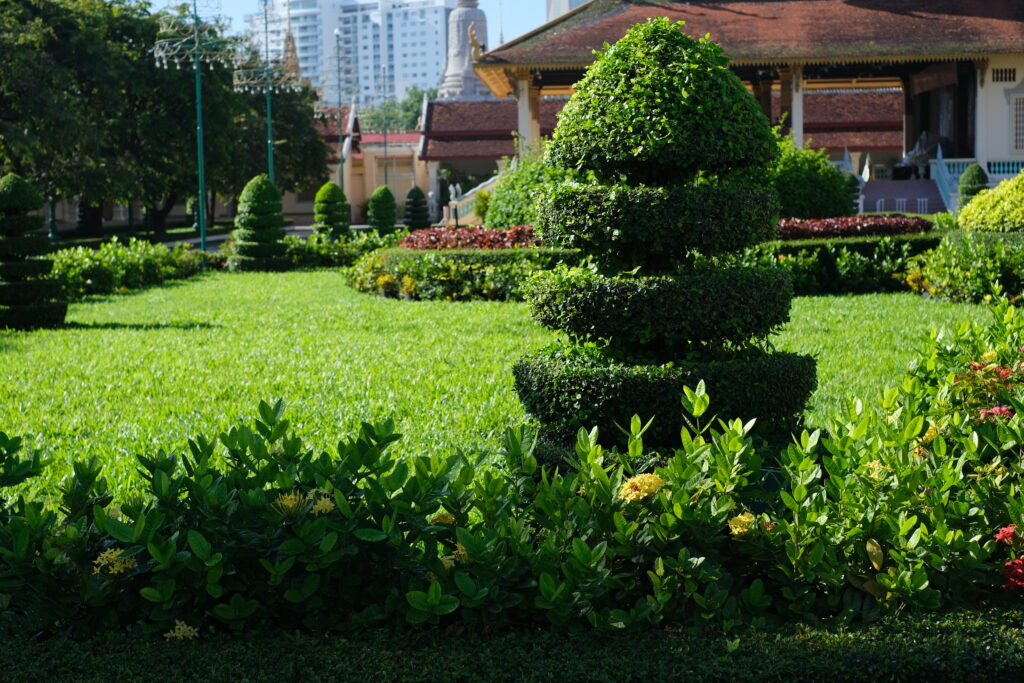
ROYAL RESTING PLACE
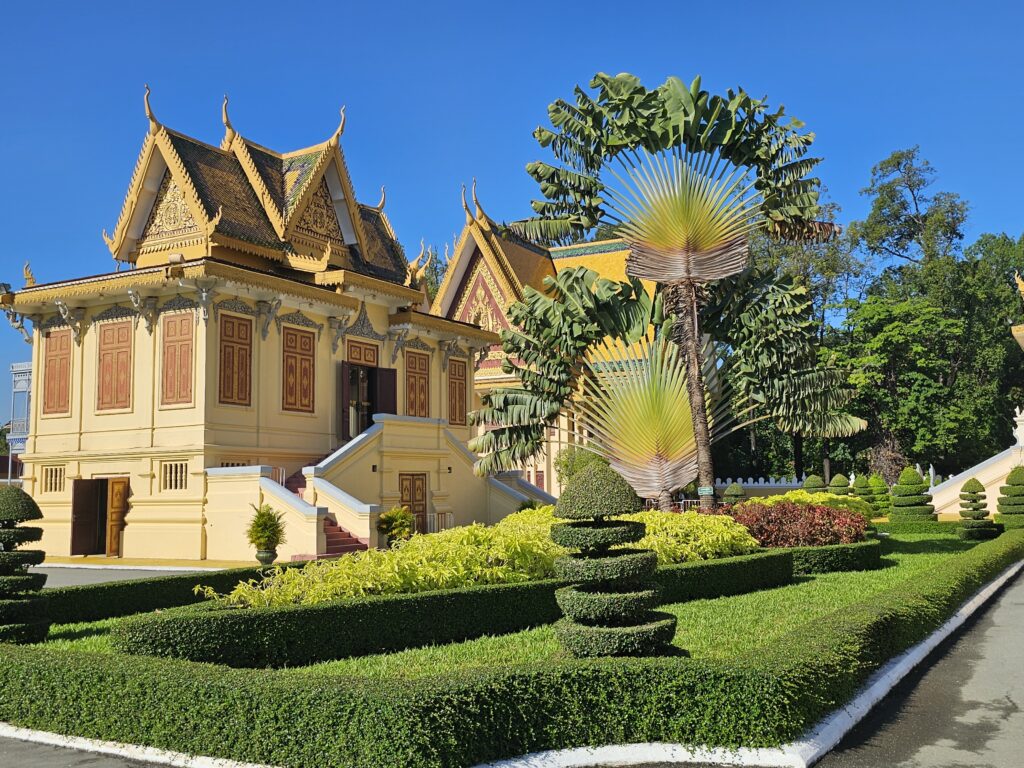
The yellow pavilion Hor Samran Phirun was built in 1917 and has served several important functions throughout history. It originally served as a place where the king rested and waited for his elephant procession. Later, it was used to store musical instruments, royal gifts, and as a library.
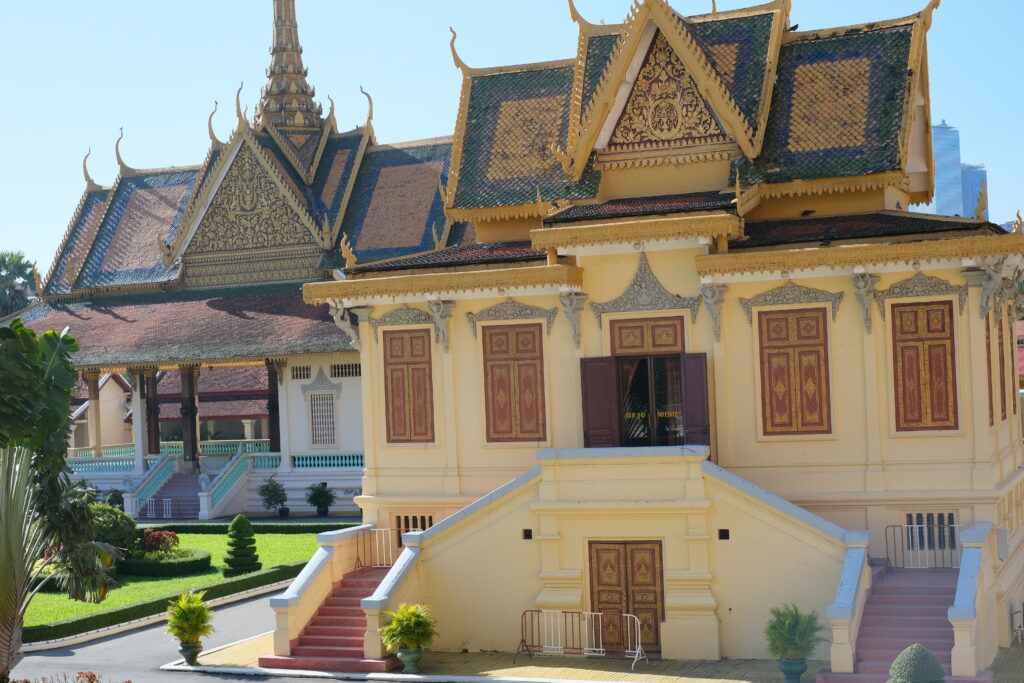
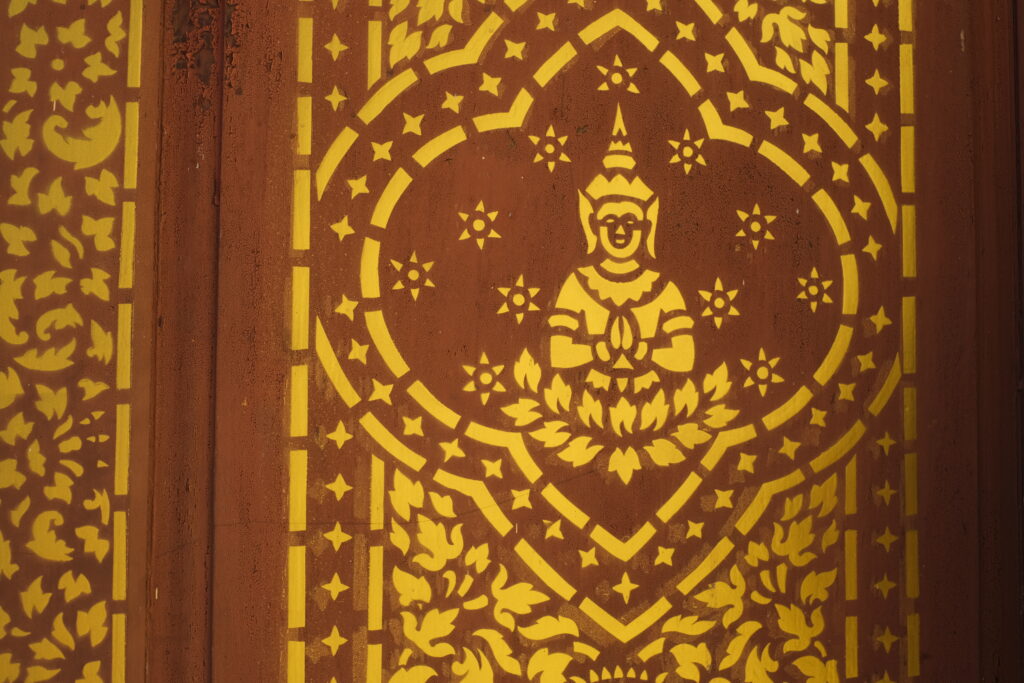
The building is constructed in traditional Khmer style with a stepped roof and rich ornamentation.
PRACTICAL INFORMATION
When visiting the palace, which is open to the public daily, respectful attire is required. Shoulders and knees must be covered. You should be prepared to remove your shoes before entering sacred areas such as the Silver Pagoda.
The dress code is strict: your shoulders and knees must be covered. Please note that it is not enough to just throw a scarf over a tank top. You must wear a shirt with sleeves.
Opening hours: The palace usually has a long lunch break (usually 11:00 a.m. to 2:00/2:30 p.m.), so plan your visit for the morning or afternoon.
Admission: For foreigners, it costs about $10.
Silver Pagoda: The complex includes a stunning pagoda with a floor made of five tons of pure silver. However, photography is not allowed inside.
NATIONAL MUSEUM: WHEN HISTORY COMES TO LIFE
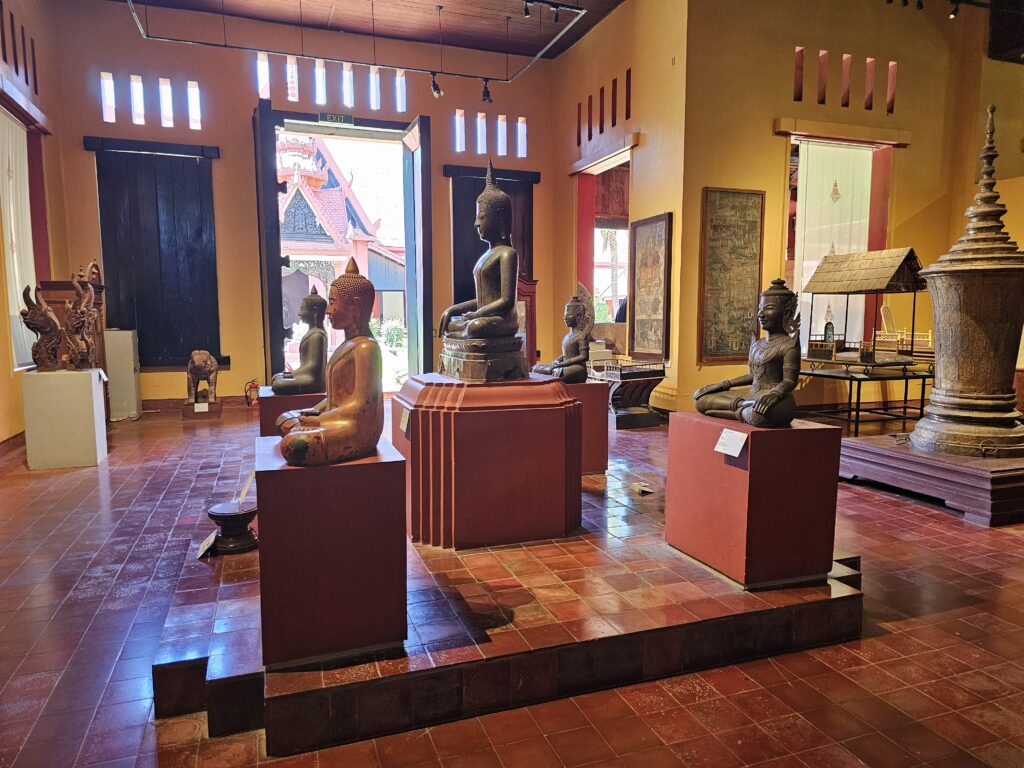
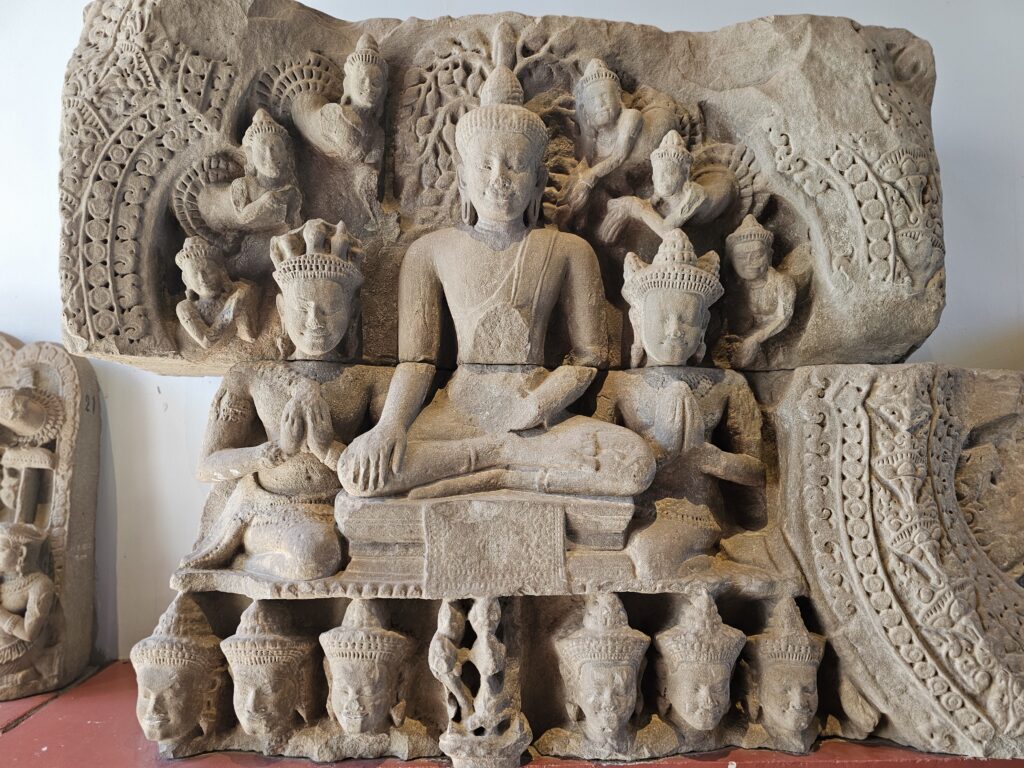
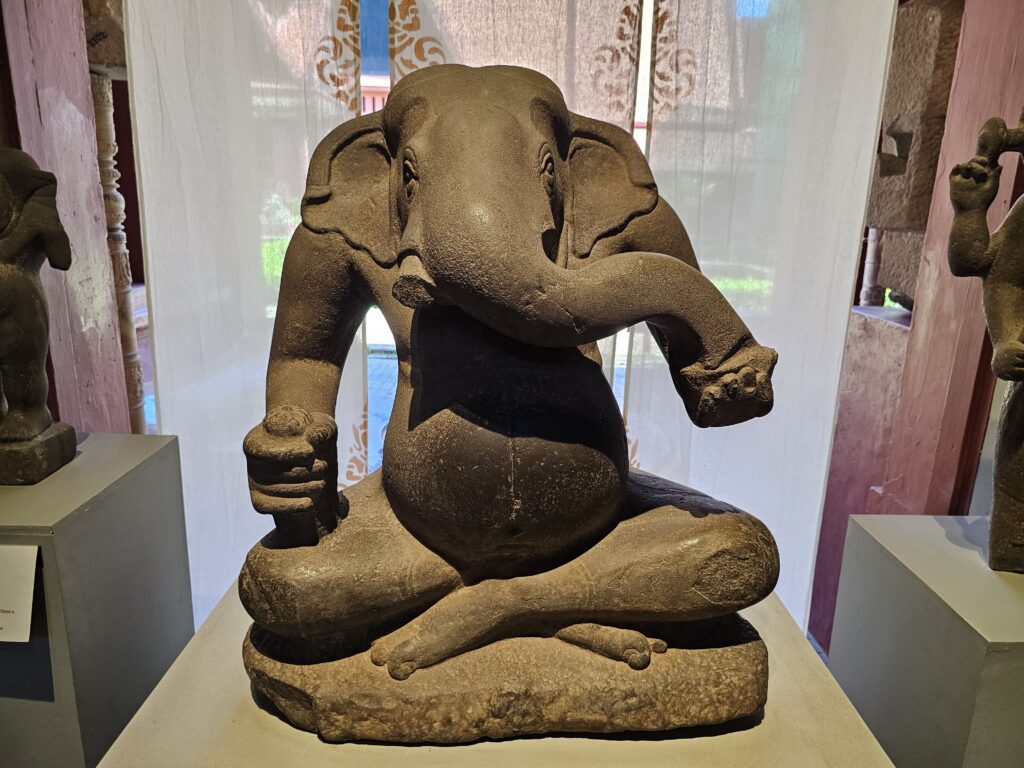
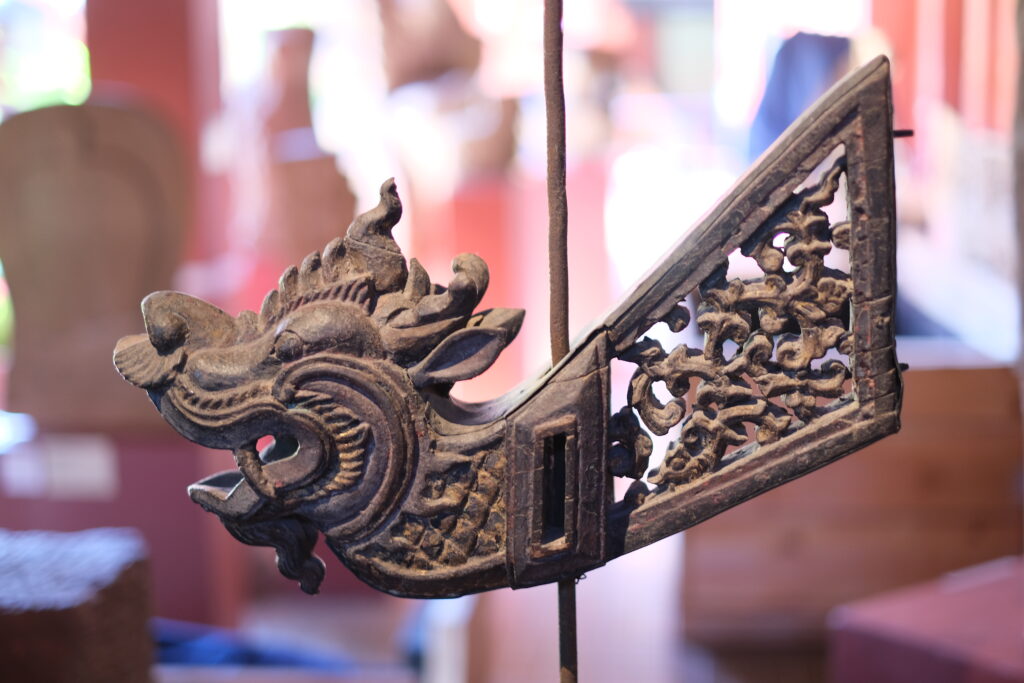
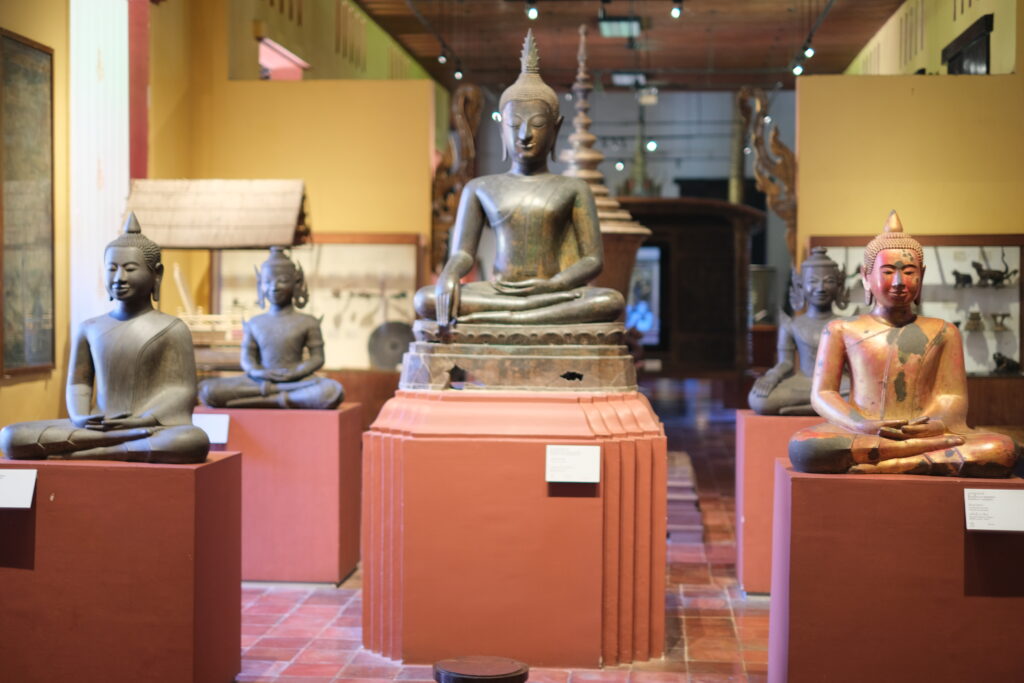
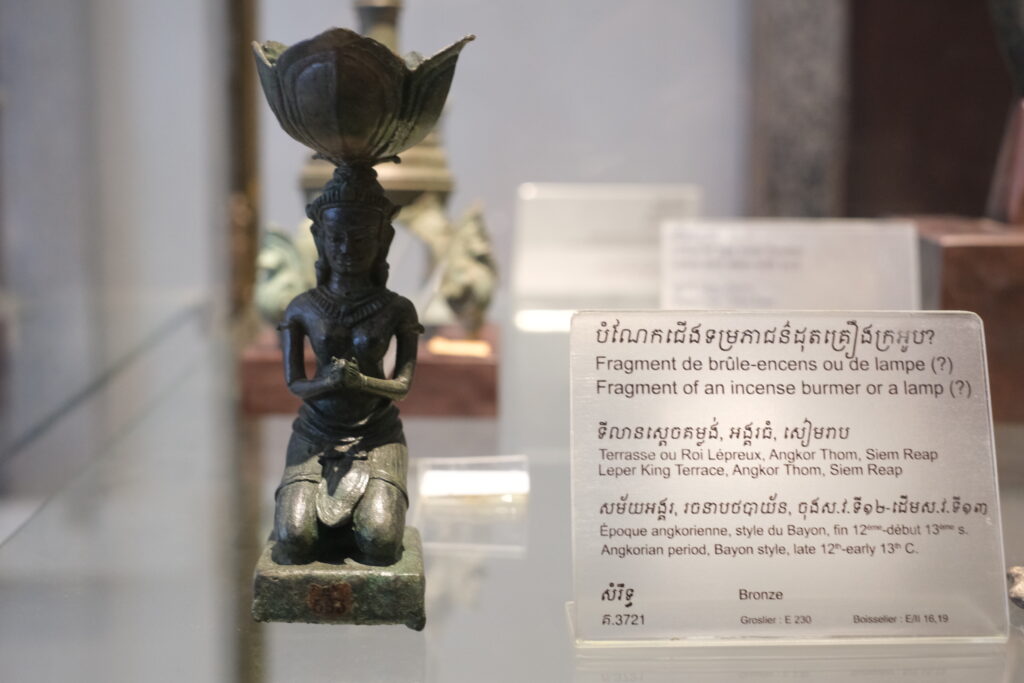
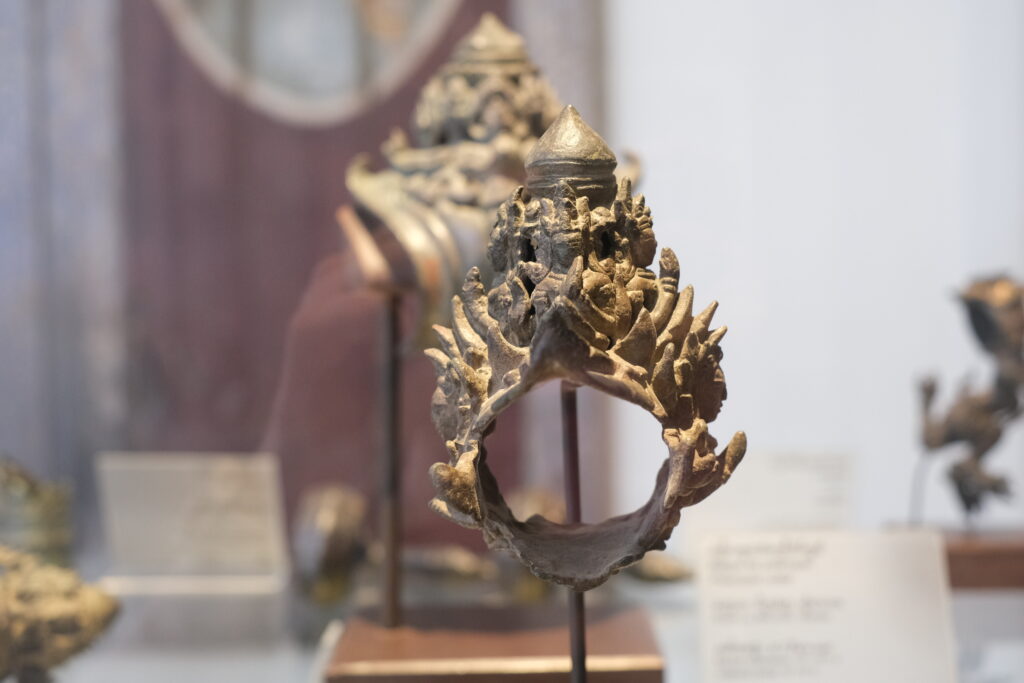
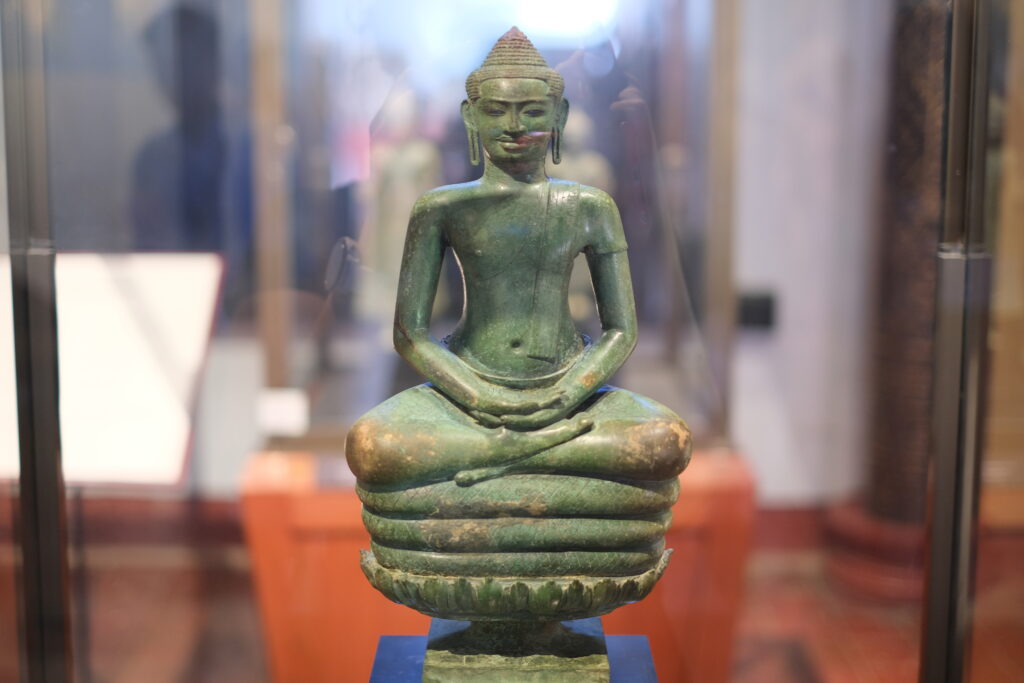
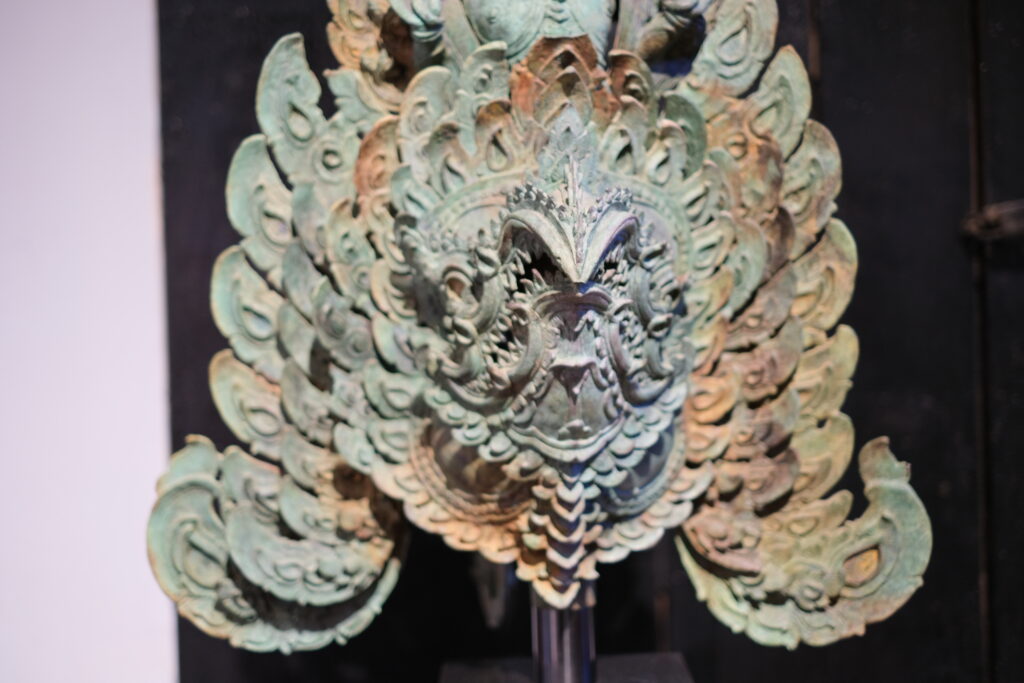
Just a few steps from the palace stands the National Museum, a beautiful red building in traditional Khmer style. Inside, you will find one of the finest collections of Khmer art in the world.
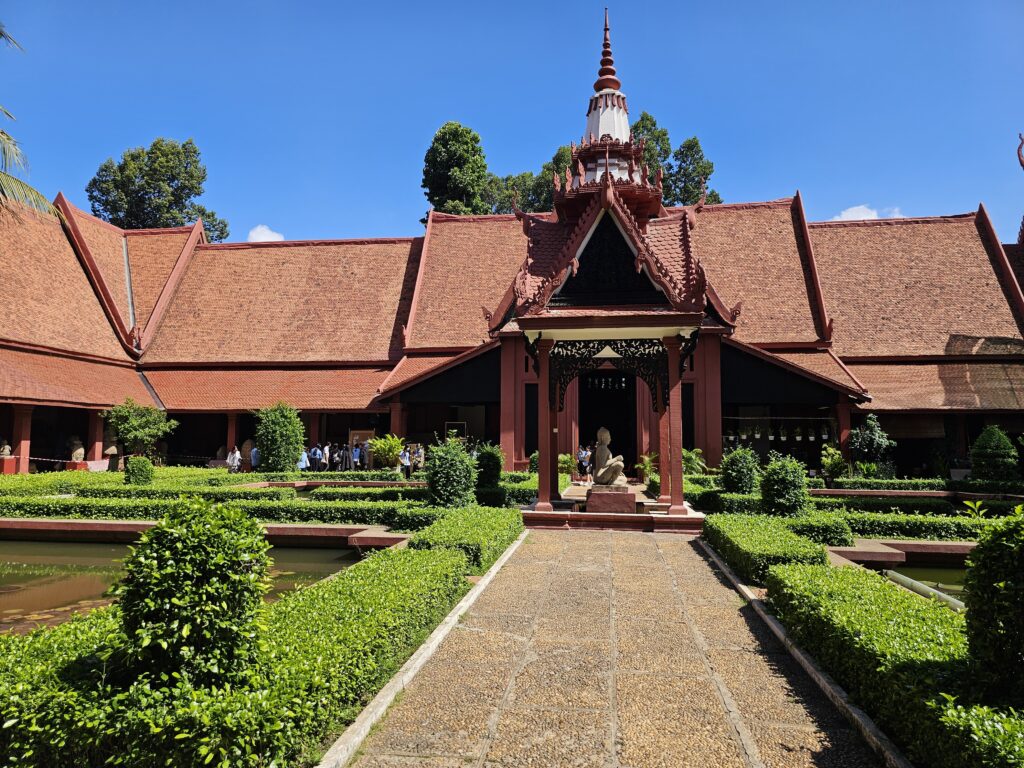
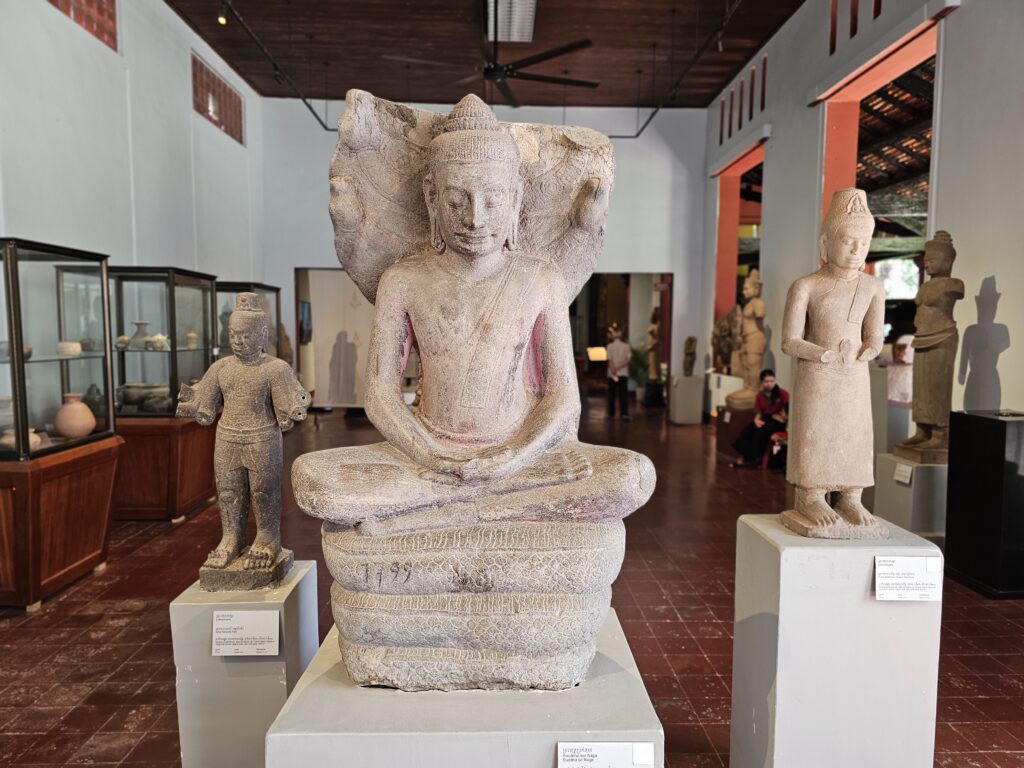
The sculptures from the Angkor period have a special energy. Even if you are not a museum lover, this is worth a visit. It is not huge, so you won’t get tired, but at the same time it will give you a deeper context to the whole Cambodian culture.
A DARK CHAPTER: TUOL SLENG AND THE KILLING FIELDS
However, Phnom Penh is not just about beauty. It is a city that also bears a very difficult past. A visit to the former Tuol Sleng prison (S-21) is one of the most demanding travel experiences. It was originally a school. During the Khmer Rouge regime, it was turned into a place of torture and death. The photographs of the victims, the empty cells, and the silence that reigns here will affect you deeply. Equally powerful is a trip to the Killing Fields in Choeung Ek, where the mass graves of the regime’s victims are located.

These are not places you would visit for the “experience.” They are places that remind you how fragile humanity can be. At the same time, you will be surprised by how incredibly kind and smiling Cambodians are today. Perhaps it is precisely because they know what it is like when joy disappears.
RUSSIAN MARKET AND CENTRAL MARKET: A PARADISE FOR LOVERS OF ATMOSPHERE
If you want to experience everyday life, head to the markets. Central Market (Phsar Thmey) is an architecturally interesting building from the colonial era. Inside, you will find jewelry, clothing, souvenirs, and food stalls.
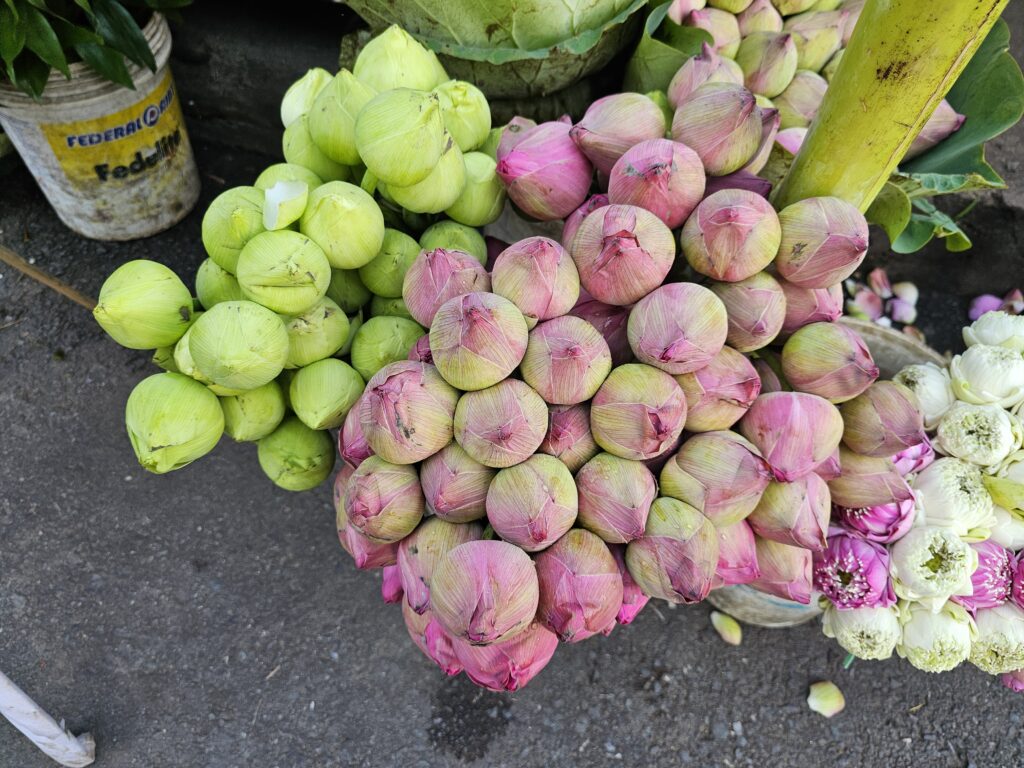
The Russian Market (Tuol Tom Poung) is more authentic and a little more chaotic. It’s a great place to buy silk, handmade products, or just to observe life. Bargaining is expected, but always with a smile. Aggressive negotiation has no place here.
PHNOM PENH TASTES GREAT
Cambodian cuisine may not be as well known as Thai or Vietnamese cuisine, but it is definitely worth exploring.
What I would recommend you try:
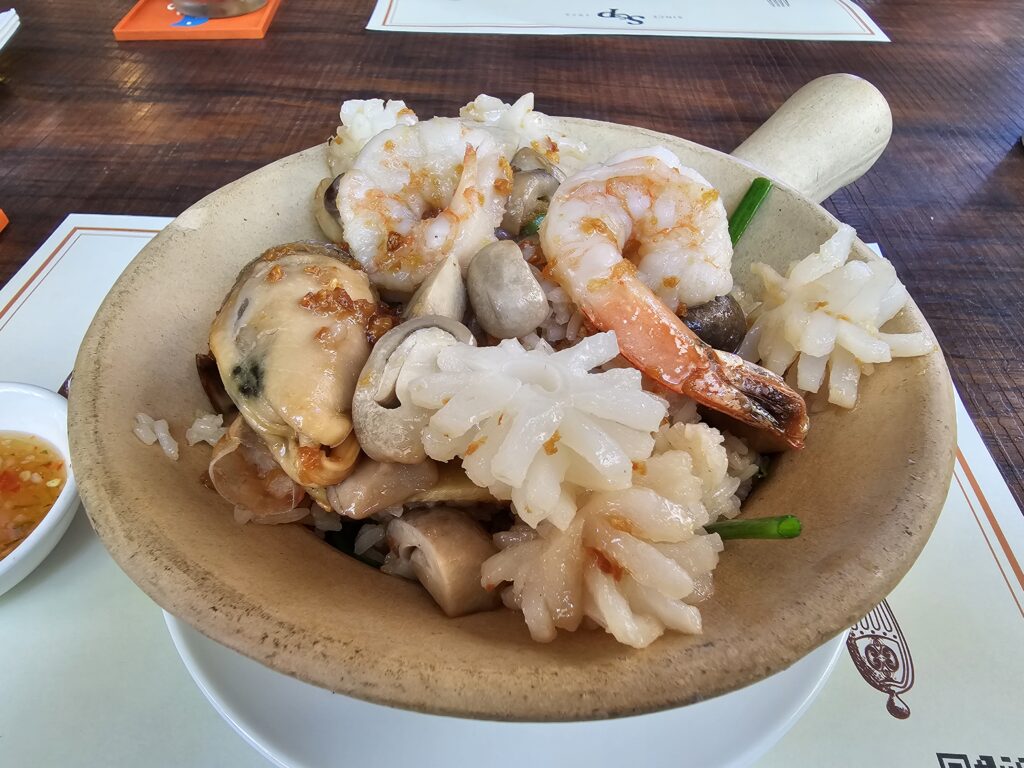
Amok – fish or chicken in coconut curry, served in a banana leaf
Lok lak – beef with pepper sauce and lime
Fresh mango, pineapple, or dragon fruit from street stalls
Iced coffee with condensed milk – strong, sweet, and addictive
In the evening, I recommend going to the riverfront. Restaurants, street stalls, local families out for a walk, children playing, and the sun slowly setting over the Mekong. How simple and beautiful.
THE RIVERSIDE AND EVENING PHNOM PENH
The promenade along the Sisowath Quay is the perfect place for an evening stroll. The city calms down, the temperature drops, and life moves outside. Locals exercise, dance aerobics, sell balloons, grill corn, or just sit and watch the river. If you want to understand the atmosphere of Phnom Penh, sit among them for a while. Don’t do anything. Just be.
MY PRACTICAL TIPS
Transportation: The easiest way is to use the Grab app (tuk-tuk or car).
Heat: Expect high humidity. Plan your sightseeing for the morning and afternoon.
Water: Drink bottled water and carry it with you at all times.
Safety: The city is relatively safe, but keep an eye on your phone and bag, especially when riding a motorcycle.
WHY YOU WILL FALL IN LOVE WITH PHNOM PENH
Phnom Penh is not a city that will charm you at first sight like Paris or Bangkok. It is rawer, more honest, and sometimes it will move you, and other times it will tire you. But if you give it time, it will begin to show you its soul. It is a city of contrasts: beauty and pain, past and hope, chaos and calm. And perhaps that is why it seems so real. Phnom Penh will not impress you with its perfection. But it will teach you something much more valuable. To look more closely, slow down, and perceive life as it is. And when you sit by the river in the evening with a coffee or a cold coconut in your hand, you may realize that it is precisely in this imperfection that its greatest charm lies.

If you liked the article, I would appreciate it if you shared it or left a nice comment below the article.

I would also like to invite you to join me on Instagram and Facebook.

MORE ARTICLES FROM CAMBODIA
